By
The war between the United States and Iran flared again overnight, with American jets striking an Iranian missile site on Qeshm Island, Iranian drones flying at US forces in Bahrain and Kuwait, and more merchant ships catching fire in the Strait of Hormuz.
By Ihsan Ur Rehman
Editor-in-Chief | The BNN Media – The Best News Network
News Beyond the Borders
MANAMA, Bahrain — The United States and Iran traded blows across the Gulf overnight on Monday, 16 November, and into Wednesday, 18 November, in the sharpest escalation of their nine-month-old war in weeks. American fighter jets struck a missile launch site of Iran’s Islamic Revolutionary Guard Corps (IRGC) on Qeshm Island, in the Strait of Hormuz, and Tehran answered with drone attacks on American forces in Bahrain and Kuwait and a new wave of attacks on merchant shipping — including a Panama-flagged LPG tanker whose crew included 24 Indian nationals, one of whom is missing.
The Strike on Qeshm Island
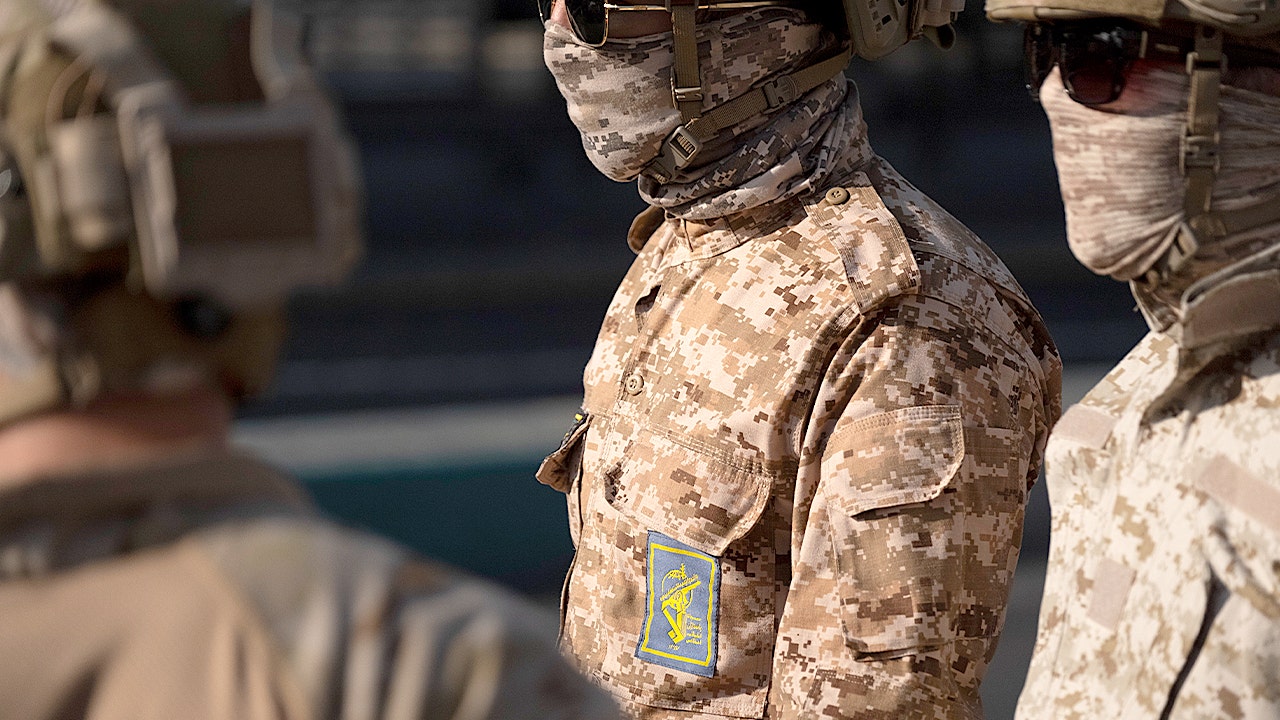
The trigger for the night’s escalation was the American strike on Qeshm, the largest island in the Strait of Hormuz and a long-standing IRGC stronghold. A US military official said American fighter jets used precision munitions to hit an IRGC missile launch site in what Washington described as a self-defence operation, in response to attacks on American personnel and assets.
US Central Command has not issued a formal statement about the strike, but the official said the command remained fully postured to protect Americans across the region. Iranian accounts played down the damage: the semi-official Mehr news agency said several locations on the island had been hit without causing casualties or damage to critical or public-service infrastructure, and a provincial official in Hormozgan said vital infrastructure and commercial and residential areas had not been damaged.
Unverified reports circulating online said at least six people had been killed or injured in the strike — a claim that contradicts the Iranian official accounts and has not been corroborated. No casualty figure for the Qeshm strike can be treated as confirmed.
Washington calls its strikes along Iran’s southern coast limited and defensive. Tehran answers each one — and this time the answer spread from Bahrain to Kuwait.
Drones Over Bahrain and Kuwait
The first exchange of the night came in Bahrain, home to the US Navy’s Fifth Fleet. The IRGC said its combat drones had carried out a “precision operation” against a radar system operated by US forces at Sheikh Isa Air Base, saying it was responding to repeated violations of Iranian airspace by American drones. Bahrain’s armed forces said they had intercepted and destroyed the attacks before they reached their targets, and Bahraini and US officials reported no casualties or damage.
It was the third Iranian attack on Bahrain in less than a week. The kingdom, heavily targeted earlier in the war, had been quiet for weeks until Iranian drone attacks resumed over the weekend. In the early hours of Wednesday, Gulf time, Bahrain’s defence force said its air defences had intercepted a further round of Iranian aerial attacks, accusing Tehran of a “systematic hostile approach” towards the country. Air raid sirens sounded again across the kingdom, and unverified social media posts claimed impacts at Sheikh Isa Air Base — claims Bahraini authorities have not confirmed.
Shortly before, at about 1:39 a.m. Gulf time on Wednesday, Kuwait’s military said its air defences were responding to hostile drone attacks. The statement gave no details of where the drones came from, what they targeted, or whether there were casualties or damage, and it did not name Iran. Initial reports attributed the drones to Iran and described them as retaliation for the Qeshm strike. If that is confirmed, it would be the first Iranian attack on Kuwait in about two and a half months.
The Human Cost at Sea: MT Tara Gas
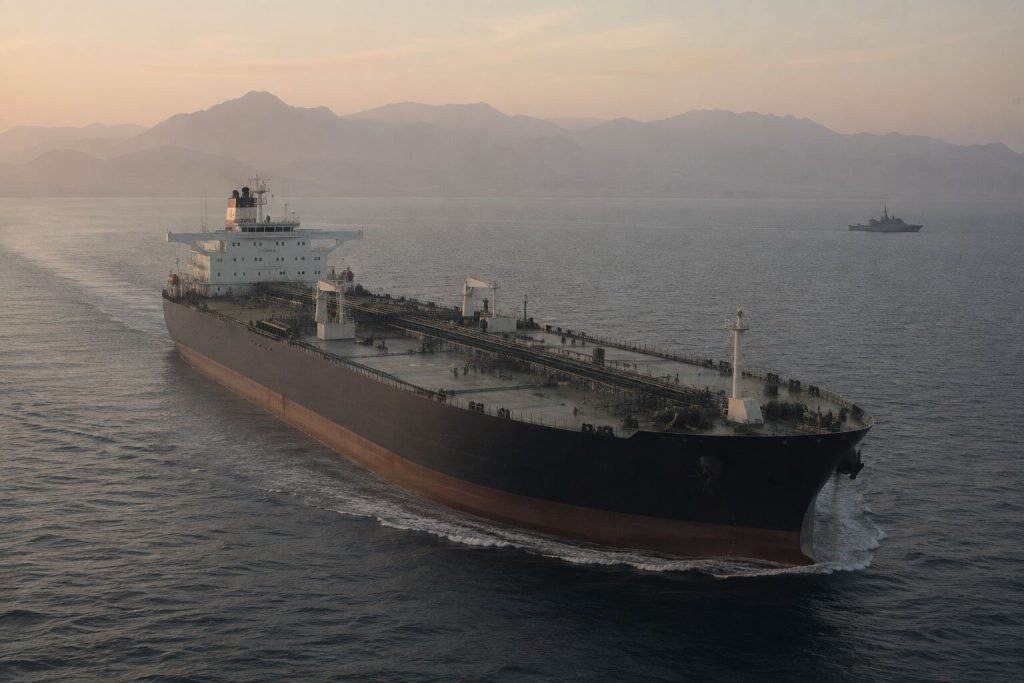
One crew is already counting the human cost. The Panama-flagged liquefied petroleum gas tanker MT Tara Gas, carrying a 25-member crew including 24 Indian nationals, was attacked in the Strait of Hormuz on Monday, 16 November. The United Kingdom Maritime Trade Operations centre reported that the first strike, at about 7:30 p.m. UTC on 16 November during an outbound transit of the strait, disabled the ship and caused an engine-room fire. The vessel was then subjected to a second attack that forced the entire crew to abandon ship.
India’s Ministry of External Affairs condemned the attack on Tuesday, 17 November. “We condemn the attack on the Panama-flagged LPG tanker MT TARA GAS in the Strait of Hormuz on 16 November 2026,” the ministry said. “Of the 24 Indian nationals on board, 21 have been safely evacuated ashore at Khasab, two injured Indian crew members have been admitted to hospital, while one Indian national remains missing.”
India’s shipping minister, Sarbananda Sonowal, said 24 of the 25 crew members had been safely accounted for and that India was urgently coordinating with the ship management company and regional rescue authorities to locate the missing seafarer. India’s embassy in Oman is closely monitoring the search and rescue operations in coordination with the Omani authorities. No group has been named by India as responsible for the attack.
Mines and Burning Tankers in the Strait
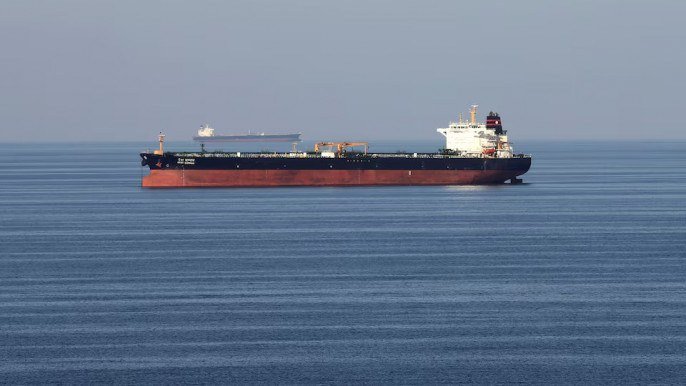
The Tara Gas was not the only vessel hit. In the Strait of Hormuz itself, the IRGC navy said two “violating” vessels exploded and caught fire after hitting naval mines — a supertanker carrying more than 2 million barrels of crude oil in the western part of the strait, and a liquefied natural gas carrier hit while using what Tehran calls an unauthorised southern route. The Guards claimed both ships were escorted by US military aircraft and warned that vessels using the southern route faced “a wall of iron and fire” of naval mines.
Independent maritime trackers reported a third vessel on fire, and Iran’s regular army separately reported a fourth tanker damaged east of the strait. Iran’s account that mines caused the blasts could not be independently verified, and Iranian statements did not name the ships. The International Maritime Organization has recorded 136 security incidents involving vessels in the Strait of Hormuz and the wider Middle East between 1 March and 11 November 2026.
The strait carried about a fifth of the world’s traded oil and gas in peacetime. Shipping through it remains about 65 percent below pre-war levels, according to UK Maritime Trade Operations, and Lloyd’s List data shows traffic still below a third of pre-war levels. Brent crude, however, did not surge on the latest escalation — it fell 0.5 percent to $95.34 a barrel on Monday, 16 November.
The shipping war is now costing seafarers’ lives, not just cargoes — and the strait that carries the world’s oil is still barely a third as busy as it was before the war.
A Third Carrier Joins the Blockade
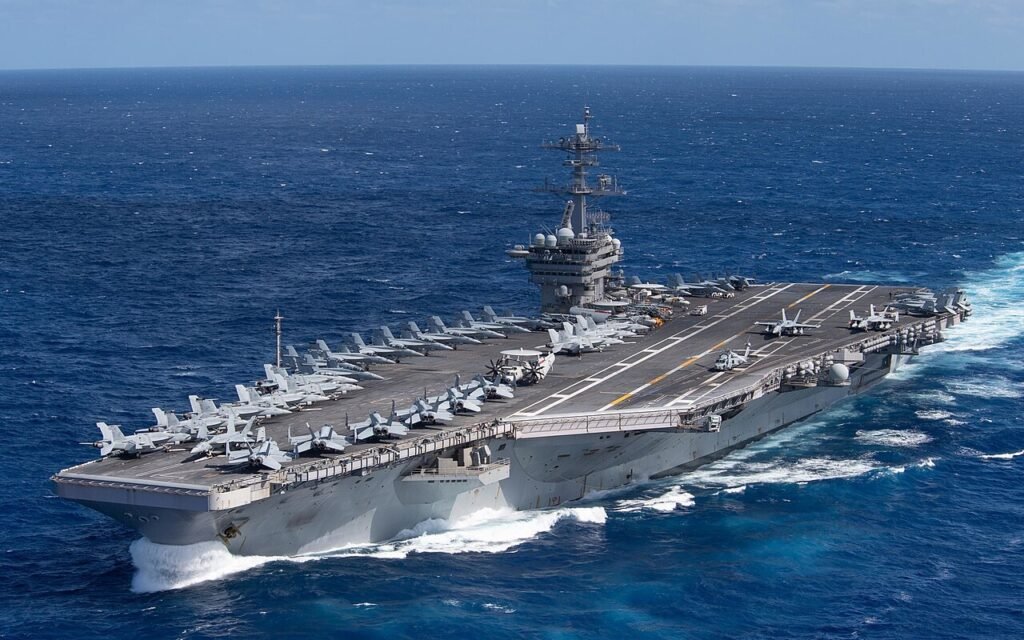
Washington is reinforcing as the shipping war intensifies. The aircraft carrier USS Theodore Roosevelt arrived in the region on Monday, US Central Command said, joining the USS George H.W. Bush and the USS George Washington and giving the United States three carrier strike groups near Iran. The ship had left San Diego in September.
The carriers are there to enforce a naval blockade of Iranian shipping that Washington has used to squeeze Tehran’s oil exports. US Central Command says the blockade has redirected 150 merchant vessels and disabled five since June. Iran has stepped up its threats against US forces and commercial shipping as the Roosevelt arrived.
The September Pattern: Five Tankers and a Jordan Base
The overnight escalation follows a pattern set two months ago, in the war’s last great tanker battle. On Saturday, 5 September, US forces struck three Iranian oil tankers after the IRGC tried to attack a US aircraft carrier and a destroyer with ballistic missiles. Then, on Tuesday, 8 September, US Central Command said its forces had destroyed five more Iranian crude oil carriers — the M/T Kaviz, M/T Charminar, M/T Horizon 1 and M/T Riesco in the Gulf of Oman, and the M/T Derya near Kharg Island — after the IRGC twice tried to hit a US warship with ballistic missiles over the previous two days.
“American forces directed the crews to abandon ship before the vessels were struck and rendered inoperable,” Central Command said, adding that no American personnel were harmed. It described the tankers as part of a multibillion-dollar shadow network funding the IRGC and its regional partners.
Iran confirmed that five tankers had been targeted and said it had retaliated by attacking ten ships near the Strait of Hormuz — two American vessels and eight oil tankers — and by firing ballistic missiles at US forces at the Al-Azraq base in Jordan. Jordan said its air defences engaged 20 ballistic missiles, intercepting 18 of them, and that the two that got through fell in unpopulated areas, causing no casualties. The IRGC also claimed its missiles had caused “significant damage” to the US Navy destroyers DDG-119 and DDG-53 — a claim Washington rejected, saying no American warship had been hit. Iran also announced a maritime restricted area stretching from Chabahar into the Gulf of Oman and the Arabian Sea. Oil prices rose above $100 a barrel in early trading the following Wednesday, and Iran’s foreign ministry condemned the tanker strikes as a “war crime”.
The American message then was the same as it is now. As US Secretary of State Marco Rubio put it in September: “Iran continues to try to hit US naval ships, and for every time they do that or try to do that, they’re going to lose tankers.”
Diplomacy Stalled as Trump Heads to China
The violence comes as diplomacy has stalled. Talks to end the war have made little progress, and President Donald Trump said last week that Washington does not need a deal. Vice President JD Vance has meanwhile said he rejects a long war with Iran.
Trump arrived in the Philippines on Tuesday at the start of a 48-hour Asia trip due to end in an unprecedented three-way meeting with Russian President Vladimir Putin and Chinese President Xi Jinping in Shenzhen — a meeting at which an American official said he intends to raise Iran. One of the few channels still open is Oman: its foreign minister has held talks with his Iranian counterpart on maritime route security.
Adding to the tension is a CNN report, citing seven US officials, that new intelligence indicates Iran is developing plans to target senior Trump administration officials in Washington with a so-called dirty bomb or a chemical weapon. The officials were reported to be divided over how credible the intelligence is, and no attack is considered imminent. The White House said there were no real threats to the country at this time, and Trump said Iran would pay a price if such a plot existed. Tehran rejected the report outright.
What Happens Next
- Whether Kuwait confirms and attributes the overnight drone attack — and whether it was, as initial reports suggest, an Iranian response to the Qeshm strike.
- Whether US Central Command sets out the scale and results of the Qeshm strike, which it has so far described only through an unnamed military official.
- Whether the search for the missing Indian seafarer from the MT Tara Gas succeeds, and whether India names those responsible for the attack.
- Whether the IRGC’s mine claims in the Strait of Hormuz are confirmed by independent tracking — and whether more merchant ships are hit.
- Whether Trump’s meeting with Putin and Xi in Shenzhen produces any pressure on Tehran or Washington to step back from the tanker war.
A War That Keeps Finding New Water
The pattern is now familiar: an American strike on Iran’s southern coast, an Iranian answer against US bases and shipping, and another lurch in the danger faced by the seafarers who still sail the strait. What changed this week is the spread — from Bahrain to Kuwait, from drones to mines — and the arrival of a third American carrier in waters that are already the most dangerous in the world for merchant shipping.
Nine months into the war, neither side is winning the tanker war. But the ships, the crews and the region’s economies are losing it every night.
By Ihsan Ur Rehman
Editor-in-Chief | The BNN Media – The Best News Network
News Beyond the Borders