By
It took three minutes. Three minutes, a handful of bids, and a painting that spent fifty years on an Argentine family’s walls became the most expensive Van Gogh ever sold — after a week in which it very nearly was not sold at all.
By Salman Qureshi
Cameraman / Photographer | The BNN Media – The Best News Network
News Beyond the Borders
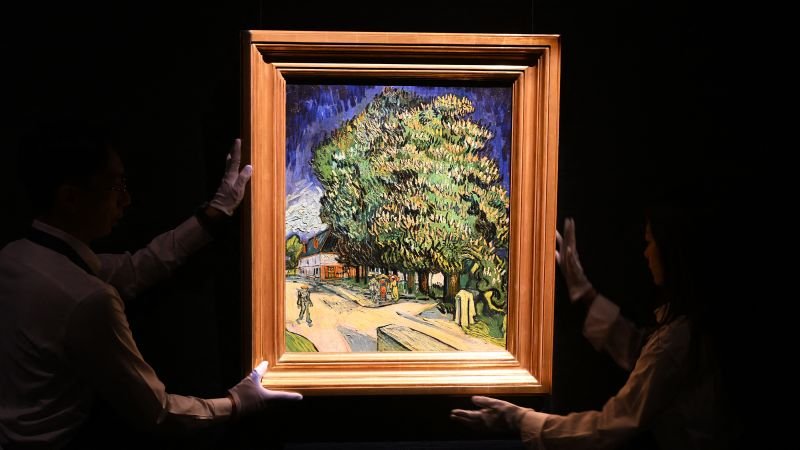
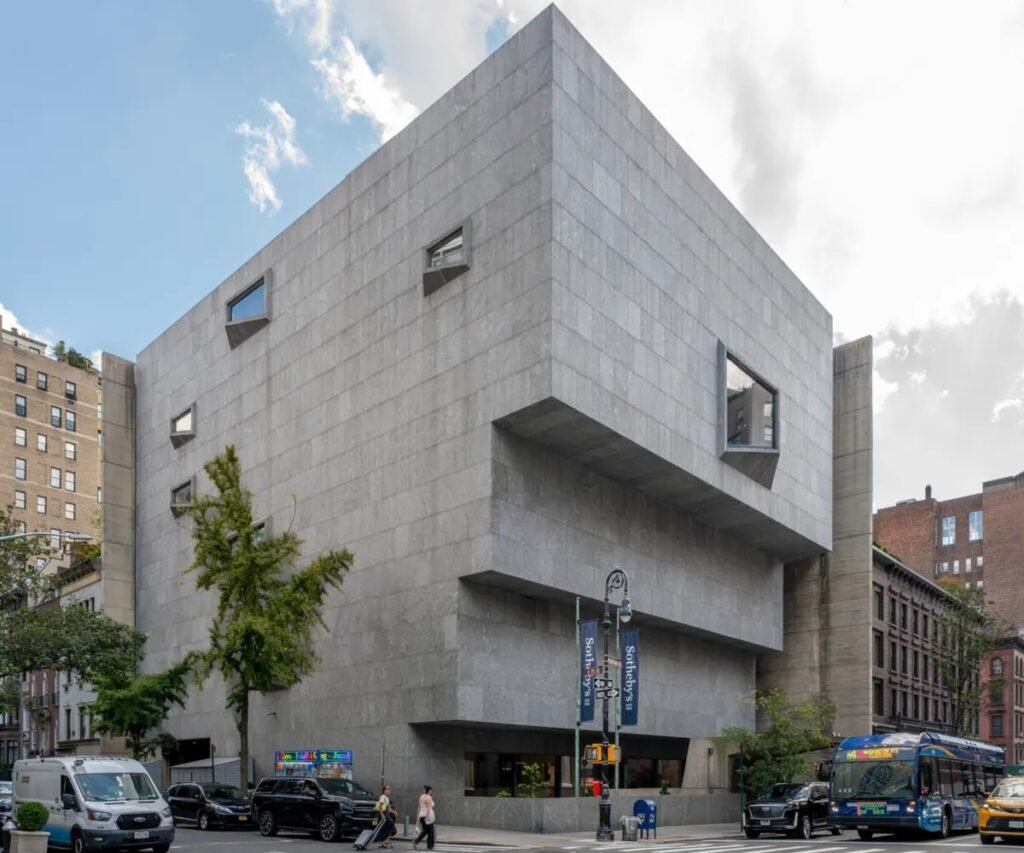
NEW YORK, United States — Vincent van Gogh’s Châtaigniers en fleurs — Blossoming Chestnut Trees — sold for $190.4 million at Sotheby’s in New York on Wednesday evening, 18 November, shattering the artist’s auction record and becoming one of the most expensive paintings ever sold under the hammer. The sale went ahead only after Sotheby’s announced, hours earlier, that it had settled a dispute with the heirs of the painting’s former Jewish owners, who said the work had been sold under duress during the rise of the Nazis.
Three Minutes That Made History
The bidding opened at $135 million and climbed in $5 million steps, Artnet News reported, with the contest over in roughly three minutes. When auctioneer Oliver Barker brought his gavel down, the bid stood at $165 million; with the buyer’s premium and fees added, the final price came to $190.4 million — about £145 million.
The winning bidder was Manhattan art dealer Bill Acquavella, who confirmed his role to Artnet News after the sale. He did not say whether he was bidding for himself or for a client, so where the painting goes next is unknown. The underbidder was a collector on the telephone with Julian Dawes, Christie’s head of Impressionist and modern art for the Americas. Barker tried to coax one more bid from him — “Try one more. The moment of no return.” It was not to be.
Sotheby’s had guaranteed the lot, and an irrevocable bid was in place before the sale, so the painting was always going to sell. What was not certain, until the day before, was whether it would sell at all.
In three minutes, a picture painted in a few days by a dying man added about $73 million to the artist’s record — a jump of roughly 62 per cent.
The Painting Itself
Van Gogh painted the chestnut-tree scene around 24 May 1890 in Auvers-sur-Oise, a village north-west of Paris, within days of arriving there after a year as a patient in the asylum at Saint-Rémy-de-Provence. The next day he told his brother Theo in a letter that he had finished “a study of chestnut trees,” according to The Art Newspaper. He would be dead about two months later, on 29 July 1890.
The picture shows a burst of pink and white blossom against a deep blue sky, above a village street in Auvers. Sotheby’s says it is the only one of his chestnut-tree studies that includes people: three women in bright dresses gathered under the blossoms, and a lone man in a straw hat who may stand in for the painter himself. In the short window before his death he produced 74 paintings, by Sotheby’s count — this is one of the few from that period still held privately.
That scarcity explains much of the price. Most of the Auvers landscapes sit in museums and will never be sold. This one had not been seen in public for half a century: its last museum showing was at the Guggenheim in 1964, and the family that owned it did not lend its pictures to museums.
A Record by the Numbers
- $190.4 million — the final price, including fees. The hammer price was $165 million.
- $117.2 million — the previous Van Gogh auction record, set in 2022 when Christie’s sold his 1888 Orchard with Cypresses from the estate of Microsoft co-founder Paul Allen.
- $180 million — the pre-sale estimate, which did not include fees. The Art Newspaper put the fee-inclusive expectation near $207 million, so the hammer landed below target even as the final figure broke the record.
- Fourth most expensive painting ever sold at auction, according to the Wall Street Journal — behind only Leonardo da Vinci’s Salvator Mundi, a Klimt portrait that fetched $236.4 million at Sotheby’s a year ago, and Andy Warhol’s Shot Sage Blue Marilyn. It is also the second-highest price ever achieved at Sotheby’s.
- About $412 million — the total for all 12 lots in the Blaquier-Arrieta collection sale, including Cézanne’s Arlequin at $111 million, a Renoir at $27.5 million and a Monet at $20.23 million.
One asterisk is worth noting. The Guardian reported a New York Times account that another Van Gogh, Le Zouave, was sold in a private Christie’s deal within the past year for “around $190m”. Private deals are not publicly audited, so that figure cannot be checked the way an auction result can. Wednesday’s sale is the record for a Van Gogh sold in public.
The Nazi-Era Row
The painting’s path to the saleroom ran through 1930s Europe. The Berlin publisher Samuel Fischer — whose house published Thomas Mann and Hermann Hesse — bought it with his wife, Hedwig, in 1909. When Samuel Fischer died in 1934, the work passed to his daughter and son-in-law. By then it was already on deposit with the Paul Cassirer gallery in Amsterdam, where it had been sent around 1932 or 1933. In 1936, a Paris couple, Henriette and Marcel Kapferer, bought it.
On 12 November, a Berlin lawyer for the Fischer heirs, Gunnar Schnabel, wrote to Sotheby’s challenging that 1936 sale. The heirs argued the family let the painting go because Nazi persecution had battered its publishing business, and they asked the auction house to prove beyond doubt that the painting had been sold at fair market value — and that the family “would have wanted to carry out the sale even without Nazi rule”. In an email to Marco Toracca, head of Sotheby’s restitution department, seen by the New York Times, Schnabel wrote that “no action may take place” unless both conditions were established.
Sotheby’s pushed back at first. It cited records from the Cassirer archive showing a June 1936 price of 68,000 Swiss francs, roughly $22,000 in 1936 dollars, and argued that sum reflected market value. In a statement to the BBC, the house said its research “has not established that the painting was sold under duress.”
The heirs’ claim was not that the painting was seized. It was that a family under Nazi persecution sold it because they had little choice — the hardest kind of restitution case to prove, and the hardest to dismiss.
The Eleventh-Hour Deal
Then, on Tuesday, 17 November — the day before the sale — came a deal. Sotheby’s announced that the sellers, the Blaquier-Arrieta family, and every legal heir of Samuel and Hedwig Fischer had reached what it called a “mutually satisfactory resolution”. The terms were not disclosed.
“In recognition of the painting’s complex Nazi-era history and the suffering endured by the Fischer family during the Holocaust, the two families have reached a mutually satisfactory resolution and the work will be sold pursuant to their agreement,” Sotheby’s said. The Blaquier-Arrieta family said they were “pleased to have reached an amicable resolution with the Fischer heirs”. Sotheby’s has told ARTnews that the buyer receives clear title.
What the settlement does not answer is whether the Fischer heirs receive any share of the $190.4 million, or whether the 1936 sale was in fact forced. The deal settles the money without settling the history. Schnabel, who watched the sale from a private room, struck a mixed note afterwards. In a statement quoted by the Times, he said the family hoped the quick resolution could encourage other families persecuted in the Nazi era, while describing the mood in the room as “no Champagne atmosphere”. The Fischer family, he said, was “delighted that this outstanding van Gogh painting, which hung in the Berlin home of Samuel and Hedwig Fischer for a quarter of a century, has now found a new owner.”
The Blaquier-Arrieta family acquired the painting in 1975 — from the dealers Wildenstein & Co., according to Artnet — and owned it for more than half a century. Nelly Arrieta de Blaquier, a Buenos Aires sugar heiress, and her late husband Carlos Pedro Blaquier built their collection from the 1960s on the fortune of the Ledesma sugar company. Nelly died in 2020 and Carlos Pedro in 2023. Sotheby’s described their collection as “stuff of legend”, with an “almost mythical status”.
Who Owns It Now — and Where It Goes Next
The most immediate question is the buyer. Acquavella has worked for some of the biggest private collectors in the country, so the painting could disappear from view again, or it could surface in a museum or a loan show. Nothing has been announced.
For the art market, the night sends two signals. The top end is clearly alive: a single picture added about $73 million to the artist’s record. Yet the hammer missed the estimate, and the collection as a whole fell short of the roughly $450 million it had been expected to bring — a reminder that buyers at this level are selective rather than euphoric.
The bigger shift may be procedural. A provenance challenge raised six days before a sale did not derail it. Instead, it forced a negotiated settlement in public view, on the eve of a record. Auction houses and sellers of works with gaps in their 1930s history will be watching to see whether that becomes the template: research the past early, or expect to settle it on deadline.
What the Painting Leaves Behind
For everyone else, the painting itself is the lasting part. A burst of pink and white blossom against a deep blue sky, made in a few days by an artist with weeks to live, has now passed through a Berlin publisher’s home, a Paris collection and an Argentine family’s walls to become the priciest Van Gogh ever sold under the gavel.
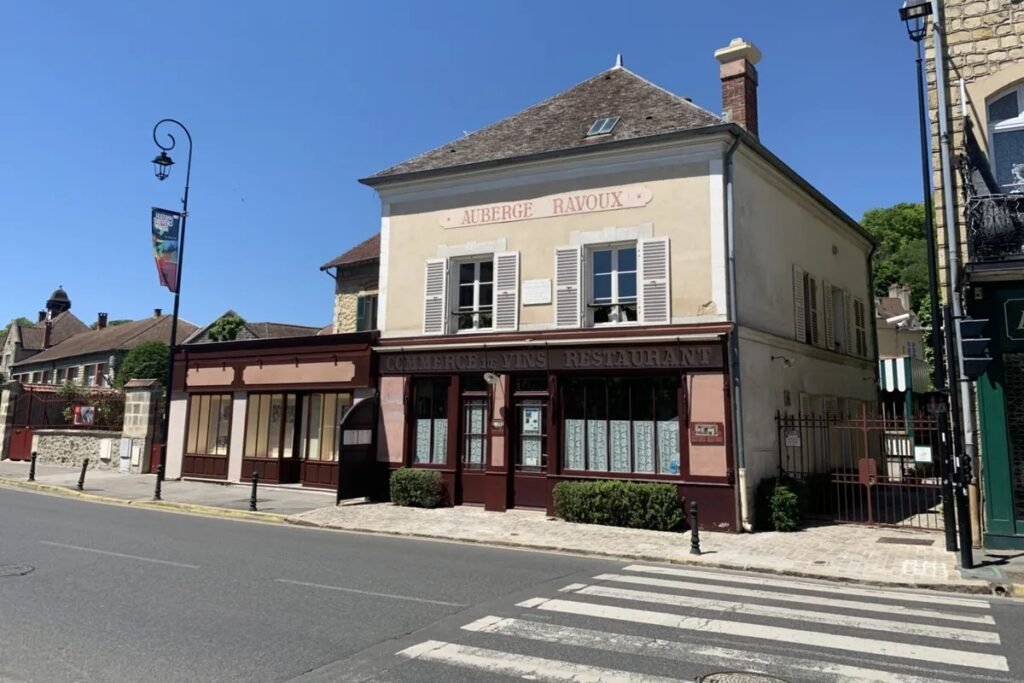
It was painted in the village where Van Gogh spent his final months, within sight of the inn where he lodged — the Auberge Ravoux, still standing in Auvers-sur-Oise today. Where the picture goes next is the one fact nobody has confirmed yet.
A record price, a settled dispute and an unanswered question: the painting’s Nazi-era history was resolved enough to sell it, but not enough to close it.
By Salman Qureshi
Cameraman / Photographer | The BNN Media – The Best News Network
News Beyond the Borders