By
Jensen Huang has resigned as president and chief executive of Nvidia, the chipmaker he co-founded and led for 33 years, and the board has named chief financial officer Colette Kress as interim chief executive, the company said on Thursday.
By Akhtar Saleem Khan
Head of IT | The BNN Media – The Best News Network
News Beyond the Borders
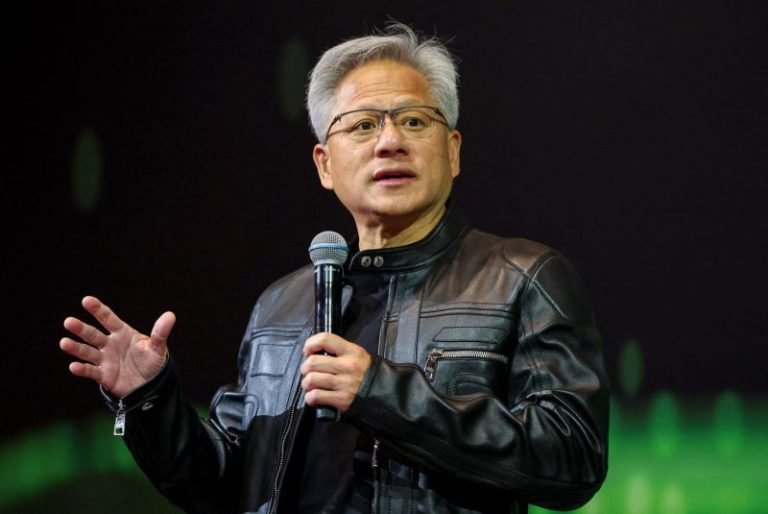
Santa Clara, United States — Jensen Huang has resigned as president, chief executive and a member of the board of Nvidia, effective immediately, the company said on Thursday, 12 November 2026, ending a 33-year run at the chipmaker he co-founded. Chief financial officer Colette Kress will serve as interim CEO while the board searches for a permanent successor.
The announcement
In a regulatory filing with the US Securities and Exchange Commission, Nvidia said its board accepted Mr Huang’s resignation on Wednesday, 11 November, the night directors met for several hours to decide his future. The announcement was made in a company statement on Thursday.
Ms Kress, 59, has agreed to serve as interim CEO and will keep her roles as executive vice president and chief financial officer, a post she has held since 2013 — a 13-year veteran of the company. The board said it was starting a search for a permanent successor and would consider internal and external candidates.
Directors also named Harvey C. Jones, the former chief executive and executive chairman of Synopsys, as the company’s first-ever board chair. Mr Jones has been on Nvidia’s board since 1993.
The filing and the press release give no reason for the resignation, and the filing does not disclose any severance, separation or equity arrangements for Mr Huang.
After 33 years under one leader, the world’s most valuable chipmaker now has an interim chief — and no named successor.
The market reaction
Investors reacted sharply. Nvidia shares fell more than 13% in premarket and early trading on Thursday, according to Reuters and CNBC, briefly falling about 14% after the open before recovering part of the losses through the day. The stock was down more than 4% by the close of trading on Thursday, according to the Globe.
The sell-off pushed the company’s market value below $4 trillion, CNBC reported. Including the latest losses, the roughly $4 trillion chipmaker has shed about $600 billion in stock market value this week, according to the Associated Press. TechCrunch reported that since Friday the stock had fallen by as much as 19%, a market-cap loss of more than $855 billion at its worst point.
Shares had already fallen about 8% in after-hours trading on Wednesday after The Wall Street Journal reported that directors were preparing to remove Mr Huang.
The turmoil spread beyond Nvidia. CoreWeave’s shares were down about 9% on Thursday, Nebius fell about 16% and IREN fell 6.6%, according to TechCrunch.

The reported background
The resignation followed days of damaging reports about Mr Huang. The Wall Street Journal reported on 11 November that directors were preparing to remove the longtime chief executive. Days earlier, reports said the board had opened an investigation after Mr Huang acknowledged a romantic relationship with a businesswoman whom US officials suspect of working for Chinese intelligence.
According to the New York Times, the woman is Alice Huang — no relation to the chief executive — an executive at Megaspeed, a customer of Nvidia. Nvidia has said the board hired the law firm Wachtell Lipton to investigate the intelligence allegations.
None of these allegations has been proven, and neither the company’s announcement nor its regulatory filing mentions them or gives any reason for Mr Huang’s departure. They are reported here only as reported by the outlets named, and the resignation itself is the confirmed news.
A company built by one man
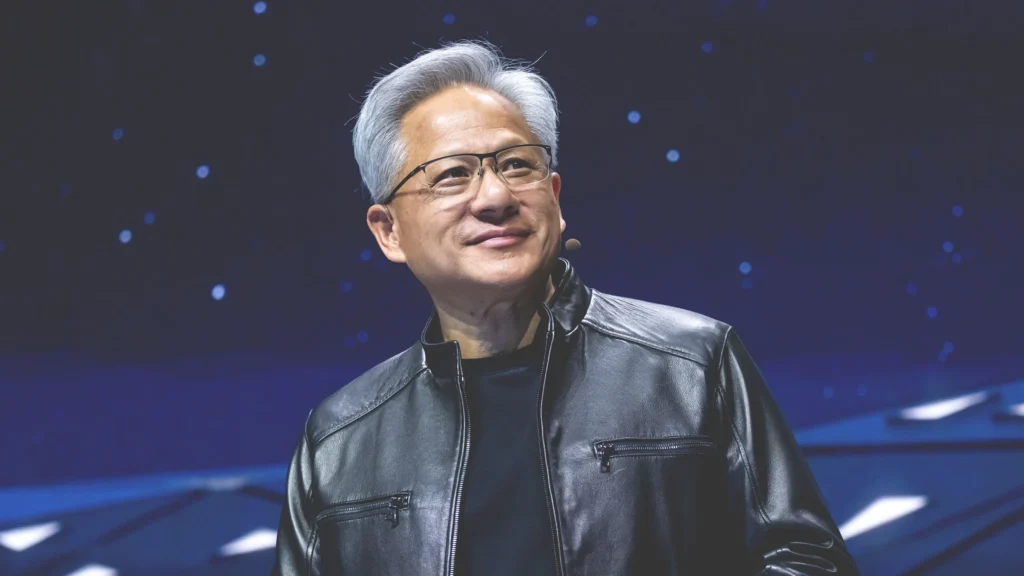
Mr Huang, 63, founded Nvidia in 1993 and has led it as chief executive ever since. Under his leadership, Nvidia played a crucial role in developing the graphics processing unit, and its chips became the standard for training and running the artificial intelligence models behind the AI boom.
Before ChatGPT launched and sparked the AI boom, Nvidia shares were trading at about $15. As of last month, they had risen more than 1,450% to an all-time high of $243, and the company’s market value had reached as high as $5.88 trillion early in October. Revenue rose more than 1,500% to $96.22 billion as of the company’s second quarter, from $5.93 billion in the third quarter of 2023.
Mr Huang owns about 3.5% of Nvidia’s stock and is the company’s single largest personal shareholder, but unlike many Silicon Valley founders he does not hold supervoting rights, and the board had the power to vote him out at any time. He famously ran a very flat organisation, with around 60 direct reports, and there was no heir apparent or succession plan. Bernstein analysts downgraded Nvidia and sharply cut their price target, citing governance and the lack of a clear succession plan, according to the New York Times.
What the company said
“Jensen’s contributions to NVIDIA are profound. NVIDIA is one of the most consequential technology companies in the world. The Board and the company thank Jensen for his immeasurable contributions to the company and the industry,” the company said in a statement.
Nvidia said it will still report third-quarter fiscal 2027 results on Tuesday, 17 November, at about 1:20 p.m. Pacific time, as previously scheduled, with an earnings call at 2 p.m. Pacific time.
What comes next
The industry will get its first glimpse of Nvidia under new leadership next week, during the quarterly conference call on Tuesday. Until then, the questions are open: who will run the world’s most important AI chip company, how the board’s search will proceed, and whether the sell-off that has wiped hundreds of billions of dollars from its value will settle.
For a company that has defined the artificial intelligence age, the next chapter begins without the man who built it.
By Akhtar Saleem Khan
Head of IT | The BNN Media – The Best News Network
News Beyond the Borders
Source: Nvidia; TechCrunch; USA Today; Reuters; CNBC