By
For the Rohingya, this day has been seven years coming. For international law, it could be a first. When the judges of the world court take their seats in The Hague this afternoon, they will answer a question no court has ever answered before: did a state commit genocide?
By Tariq Jamal
Freelance Journalist | The BNN Media – The Best News Network
News Beyond the Borders
THE HAGUE, Netherlands — The International Court of Justice will deliver its judgment today, Thursday, 19 November, in the case of The Gambia v. Myanmar, deciding whether Myanmar committed genocide against its Rohingya Muslim minority during the military campaign in Rakhine State in 2017. The public sitting begins at 10:00 a.m. local time at the Peace Palace in The Hague — 09:00 GMT, 2:00 p.m. in Pakistan — and the reading of the judgment is expected to last up to 90 minutes. The court’s president, Judge Iwasawa Yuji, will read the decision aloud. No outcome has been announced in advance, and none is claimed in this article.
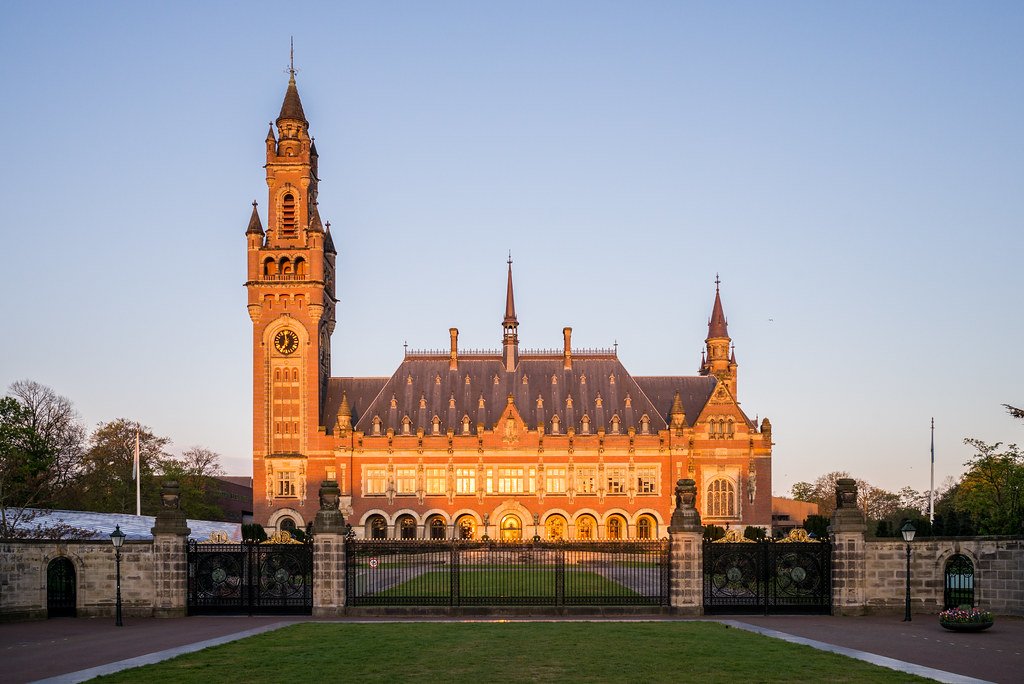
What Happens Today in The Hague
The judgment is the final step in a case that has run for almost exactly seven years. The Gambia filed its application on 11 November 2019, and the court has worked through preliminary objections, provisional measures and three weeks of hearings on the merits before reaching this day.
What the judges decide today is a question of state responsibility, not individual guilt. The court will rule on whether Myanmar, as a state, breached its obligations under the 1948 Convention on the Prevention and Punishment of the Crime of Genocide. It cannot send anyone to prison: that is the work of the International Criminal Court, a separate institution. But a finding against Myanmar would be historic — the court has never before found a state responsible for genocide.
The ruling is final. There is no appeal from a judgment of the International Court of Justice.
The Case: Seven Years in the Making
The Gambia, a small, mostly Muslim country in West Africa, brought the case with the backing of the 57-member Organisation of Islamic Cooperation. Its argument, in essence, is that Myanmar’s military carried out a campaign against the Rohingya with the intent to destroy the group, in whole or in part — the legal definition of genocide.
The case has moved in stages:
- November 2019: The Gambia files the case, alleging breaches of the Genocide Convention.
- January 2020: The court orders provisional measures, requiring Myanmar to prevent acts prohibited by the convention and to preserve evidence.
- July 2022: The court rejects Myanmar’s preliminary objections, allowing the case to proceed.
- January 2026: Public hearings on the merits run from 12 to 29 January, with oral arguments and witness evidence.
- November 2026: The judgment is delivered.
Eleven other countries — Canada, Denmark, France, Germany, the Netherlands, the United Kingdom, the Maldives, Slovenia, the Democratic Republic of the Congo, Belgium and Ireland — have formally intervened in the case in support of The Gambia’s position. The Gambia’s legal team has included Navi Pillay, the former UN human rights chief, who sits as the country’s ad hoc judge; she received the Nobel Peace Prize in October.
The long road to this judgment — seven years from filing to verdict — is itself a measure of how hard genocide is to prove against a state.
What Happened in Rakhine State
The case turns on the military’s so-called clearance operations in northern Rakhine State in 2016 and 2017, above all the offensive that began in August 2017. In the weeks that followed, more than 730,000 Rohingya fled across the border into Bangladesh, joining hundreds of thousands who had fled earlier waves of violence. Nearly 400 villages were destroyed or burned, according to investigators’ findings, and survivors described mass killings and widespread sexual violence.
A United Nations fact-finding mission concluded in 2018 that there were reasonable grounds to investigate senior Myanmar military officials for genocide, crimes against humanity and war crimes. The Gambia’s submissions to the court cite a death toll of 10,000, the use of rape as a weapon, and argue that the army acted with genocidal intent.
Myanmar has denied throughout that genocide was committed, describing the operations as legitimate counter-insurgency measures against militants who had attacked security posts. That denial — and the question of intent — has been the central dispute of the case.
What The Gambia Is Asking the Court to Decide
The Gambia has asked the court to find that Myanmar violated the Genocide Convention in several ways: by committing genocide, by conspiring to commit it, by failing to prevent it, and by failing to investigate and punish those responsible.
Beyond a finding of responsibility, The Gambia has asked the court to order Myanmar to stop any continuing violations, to prosecute those suspected of genocide, to pay reparations, and to guarantee conditions for the safe and voluntary return of the displaced Rohingya.
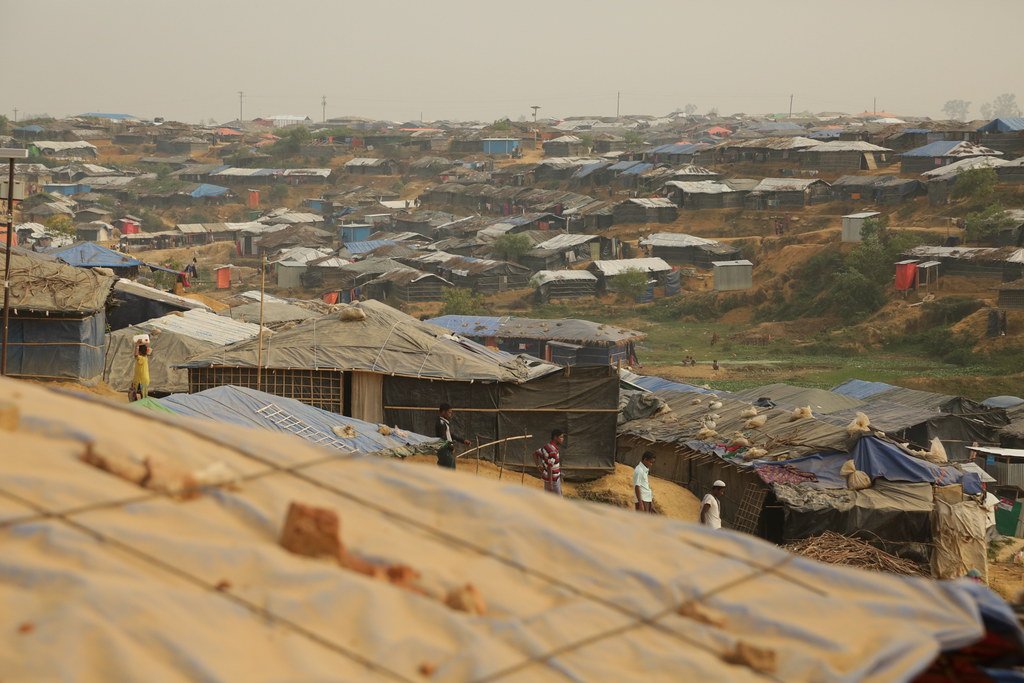
Around a million Rohingya refugees now live in camps in and around Cox’s Bazar in Bangladesh, in what is one of the world’s largest refugee settlements. For them, the judgment is about more than law: it is about whether the world formally recognises what was done to them — and whether return home will ever be possible.
Why This Judgment Would Be Historic
If the court finds against Myanmar, it would be the first time in the nearly 80-year history of the Genocide Convention that a state has been held responsible for committing genocide. The court has come close before — in the case brought by Bosnia against Serbia, it found that Serbia had failed to prevent genocide at Srebrenica, but it did not find that Serbia itself had committed it.
Proving intent has been the main obstacle. Genocide is not only about the scale of killing; the law requires proof that the acts were carried out with the specific intent to destroy a protected group. That is why the judgment matters far beyond Myanmar: whatever the court says about intent will shape how future cases are argued and decided.
Whether the ruling goes for The Gambia or for Myanmar, the reasoning the judges publish today will be studied in law schools and foreign ministries for a generation.
What Happens After the Ruling
A judgment from the world court is binding, but the court has no police force, no army and no independent means of enforcement. If Myanmar refuses to comply, The Gambia could take the matter to the United Nations Security Council — where action would depend on the politics of its members.
The practical questions are immediate. Bangladesh’s government has said it is watching the judgment closely: its State Minister for Foreign Affairs, Shama Obaed Islam, said on Wednesday that accountability for serious human rights violations is essential to delivering justice to the Rohingya and addressing the root causes of their prolonged crisis. The UN’s Special Rapporteur on human rights in Myanmar, Kelley Currie, said this week she hoped the verdict would acknowledge the atrocities and pave the way for justice.
There is also the question of what has changed on the ground since the case was filed. The Arakan Army, an ethnic armed group, now controls substantial areas of Rakhine State, creating a new and complicated reality for civilian protection, humanitarian access and any prospect of repatriation. A court judgment cannot, by itself, change who holds territory.
The World Watches — and the Pressure on the Court
The judgment arrives at a moment when the court itself is under pressure. Reports in the run-up to the ruling have warned that the United States could sanction the court’s judges, including Judge Pillay, after Washington already imposed sanctions on judges of the International Criminal Court over arrest warrants for the Israeli prime minister. A Washington think tank close to the White House has predicted that a genocide finding would bring US sanctions on the court.
That pressure is part of why today matters beyond this one case. The court is being asked to do its hardest job — to judge a state for the gravest of crimes — while its own authority is being questioned by powerful governments.
Whatever the court decides this afternoon, the verdict will not end the Rohingya’s wait for justice. It will decide whether the law, at last, calls what happened to them by its name.
By Tariq Jamal
Freelance Journalist | The BNN Media – The Best News Network
News Beyond the Borders