 By
For the first time in his long hold on power, Benjamin Netanyahu has been passed over for the job of forming a government. The man chosen in his place is a former chief of staff who has never been prime minister — and who now has 28 days to do what the election could not: build a majority out of a parliament that has none.
By Tariq Jamal
Freelance Journalist | The BNN Media – The Best News Network
News Beyond the Borders
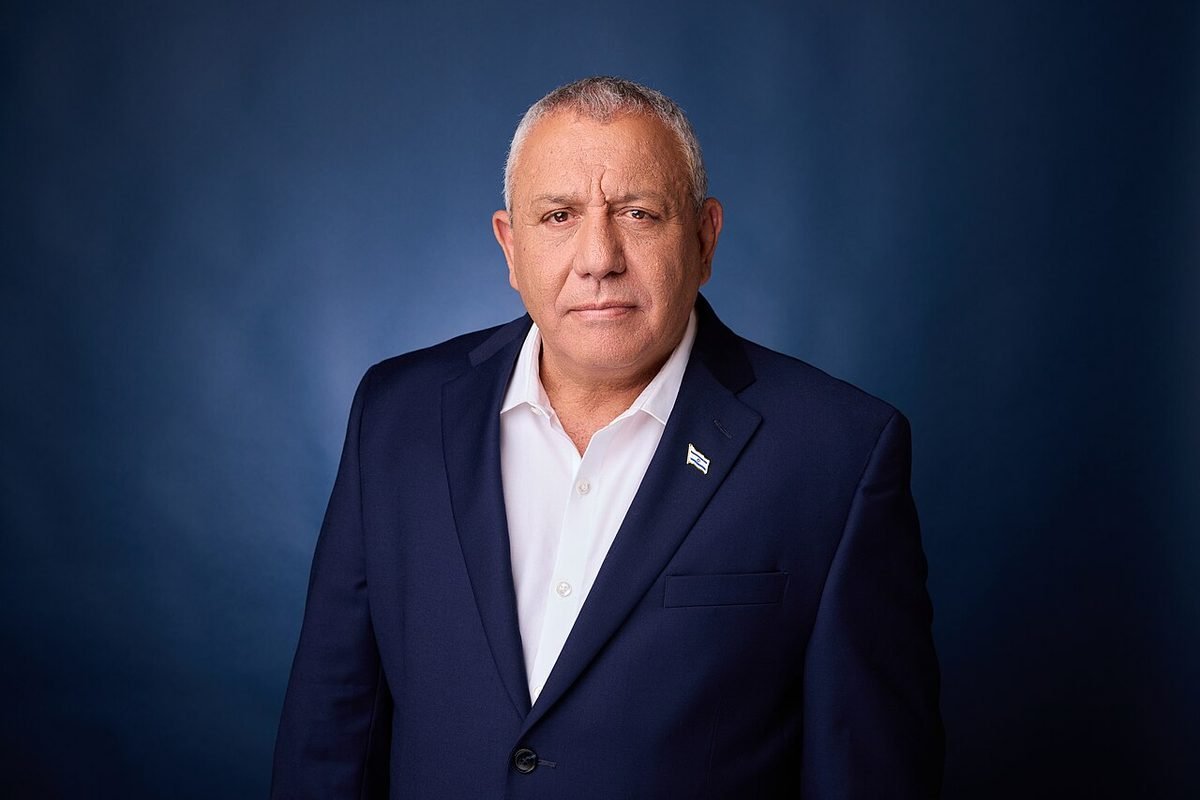
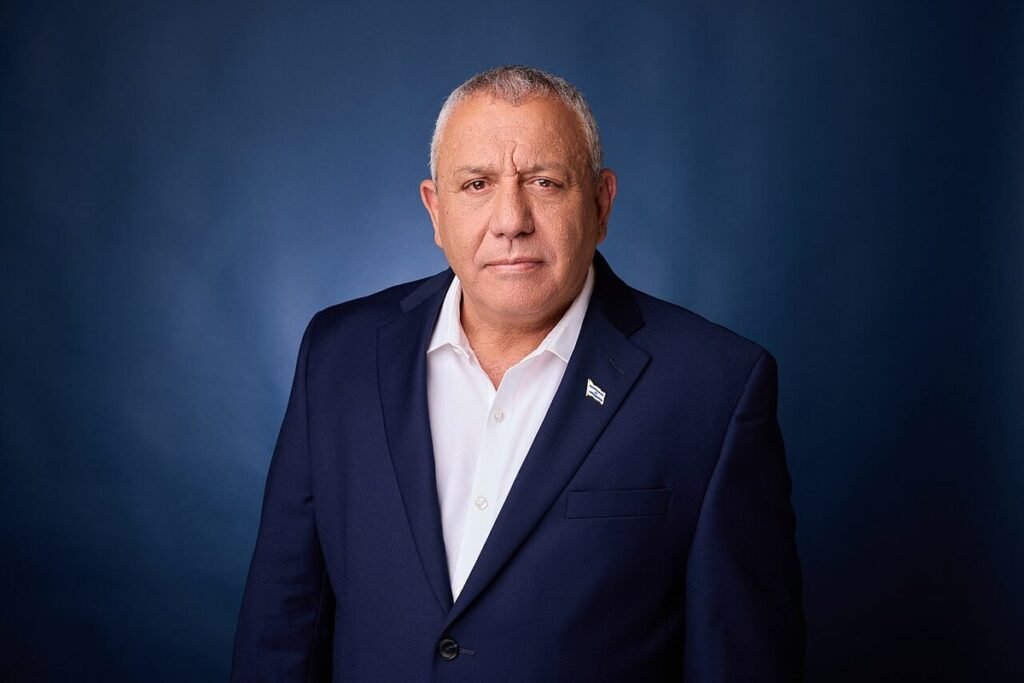
JERUSALEM, Israel — President Isaac Herzog has formally tasked Gadi Eisenkot, the former chief of staff of the Israel Defense Forces and leader of the centrist Yashar party, with forming Israel’s next government, choosing him over caretaker Prime Minister Benjamin Netanyahu after the general election of Tuesday, 27 October left neither man’s bloc with a majority in the 120-seat Knesset. Herzog told Eisenkot of his decision on the evening of Saturday, 7 November, and formally handed him the mandate at a ceremony at the President’s Residence in Jerusalem on Sunday, 8 November.
Why Herzog Chose Eisenkot
Under Israel’s Basic Law on the government, the president must decide which member of the Knesset has the best chance of forming a government, after consulting every faction. Herzog held those consultations at the President’s Residence on 4 and 5 November, and the numbers pointed one way.
Sixty-seven of the 120 members recommended Eisenkot to form the government, against 46 for Netanyahu. The ultra-Orthodox United Torah Judaism, which holds seven seats, recommended no one. The recommendations are not a coalition agreement — they are a statement of preference — but they gave Herzog his answer: the man with the broader backing in the new parliament was the challenger, not the incumbent.
The election itself had been inconclusive in a different way. Netanyahu’s bloc of Likud, far-right and ultra-Orthodox parties won 53 seats — eight short of the 61 needed for a majority. Eisenkot’s four-party opposition alliance won fewer still: 48 seats. The remaining 19 seats belong to Arab-led parties, which oppose Netanyahu but have never sat in a government with the parties now backing Eisenkot.
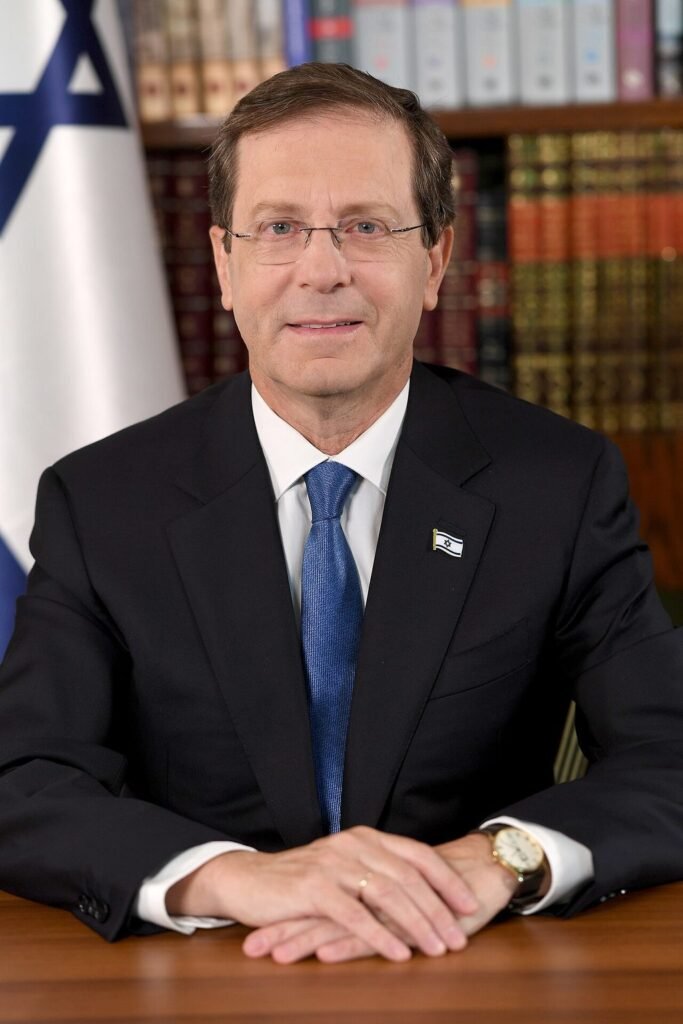
Herzog’s choice does not make Eisenkot prime minister. It gives him the first attempt — and the clock is already running.
The Man With the Mandate
Eisenkot, 66, is a political newcomer who arrived at the top of Israeli politics by the shortest of routes. Born on 19 May 1960 in Tiberias, he served in the IDF for four decades, rising through the Golani Brigade and Northern Command to become the army’s 21st chief of staff, serving from 2015 to 2019. He entered politics in 2022 in the National Unity party of Benny Gantz, resigned from that party and the Knesset in June 2025, and founded his own centrist party, Yashar — Hebrew for “Straight” — on 16 September 2025, barely six weeks before the election.
Yashar won 21 seats on 27 October, second only to Likud’s 27. Eisenkot’s allies in the change bloc are the B’Yachad list of former prime ministers Naftali Bennett and Yair Lapid, with 12 seats, Yisrael Beiteinu under Avigdor Liberman, and the Democrats under Yair Golan. Together they hold the 48 seats that form the core of any Eisenkot government — 13 short of a majority.
Before the election, the five opposition leaders had already agreed to back Eisenkot. Meeting in Herzliya on Tuesday, 3 November, in their first joint session since the vote, they promised in a joint statement to replace Netanyahu’s government “with a national emergency government” as quickly as possible, and said their negotiating teams would immediately begin drafting policy guidelines and coalition agreements. “We don’t have time — we must act with great urgency,” Bennett told reporters.
The Arithmetic That Will Not Add Up Easily
Eisenkot has set four principles for any party that wants to join his government: recognition of Israel as a Jewish and democratic state; acceptance of the values of the Declaration of Independence; military or civilian national service for all; and recognition of Hamas as a terrorist organisation whose military and governing capabilities must be dismantled.
Those conditions are the heart of his problem. There are only two obvious routes to 61 seats, and both run through parties his principles were designed to exclude — or that exclude each other.
- The ultra-Orthodox route: Shas and United Torah Judaism together hold 13 seats — precisely the number Eisenkot needs. But the four principles include universal national service, the issue on which negotiations with the ultra-Orthodox parties have repeatedly stalled, and Eisenkot has in recent days been pressing United Torah Judaism to join without an agreement yet in sight.
- The Arab-parties route: Ra’am, with eight seats, and the Joint List, with 11, would take an Eisenkot government to 67 seats at a stroke. But Eisenkot has repeatedly said he will not form a government with the Arab-led parties, and three of his four bloc partners pledged the same during the campaign. Only Yair Golan, of the Democrats, openly backs sitting with them — and Liberman has ruled out even a minority government that depended on Arab parties abstaining.
Either road requires Eisenkot to break a promise he made to win the election. That is the gamble Herzog has handed him — and the reason the mandate, for all its symbolism, guarantees nothing.
Netanyahu’s Answer: A Unity Government
Netanyahu, Israel’s longest-serving prime minister, remains in office as caretaker until a successor is sworn in, and he has not accepted that the election is over. His response to losing the mandate has been to call, twice, for a national unity government — and Eisenkot has refused him twice.
The first appeal came at the swearing-in of the new Knesset on Tuesday, 10 November. The second came in a video statement on Saturday, 14 November, after the two men had spent two hours together in a security briefing on Thursday, 12 November. Netanyahu said that briefing had only strengthened his conviction that only a unity government could guarantee Israel’s security, citing what he described as Iran’s drive to renew its nuclear programme, and invited Eisenkot to meet “in one room, without preconditions”.
Eisenkot dismissed the appeal within minutes. “Nice try, but these tricks don’t work on me,” he wrote, calling the statement “another spin” and pointing out that negotiating teams from Likud and Yashar were already due to meet on Sunday, 15 November — a meeting Netanyahu knew about. He has said Likud could join only a government he leads, and only if it accepts his four principles and breaks with extremists — a condition aimed squarely at supporters of the far-right minister Itamar Ben-Gvir. He has also said, repeatedly and unequivocally, that he will not sit under Netanyahu, not even in a rotation of the premiership.
Netanyahu, for his part, has sought to cast doubt on the election result, baselessly alleging voter fraud by Arabs, who make up a fifth of the population. Election officials have said they are probing potential misconduct but have seen no evidence of fraud that could have influenced the outcome. Israel’s Channel 12 News reported that law enforcement was investigating whether officials in Netanyahu’s office had deliberately planted information that prompted an inquiry into alleged vote-buying in Arab communities; Netanyahu’s office dismissed the report as “false”.
The First Test: The Speaker’s Chair
The first real vote of the new Knesset came on Tuesday, 17 November — and Eisenkot’s bloc won it. Lawmakers elected Matan Kahana, a member of Eisenkot’s Yashar party, as Speaker of the Knesset, with 66 votes against 52 for the rival candidate. Kahana replaces Amir Ohana of Netanyahu’s Likud.
The speakership matters because it controls what legislation reaches a vote. “The Knesset of Israel is the home of all citizens of the State of Israel, and I intend to be the Speaker for everyone,” Kahana said in his inaugural speech. Members of the Eisenkot-led bloc have also been appointed to chair several key parliamentary committees.
The bloc’s stated priorities for that power include establishing an independent inquiry into the 7 October 2023 Hamas attack, which Netanyahu has opposed; imposing term limits on the prime minister; and repealing laws passed by the previous Netanyahu-led government that critics said curtailed the powers of the judiciary. Likud condemned the vote, saying lawmakers had elected Kahana with “the votes of terror supporters” — the same language Netanyahu used against the Arab-led parties throughout the campaign, which those parties condemned as racist and discriminatory.

What Happens Next
- Eisenkot has 28 days from 8 November to form a government — until about 6 December — and Herzog can extend that by up to 14 days, to about 20 December. (Those dates are this report’s own arithmetic from the 28-day rule, not announced deadlines.)
- If he succeeds, he must still win a vote of confidence from the Knesset before he can be sworn in as prime minister.
- If he fails, Herzog can assign the task to another member of the Knesset — most likely Netanyahu, who would then get his own chance to assemble 61 seats.
- If no one can form a government, a new election will be called within 90 days, and Netanyahu will stay on as caretaker prime minister in the meantime.
The speaker’s vote showed that Eisenkot can command a majority in the chamber on a single question. Forming a government requires him to hold that majority together, day after day, on questions — Arab parties, ultra-Orthodox conscription, a unity deal with Netanyahu — on which his own allies disagree with each other.
Herzog has given the mandate to the man who beat Netanyahu at the ballot box. Whether that man can govern is a question the next 28 days will answer — and it is far from settled.
By Tariq Jamal
Freelance Journalist | The BNN Media – The Best News Network
News Beyond the Borders