By
Down at half-time and facing a Pakistan side playing in its first-ever senior final, India turned the game on a red card and two second-half goals — Sandip Mandi’s 88th-minute header sealing a record-extending 10th South Asian crown and a first-ever hat-trick of titles.
By Hashim Khan
Sports Journalist | The BNN Media – The Best News Network
News Beyond the Borders
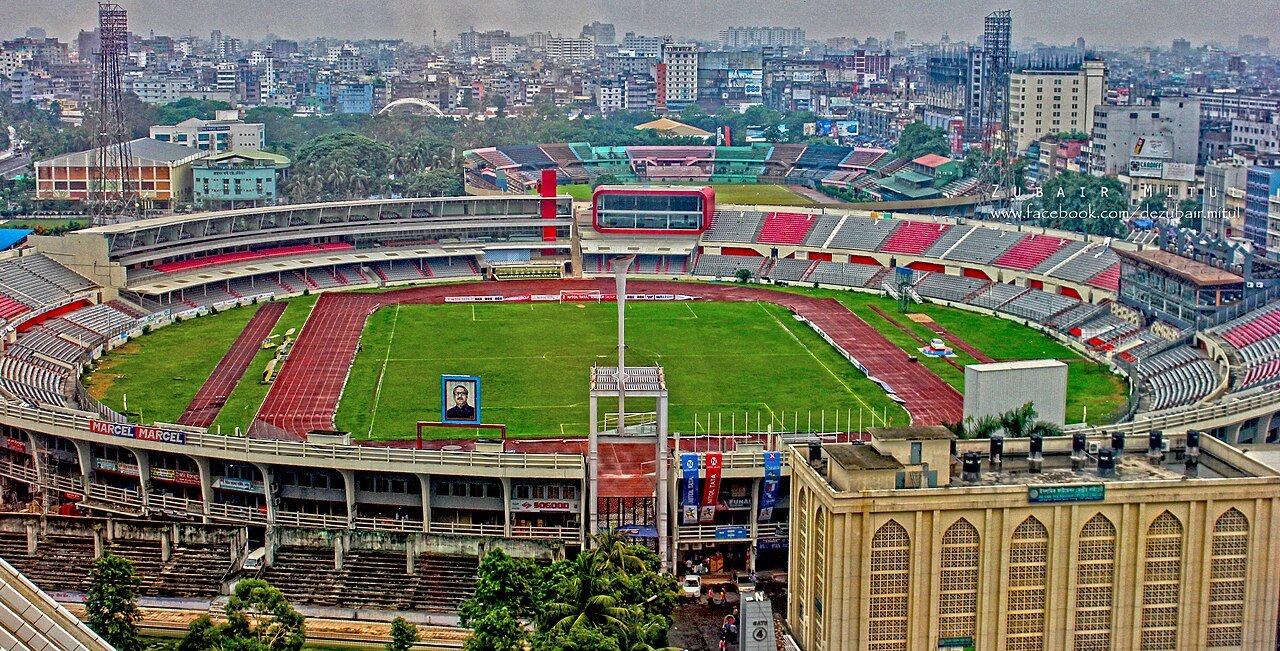
Dhaka, Bangladesh — India came from behind to beat Pakistan 2–1 in the final of the SAFF Championship 2026 on Tuesday, 17 November 2026, at the National Stadium in Dhaka, winning the South Asian title for a record 10th time and becoming the first team ever to lift the trophy three times in a row.
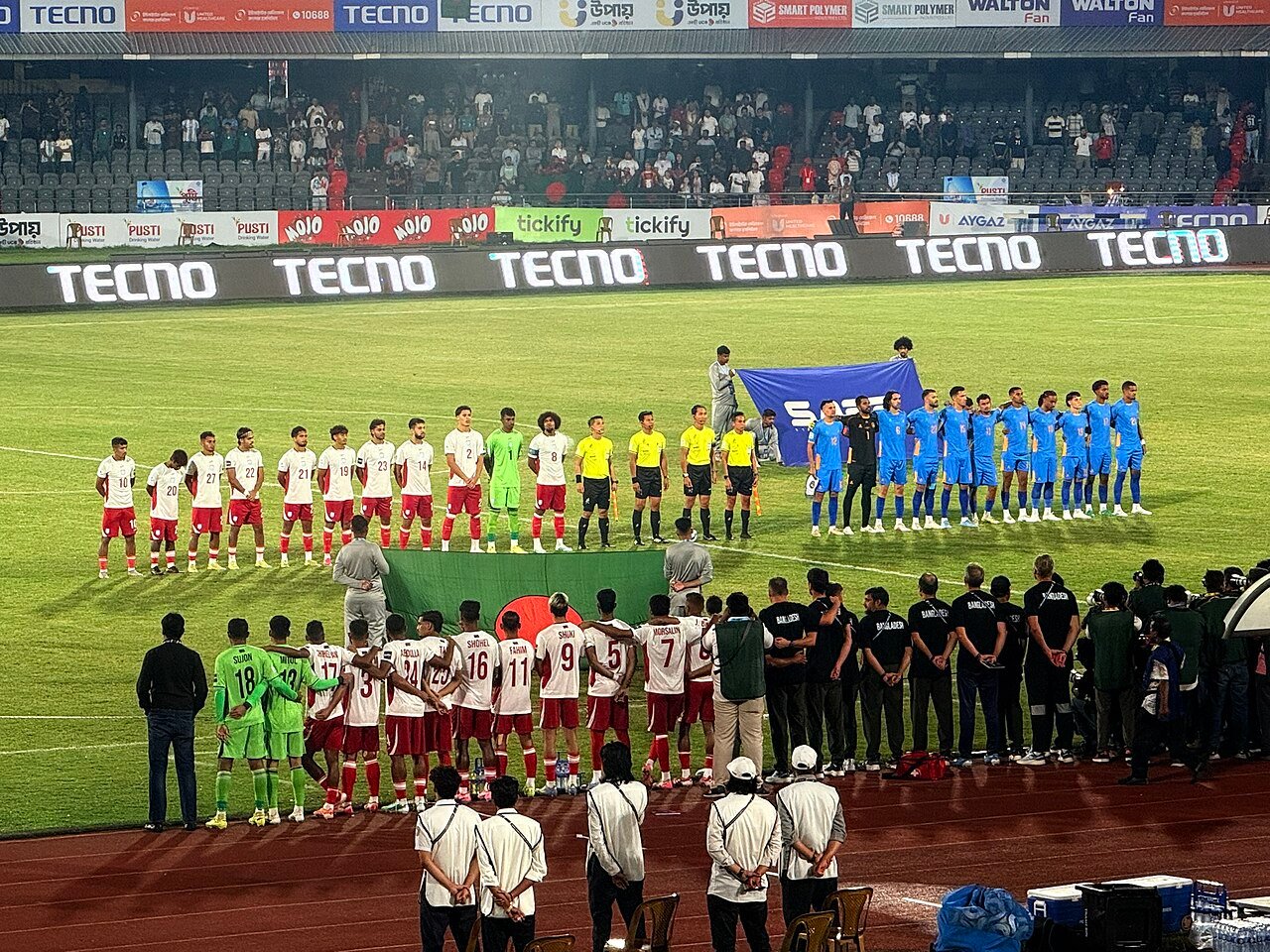
Pakistan, playing in their first senior SAFF final, took a shock lead in first-half stoppage time and held it until the hour mark. Then a red card changed the match, India scored twice in 28 minutes, and the Blue Tigers — fielding a largely second-string squad in Dhaka — extended a dominance of South Asian football that now stretches back more than three decades.
Pakistan Strike First
The final began as few had expected. Pakistan, who had already pushed India hard in a 3–2 group-stage defeat on 5 November, started the brighter side and had nine shots in the first 30 minutes. Their reward came in first-half stoppage time, when Alamgir Ghazi curled a shot into the far corner after a cross from the left by Junaid Shah deflected off an Indian player.
It was a goal worthy of a final, and it sent Pakistan into the break dreaming of a maiden title. India, the record champions, were behind in a SAFF final — and for the first 15 minutes of the second half, there was little sign of a way back.
Pakistan led at half-time, and for a while the biggest upset in SAFF history looked possible.
The Red Card That Turned the Final
The match turned in the 59th minute. Pakistan’s Junaid Shah — the same player who had set up the opening goal — was sent off after a video assistant referee (VAR) review for a rash tackle on India midfielder Brison Fernandes. It was the second time VAR had intervened decisively in the tournament, after its first-ever use in SAFF Championship history in the two semi-finals and the final.
India wasted no time. A minute later, Suhail Ahmad Bhat equalised from a free-kick, side-footing the ball into the net to make it 1–1. The goal was Bhat’s fourth of the tournament — making him the competition’s top scorer with four goals in four matches — and it shifted the entire balance of the final. Against ten men, India dominated possession and pressed for a winner.
Mandi’s Late Header Seals History
The winner, when it came, was worth the wait. In the 88th minute, defender Sandip Mandi rose to head in a corner from Abdul Rabeeh and complete the comeback. Pakistan, who had defended with ten men for more than half an hour, had no answer in the closing minutes, and India held on to secure a memorable 2–1 victory.
The triumph gave India their 10th SAFF Championship title — adding 2026 to wins in 1993, 1997, 1999, 2005, 2009, 2011, 2015, 2021 and 2023 — and made them the first side to win three consecutive editions of the competition. No other team in the tournament’s history has managed even two in a row as champions on three occasions.
Two goals in 28 minutes turned a final Pakistan had controlled into a coronation for India — and a record no South Asian rival has come close to matching.
A Guard of Honour, Not a Handshake Row
If the football was dramatic, what happened after the final whistle was just as striking. At the prize-giving ceremony, champions India first formed a guard of honour for runners-up Pakistan — and the Pakistan players then returned the gesture, lining up to applaud the Indian team.
The scene stood in sharp contrast to cricket, where meetings between the two countries have become a flashpoint for political tension. At the Asia Cup in September 2025, India’s players refused to shake hands with Pakistan after their group match in Dubai, and Pakistan lodged a protest with the Asian Cricket Council; the Indian captain again avoided a handshake at the toss in the final. That row followed a four-day military conflict between the nuclear-armed neighbours in May 2025, triggered by a deadly attack on tourists in Indian-administered Kashmir.
Ahead of the SAFF Championship, both football coaches had been asked whether that hostility would spill onto the pitch. Both said their teams would compete hard but had no objection to the usual courtesies after the final whistle. “Of course, we will do it. If needed, we will even hug them,” India coach Naushad Moosa had said. On Tuesday, the two sides went further than a handshake.
How the Champions Got There
India’s road to the title was never straightforward:
- Group stage: India beat Pakistan 3–2 in their opener on 5 November, surviving a late scare after leading by three goals at half-time and conceding twice in stoppage time.
- Second-string squad: India came to Dhaka without many of their established stars, yet still reached their 14th SAFF final in 15 appearances.
- Pakistan’s run: Coached by former Peru international Nolberto Solano, Pakistan reached the final by beating hosts Bangladesh 1–0 in the semi-finals, with Abdul Samad scoring late.
- VAR debut: Video review was used for the first time in SAFF Championship history in the two semi-finals and the final — and it decided this final.
- Top scorer: Suhail Ahmad Bhat finished the tournament with four goals in four matches.
For Pakistan, the defeat was painful but the campaign was still historic: a first senior final, a first-half lead against the region’s dominant team, and a performance that earned them a guard of honour from the champions themselves.
What This Title Means
India’s 10th title extends a record that already belonged to them, but this one will be remembered differently. It was won by a young, second-string squad; it was won from behind; and it was won against a Pakistan team that had never before reached a final and that played with a courage that surprised even their own supporters. The three-in-a-row — 2021, 2023 and now 2026 — is a first in the competition’s history, and it underlines how far ahead of their neighbours India remain in South Asian football.
For Pakistan, the challenge now is to turn a first final into a first title. They showed in Dhaka that they can live with India for long stretches of a match. What they could not do — not yet — was hold on for 90 minutes.
India are champions of South Asia for the 10th time, and for the third time in a row. Pakistan left Dhaka with nothing but applause — from their rivals, and from a tournament they very nearly won.
By Hashim Khan
Sports Journalist | The BNN Media – The Best News Network
News Beyond the Borders
Sources: The Business Standard (UNB), 18 November 2026; The Asia Times, 18 November 2026; myKhel, 18 November 2026; Pure Play India match report, 18 November 2026; Khel Now, 18 November 2026. For the wider India–Pakistan rivalry, see BNN’s report on the Under-19 Asia Cup final: https://thebestnewsnetwork.com/india-vs-pakistan-in-the-under-19-asia-cup-final-today-as-unbeaten-champions-meet-their-old-rivals-in-al-amerat/