 By
Nearly 29 million Americans are expected to fly over the Thanksgiving holiday week, even as airlines add seats, fares climb sharply and a run of Pacific storms threatens to make the busiest travel days of the year a test of patience.
By The BNN Media
The Best News Network
News Beyond the Borders
Washington, United States — Airlines for America, the industry trade group, expects nearly 29 million passengers to fly between Friday, 20 November, and Monday, 30 November, at a rate of about 2.7 million a day, with 38,000 more seats a day than in 2025. The rush comes just nine days after a nationwide ground stop halted departures across the country, and forecasters warn that storms on both coasts could disrupt the peak travel days.
A holiday of near-record crowds — at record prices
The wider picture is one of huge numbers and higher costs. AAA projects 81.5 million Americans will travel at least 50 miles from home between Tuesday, 24 November, and Monday, 30 November — only 0.1 per cent fewer than last year’s 81.6 million, ending a three-year run of record Thanksgivings.
“After three years of record highs, the number of travelers is slightly lower partly because of higher travel costs this year,” said Stacey Barber, vice president of AAA Travel. “But travelers won’t notice much of a difference on the roads and at the airports, since projected volumes remain near record levels.”
The cost is the story of this holiday. Domestic round-trip flights are averaging about $800, up 17 per cent on last year, according to AAA. Airlines point to fuel: the trade group says the jet fuel spot price averaged a record $4.64 a gallon in October, and US government data put the Gulf Coast benchmark at $4.483 a gallon — more than double a year earlier.
The takeaway: the crowds will feel like a record year, even if the official count falls just short — and families will pay considerably more to be part of them.
How America is travelling
The split by mode of travel shows a holiday shaped by price:
- By car: 72.9 million people will drive, about 200,000 fewer than in 2025, with drivers still accounting for nearly 90 per cent of all Thanksgiving travel. AAA reported a national average of $3.81 a gallon for regular petrol as of 16 November.
- By air: 5.96 million travellers will take domestic flights, down 0.2 per cent on last year — even though airlines are adding seats.
- By bus, train and cruise: 2.6 million, up 4.1 per cent — the only mode of travel that is growing this year.
The 81.5 million total still exceeds pre-pandemic Thanksgiving travel by 3.7 million people, according to AAA.
The airports brace for a record Sunday
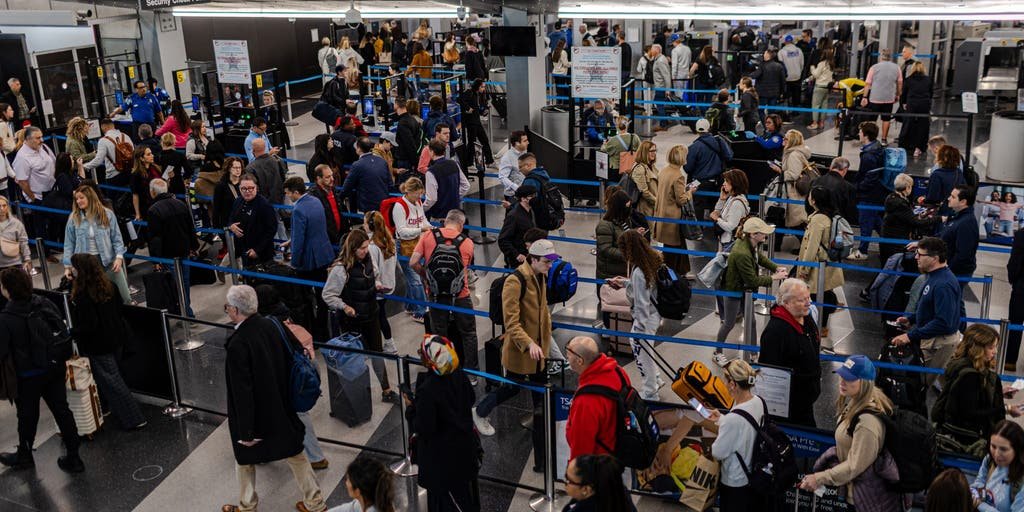
The sharpest test may come on the return leg. The Transportation Security Administration said in a release on 18 November that early indicators show “the potential to screen more than 3 million passengers nationwide on Sunday, Nov. 29.” The all-time record for a single day is 3,134,613 people screened, set on Sunday, 30 November 2025. No day in 2026 has yet reached 3 million; the year’s peak so far is 2,988,204, on 18 June.
Airlines for America expects the peak on Sunday, 29 November, and Monday, 30 November. American Airlines has scheduled 7,021 flights for 29 November, its busiest day since the pandemic, and expects more than 8 million customers on nearly 85,000 flights between 19 November and 1 December. United expects about 600,000 passengers on 29 November alone.
One airport faces a double surge. Las Vegas is hosting its Formula One race weekend just before the Thanksgiving period, and the TSA warns of back-to-back Sunday rushes at Harry Reid International Airport: first on Sunday, 22 November, as race visitors head home, then again over Thanksgiving week. The agency expects to screen more than 91,000 passengers there between 4 a.m. and noon on a peak Sunday.
The takeaway: Sunday, 29 November, could be the busiest screening day in American history — arrive early, or risk spending the holiday in a queue.
Still recovering from the ground stop
The system is also recovering from a jolt. On Friday, 13 November, the FAA ordered a nationwide ground stop on 13 November after a communications failure struck the air traffic control centres that guide aircraft between airports, halting US departures for more than four hours. The FAA counts about 12,462 cancellations that day.
Transportation Secretary Sean Duffy and FAA Administrator Bryan Bedford have said they expect air traffic to return to normal well before the holiday rush, the Associated Press reported. AAA spokesperson Aixa Diaz said the ground stop should not have a major impact on Thanksgiving travel unless it happens again.
That warning matters: a single disruption can ripple across the whole system, and the memory of stranded passengers is still fresh. Travellers are being urged to check their flight status before leaving home.
Storms gather on both coasts
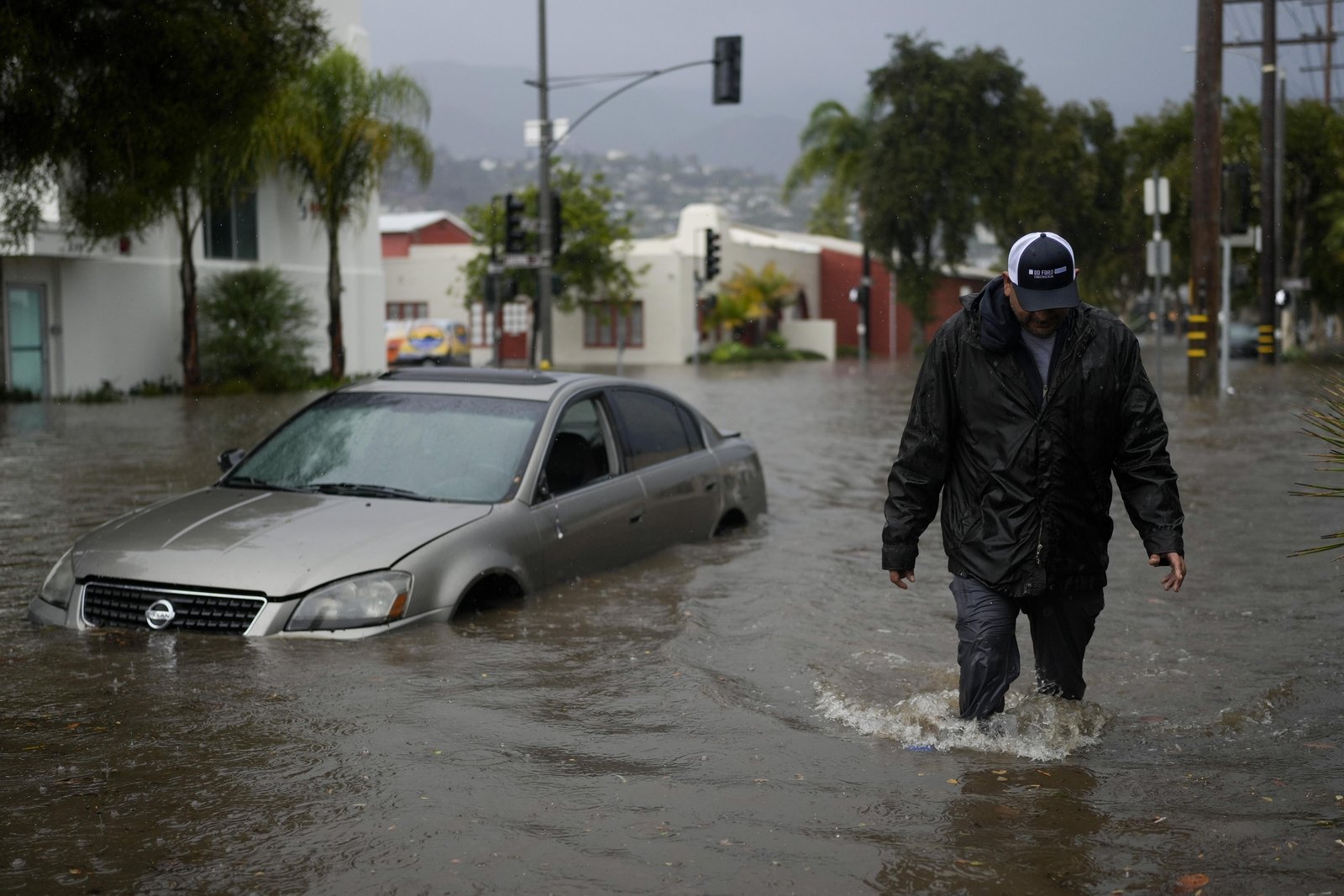
The weather is the other threat to a smooth holiday. A series of Pacific storms is bringing heavy rain, strong winds and deep mountain snow to California and Oregon, and forecasters expect the pattern to continue into Thanksgiving week.
AccuWeather, in a forecast first published on 18 November and updated on 19 November, expects at least three more storms to move onshore by the middle of next week. The first storm already made Sierra Nevada travel difficult on 19 November, with two to four feet of snow forecast at and above about 5,500 feet in the central Sierra, and a local maximum of about six feet. Lower down, one to four inches of rain was expected, with up to eight inches on some slopes, and gusts of 40 to 60 mph, some reaching 60 to 80 mph.
The harder test is still coming. AccuWeather expects a more potent storm on Tuesday and Wednesday, 24 and 25 November — the two busiest days for holiday road travel — with renewed flash-flood risk from Northern and Central California into southern Oregon. King tides combined with the storm could push coastal water levels to record highs in California, with dangerous surf and overwash in beach communities.
The warning is grounded in what has already happened. Downtown San Francisco recorded 2.31 inches of rain on Wednesday, 18 November, breaking the daily record of 2.24 inches set on 18 November 1918 — a mark that had stood for 108 years. About 30 million people were under a flash flood threat between Wednesday and Thursday, a 46-mile stretch of Highway 1 near Big Sur was closed, and flooding forced the evacuation of a school in Antioch.
An East Coast storm is building too
The National Weather Service, in its extended forecast discussion issued on Saturday, 21 November, warned that a dynamic system may bring heavy rainfall and strong winds to the East Coast, with possible wintry weather over parts of the Appalachians and the interior Northeast in the middle to late part of next week.
A mid-latitude cyclone is expected to form and deepen as it tracks along the East Coast through Thanksgiving and into the weekend. Rain showers, some heavy, will spread across the East Coast, and strong winds along the coast could bring beach erosion, rip currents and coastal flooding.
The takeaway: the two busiest travel days of the year fall exactly when the strongest storms of the week are forecast to hit — on both coasts at once.
Where everyone is going — and when to leave
Florida dominates AAA’s domestic Thanksgiving rankings, claiming four of the top 10 spots. Orlando leads the country, followed by Fort Lauderdale and Miami in second and third, with Tampa sixth. Anaheim/Los Angeles and New York round out the top five. Detroit and Dallas also make the top 10, as both cities host Thanksgiving Day football games.
For the 72.9 million Americans driving, timing is everything. Transport data provider INRIX, working with AAA, expects the busiest days on the road to be Tuesday and Wednesday as people head out, and Sunday and Monday as they return. Afternoons and early evenings will see the heaviest congestion; mornings are the best bet. Major metro areas could see more than double their normal congestion — the drive from New York to the Hamptons on the Long Island Expressway could take 138 per cent longer than usual on 24 November.
For flyers, the major airlines recommend arriving at least two hours early for domestic flights and at least three hours early for international flights. Solid Thanksgiving food — pies, cakes, turkey, stuffing — is generally permitted in carry-on bags, but anything that can spill, spread or pour in a container larger than 3.4 ounces, including cranberry sauce, gravy and wine, must go in a checked bag. REAL ID is now required to fly for travellers aged 18 and older; adults without it face a $45 fee to have their identity verified through the TSA’s ConfirmID programme.
Thanksgiving 2026 will be a holiday of price over volume. The crowds will be near-record, the costs will be record, and the weather will decide how many journeys run to plan. Travel early in the day, pack the gravy in your checked bag, and leave yourself more time than you think you need.
By The BNN Media
The Best News Network
News Beyond the Borders
Sources: AAA 2026 Thanksgiving Travel Forecast (published 16 November 2026); Airlines for America Thanksgiving travel forecast; Travel Market News, “Thanksgiving 2026 Travel Forecast: AAA, Airlines and TSA” (20 November 2026); QUE.com, “Thanksgiving 2026 Travel: 81.5 Million on the Move as Fares Jump 17% and the Record Streak Ends”; Travelers Today, “Back-to-Back Pacific Storms Threaten Sierra Passes, California Roads and Coastal Towns Into Thanksgiving Week”; National Weather Service, Preliminary Extended Forecast Discussion (21 November 2026); Associated Press, via Travelers Today; The Best News Network, “US Flights Grounded Nationwide as Air Traffic Control Communications Fail, Stranding Thousands” (14 November 2026).