By
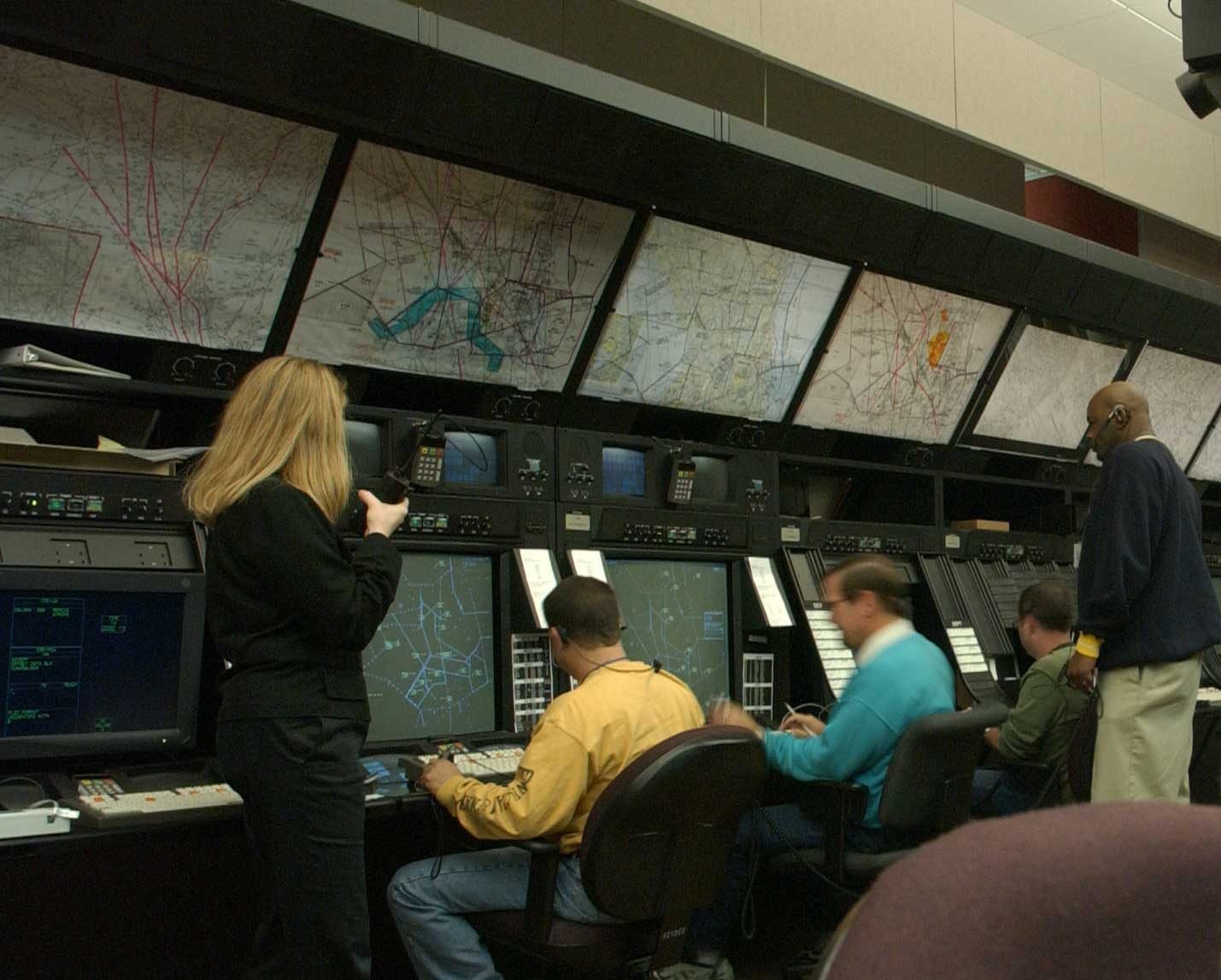
For more than four hours on Friday, almost nothing took off in the United States. The Federal Aviation Administration ordered every airport in the country to hold its departing flights after a communications failure struck the centres that guide aircraft between airports — only the second nationwide halt of all departures since the September 11, 2001 attacks.
By Faseeh Ur Rehman
Senior Journalist | The BNN Media – The Best News Network
News Beyond the Borders
WASHINGTON, United States — The Federal Aviation Administration (FAA) issued a nationwide ground stop for all United States airports on Friday, 13 November 2026, after a communications failure hit air traffic control centres across the country. The order, issued at about 3:54 p.m. Eastern Time, meant planes already in the air could land, but those on the ground could not take off — and by Friday evening, more than 10,000 flights had been delayed and more than 2,500 cancelled, according to flight-tracking service FlightAware.

How Friday afternoon unfolded
The first sign of trouble came shortly before the national order, when the FAA halted traffic in Chicago because of air traffic control communications issues. Minutes later, the FAA’s Air Traffic Control System Command Center issued Advisory 111, titled “National Ground Stop”, ordering all departing traffic to remain on the ground until further notice.
“The FAA issued a nationwide ground stop for all U.S. airports following a communication issue impacting all Air Route Traffic Control Centers. FAA technicians are investigating the issue. We will provide immediate updates as we have them,” Transportation Secretary Sean Duffy said in a post on X.
The FAA said it would manage international flights on a case-by-case basis, and that flights already airborne would be allowed to land. But with the centres that handle high-altitude traffic between airports unable to communicate properly, departures across the country simply stopped — and airport terminals filled with stranded passengers.
Within hours, the disruption had spread beyond the United States: flights between Canada and the US were held or delayed at airports across Canada, even though Canadian air traffic systems were never affected.
The scale of the disruption
The numbers climbed through the evening as airlines cancelled flight after flight and departure boards turned red. FlightAware counted nearly 7,000 flights delayed or cancelled in the first hours of the stop. By 6 p.m. ET, the service reported more than 10,000 flights delayed and 2,500 cancelled in the United States, figures reported by the Associated Press. By 7 p.m., the count had reached more than 10,000 delayed and 4,000 cancelled, and by the end of Friday, FlightAware showed nearly 5,000 flights cancelled — with nearly 800 cancellations already listed for Saturday.
The human scale was just as stark. Aviation analytics firm Cirium estimated that more than 1.5 million passengers were scheduled to depart US airports on roughly 11,000 flights after 4 p.m. ET, shortly after the ground stop began. At Chicago’s O’Hare airport, at least 114 aircraft sat waiting on the ground, according to flight-tracking app Flighty, and college football teams were among those whose travel to Saturday’s games was disrupted.
What caused it — and what is still unknown
Duffy later attributed the outage to a problem with the FAA’s legacy network. Speaking at a White House briefing, he said that at 3:36 p.m. ET “we experienced instability for our radar and our communications in our centers and our TRACONs across the country.” The system’s switches and routers “got overloaded with data” and began to give inconsistent data, he said, and the system was shut down because of it.
What caused the equipment overload is not yet known. Duffy said it was not immediately clear what triggered it, and Homeland Security Secretary Markwayne Mullin said there was no sign so far of a malicious act or attack. The FAA described the event as a “temporary telecommunications outage” affecting the air traffic control centres that direct planes en route between airports.
Unconfirmed reports in some outlets have suggested investigators are examining whether a software update played a role. No official source has confirmed that, and it should be treated as speculation until the FAA or another authority says otherwise.
The official position, for now, is narrow: overloaded network equipment brought the system down, and the trigger for the overload is still under investigation.
The long road back to normal
The FAA lifted the ground stop at 8:15 p.m. ET on Friday, Duffy said, ending a stop that lasted more than four hours. But the end of the order did not mean the end of the disruption. Duffy warned that it would take time for air traffic operations to return to full capacity, and the FAA’s own status board continued to show delay programmes at several airports after the stop was lifted.
Airlines faced a familiar problem: aircraft and crews were in the wrong places, and the backlog of delayed flights would take days to clear. Passengers were urged to check with their airlines before travelling, and knock-on delays and cancellations continued into Saturday, 14 November.
A system under strain for years
Friday’s halt was the latest — and most dramatic — sign of strain on a US air traffic control system beset by equipment failures, communications problems and shortages of controllers, while the FAA tries to replace ageing infrastructure.
It was the first nationwide ground stop since January 2023, when a failure of the FAA system that distributes critical safety notices to pilots halted departures for less than two hours and disrupted more than 10,000 flights. Friday’s stop was only the second nationwide halt of all departures since the September 11, 2001 attacks.
The deeper problem is old. The Government Accountability Office reported in 2024 that the FAA had classified 51 of its 138 air traffic control systems as unsustainable and another 54 as potentially unsustainable. FAA Administrator Bryan Bedford told Reuters in September that the agency’s more than 300 air traffic facilities operated as technological silos, relying in some cases on decades-old computers and telecommunications systems that cannot communicate seamlessly with one another.
Congress approved $12.5 billion in July 2025 to modernise the country’s ageing air traffic control infrastructure, including telecommunications and radar systems. On Friday itself, the FAA and the White House asked lawmakers for another $30.1 billion for the overhaul.

What travellers should know now
- Departures resumed on Friday evening, but delays and cancellations are continuing into Saturday as airlines work through the backlog.
- Passengers should check their flight status with their airline before travelling to the airport.
- The FAA has not given a final account of what overloaded its network equipment; its investigation is continuing.
Friday’s shutdown was not caused by weather, and not by a single airport’s failure — it was a failure of the network that ties the whole system together, and it exposed, in a single afternoon, how fragile that network has become.
By Faseeh Ur Rehman
Senior Journalist | The BNN Media – The Best News Network
News Beyond the Borders