 By
Twenty-seven heads of state and government gathered in Brussels on Thursday for a special summit with just two items on the agenda — the EU’s next seven-year budget and how to keep Ukraine funded through 2027 — and the two questions have become impossible to settle separately.
By The BNN Media
The Best News Network
News Beyond the Borders
Brussels, Belgium — European Union leaders met in Brussels on Thursday for a special two-day summit to settle the shape of the bloc’s next seven-year budget and to agree how to finance Ukraine through 2027, with Germany threatening to veto the budget unless all 27 member states share the cost of supporting Kyiv. The meeting, a special European Council called for 26–27 November, is widely expected to be one of the most contentious summits in years — and no breakthrough is expected before it ends.

Two Questions, One Summit
European Council President António Costa set aside the 26–27 November meeting for exactly two items: the EU’s next multiannual financial framework — the seven-year spending plan for 2028–2034 — and Ukraine’s financing needs for 2027. In a letter to Germany’s Chancellor Friedrich Merz seen earlier this month, Costa confirmed the agenda would cover “the EU’s next multiannual financial framework and Ukraine’s financial needs for 2027”, with the European Commission to submit its proposal on Ukraine’s financing before the meeting.
The two items are technically separate. In practice, they have become politically intertwined: several governments are treating agreement on one as the price of agreement on the other, and the budget requires the unanimous approval of all 27 member states.
Arriving at the summit on Thursday, Costa called on leaders to approach the discussions with an “open mind, a constructive approach and a sense of compromise”, and to approve the budget in a “timely” way — “that means by the end of this year”.
The summit’s real test is not whether leaders agree on Thursday, but whether they leave Brussels with a budget deal in December looking remotely achievable.
The Budget on the Table
The European Commission proposed a near-€2 trillion budget for 2028–2034 in July 2025. Most capitals opposed the plan, and leaders have disagreed over its size for almost all of 2026. On Saturday 21 November, Costa circulated his own revised negotiating box, taking the talks over from the rotating presidency after its October text won no significant backing.
Costa’s framework trims the Commission’s original proposal by roughly €204 billion — about 10 per cent — to around €1.78 trillion in current prices, or €1.58 trillion in 2025 prices, the measure used in the Council’s draft conclusions. The draft puts total commitments at €1,582,516 million and payments at €1,553,665 million. Costa argues the cut keeps average national contributions within “reasonable limits”, rising only modestly from 0.80 to 0.82 per cent of gross national income, while still increasing spending on competitiveness, defence and security, migration and external action compared with the current budget.
Some lines were deliberately protected. Research funding through the Horizon Europe successor programme is held at €158 billion — below the Commission’s €175 billion blueprint and far short of the Parliament’s €200 billion, but untouched by Costa’s cuts. By contrast, the defence commissioner, Andrius Kubilius, has warned that a proposed €39 billion cut to defence and space funding — a reduction of 30 per cent — would jeopardise crucial pan-European programmes.
- €1.78 trillion — Costa’s proposed budget in current prices (€1.58 trillion in 2025 prices), down about €204 billion from the Commission’s original plan.
- €158 billion — research funding through the Horizon Europe successor, protected from the cuts.
- €140 billion — included in the total to repay pandemic-era borrowing.
- Unanimity required — all 27 member states must approve the budget, and the European Parliament must then consent.
Costa’s wager is that a realistic, slightly smaller budget, presented as the only landing zone available, can do what two presidencies’ texts could not.
The Frugal Wall and Parliament’s Revolt
The first collision waiting in Brussels is with the frugal net contributors. Austria’s Chancellor Christian Stocker has already issued the summit’s first explicit veto threat, demanding that spending come down further, and net contributors coordinated against the October text before it was even presented.
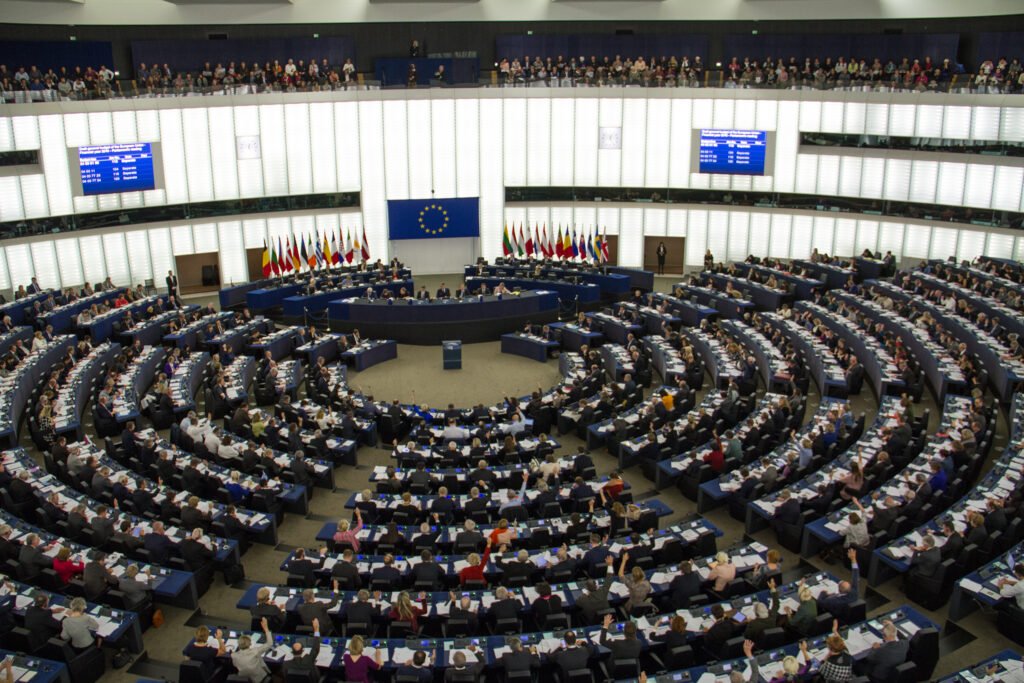
The second collision is with the European Parliament, whose consent is legally required. The Parliament’s co-rapporteur on the budget, Siegfried Mureșan, has called Costa’s approach “unacceptable” and said it “cannot form the basis for our consent”. Parliament voted on its own position on Wednesday 25 November, the eve of the summit, and its €1.789 trillion demand sits well above Costa’s ceiling. The Parliament had already denounced the deal on the table as a strategy of “cuts, more cuts and a side of cuts”.
The political calendar is unforgiving. Leaders want a deal by the end of the year because elections next year in France, Italy, Poland, Greece, Estonia, Finland and Slovakia could complicate negotiations — and Spain votes in a snap election on 29 November, two days after the summit closes. Greece’s Prime Minister Kyriakos Mitsotakis told reporters on entering the summit that it was “politically imperative to reach a definitive solution … in December, because if this does not happen, political developments in many EU countries will make a political agreement practically impossible in the first half of 2027”.
Costa arrived in Brussels without a strong ally to help him broker a deal — and with both the frugals and the Parliament arrayed against his text.
Ukraine’s €70 Billion Gap
The third collision is Ukraine. Russia’s relentless attacks have left Kyiv facing a budget shortfall of about €70 billion next year. The European Commission proposed last week that the EU borrow a further €45 billion and lend it to Ukraine — €25 billion for military spending and €20 billion for civilian needs such as schools and hospitals — to be repaid only when Russia pays war reparations to Kyiv.
In 2027, non-EU countries such as Britain, Norway, Japan, Switzerland and Canada are expected to provide another €25 billion for Ukraine. The combined €70 billion would cover the funding gap that Ukraine faces next year.
But the loan is borrowed against the EU’s current budget, which expires at the end of next year — which is why the 2027 financing question has to be settled at this summit, and why it cannot be separated from the budget fight.
The longer-term picture is no easier. The 2028–2034 budget includes up to €100 billion for Ukraine, mainly for defence and budget support — an amount diplomats say falls well short of the country’s needs. Interest on the existing €90 billion EU loan for Ukraine and the forthcoming €45 billion loan is estimated to rise to €55–65 billion, further depleting Ukraine’s reserve in the budget.
Ukraine’s war is being fought on the battlefield — and its financing is being fought over in Brussels, where the money runs out first.
Merz’s Link: No Loan, No Budget
Germany’s Chancellor Friedrich Merz has made resolution of the budget dispute conditional on all 27 EU countries agreeing to finance Ukraine — and has threatened to veto the entire seven-year budget unless they do.
“When the European Union provides funding, it does so as the European Union — and that union consists of 27 member states, not 23 or 24,” Merz said on arriving in Brussels. “For me, there is a link between our support for Ukraine and the European budget. … What do we want to achieve together as Europeans?”
His demand has been roundly rejected by Hungary, the Czech Republic, Slovakia and Bulgaria, who want no part in the new loan. The Commission has suggested an escape route that would allow reluctant countries to contribute to the €20 billion earmarked for Ukraine’s civilian needs without participating in the €25 billion military component — but there was no sign of compromise as leaders arrived.
“We must ensure that Ukraine receives sufficient support in the coming years,” Merz said on entering the summit. “I don’t think anyone in Europe can have any interest in seeing new waves of refugees from Ukraine if this war does not come to an end.”
Four governments want out of the loan; Germany says the budget depends on them staying in. That is the deadlock at the heart of the summit.

Pressure on Russia, and the Clock
The financing fight sits alongside the bloc’s wider pressure on Moscow. Just two days before the summit, the European Commission proposedthe bloc’s 22nd sanctions package against Russia, targeting banks, crypto platforms and former combatants — a reminder that the sanctions track and the funding track are two halves of the same policy, even as leaders argue over who pays for the second half.
Leaders will also discuss the choice of a successor to European Central Bank chief Christine Lagarde, with Pablo Hernández de Cos expected to be signed off as the next ECB president at the summit.
The timetable now runs to December. Leaders hope the Brussels meeting paves the way for Costa to bring a new budget proposal in the coming weeks, with members aiming to agree it at the regular European Council on 17–18 December. One diplomat expected leaders first to be “yelling, complaining, showing they are willing to fight” — adding: “They need that first. They need a breakdown, blood on the walls, before they can get to an agreement.”
No breakthrough is expected by the end of the summit, which could spill into Friday. But by Friday night, Europe will know whether Costa’s compromise has any life left in it.
What Happens Next
If the summit fails to narrow the gaps, the next chance is the regular European Council on 17–18 December — the last realistic window before the election year makes agreement harder. If it succeeds, Costa will return with a revised proposal and the trilogue negotiations with Parliament will begin in earnest.
Either way, the two questions that brought leaders to Brussels will not go away. Ukraine’s funding gap for 2027 has a deadline measured in months, and the seven-year budget has a deadline measured in weeks. The summit was called to answer both. Whether it does will be decided not in the meeting room on Thursday, but in the weeks of bargaining that follow it.
Europe’s leaders came to Brussels to argue about money. What they are really arguing about is what the Union is for — and who pays for it.
By The BNN Media
The Best News Network
News Beyond the Borders