 By
In a significant political maneuver that threatens to reshape Pakistan’s provincial landscape, the Muttahida Qaumi Movement-Pakistan (MQM-P) has officially reactivated its demand for the creation of a new administrative province in urban Sindh. Speaking from Karachi amid accelerating federal discussions regarding a proposed 28th Constitutional Amendment, party leadership argued that structural fiscal centralisation in Karachi has starved the metropolis of municipal authority and essential services.
Strategic Background & Legislative Timelines
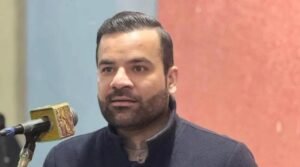
The long-standing geopolitical fracture between urban and rural Sindh has once again taken center stage in Pakistan’s federal legislative apparatus. During a high-profile media address in Karachi on November 20, 2025, MQM-P Convener Dr. Khalid Maqbool Siddiqui framed the party’s revived demand for a new province not merely as a political aspiration, but as a constitutional imperative for administrative survival.
This renewed push coincides directly with high-level negotiations taking place in Islamabad regarding the draft parameters of the 28th Constitutional Amendment. Following the controversial package of administrative and judicial changes introduced under previous legislative initiatives, federal lawmakers are currently debating further adjustments to local governance structures, fiscal decentralization, and state institutions. MQM-P leadership views this fluid legislative window as a crucial nexus to address what it characterizes as decades of administrative neglect and revenue extraction from Sindh’s major urban centers, primarily Karachi and Hyderabad.
Historically, demands for an urban administrative unit—often termed an urban province or South Sindh—have triggered intense socio-political friction across the region. Sindh’s political history has been shaped by the post-1970 quota system and the fiscal distribution framework under the National Finance Commission (NFC) Award. Under the 18th Constitutional Amendment passed in 2010, significant powers were devolved from the federal government to provincial capitals. However, urban advocates argue that provincial governments failed to further devolve those financial resources and administrative decisions down to municipal local bodies.
Verified Facts & Key Press Conference Declarations
Addressing party supporters and reporters in Karachi, Dr. Siddiqui stressed that the existing administrative architecture in Sindh has proven fundamentally incapable of delivering basic civic infrastructure, clean drinking water, public transportation, and adequate public safety to urban residents. He highlighted that Karachi alone generates over 60 percent of the national tax revenue and more than 80 percent of Sindh’s provincial revenue, yet receives a disproportionately low allocation for municipal development and social services.
Key demands articulated during the briefing include:
- The immediate constitution of an autonomous administrative unit encompassing urban Sindh to guarantee direct federal or local fiscal transfers.
- The formal constitutional binding of local government empowerment under Article 140-A, establishing financial and administrative devolution to elected municipal authorities.
- A comprehensive revision of local electoral boundaries and census audit mechanisms within Karachi, Hyderabad, and Sukkur.
- Direct inclusion of municipal devolution clauses into the draft framework of the upcoming 28th Constitutional Amendment package.
The administrative status quo in Sindh is no longer sustainable. Real democracy requires that resources generated by urban centers be reinvested directly into their governance. Decentralization cannot stop at provincial capitals; it must reach the streets and neighborhoods of our cities.
Political Alignment & Coalition Tensions
The timing of MQM-P’s demand introduces substantial pressure on the ruling federal coalition in Islamabad. MQM-P serves as a critical coalition partner for the federal government, providing essential parliamentary votes needed to pass constitutional legislation. However, any proposed division of Sindh faces fierce and non-negotiable opposition from the Pakistan Peoples Party (PPP), which governs the province of Sindh and holds substantial power in both houses of Parliament.
The PPP leadership has consistently rejected any proposals that imply the territorial or administrative division of Sindh, deeming the historic boundaries of the province immutable. Political analysts note that the federal government led by the Pakistan Muslim League-Nawaz (PML-N) must now perform a delicate balancing act. Championing MQM-P’s demands risks alienating the PPP and destabilizing the federal coalition, while completely ignoring MQM-P could lead to street mobilization and procedural walkouts in Parliament during crucial amendment voting sessions.
Legal scholars also point out severe constitutional hurdles. Under Article 239 of the Constitution of Pakistan, altering the boundaries of a province requires not only a two-thirds majority in both the National Assembly and the Senate, but also a two-thirds majority vote inside the relevant Provincial Assembly. Given PPP’s firm majority in the Sindh Assembly, the legal passage of a new province remains virtually impossible through standard legislative votes without a broader political compromise.
Key Takeaways & Strategic Intelligence
- Tactical Timing: MQM-P is using the parliamentary momentum surrounding the 28th Amendment to maximize political leverage for urban Sindh.
- Fiscal Disparity Focus: The push centers on municipal revenue retention, highlighting Karachi’s major tax contributions versus local development allocations.
- Constitutional Obstacles: Article 239 mandates a two-thirds vote in the Sindh Provincial Assembly, giving the opposing PPP effective veto power over territorial division.
- Coalition Fragility: Federal alliance dynamics between PML-N, PPP, and MQM-P face elevated political strain as constitutional drafts are finalized.
Economic Governance & Industry Consequences
Karachi serves as Pakistan’s commercial engine, housing the country’s main sea ports, financial institutions, national stock exchange, and industrial manufacturing zones. Decades of deteriorating civic infrastructure—ranging from power grid vulnerabilities to severe urban flooding and industrial logistics bottlenecks—have drawn alarm from international trade bodies and domestic business syndicates.
Industrial associations in Karachi have voiced cautious support for enhanced municipal autonomy, noting that streamlined local administration and dedicated infrastructure funds are essential to maintain export competitiveness. However, commercial entities also express concern that heightened political confrontation or regional strikes could disrupt supply chains, port operations, and industrial manufacturing schedules during an already delicate period for Pakistan’s national macroeconomic stabilization program.
Future Outlook & Strategic Projections
Over the coming weeks, parliamentary special committees in Islamabad will deliberate on the contents of the 28th Amendment. MQM-P is expected to press for a compromised solution focused heavily on strengthening Article 140-A to secure guaranteed financial transfers directly to municipal corporations if outright provincial division encounters legal blockades. Expect intense inter-party diplomacy, public rallies in Karachi, and potential legal petitions as key stakeholder groups maneuver for maximum position before the final constitutional draft is tabled.