 By
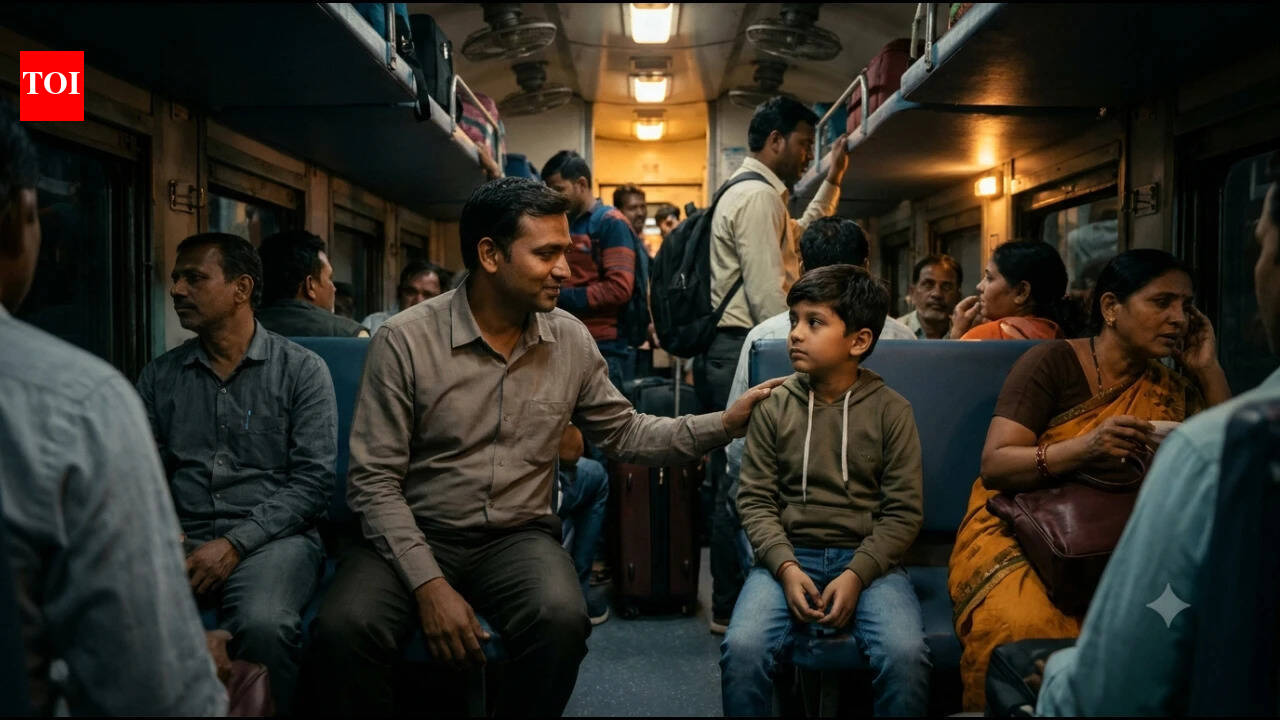
Children who grow up with comfortable lives may not always realise how different everyday experiences can be for others. For parents, teaching them gratitude, humility and respect can be harder than simply providing them with a good education and a comfortable lifestyle. A recent Instagram post by Naveen Gupta has brought this conversation into focus. During an urgent Diwali journey, Gupta said his son was uncomfortable travelling in a 3AC coach because he was accustomed to travelling in higher classes. Instead of dismissing his discomfort, Gupta decided to show him a general railway compartment and explain how different people experience the same journey.The post offers an interesting parenting lesson: children need to understand the privileges they enjoy without being made to feel guilty about having them.
5 Oct 2026 | 12:06
Parents, when your child refuses to greet relatives, do you make them say hello or respect their choice?
Let children see lives beyond their own comfort zone
One of the more interesting aspects of Gupta’s approach is that he did not simply lecture his son about privilege. He tried to give him an experience that could help him understand the difference.In his Instagram caption, Gupta explained that his son was accustomed to travelling in 1AC or 2AC and found the 3AC journey uncomfortable. Since higher-class tickets were unavailable because of the urgent Diwali travel plans, he took his son to see a general compartment.This approach raises an important point about parenting. Children often understand things better when they can observe them rather than hear repeated instructions. Talking about financial differences is one thing, but seeing how people travel, work and manage their everyday lives can make the conversation more meaningful.However, such experiences should never become an exercise in making children feel ashamed of their comforts. The purpose should be to build understanding, not guilt.
Teach respect without connecting it to someone’s financial position
Gupta shared that he regularly reminds his son that every life is equal and everyone deserves respect.This is perhaps the strongest message in his post. A person’s financial position, profession, clothes or lifestyle should never decide how they are treated.He also pointed out that society’s definition of wealth changes with time. People who enjoy financial advantages today may not necessarily occupy the same position generations later.For children, this is an important distinction to understand early. Respect should not depend on whether someone has a bigger house, an expensive car or a prestigious job. A child who learns to speak politely to a security guard, domestic worker, shopkeeper and school principal is learning something that no expensive classroom can teach alone.
Childhood does not become happier simply because life becomes more expensive
Gupta’s reflection on his childhood adds an emotional layer to the post.He remembered visiting neighbours without formal invitations, cycling to friends’ homes, playing outdoors and spending summer holidays with cousins and grandparents.He also recalled eating meals cooked on a traditional chulha, climbing trees for fruits and enjoying simple purchases for months.His observation about how quickly children today move past the excitement of expensive purchases is particularly interesting.The problem is not that modern children have more comforts. It is that constant access to entertainment, shopping and instant gratification can leave less room for anticipation.Parents can recreate some of that excitement through everyday experiences. A family picnic, helping grandparents prepare a meal, growing a plant or allowing children to explore their neighbourhood can create memories without requiring expensive plans.
Give children responsibilities, not just privileges
A comfortable childhood does not have to mean a childhood without responsibilities.Children who receive everything without participating in everyday family life may find it difficult to understand the effort behind those comforts.This does not mean deliberately making life difficult for them. Instead, parents can involve children in age-appropriate household activities, encourage them to organise their belongings and help them understand how everyday services and facilities work.For instance, a child who helps prepare a family meal may begin to appreciate the time and effort involved in cooking. Similarly, understanding how much work goes into earning money can make children more thoughtful about spending it.The lesson is simple: enjoying privileges and understanding the effort behind them can go together.Disclaimer: This article examines the parenting lessons reflected in Naveen Gupta’s publicly shared Instagram post. It does not suggest that all children have the same experiences or that exposure to difficult living conditions is necessary to develop empathy.