 By
Last Updated:
Learn how to make this comforting South Indian tomato soup aka rasam with black pepper, cumin, garlic, curry leaves and turmeric




News18
Changing weather, fluctuating temperatures and pollution is doing its rounds across India. There are higher chances of people falling ill. At such times, a warm, comforting bowl can sound especially appealing. While the West might have chicken noodle soup, in India we have rasam.
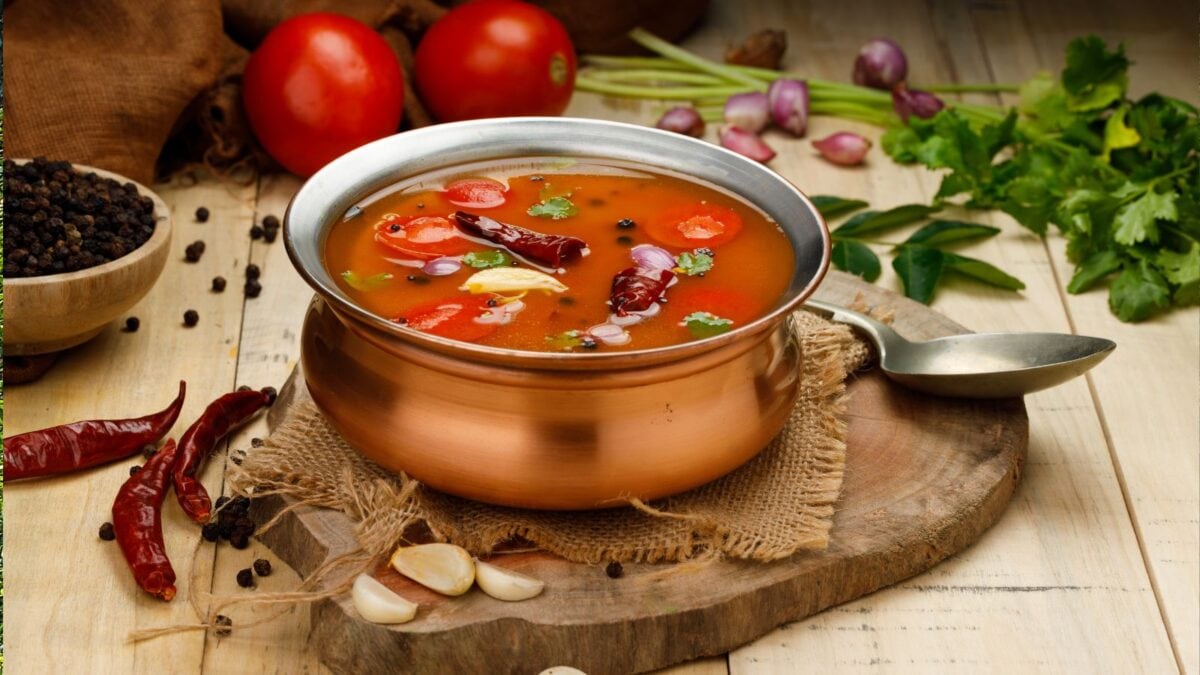
With coughs, colds and flu-like illnesses doing the rounds, traditional Indian preparations such as pepper rasam are finding their way back into home kitchens. Made with fresh tomatoes, black pepper, cumin, garlic, curry leaves and turmeric, this South Indian preparation is known for its distinctive spicy, tangy flavour and warming aroma.
It is easy to prepare using everyday kitchen ingredients and can be enjoyed as a light soup or served with steamed rice. The recipe also comes at a time when a new COVID-19 subvariant, PJ.2.1, has been reported in several countries. While this is no cure, it is a comforting addition on those days when you need a warm hug.
This recipe was shared by food content creator Preetha Athrey (@easyeatswithpreetha) on Instagram.
Pepper Rasam Recipe
Ingredients:
For the rasam:
- 2 large tomatoes
- 1 handful fresh coriander leaves, finely chopped
- 1 tbsp ghee
- 2–3 pieces of kokum or tamarind, as an alternative
- 2 cups water
- Salt to taste
- ½ tsp turmeric powder
For the spice mix:
- 2 tsp cumin seeds (jeera)
- 2–3 tsp whole black peppercorns
- 2 sprigs curry leaves
- 3–4 garlic cloves
How To Make Pepper Rasam At Home
Step 1: Prepare the tomatoes
Wash the tomatoes thoroughly and boil them in water until their skins begin to loosen and the flesh softens. Remove them from the water and allow them to cool slightly. Peel off the skins and roughly blend the tomatoes into a smooth puree. Keep aside.
Step 2: Roast the spices
Heat a small pan over a low flame. Add the cumin seeds and whole black peppercorns. Dry roast them for 2–3 minutes, stirring continuously until fragrant. Add the curry leaves and roast for another few seconds until they turn crisp. Switch off the flame and allow the mixture to cool.
Step 3: Prepare the pepper-cumin paste
Transfer the roasted cumin, peppercorns and curry leaves to a mixer grinder. Grind into a coarse powder. Add the peeled garlic cloves and grind again until the mixture forms a coarse paste. There is no need to add water.
Step 4: Prepare the rasam base
Soak the kokum pieces in a little warm water to help release their tangy flavour. If using tamarind instead, soak a small piece in warm water and extract its pulp. In a large kadai, add the tomato puree, the kokum soaking liquid or tamarind extract, salt, turmeric powder and 2 cups of water. Mix well and bring the mixture to a boil.
Step 5: Add the ground spice mixture
Once the tomato mixture begins boiling, add the freshly ground pepper, cumin, curry leaf and garlic paste. Stir thoroughly to combine the ingredients. Allow the rasam to simmer for 4–5 minutes on a medium-low flame so that the flavours blend together.
Step 6: Finish with coriander and ghee
Add the freshly chopped coriander leaves and stir. Finish with a tablespoon of ghee, mixing it gently into the rasam. Switch off the flame once the rasam is aromatic and well combined.
Step 7: Serve hot
Transfer the pepper rasam into a serving bowl and garnish with a few fresh coriander leaves. Serve piping hot as a light soup or pair it with steamed rice, papad and a simple vegetable side dish.
Quick Answers
 Ask News18
Pepper rasam is made using everyday kitchen ingredients including large tomatoes, black pepper, cumin seeds, garlic cloves, curry leaves, turmeric powder, fresh coriander leaves, ghee, and kokum or tamarind for tanginess.
Ask News18About the Author

Abigail Banerji is a Senior Sub Editor with News18’s English desk. She brings 6 years of experience across both print and digital newsrooms, spanning editorial planning, reportage, copy editing, conte…Read More
November 13, 2026, 17:45 IST