By
The SEC may soon begin fining schools that exceed the athlete revenue-share cap.
In a proposed plan the league is socializing with other conferences, the SEC would establish a conference cap policy penalizing schools for spending over the $21.6 million House settlement revenue-share cap, with escalating fines that exceed $10 million for those spending more than $70.5 million on their rosters, according to administrators briefed on the plan.
The SEC’s proposal, far different from the Big Ten’s cap rules passed last month, would consider some school-affiliated, third-party NIL deals as “institutional pay,” implementing terms of the House settlement that have not previously been enforced — with, importantly, the addition of pro sports-like luxury taxes.
Details of the penalty structure, only recently formalized, is new information shared with dozens of administrators over the last several days.
Financial penalties would begin low and gradually increase in a tiered system. Fines begin at less than 1% for those spending below $50.5 million on their rosters, and then increase to 1% for those spending $50.5-60.5 million, then to 3% for those spending $60.5-70.5 million and, finally, to 10% for those spending more than $70.5 million. This means a school could spend $70.5 million on its athletes with a fine of around $7 million.
However, the financial penalties in each tier increase with each new cap year. Next year, for example, the model increases the penalty from 3% to 5% for those spending between $60.5-$70.5 million and from 10% to 15% for those exceeding $70.5 million. The following year, the penalty would reach 20% for the biggest spenders — a tax of roughly around $14-16 million.
It’s unclear where the fine money will be distributed and how.
“The headline here is that the new cap would basically be $70 million,” said one power league athletic director.
In a concept widely supported by many college leaders, the SEC’s proposal may remove the requirement for schools to gain approval from the College Sports Commission’s NIL Go clearinghouse for NIL agreements with associated entities redirecting revenue from the athletic department to the roster. These deals likely feature school corporate sponsors, multi-media rights partners and perhaps even apparel brands. They represent a large chunk of submissions in the current system.
This would eliminate what officials say are time-consuming and resource-draining measures to circumvent the existing cap by redirecting revenue to athletes in the form of concocted marketing and endorsement agreements. Many universities are paying as much as 20% to third party entities to “wash money,” several power conference leaders contend, in an effort to effectively pass the contracts through the NIL Go clearinghouse.
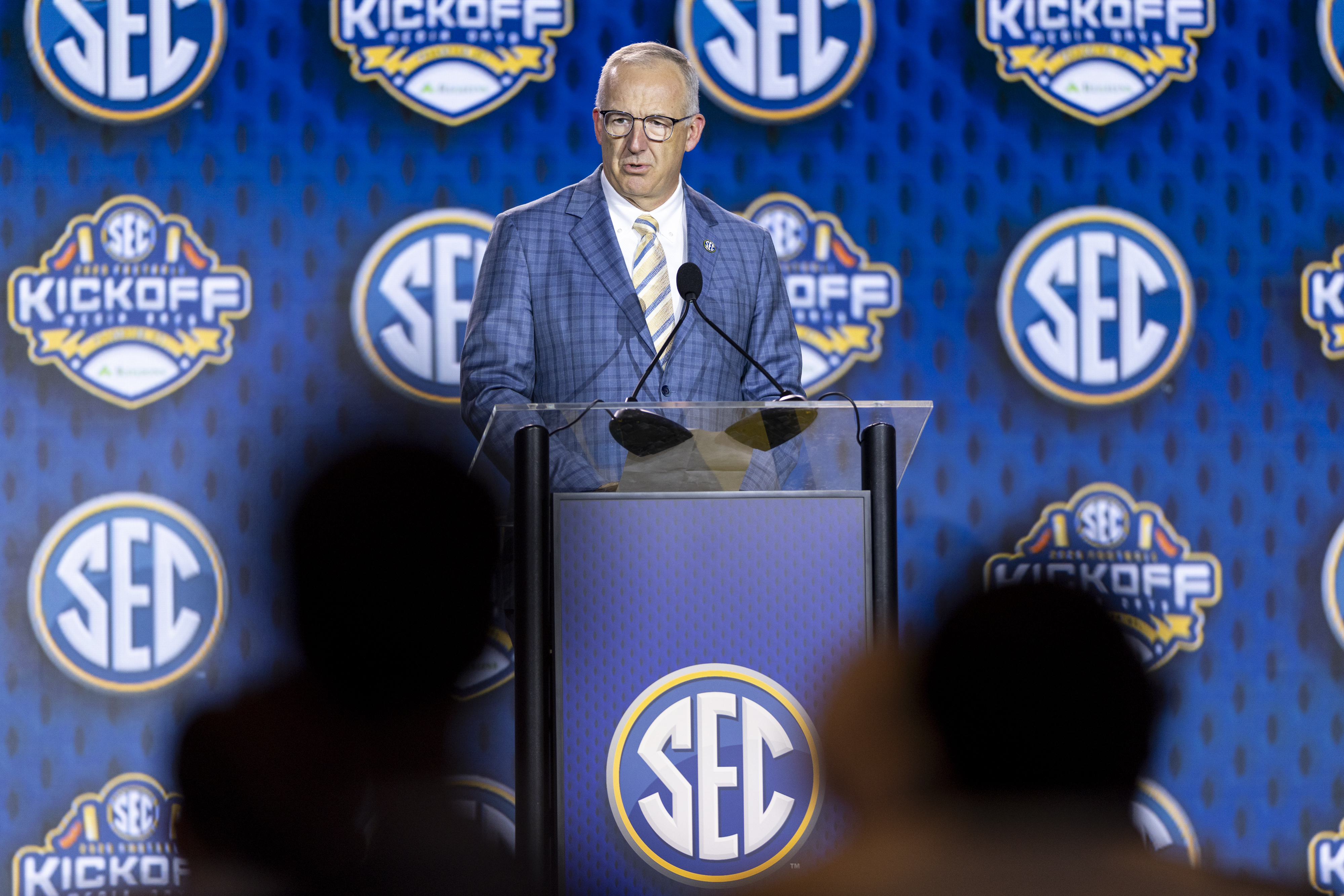
For now, a retroactive implementation date of Oct. 1 is under discussion for the new fining structure. Third-party NIL deals featuring redirected school revenue that were submitted on or after that date would be considered institutional pay. Only fully independent third-party NIL payments are excluded from the new cap policy, such as authentic marketing and endorsement deals that athletes strike on their own with businesses and brands.
The SEC’s proposal would tremendously reduce submissions to the College Sports Commission, the 18-month-old enforcement body charged with policing third-party NIL deals. Though it is conducting more than a dozen active investigations and inquiries into college programs with a staff that now has reached 30 people, the commission has not yet penalized programs for cap circumvention.
Over the last few months, however, the CSC’s scrutiny of school-affiliated NIL deals has increased, those with knowledge of the latest submissions say — a move that, perhaps coincidentally, coincides with the development of these conference-cap policies.
The SEC’s fining system is meant to close a loophole that schools are using to exceed the cap by redirecting revenue from school-affiliated entities to athletes. But questions still loom on whether the latest proposal completely closes the circumvention loophole.
For example, are all NIL deals — even those from booster-backed collectives — considered as part of the SEC’s cap policy? Or can schools still circumvent the system in other ways?
While the proposal originates from the SEC, the four power conferences are expected to attempt to align with similar league cap rules to avoid competitive inequity while adhering to federal collusion laws. Conferences are attempting to create and enforce rules around athlete compensation, player movement and eligibility with hopes that they can avoid antitrust legal challenges that toppled the NCAA’s national policies.
The Big Ten last month created new compensation cap rules that fine schools spending more than $49 million on their rosters in a similarly escalating system. The fining system permits schools to spend the $21.6 million allowed under the House settlement plus $27 million in school-affiliated third-party NIL deals before the penalties begin.
However, the Big Ten’s policy features a significant league fine — as much as $25 million — once a school exceeds the $60 million mark.
These conference policies may put leagues at odds with both antitrust laws and with the House settlement itself. In fact, House plaintiff attorneys Jeffrey Kessler and Steve Berman believe the Big Ten’s proposal violates settlement terms.
The SEC’s plan has its own issues for those lower-resourced programs.
The potential for the biggest spenders to further exploit even the new penalty system strikes fear in those smaller-spending programs, especially those in the Big 12 and ACC. Many officials in those leagues wonder if the loophole is really closed and believe the penalties are not severe enough.
For reference, the MLB’s luxury tax is between 20-50% depending on how many consecutive years that team has exceeded the soft-cap figure.
“Anything north of $50 or $60 million should come with a 1-for-1 tax,” said one Big 12 school administrator.
It’s unclear if NCAA or College Sports Commission policies would need to change under the SEC’s penalty structure. It’s also unclear if House settlement terms need amending. To modify settlement terms, the NCAA and the five conferences — the Pac-12 included as it was an original defendant in the House antitrust lawsuit — must agree to changes, along with plaintiffs and their attorneys. It is considered a laborious process that may drag well past January’s transfer football portal, when many officials believe conference caps are necessary to slow spending.
The SEC’s formalized proposal comes amid what administrators describe as a “chaotic” environment in the industry, where court rulings and state laws have crippled NCAA rules and created a landscape of free player movement, mostly uncapped compensation and even uncertain eligibility standards — which some contend is the fault of college leaders failing to adapt quickly enough.
For some, the solution lies on Capitol Hill, where college leaders have spent years and millions of dollars lobbying lawmakers to pass a congressional bill, the Protect College Sports Act. The legislation attempts to bring order to the unruly environment by limiting athlete movement, establishing eligibility standards and granting the NCAA and College Sports Commission an antitrust exemption to regulate athlete compensation in a way that many believe is unfair.
However, the Act, though overwhelmingly passed by the Senate in striking bipartisan fashion, faces a steep climb in the House of Representatives, which only has five working weeks before a new Congress — and likely a new, more Democrat-friendly bill — arrives in January. The Democrats won back control of both the Senate and House in last week’s mid-term elections.
Some administrators are frustrated enough to support an employment and collective bargaining model — a concept that, while rife with hurdles, is gaining momentum among stakeholders.
The predicted congressional failure now has conferences returning to what many describe as “Plan B,” where leagues create and enforce their own rules.
While on with Paul Finebaum earlier this week, SEC commissioner Greg Sankey encouraged Congress to pass the legislation to provide regulation around player movement, eligibility and compensation.
If left without a signed bill, conferences “perhaps individually, to the extent they can legally, will have to be involved in addressing those issues directly.”
“Some of those are embedded in the Protect College Sports Act,” he said. “Some are about conference policies we’ve had in the past. Some we’ve emphasized this year. They haven’t changed. Others we’ve introduced as we move forward.”