 By
Addressing a high-level official ceremony in Azad Jammu and Kashmir on November 20, 2025, Prime Minister Shehbaz Sharif declared that a newly published U.S. defense assessment provides indisputable international validation of Pakistan’s aerial combat prowess and tactical edge over India. The Prime Minister emphasized that the document dismantles opposing narratives surrounding previous cross-border dogfights, reinforcing Islamabad’s credible conventional deterrence framework across South Asia.
Strategic Background & Context of the Address
The Prime Minister’s remarks in Muzaffarabad mark a significant turn in Pakistan’s posturing regarding regional security and defense readiness. Speaking before an audience of civil-military leadership, regional leaders, and foreign diplomats, Shehbaz Sharif underscored that independent evaluations by global defense authorities now officially align with Islamabad’s account of historical aerial engagements. The address comes at a pivotal juncture when military balances in South Asia are undergoing intense international scrutiny following rapid technological upgrades by both nuclear-armed neighbors.
Sharif noted that Pakistan’s measured operational response during escalation cycles was dictated by professional doctrine rather than aggressive posturing. According to the Prime Minister, the findings detailed in the U.S. report confirm that the Pakistan Air Force demonstrated superior tactical planning, situational awareness, and execution when defending sovereign airspace against foreign incursions. The public invocation of Washington’s assessment is intended to signal to global observers that Pakistan’s military posture remains calibrated, precise, and technologically capable of neutralizing overt threats.
Verified Declassified Insights & Defense Metrics
The intelligence document referenced by the Pakistani premier highlights key operational factors during recent aerial skirmishes over the Line of Control. Analysts involved in the American assessment noted that Pakistani flight squadrons effectively leveraged network-centric warfare capabilities, advanced radar integration, and long-range air-to-air missile systems to establish domain control during critical engagement windows. This strategic coordination allowed Pakistani pilot formations to successfully target and neutralize intruding aircraft while preventing broader escalation into civilian sectors.
Furthermore, the evaluation reportedly highlighted systemic operational gaps within rival defense architectures, particularly regarding integrated command-and-control protocols and electronic warfare countermeasures. By validating the downing of Indian military aircraft, the U.S. analytical brief provides a authoritative counterweight to years of conflicting claims, establishing a baseline of verified data that international military planners are now integrating into broader South Asian strategic equations.
The findings published by independent U.S. defense analysts serve as an undeniable international endorsement of Pakistan’s defensive capabilities. Our armed forces have demonstrated that operational excellence, combined with unyielding resolve, guarantees national sovereignty against any miscalculation.
Implications for Regional Deterrence & Procurement
The confirmation of Pakistan’s tactical aerial superiority has immediate ramifications for defense planning across the subcontinent. For years, Islamabad has advocated for a Strategic Restraint Regime in South Asia, arguing that aggressive procurement strategies by New Delhi risk destabilizing the regional balance. The validation of Pakistan’s operational success despite quantitative imbalances highlights the efficacy of its asymmetric defense strategy and modern air combat doctrine.
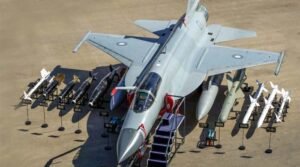
Defense analysts note that the report will likely influence defense acquisition strategies for both nations. Pakistan’s successful deployment of indigenous platforms alongside upgraded multi-role fighter fleets demonstrates the viability of high-tech defense integration. For international arms exporters and defense analysts, the U.S. validation underscores the necessity of factoring combat readiness and tactical training into force projection models, rather than relying solely on raw inventory figures.
Key Takeaways & Strategic Intelligence
- Formal U.S. Validation: A comprehensive U.S. report officially corroborates Pakistan’s account of downing Indian aircraft, confirming operational superiority during aerial engagements.
- Deterrence Alignment: Prime Minister Shehbaz Sharif stressed that the findings validate Pakistan’s strategic defensive posture and commitment to preserving regional equilibrium.
- Technological Superiority: The assessment highlights Pakistan’s effective utilization of network-centric warfare, radar integration, and precise missile engagement zones.
- Diplomatic Posture: Islamabad is utilizing the report to reinforce its stance on Kashmir and highlight the risks of unprovoked escalation along the Line of Control.
Economic & Geopolitical Fallout
Beyond military doctrine, the Prime Minister’s address touched upon the broader geopolitical implications of the U.S. findings. Sharif reiterated that peace in South Asia remains inextricably linked to the resolution of the core dispute of Jammu and Kashmir in accordance with United Nations Security Council resolutions. He argued that military adventurism only serves to divert critical financial resources away from human development and economic growth across the region.
International observers suggest that Washington’s transparent assessment may alter diplomatic engagement patterns in South Asia. By formally acknowledging the tactical realities on the ground, Western powers are indicating a desire for objective risk assessments in potential crisis zones. This transparency could encourage renewed emphasis on bilateral risk-reduction measures and crisis communication channels between Islamabad and New Delhi to prevent future escalatory spirals.
Future Outlook & Strategic Projections
Moving forward, the public release and endorsement of the U.S. report will likely shape the discourse in upcoming multilateral security forums. Pakistan is expected to continue leveraging these verified facts to cement its reputation as a disciplined and capable military power. As both nations continue to modernize their defense structures, international diplomatic pressure is expected to focus heavily on maintaining stability, preventing aerial miscalculations, and encouraging structured dialogue over long-standing territorial disputes.