By
By The BNN Media
The Best News Network
News Beyond the Borders
South Korea’s education minister has resigned after last-minute measures to stop artificial intelligence-assisted cheating caused confusion around the country’s most important exam. The resignation, accepted within an hour, has turned a cheating scare into a political reckoning over how a high-stakes test can be protected in the age of AI.
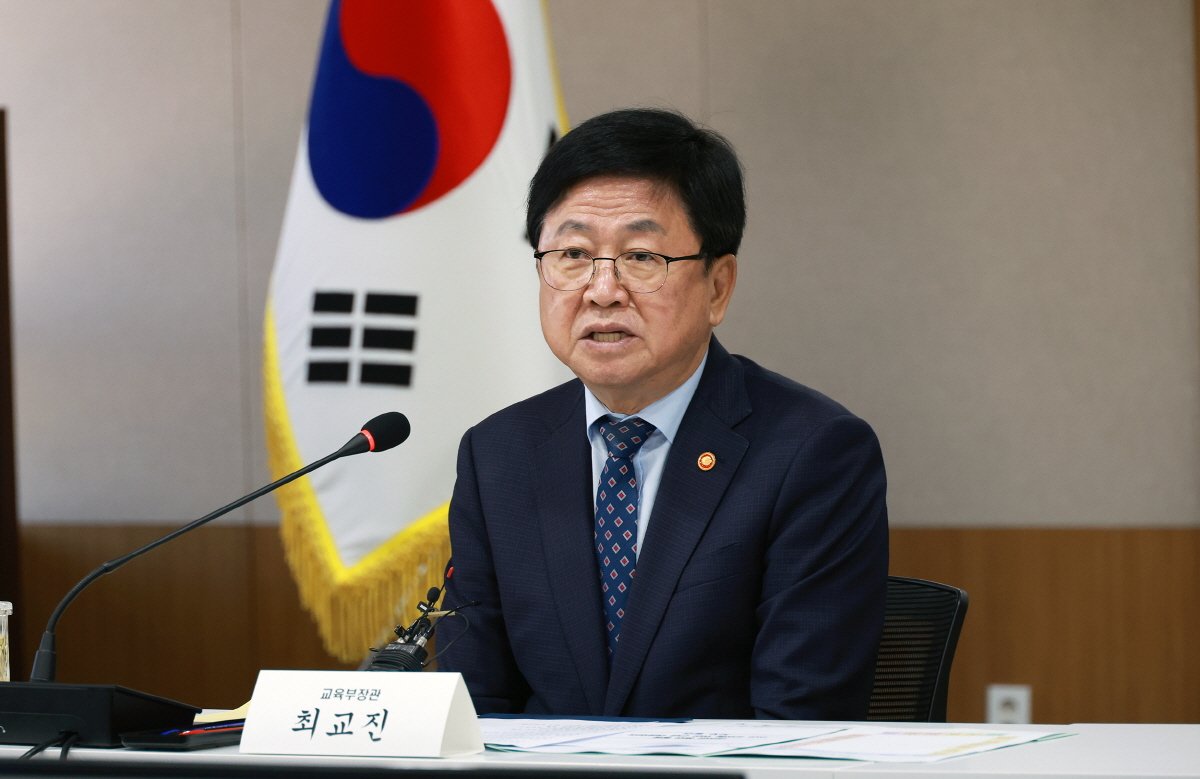
Seoul, South Korea — Education Minister Choi Kyo-jin resigned on Sunday, 22 November, taking responsibility for confusion caused by last-minute measures to prevent AI-assisted cheating in the College Scholastic Ability Test (CSAT), the national college entrance examination held last week. President Lee Jae Myung accepted the resignation within an hour and ordered a comprehensive review of national exam management and related laws, according to Reuters.
The exam that decides futures
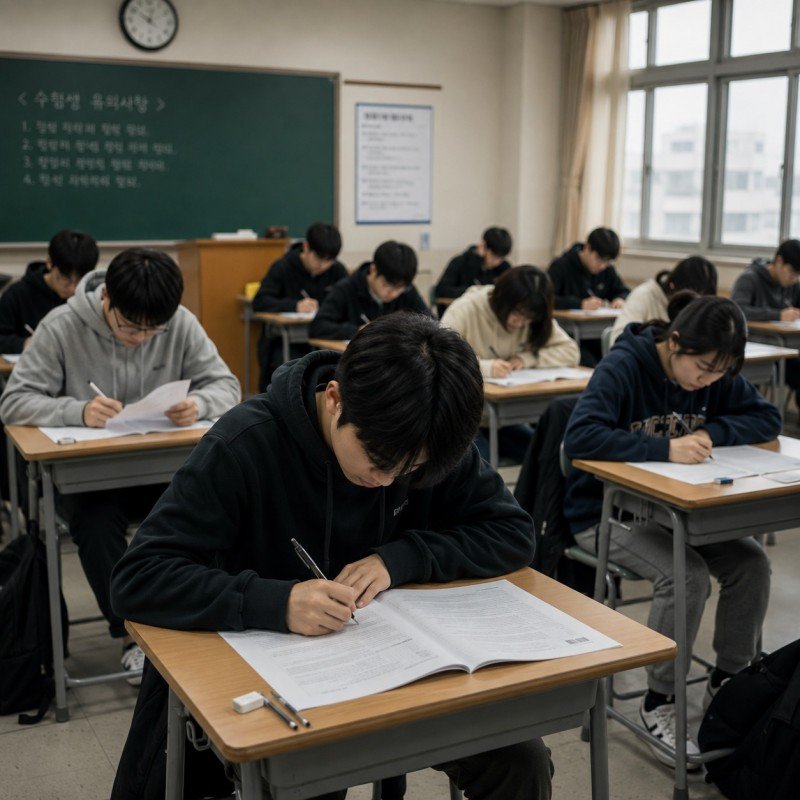
The CSAT, known in South Korea as the Suneung, is far more than a school test. More than 550,000 students registered for this year’s exam, which plays a major role in admission to the country’s top universities — and, in turn, heavily influences career prospects. The exam was held on Thursday, 19 November, and ran through the day under sweeping security measures.
That scale is what made the cheating scare so sensitive. A single leaked question, or a single undetected device, could affect the prospects of hundreds of thousands of young people. It is also why the government’s response, rushed out in the final days before the test, drew such intense public scrutiny.
The takeaway is that in South Korea, exam fairness is not an administrative detail — it is a matter of public trust.
A confession four days before the test
The trouble began on 15 November, four days before the CSAT, when the top scorer in a national certified tax accountant examination admitted to cheating with a miniature camera, a smartphone and artificial intelligence. According to Reuters, he used the camera to photograph questions, sent them to an AI tool and checked the answers on his phone, achieving a near-perfect score.
The confession set off alarm that the same method — tiny cameras, earpieces and smart glasses — could let CSAT candidates receive outside help without invigilators noticing. The Education Ministry had initially focused on smart glasses, but after the admission it rushed out additional measures, drawing criticism that the response came too late and then changed too often.
As fears grew, the government kept changing its anti-cheating measures until days before the exam. The result was confusion for students, parents and officials alike, in the week when calm mattered most.
Last-minute rules: stickers, Wi-Fi blocks and nationwide alerts
The emergency measures were unusually strict. During the exam, authorities restricted Wi-Fi around test centres, checked candidates’ glasses for smart glasses and covered clothing buttons with stickers to block hidden cameras. Candidates were told to bring only pencils into exam rooms in some accounts, and to turn off and hand in smart devices, with bags left in corridors checked for devices still switched on.
Authorities also sent emergency alerts to phones nationwide three times during the exam to catch test-takers who had not handed in their phones. The heightened precautions uncovered dozens of prohibited mobile phones, although Reuters reported it was unclear whether all of them were intended for cheating.
The Ministry of Education said on Friday that it had caught 111 suspected cases of cheating with electronic devices during Thursday’s exam. Those cases will be considered by a ministry committee before scores are released, and the government and the ruling party have proposed barring anyone caught using AI to cheat from retaking the exam for up to 10 years, according to reports. That proposal has not yet become law, and the final penalties have not been decided.
The remark that deepened the crisis
Choi’s own words added to the controversy. At a National Assembly Education Committee session on Monday, three days before the CSAT, he was asked whether he was confident he could catch 100% of AI-assisted cheating.
“I don’t think that I can,” he replied. “Because of my age.”
The remark, which suggested he was too old to keep up with the technology, drew criticism for dodging responsibility. Choi was largely absent from the Education Ministry’s official events that followed, with Vice Minister Choi Eun-ok attending in his place. Reuters also reported that he had faced criticism after making the age remark.
In his resignation statement, released through the Ministry of Education, Choi struck a different tone. “Now that the CSAT is over, I keenly feel responsible and am offering my resignation,” he said. “In the process of preparing for the CSAT, various changes arose with the exam just ahead, causing inconvenience to the public, including test-takers. Fortunately, thanks to the public’s cooperation, it concluded without major incident. However, as the minister of the ministry in charge, I don’t think that I’m free from the criticism that we failed to prepare in advance.”
The takeaway is that the resignation was not presented as an admission that the exam itself had failed, but as acceptance that the preparation had.
A death on exam day
The week also carried a separate tragedy. On the day of the exam, Lee Jin-woo, a perfect scorer on the Legal Education Eligibility Test who had been accused of using AI to cheat, was found dead at a motel in Seoul. He had promised to dispel the allegations by solving CSAT questions on a livestream that morning but did not show up. Police are investigating his death.
No cause of death has been publicly confirmed, and no link between the allegations and his death has been established. The case is reported here only because it formed part of the wider public debate about AI cheating that week; it should not be treated as evidence about the CSAT itself.
The president’s response: fairness “can never be compromised”
President Lee accepted the resignation the same day, the presidential office said. Chief presidential spokesperson Kang Yu-jung said in a press notice that the president had been briefed on Choi’s offer and accepted it, and that the selection of a new education minister would proceed according to procedure. Lee also instructed Prime Minister Han Seong-sook to take responsibility for follow-up measures for the CSAT.
Shortly after Choi announced his resignation, Lee wrote on X: “Concerns over cheating that exploits AI are spreading beyond the CSAT to essay-based admission exams and school tests,” adding, “The fairness of exams is a principle that can never be compromised.”
“No matter how much technology advances, the principle of fairness must not be shaken,” he wrote. “We will comprehensively inspect how the CSAT and other exams are being managed.” Lee also said he would order a review of plans to add identification marks to question papers so their source can be identified if they are photographed or leaked.
The takeaway is that the government is treating this as a system-wide problem, not a one-exam failure.
What happens next
The immediate question is who will lead the Education Ministry through the aftermath. No successor had been named at the time of the resignation, and the presidential office said only that the selection would follow due procedure. The ministry must now decide the fate of the 111 suspected cases, with scores due to be released on 11 December, according to reports.
The longer question is harder: how does any country run a fair national exam when a camera can be hidden in a button and an AI model can answer a question in seconds? South Korea’s answer this year — emergency alerts, Wi-Fi blocks, stickers on buttons and checks of every pair of glasses — caught suspected cheats, but at the cost of confusion and a minister’s resignation. Other countries watching the Suneung will be asking whether a calmer, earlier plan, built before the exam season rather than during it, could have avoided both.
For the more than 550,000 students who sat the test, the exam itself is over. The debate it has started about technology, trust and fairness is only beginning.
Sources: Reuters, 23 November 2026; Korea JoongAng Daily, 22 November 2026; The Guardian / TBS News.
By The BNN Media
The Best News Network
News Beyond the Borders