By
The 15th Starship test flight put a full load of next-generation Starlink satellites into orbit, lost its booster to the Gulf of Mexico, and then achieved what no rocket has done before: bringing an upper stage back from orbit into the arms of its launch tower.
By Faseeh Ur Rehman
Senior Journalist | The BNN Media – The Best News Network
News Beyond the Borders
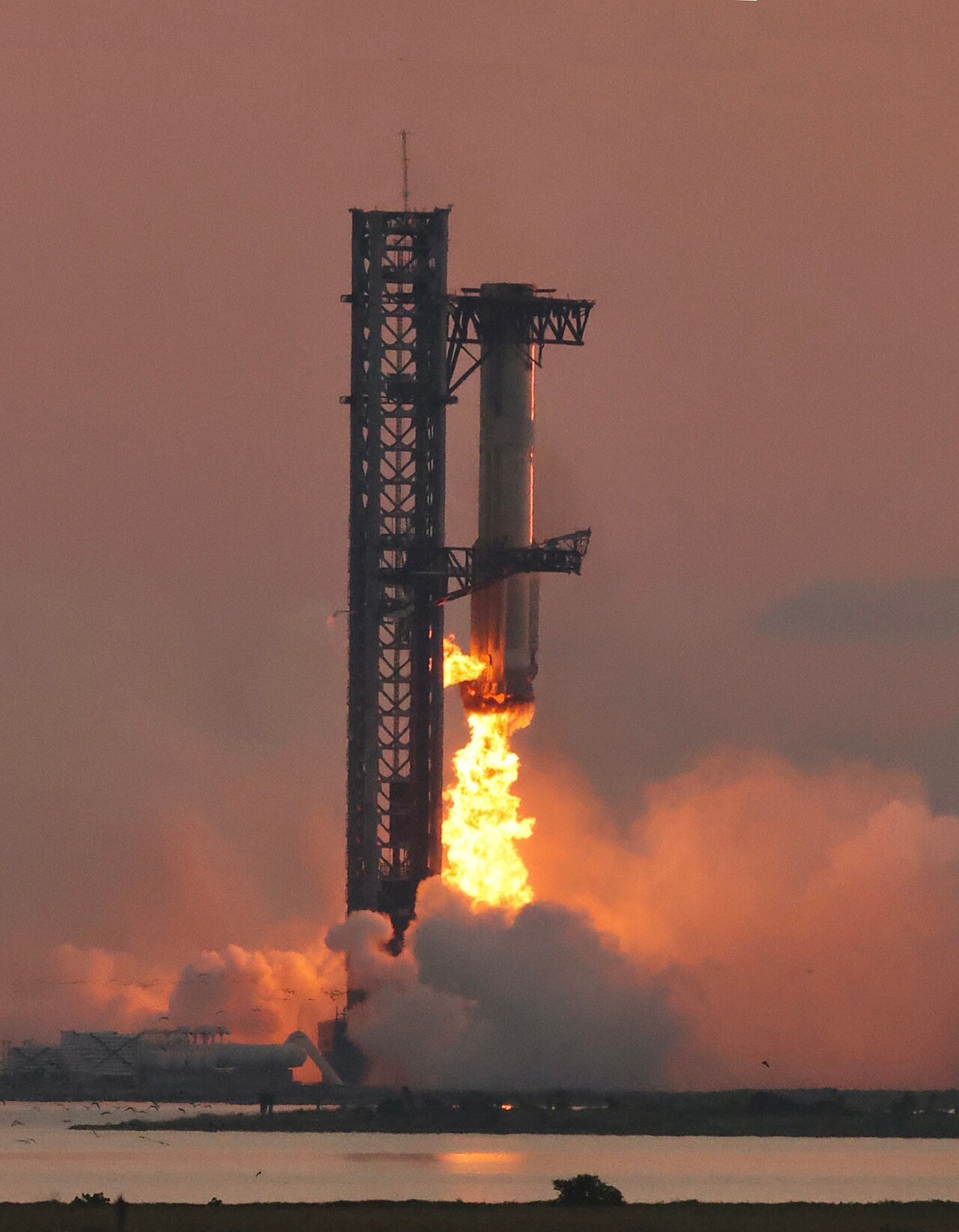
STARBASE, Texas — SpaceX’s Starship lifted off on its 15th test flight at 4:47 p.m. local time (2247 UTC) on Friday, 13 November, from Starbase in South Texas, and its upper stage, Ship 42, deployed all 26 Starlink V3 satellites before completing about 14 orbits of the Earth and being caught by the launch tower’s mechanical arms on Saturday — the first time an upper stage has ever been caught after returning from orbit.
A Flight With Two Recoveries Planned
Flight 15 was SpaceX’s most ambitious Starship test to date. For the first time, the company attempted to recover both stages of the two-stage system: the Super Heavy Booster 22 was to fly back to the launch pad about six and a half minutes after liftoff and be caught by the tower’s arms — the giant pincers SpaceX calls Mechazilla — while Ship 42 was to spend up to 22 hours in orbit and then return to the same tower.
The Federal Aviation Administration issued the flight licence on 13 November, the same day the 75-minute launch window opened, and the vehicle — the 236-foot Super Heavy booster with its 33 methane-burning Raptor engines beneath Ship 42 — cleared the tower on schedule.
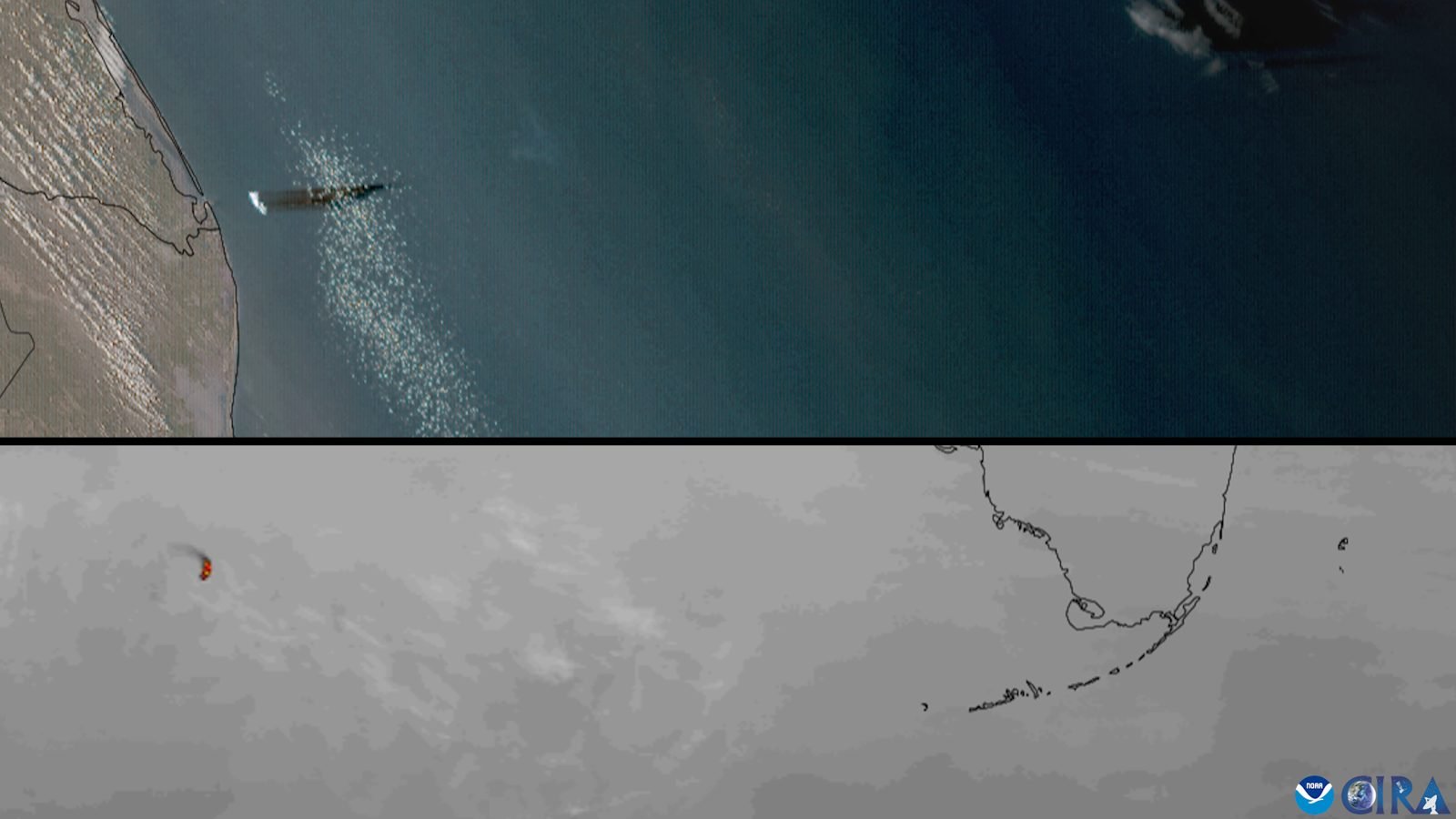
The plan for a double catch ended within minutes. Controllers called off the planned catch of Booster 22 over a safety concern and diverted it to an offshore splashdown in the Gulf of Mexico, where it exploded in a fireball moments before hitting the water as remaining propellants burned off.
Why the Booster Never Came Home
SpaceX commentator Dan Huot explained on the company’s webcast that the booster’s guidance, navigation and control system detected that the vehicle was not in the position it needed to be in to proceed with the catch, and carried out an automated abort, sending it to the contingency splashdown site offshore.
“It was doing what it was supposed to do, basically detected that the booster was not in the place that it was supposed to be to proceed with the catch, did an automated abort, and then headed out to that offshore splashdown location,” Huot said.
SpaceX’s Kate Tice later added that the booster’s engines stopped firing too early during the return, and the guidance system determined the vehicle was not correctly positioned — prompting the offshore diversion and self-destruction. Huot also corrected an earlier remark on the webcast, stressing that it was not a fault in the guidance system itself that kept the booster from returning. The sequence is preliminary, not a final failure analysis.
Three previous Super Heavy boosters have been caught by the launch tower, but the Version 3 Super Heavy is yet to make a successful return.
The booster was lost — but the abort system worked exactly as designed, choosing the empty sea over a risky catch.
Twenty-Six Satellites Into Orbit
While the booster was heading for the Gulf, Ship 42 was doing the job the flight was built around. The upper stage deployed all 26 Starlink V3 satellites through its payload door, with deployment starting about 35 minutes after launch and running for roughly 42 minutes. According to Space.com, all 26 were out by one hour and 17 minutes into the flight.
The deployment gave the flight a real operational payload alongside its recovery objectives — the first time Starship has carried a full load of the larger, more capable V3 satellites into orbit. Three of the 26 satellites carry cameras to inspect the ship’s heat shield after deployment.
The satellites will now raise their own orbits and join a Starlink fleet that stood, as of 14 November, at 13,096 satellites launched, 11,193 in orbit and 11,179 working. With this flight, 52 V3 satellites have now been deployed across two Starship flights.

The Long Way Home
After deployment, Ship 42 entered a long coast phase of up to 14 orbits of the planet — only the second time a Starship has reached orbit at all, and by far its longest mission. SpaceX kept options open to end the flight early with controlled splashdowns off Hawaii or Chile if there was any doubt about the safety of a landing attempt at Starbase, which would take the craft over Mexico and South Texas.
The ship passed its return health checks, and on Saturday afternoon it came down through the clouds, flipped upright and eased itself between the arms of the launch tower at about 21:20 UTC (4:20 p.m. Eastern) — roughly 22.5 hours after liftoff. SpaceX said the heat shield and other systems appeared to have worked well.
The company had caught its Super Heavy booster on three earlier test flights, but never the upper stage. Saturday’s catch was the first time any upper stage has been recovered from orbit in this way.
Why This Flight Matters
- A first in rocketry: no upper stage returning from orbit has ever been caught by a launch tower before. Ship 42’s catch is the milestone the flight will be remembered for.
- A working payload: 26 Starlink V3 satellites were deployed, showing Starship can place a real operational load into orbit while flying a development mission.
- A setback, not a failure: the loss of Booster 22 means the Version 3 Super Heavy still has not been recovered — but the automated abort chose the safe outcome.
- The Moon connection: the catch matters for NASA’s Artemis plans, which rely on Starship as the lunar lander, and for SpaceX’s ambition of a rapidly reusable heavy-lift system.
SpaceX set out to recover a whole rocket in one flight and recovered half of it — but the half it recovered had never been recovered by anyone before.
What Happens Next
SpaceX has not yet published a final account of why Booster 22’s engines shut down early, and a full failure analysis will follow. The company will now study Ship 42’s condition after its first orbital return, including the heat shield data from the three camera-carrying Starlink satellites, before the next flight.
The programme has a record of missed schedules and mixed results, and Flight 15 added to both columns in a single day. But the image of a spacecraft that had circled the Earth 14 times settling into the arms of its tower is now part of the record — and it is the step that brings a fully reusable Starship closer.
By Faseeh Ur Rehman
Senior Journalist | The BNN Media – The Best News Network
News Beyond the Borders
Sources: Spaceflight Now; Metapress; KeepTrack.Space.