By
Spain has come to a virtual standstill following the commencement of its first nationwide general strike in fourteen years. With major transit networks frozen, commercial hubs shuttered, and mass demonstrations surging through urban centers, the industrial action erupts less than three weeks before a high-stakes parliamentary election destined to reshape the nation’s political trajectory.
Strategic Background & Timeline
The industrial action marks the first unified national general strike in Spain since the acute labor disputes of the early 2010s. Sparked by a coalition of major trade federations, independent labor groups, and civic organizations, the strike follows months of escalating disputes over persistent inflation, stagnant real wages, purchasing power erosion, and controversial regulatory reforms. Organizers argue that structural economic pressure has reached an intolerable threshold for working-class households across the Iberian Peninsula.
The timing of this nationwide shutdown is politically explosive. With Spaniards scheduled to cast their ballots in parliamentary elections in less than twenty days, the strike forces socio-economic grievances to the absolute apex of the national political debate. Campaign rallies have been disrupted or repurposed as political factions scramble to either align with the strike’s populist energy or condemn the economic fallout caused by the widespread labor stoppage.
Verified Facts & Developments
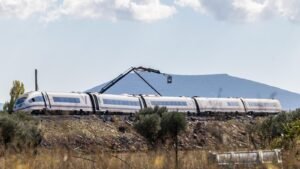
From the early hours of the morning, public infrastructure across Spain experienced severe operational paralysis. National rail operator Renfe reported massive cancellations across high-speed Ave routes and regional commuter trains. Metro systems in metropolitan centers such as Madrid, Barcelona, Valencia, and Seville operated at bare-minimum emergency capacities, creating severe congestion along primary commuter corridors. Major highways, including the AP-7 coastal arterial and Madrid’s M-30 beltway, saw strategic blockades erected by union pickets and agricultural transport groups.
Aviation and maritime trade hubs have also suffered compounding disruptions. Airport operator AENA confirmed hundreds of flight delays and cancellations across major hubs like Madrid-Barajas and Barcelona-El Prat, while cargo handling at key commercial ports—including Algeciras and Valencia—halted almost entirely. Security forces have been deployed in high concentrations around government institutions, electrical grid hubs, and international transit terminals to maintain public order amid sprawling street marches involving tens of thousands of citizens.
“This mobilization is not merely a routine dispute over collective bargaining agreements; it represents a fundamental structural challenge to the prevailing socio-economic order, delivered at the exact moment when executive authority is most vulnerable.”
Economic & Industry Consequences
The financial ramifications of the twenty-four-hour strike are reverberating far beyond Spain’s national borders. Freight corridors connecting the Iberian Peninsula to Central Europe are experiencing severe bottlenecks, stranding agricultural shipments, automotive components, and industrial raw materials. Logistics experts estimate the immediate economic loss to retail, manufacturing, and transport sectors will run into hundreds of millions of euros, threatening supply chain consistency across Southwest Europe.
The tourism and hospitality sector, a cornerstone of the domestic economy, has also been hit hard during a peak travel window. Hotel chains, international tour operators, and municipal commerce associations have reported thousands of last-minute cancellations. European equity markets reflected this heightened uncertainty, with Spanish sovereign bond yields experiencing short-term volatility as international investors evaluate the risk of prolonged policy gridlock post-election.
Key Takeaways & Strategic Intelligence
- Unprecedented Mobilization: The nation’s first total general strike in 14 years highlights deep-seated labor dissatisfaction and economic strain.
- Critical Electoral Timeline: Occurring under three weeks before parliamentary elections, the strike radically alters party campaign strategies and voter engagement.
- Severe Infrastructure Paralysis: Freight shipping, rail networks, international aviation, and regional commuting corridors face multi-day operational backlogs.
- Cross-Border Economic Strain: Supply chain bottlenecks threaten industrial production lines and commercial distribution across neighboring European markets.
Political Fallout & Pre-Election Polarization
The strike has thrown parliamentary campaign strategies into complete disarray. Incumbent government officials have called for restraint, emphasizing existing welfare investments and warning that prolonged economic interruption harms national recovery efforts. Conversely, opposition parties have seized upon the widespread unrest, framing the strike as an emphatic vote of no confidence in current leadership and a direct indictment of recent fiscal management.
Political analysts note that the strike is mobilizing previously undecided voters, creating an unpredictable environment for polling models. Labor leaders have warned that today’s actions are merely a prelude to sustained civil resistance if incoming policymakers fail to address inflation-adjusted wages, housing affordability, and job security guarantees immediately following the parliamentary vote.
Future Outlook & Strategic Projections
As election day rapidly approaches, the ultimate success of this general strike will be measured by its ability to extract binding policy commitments from competing political factions. Financial markets will closely monitor post-strike negotiations for signs of long-term economic instability, while political observers anticipate that civic activism will remain exceptionally high through polling day, establishing labor rights as the defining issue of the incoming administration.