 By
“Where do you feel like your most authentic self? Where do you feel most alive?”
These were the questions that Maritz asked in a registration survey for Elevate 2026, the company’s brand event that brought together about 300 clients, supplier partners, and the company’s staff in Scottsdale, Arizona, earlier this year.
After last year’s event, attendees shared in a post-event survey that they wished they’d made connections earlier and that the barrier to engaging with new people was lower. The team at Maritz used this insight as the guiding principle to design an experience grounded in belonging and authentic connections on day one.
“People tend to connect on low-risk, emotional items, not on business elements,” says Claire Lester, senior design studio strategist at Maritz.
To determine the right environments where those low-risk conversations could happen organically, the team asked questions about where attendees felt like their most authentic selves and offered choices, including “in nature,” “by the water,” “at a concert”, and “at home.”
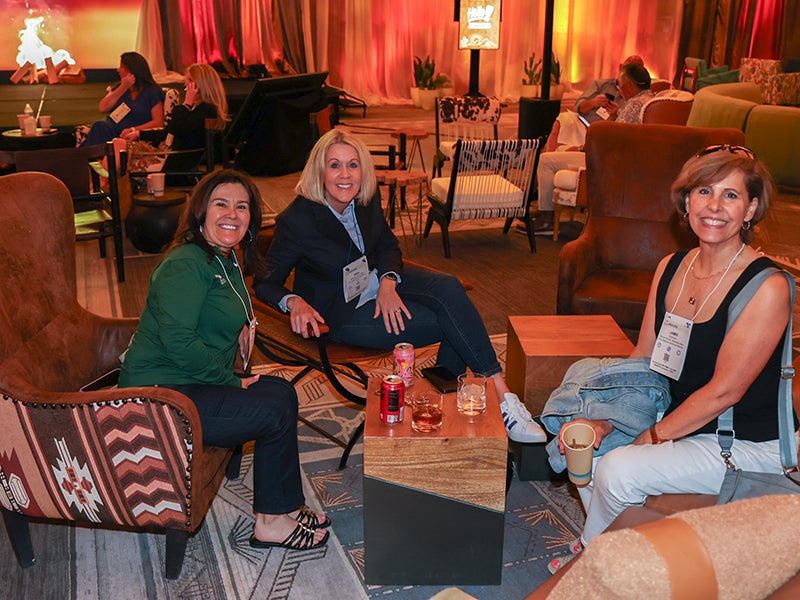
As attendees entered the event, they found themselves at the Elevation Lounge, designed around the environments mentioned in the survey, and could immediately proceed to the space where they felt most comfortable and be surrounded by like-minded attendees.
During the course of the event, the lounge became their home base and a space for networking, meals, learning sessions and Braindates. (Partners: Encore, Hello! Destination Management)
“When you get familiar with the space, there’s not that much anxiety in terms of what to do and how to act. People found their favorite nooks and crannies, and made it their own,” Lester says.
“Sometimes we think about personalization as how do we satisfy the most people instead of thinking about personalization as where do we meet people where they are.”
Related:
Whether this approach was successful is now up to the company’s data science team to figure out, and it will certainly play a role in next year’s event design, but Lester notes that one of the biggest information gaps is making event-design decisions based only on past attendees’ responses. Learning about first-time attendees is harder but crucial.
One way Lester’s team approaches this is by asking preference questions early on. She says, “We actually consider ‘What do you want at an event?’ a lazy question. It puts a lot of pressure on the person answering. Instead, we provide preference choices, which creates a range of data that allows us to be more intentional with the experiments we’re looking to try at an event.”
As ROI remains a key consideration, Lester notes the importance of starting the event planning process with a clear understanding of what success looks like, extrapolating outcomes and measuring them. “If one of our outcomes is for people to feel a sense of belonging, we ask them, ‘How did you feel in terms of belonging?’ Sometimes it’s as simple as that.”
Have a measurement story idea? Reach out to EM’s editor-at-large Anna Huddleston.