By
For more than four years, the idea of trading Ukrainian land for Western security was the one bargain nobody would say out loud. On Friday, 13 November, Volodymyr Zelensky said the Americans had finally said it — and that he would only ever put such a deal to his people if it came with guarantees he could trust.
By Ihsan Ur Rehman
Editor-in-Chief | The BNN Media – The Best News Network
News Beyond the Borders
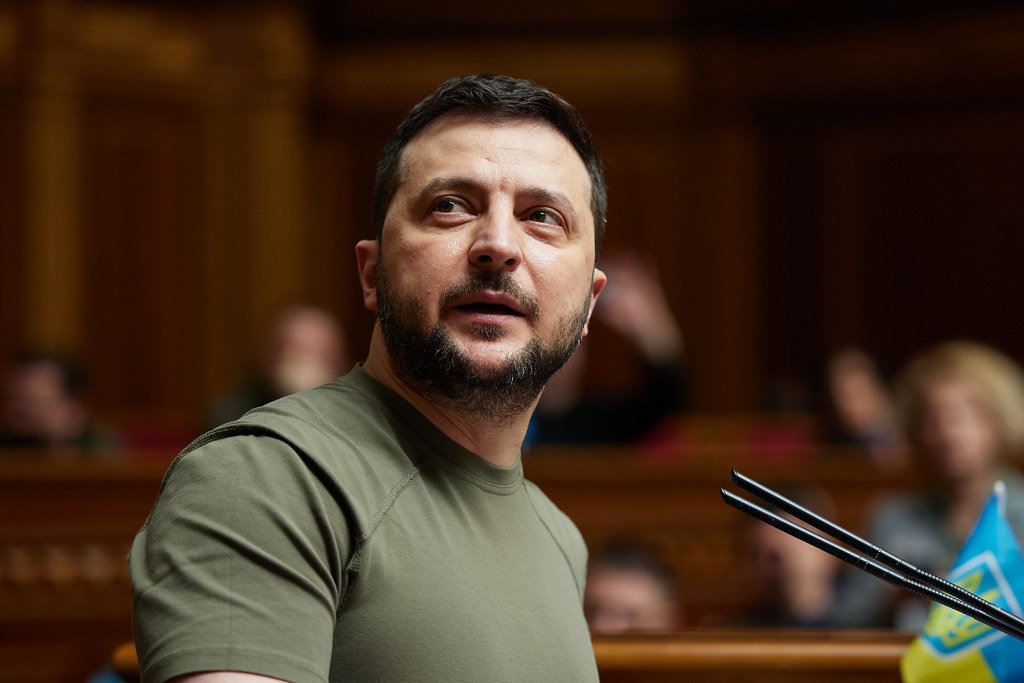
KYIV, Ukraine — President Volodymyr Zelensky has revealed that United States negotiators raised the idea of Ukraine withdrawing from the Donbas in exchange for NATO membership during the latest round of peace talks with Russia, in remarks to journalists on Friday, 13 November, released by his office on Saturday, 14 November. It is the first time the question of linking NATO membership to territorial concessions has been raised in the negotiations, Zelensky said.
A Question Never Asked Before
“The Americans raised a question: ‘What if Ukraine joins NATO? Would Ukraine withdraw from Donbas?'” Zelensky told reporters. “This was the first time this had been raised.”
The question was put during two days of US-brokered talks between Ukrainian and Russian representatives in Abu Dhabi on Tuesday and Wednesday, 10–11 November, mediated by US President Donald Trump’s envoys Jared Kushner and Steve Witkoff. The talks ended without a breakthrough, though the two sides agreed to a prisoner exchange involving more than 1,000 people.
Zelensky said the suggestion had put NATO membership back on the negotiating agenda. “That is why I believe NATO is back on the agenda,” he said. “But you have also heard [Russian President Vladimir] Putin’s signals, and this is an extremely difficult conversation.”
Putin has long said Ukrainian membership of NATO is a red line for Moscow, and has cited the issue as one reason for launching Russia’s full-scale invasion in 2022. Russia’s demands, as reported around the same talks, run in the opposite direction: written guarantees that NATO will not expand further eastward, and no ceasefire until a final deal includes Ukraine ceding the parts of the Donbas its troops have not captured, as well as Crimea.
For the first time in the talks, the two sides’ bottom lines have been stated as a single trade — land for membership — and neither side has accepted it.
What Zelensky Said He Would Need
Zelensky stressed that Ukraine would not simply give up territory. But he set out the conditions under which he would put such a proposal to the Ukrainian people in a national referendum.
“If the American side confirms precisely this to us, together with other NATO partners, then I will ask our Ukrainian society what it thinks: do we accept it or not? I have no right to make that decision on my own. But we need specifics, and we don’t have them yet,” he said.
The package he described would have to be comprehensive: security guarantees from NATO and the European Union, the right to a strong and well-funded Ukrainian army, and funds to rebuild the country from identified sources. He also made clear that Ukraine would never recognise occupied territory as Russian, and his standing demand remains a freeze of the fighting along the present front line — which would keep roughly 20% of Donetsk in Kyiv’s hands.
The United States has not confirmed Zelensky’s account. A US official told the BBC that “many ideas continue to be discussed but any final deal will have to be agreed to by both parties.” Kushner, writing on social media on Saturday, said only that “several new ideas emerged from these discussions and are now being explored”, without referring to the NATO proposal.
The Map Behind the Question
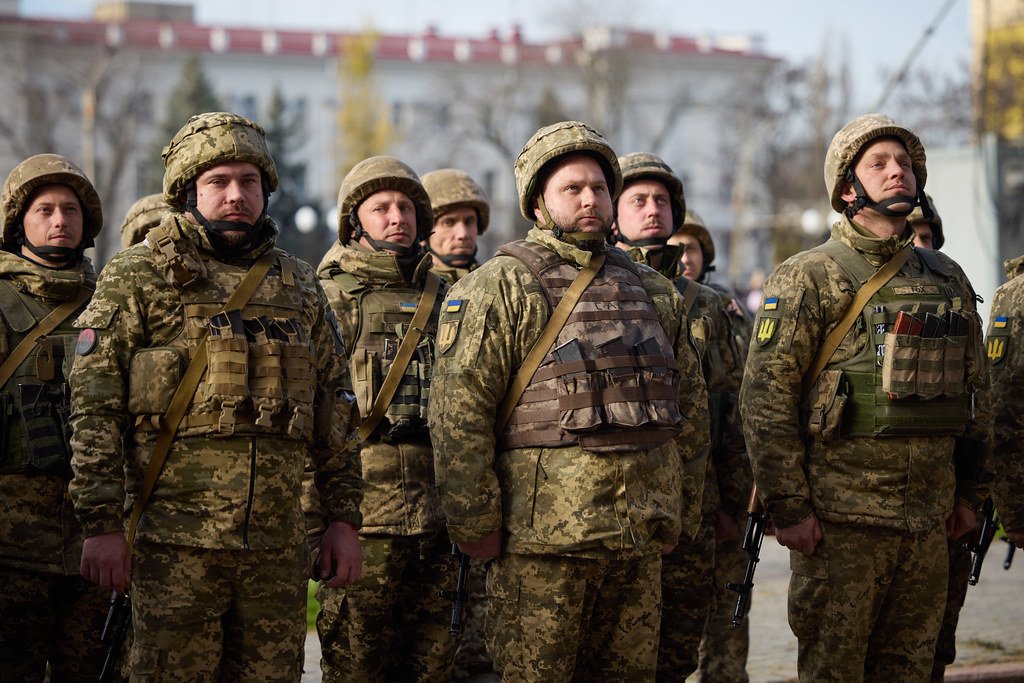
The Donbas — the eastern region made up of the provinces of Donetsk and Luhansk — is the ground the question is really about. Russia already holds about 80% of Donetsk and nearly all of Luhansk, according to the Institute for the Study of War, after a grinding offensive that has largely stalled in recent months.
What Moscow is demanding, in effect, is the remainder: the roughly one-fifth of Donetsk that Ukrainian forces still hold, including fortified towns that Kyiv has defended for years. Zelensky’s position is that those towns are not his to give away — only the Ukrainian people, in a referendum, could authorise such a withdrawal, and only in return for the kind of security that would make a second invasion unthinkable.
The stakes explain why the question matters even though nothing has been agreed. For Kyiv, NATO membership has always been the guarantee that would make a ceasefire durable. For Moscow, it has always been the outcome the war was fought to prevent. The American question links the two for the first time — and exposes how far apart they still are.
An Offer Washington Cannot Make Alone
There is a further problem with the idea, and it is institutional rather than political. Bringing a new country into NATO requires the unanimous consent of all member states — in practice, ratification by their parliaments. Washington cannot offer membership on its own, however forcefully it argues for it.
Former US ambassador to Ukraine William Taylor made the point plainly to CNN: the offer is not exactly Washington’s to make. He added, however, that NATO membership could be the security guarantee Ukraine needs to accept a ceasefire — which is precisely why the question, once raised, is unlikely to go away.
Any deal would also have to survive contact with the allies. European governments have insisted on a seat at the table, and the coming round of talks is expected to pull in as many as five European governments — Britain, France, Germany, Italy and Poland — to send representatives.
NATO membership is the one guarantee Kyiv has always wanted and Moscow has always refused. That it is now being discussed as a trade, rather than a red line, is itself the news.
The Talks So Far — and the Energy Question
The Abu Dhabi round was the first talks involving both parties in months, and the prisoner exchange was its one concrete result. Beyond it, Zelensky said Witkoff and Kushner had pledged to raise the possibility of an energy ceasefire with Putin at a meeting in Moscow on Thursday, 12 November, though there was no news of any progress after those talks.
The energy question matters because Russia has spent the autumn striking Ukraine’s power grid, and winter is now approaching. A pause in attacks on energy infrastructure would be a limited, verifiable step — the kind of measure negotiators often use to test whether a wider ceasefire is possible. That it was raised at all, and that nothing came of it, shows how little trust remains between the two sides.
What Happens Next
- The next round of talks is expected to include representatives from five European governments — Britain, France, Germany, Italy and Poland — alongside the US, Ukrainian and Russian sides.
- Zelensky is waiting for specifics from Washington: a confirmed NATO offer, agreed with other NATO partners, before he would put any proposal to a referendum.
- The prisoner exchange agreed in Abu Dhabi, involving more than 1,000 people, is the one concrete outcome to be delivered.
- Russia’s position remains unchanged: no ceasefire until a final deal includes Ukraine ceding the parts of the Donbas it has not captured, and guarantees that NATO will not expand eastward.
A Trade Nobody Has Agreed To
Zelensky did not announce a deal. He did not confirm that NATO membership has been formally offered, and he did not accept any territorial concession. What he did was make public a question that had previously only been whispered about — and attach to it the hardest condition in Ukrainian politics: that only the Ukrainian people, in a referendum, could approve giving up land, and only for guarantees that would have to be real, funded and unanimous.
The Donbas-for-NATO question is now on the table. Whether it becomes a negotiation, or remains a question nobody can answer, will be decided in the next round of talks.
By Ihsan Ur Rehman
Editor-in-Chief | The BNN Media – The Best News Network
News Beyond the Borders