 By
Hackers switched supermarket freezers into defrost mode overnight, pushing temperatures from minus 27C to 50C and forcing shops across seven countries to throw away millions of euros of food. Nobody has claimed responsibility — and the experts say the same trick will keep working until the machines are fixed.
By Akhtar Saleem Khan
Head of IT | The BNN Media – The Best News Network
News Beyond the Borders
BRUSSELS, Belgium — Supermarket chains in at least seven European countries have said the temperatures of refrigerators and freezers in some of their shops soared overnight to as high as 50C (122F), in a cyber-attack that struck on Monday, 2 November and echoed a similar attack in France a month earlier. Retailers in Belgium, Estonia, Ireland, Finland, Luxembourg, the Netherlands and Sweden reported problems with their refrigeration systems that morning, and several companies confirmed they had been hacked.
What Happened Overnight
The attackers did not break the fridges. They logged into the systems that control them. According to Sabcobel, the Belgian company that manufactures some of the affected refrigeration units and operates Delhaize’s systems, the units’ evaporators were switched to defrost mode, causing them to warm up — the same method used in last month’s incident in France.
“It’s a cyber-attack, there is no other reason,” said Mich Vergauwen, a spokesperson for Carrefour Belgium. Sabcobel’s chief executive, Stephan Moelans, told the Belga news agency the incident had been a cyber-attack, and told the newspaper Le Soir: “We started mobilising technicians at 1am. We spent all night and morning disconnecting the affected installations.”
The scale was wide but uneven. Around 40 Delhaize supermarkets in Belgium and Luxembourg were affected. Carrefour Belgium reported disruption in about 15 of its 700 shops; Colruyt said five of its shops were hit and Intermarché fifteen; five Spar outlets, Shop & Go convenience shops attached to Q8 service stations and some smaller Proxy Delhaize mini-markets were also affected, according to Le Soir. In Sweden, Coop said six of its shops had been hit, while ICA said a limited number of its stores were affected — one ICA shop in Sjöbo in southern Sweden posted that its fridges and freezers had been hacked and their temperature set at 50C, and another in Stockholm said its freezers were broken “due to a 2am cyberattack” and that “everything was destroyed”. In Ireland, SuperValu said refrigeration systems limited to a specific model in 13 of its 223 shops had been affected. In Finland, shops operated by the Kesko chain were investigating similar problems; Dutch public radio NOS reported that the systems of at least 17 mainly small local shops had been affected; and in Estonia, Selver said one of its outlets had been hit, after attackers accessed a computer controlling the refrigeration system and turned the temperature up to 50C. IKEA’s shop in Mons, Belgium, also confirmed a cyber-attack had caused the temperature of its freezers to rise suddenly.
Dozens of shops, seven countries, one night — and the same trick, repeated.
The Damage on the Shelves
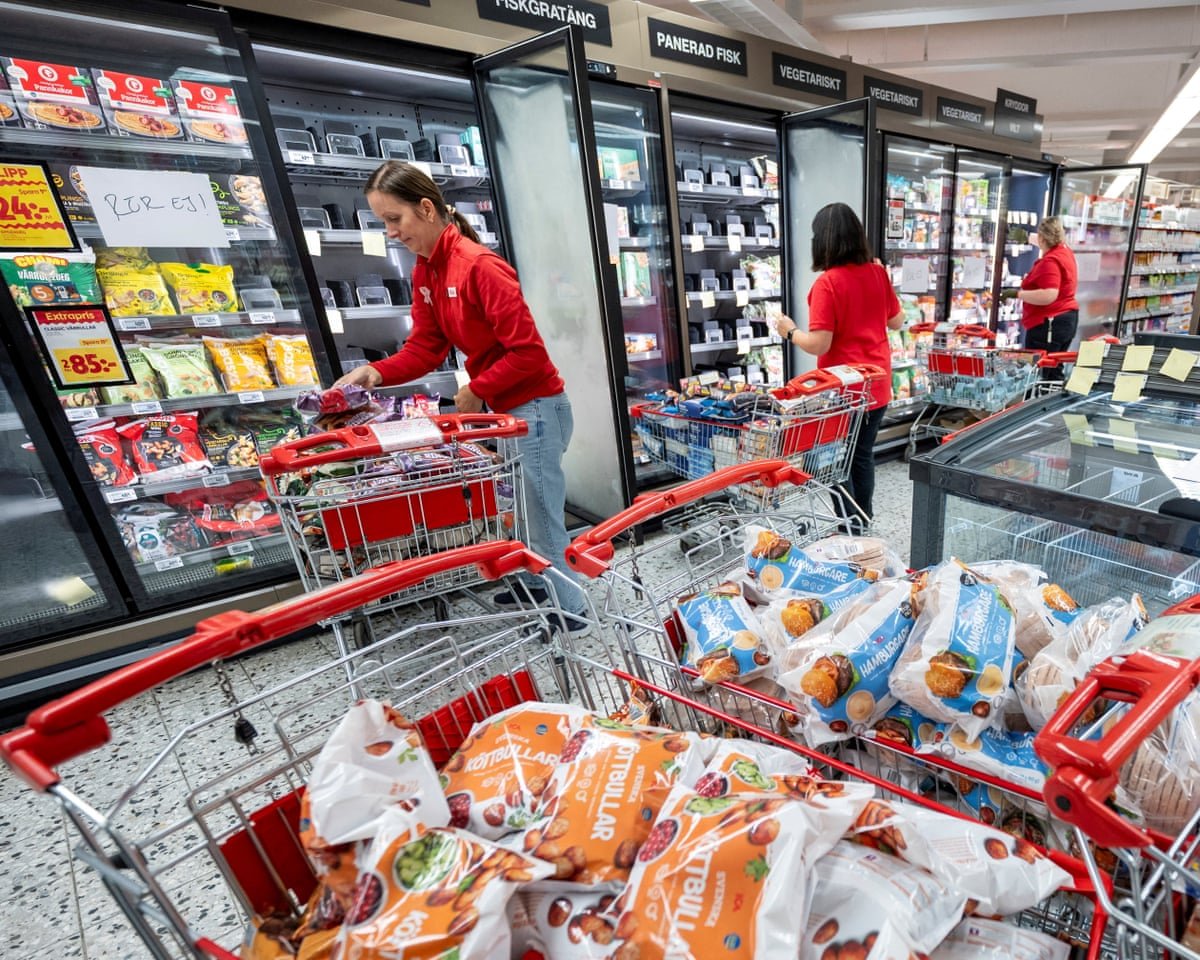
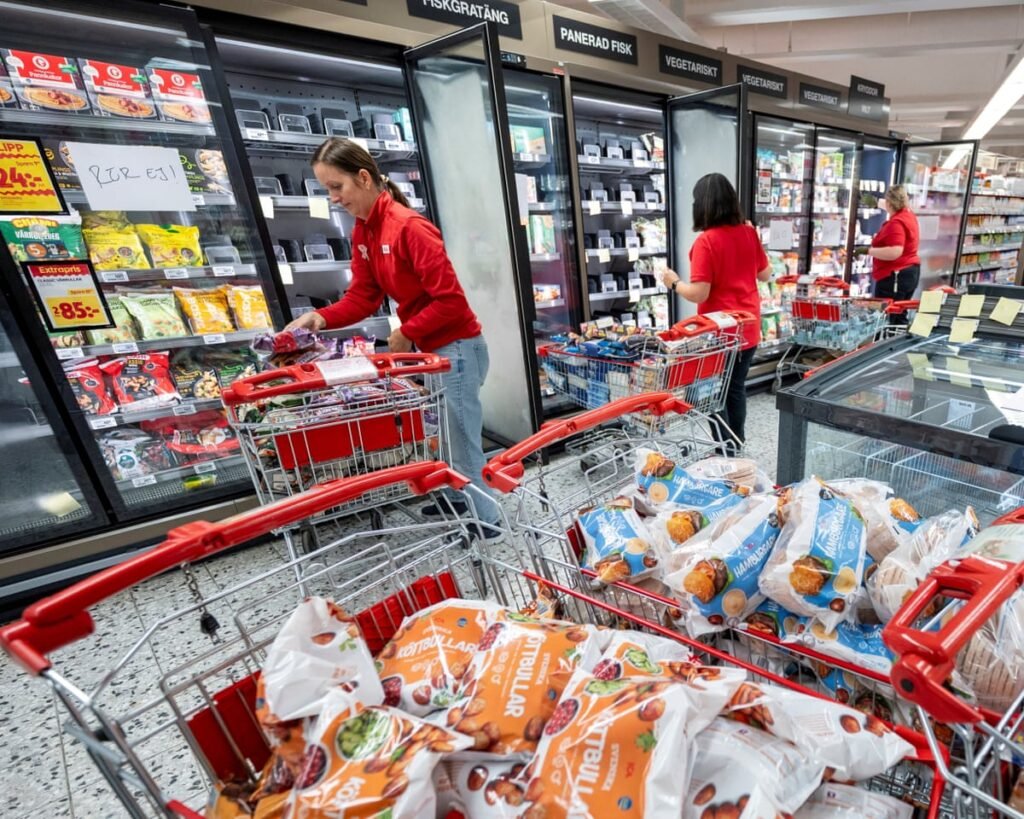
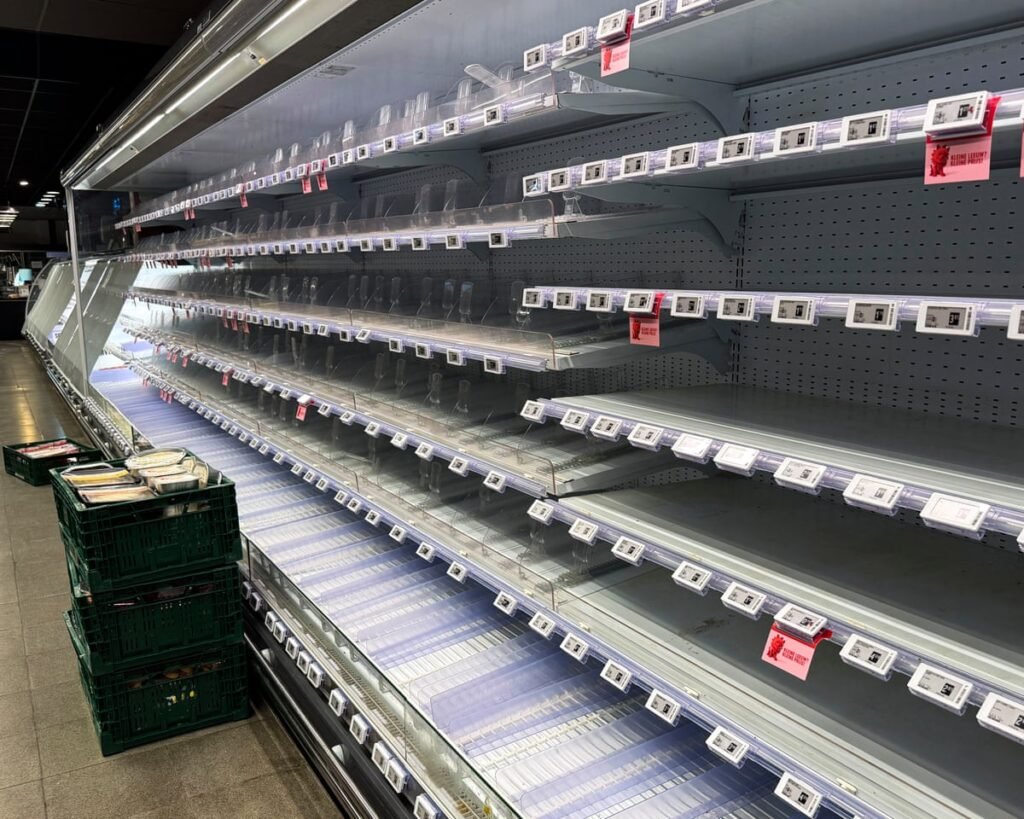
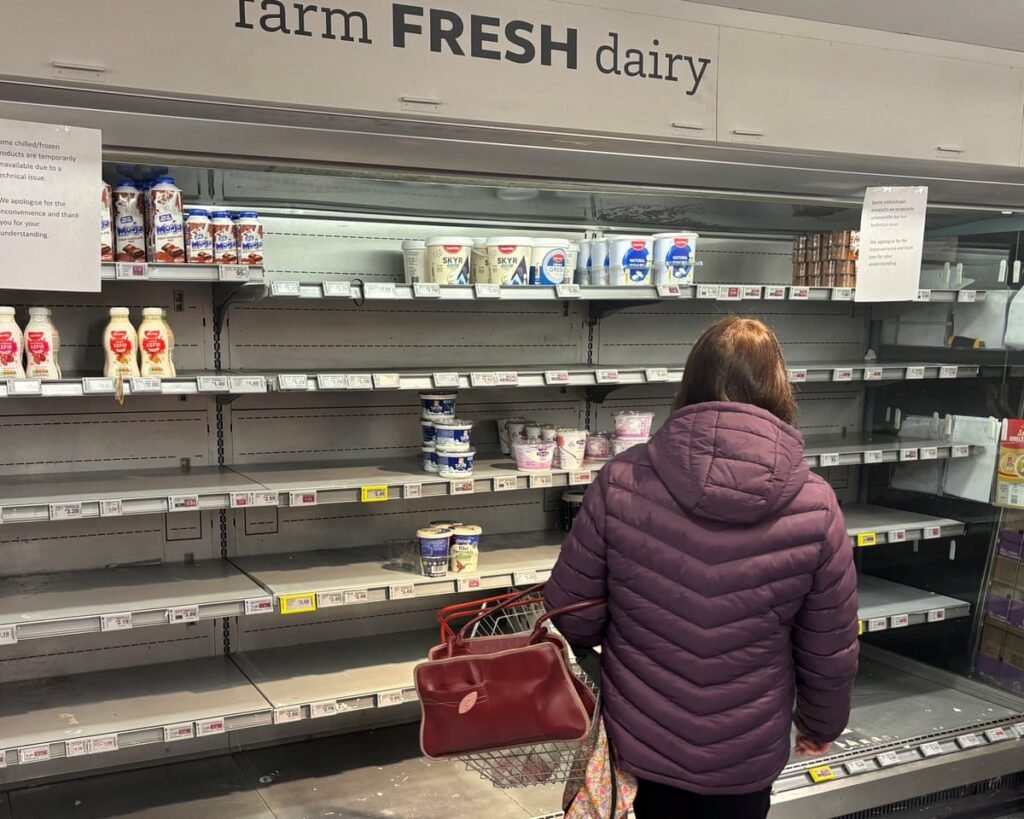
The damage was immediate and visible. Shops had to empty chilled and frozen shelves and throw away vast quantities of fresh meat, dairy and frozen products. At a Delhaize branch in Hoeilaart, just outside Brussels, the BBC’s Europe correspondent found frozen pizzas and ice cream among a mountain of food having to be scrapped; the branch estimated the cost of the damage at more than €100,000 (£83,500).
Ahold Delhaize, the Dutch retailer behind the Delhaize chain, said fridges and freezers in dozens of its supermarkets in Belgium and Luxembourg had been hit. Reporters visiting a shop north-east of Brussels saw refrigerators and freezers empty and a sign reading: “Due to cyberattacks, there will be no products on the refrigerated or freezer shelves. We offer our sincere apologies.” A company spokesperson, Sarah De Meester, said the range of fresh and frozen products was “temporarily somewhat limited” in affected shops, but that distribution centres were operating normally and there was no disruption to deliveries.
The November attack was the second wave. The first, in France in October, was far bigger: hackers seized control of cooling units in as many as 700 supermarkets, raising their temperatures as high as 50C and causing fires and food losses estimated in the tens of millions of euros. Individual French supermarkets reportedly suffered losses ranging from tens of thousands of euros to more than €130,000 (£109,000). The chains hit included Intermarché, Carrefour, Leclerc, Coopérative U and Monoprix.
How the Attack Worked
The method was strikingly simple — and that is what worries the experts. The hackers remotely overrode the settings on thousands of freezers, fridges and chiller cabinets, pushing them from as low as -27C to well over 50C. In the French attack, the hackers pirated controllers mostly supplied by the Danish company Danfoss, which said subsequently that it had identified some security flaws last year and had “long recommended” customers install updates. France’s national cybersecurity agency, ANSSI, later reported that supermarkets using controllers from two other companies had also been targeted.
The problem, investigators say, is that thousands of these controllers were left reachable directly from the public internet. According to the Centre for Cybersecurity Belgium, the attackers targeted controllers whose web management interfaces were reachable from the internet, running out-of-date firmware or still using default passwords. “Thousands of these controllers were still reachable from the internet after the French attack,” said Patrick Lamplmair of the cybersecurity firm Tributech. “A few commands to a temperature controller can destroy stock overnight and close stores.”
The head of Sweden’s national cybersecurity centre, John Billow, said it was working on incidents around the country and had established that Sweden had “quite a lot of exposed operational technology devices” that needed updating or patching. The UK’s National Cyber Security Centre has also confirmed “a couple of instances where vulnerable technology had been exploited” in Britain, and has described the attacks as unsophisticated.
- Seven countries hit on 2 November: Belgium, Estonia, Ireland, Finland, Luxembourg, the Netherlands and Sweden
- Around 40 Delhaize supermarkets affected in Belgium and Luxembourg
- Temperatures pushed from as low as -27C to 50C (122F)
- Up to 700 supermarkets hit in the earlier French attack in October, with losses in the tens of millions of euros
- No ransom demands made; no claims of responsibility
Sabotage, Not Ransom
No financial demands were made — and that, analysts say, is the point. Many cyber-attacks involve extortion or are politically motivated and are potentially carried out by state-level actors, said Tom Hegel of the cybersecurity firm SentinelOne. But the supermarket attacks, with no financial demands, point to sabotage, he said.
“Retail is an easy target because retail chains run enormous estates of refrigeration controllers, building management systems, door access panels and point-of-sale gear,” Hegel told Reuters. Lamplmair added that cyber-attackers would keep going “until it stops working” because the method was “cheap and the damage is immediate”.
The European Union’s food and agriculture commissioner, Christophe Hansen, called the repeated attacks deeply concerning, describing them as “a deliberate attempt to disrupt our food supply chain and undermine consumers’ confidence in it”. A growing range of devices, including refrigeration systems, can now be monitored and controlled remotely, leading authorities to particularly fear government-sponsored hybrid attacks in the wake of Russia’s 2022 invasion of Ukraine — though no one has been blamed for these attacks, and there have been no claims of responsibility.
In the United States, authorities are investigating what caused refrigeration malfunctions at a number of American military bases in August, and are working with French officials to examine whether the incidents could be linked.
What Happens Next
In France, the Paris prosecutor’s office has opened a formal investigation into the October attack, and Prime Minister Sébastien Lecornu instructed ANSSI to investigate. But the November wave shows the fix has not yet happened: the same controllers, still reachable from the internet, were hit again with the same method.
For retailers, the lesson is now a practical one. The UK’s National Cyber Security Centre and industry guidance say the defences are unglamorous but effective: take the controllers off the public internet, change default passwords, install the firmware updates the manufacturers have already issued, and monitor the units so a temperature spike is caught before a night’s stock is lost. Until that work is done, the experts warn, the same cheap trick will keep working — and the next overnight attack will cost another chain another mountain of food.
No ransom, no claim of responsibility, no sophisticated break-in — just controllers left open to the internet, and a defrost command that turned freezers into ovens.
By Akhtar Saleem Khan
Head of IT | The BNN Media – The Best News Network
News Beyond the Borders