By
Foreign portfolio investors have bought a record $10.07 billion of Indian shares so far in November — the biggest monthly inflow ever recorded — in a dramatic reversal after a year of heavy selling that had made 2026 the worst year for foreign equity flows since records began.
By The BNN Media
The Best News Network
News Beyond the Borders
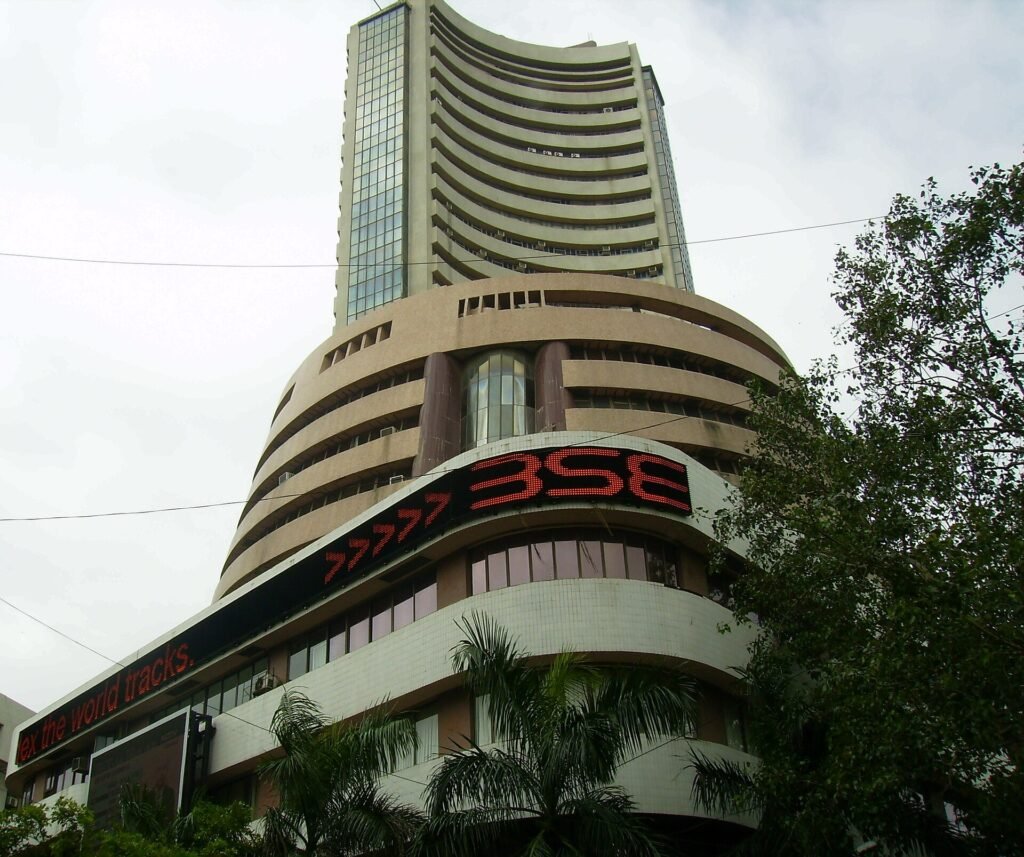
MUMBAI, India — Foreign portfolio investors (FPIs) have net purchased a record $10.07 billion of Indian equities in November up to 17 November, the highest net inflow for any month on record, according to data reported by The Hindu BusinessLine. The figure surpasses the previous monthly record of $8.42 billion set in December 2020 by 19.6 percent — and comes in a year that remains, paradoxically, the worst on record for foreign selling.
The Record in Numbers
The November buying has been relentless. Overseas investors have been net buyers of Indian shares for twelve consecutive trading sessions, according to CNBC-TV18, citing provisional exchange data. On Monday, 16 November, they bought shares worth about $520 million, taking the month’s net purchases to $9.6 billion at that point — already a record — before the tally rose past $10 billion on Tuesday.
The scale of the inflow stands out sharply against the rest of Asia. While India has attracted nearly $10 billion of foreign equity money so far this month, South Korea has seen outflows of $9.3 billion and Taiwan withdrawals of nearly $21 billion over the same period, according to Bloomberg data cited by CNBC-TV18.
The buying has lifted the market with it. The Nifty 50 index is up about 10 percent this month and reclaimed a nine-month high on Tuesday, erasing all its losses since the war in West Asia began, Outlook Business reported. The rupee has strengthened on the back of the inflows, closing at 93.92 to the dollar on Monday.
A single month of record buying has not erased a year of selling — but it has changed the direction of the story.
A Year of Selling, Reversed
November’s surge is remarkable precisely because of what came before it. Foreign investors began 2026 pulling money out of India, and for most of the year the flow ran only one way:
- January: net withdrawal of $3.98 billion
- February: inflows of $2.50 billion, a brief pause in the selling
- March: an unprecedented $12.72 billion of outflows, triggered by surging crude oil prices and a sharp fall in the rupee as the US–Iran war began
- April to June: outflows continued through the second quarter
- July and August: inflows of $2.12 billion and $3.10 billion offered a short-lived recovery
- September and October: foreign investors pulled out a combined $7.35 billion
Even after November’s record buying, 2026 remains the worst calendar year for net foreign equity investment since the data series began in 2002, with net outflows of $21.33 billion up to 17 November — surpassing the previous record outflow of $18.91 billion in 2025.
The record month and the record year sit side by side: November’s buying is a sharp turn, not yet a full recovery.
Why the Money Came Back
Analysts say the buying is driven less by a sudden new faith in India than by a rotation away from crowded trades elsewhere. Madan Sabnavis, chief economist at Bank of Baroda, told The Hindu BusinessLine that flows changed direction after the US mid-term elections. “Earlier funds were moving into US AI stocks. Now funds feel focus will be less on AI. Hence Indian market looks attractive for diversification,” he said.
Vivek Iyer, partner and financial services risk advisory leader at Grant Thornton Bharat, put it more bluntly: “November’s record is as much a vote against crowded AI trades in North Asia as a vote for India. The test is whether FPIs stay once the rotation fades. The Budget’s stance on FPI capital gains tax could decide that.”
The money has flowed into the market’s heavyweights. Financials, telecommunications, capital goods, pharmaceuticals and automobile manufacturers attracted the bulk of the offshore capital, according to exchange trading data. Morgan Stanley has raised its outlook for Indian equities, projecting a 16 percent upside for the BSE Sensex.
The Other Side of the Trade
The foreign buying has not gone unanswered at home. Domestic institutional investors have sold more than ₹52,000 crore worth of equities this month, booking profits into the rally — a reminder that the market’s rise is being driven from abroad while local institutions take money off the table.
That tension is part of what makes the record fragile. Foreign investors still hold about $685 billion of Indian equities in total, with financial services stocks accounting for $206 billion, or 30 percent, of that total at the end of October. But Jefferies has noted that foreign ownership of BSE 500 companies stood at a 12-year low of 17.3 percent in September — the buying is coming off a very low base.
The rally, in other words, is real — but it is being built on a narrow foundation, and domestic investors are selling into it.
How Long Can It Last?
The honest answer, from the analysts quoted in the reporting, is that nobody knows yet. Aditi Nayar, chief economist at ICRA, said foreign flows “may remain volatile, subject to geopolitics and developments in the AI sector,” adding that India is expected to run a modest current account deficit of 0.9 percent of GDP in the 2027 financial year, with the size and direction of foreign flows in the second half bearing on the overall balance of payments surplus.
Two policy questions hang over the trade. The first is the Budget’s stance on capital gains tax for foreign investors — the factor Grant Thornton’s Iyer identified as potentially decisive. The second is a reported proposal by the market regulator SEBI to scrap the 12.5 percent long-term capital gains tax for foreign investors — a pre-Budget proposal, not law, and one that has not been confirmed by the government.

The Record in Context
November’s figure is a monthly record, but it is not the largest annual flow India has ever seen. In full calendar years, foreign investors pumped in $29.36 billion in 2010, $24.37 billion in 2012 and $23.01 billion in 2020. What is new is the speed of the turn: from net sellers of roughly ₹35,000 crore in each of September and October to net buyers of nearly ₹95,000 crore in the first half of November alone.
Whether November proves to be the start of a durable return or a brief rotation will be decided by earnings, the currency and the Budget — not by the record itself.
By The BNN Media
The Best News Network
News Beyond the Borders
Sources: The Hindu BusinessLine; CNBC-TV18; Outlook Business.