 By
Nvidia has brought in one of Wall Street’s most feared law firms to investigate reports that its chief executive was targeted by a suspected Chinese intelligence operation — a case that has already cost the chipmaker its leader, shaken its board and drawn in the FBI, Congress and now the securities regulator.
By The BNN Media
The Best News Network
News Beyond the Borders
SANTA CLARA, United States — Nvidia has hired the Wall Street law firm Wachtell, Lipton, Rosen & Katz to conduct an independent investigation into reports that its chief executive, Jensen Huang, was targeted by a foreign intelligence operation, the company’s independent directors confirmed on 10 November 2026. Former acting US Attorney Joon H. Kim will lead the review, which will examine Huang’s relationship with a woman US intelligence officials reportedly believe worked for Beijing — allegations that remain unproven and that China has denied.
The Appointment
Nvidia’s independent directors announced on Tuesday, 10 November, that they had retained Kim and his firm “to conduct a thorough and independent investigation as was announced on Sunday,” referring to the board’s announcement two days earlier that a committee of independent directors would oversee an inquiry with assistance from outside counsel.
The appointment put one of America’s best-known corporate investigators at the centre of the biggest governance crisis in Nvidia’s history. Kim served as acting US attorney for the Southern District of New York from March 2017 to January 2018, and in 2021 he was one of two lawyers appointed by New York’s attorney general to investigate sexual harassment allegations against former Governor Andrew Cuomo — an inquiry that concluded Cuomo had harassed multiple women and ended with his resignation.
Wachtell, widely regarded as the most prestigious corporate law firm on Wall Street, has recent experience of high-stakes independent reviews. Its investigation into the Los Angeles Clippers found the NBA team had broken salary-cap rules, prompting the league in September to fine the club $30 million, strip it of five first-round draft picks and suspend its owner for a year.
The choice of an outside firm, rather than an internal review, signals that Nvidia’s board wants the findings to be seen as independent — a difficult task for a board long viewed as loyal to its founder.
How the Allegations Emerged
The case centres on Huang’s relationship with Alice Huang, also known as Huang Le, a 63-year-old Chinese businesswoman and former executive at Megaspeed, a Singapore-based data-centre company that has been a customer of Nvidia. The two are not related.
The New York Times reported on 29 October that US officials suspected Alice Huang could be a spy for China, and subsequent reporting said US intelligence officials had identified her as an asset of China’s Ministry of State Security. Beijing has rejected the allegations. At a press briefing on 9 November, Foreign Ministry spokesperson Guo Jiakun said they were unsubstantiated and intended to smear China.
Huang has acknowledged that he had an extramarital relationship with Alice Huang. He admitted on Sunday, 8 November — the same day the board announced its inquiry — that he had been unfaithful to his wife of more than 40 years.
Questions about Nvidia’s China business and Megaspeed’s chip purchases had already been raised publicly. On 13 May 2026, the short seller Culper Research published a report questioning the company’s China sales, Megaspeed’s purchases and Huang’s relationship with Alice Huang.
Nothing has been established about whether any Nvidia secret, chip or piece of US national security information was compromised. The espionage allegation itself remains an unproven claim by US officials, reported in the press — not a finding by any court, regulator or investigator.
What the Board Said — and Did Not Say
When it announced the inquiry on 8 November, Nvidia’s board said it had “no reason to believe” that either US national security or Nvidia’s confidential information had been compromised, but pledged to examine all available information.
The company said Huang would remain chief executive while the investigation ran and would not take part in choosing outside counsel. In the event, he did not remain in the job for long: Huang resigned as chief executive on 12 November, two days after Wachtell’s appointment, and finance chief Colette Kress was named interim chief executive. Nvidia gave no reason for the resignation, and the circumstances of his departure remain the subject of the investigations now under way.
The board’s handling of the affair has itself become part of the story. The New York Times has reported that Nvidia’s ten directors have served a combined 161 years on the board, and that several have longstanding business ties to Huang, including early investors Mark Stevens and Tench Coxe, who joined the board in 1993, the year Huang co-founded the company. Three former employees told the newspaper Huang regarded the board largely as a formality.
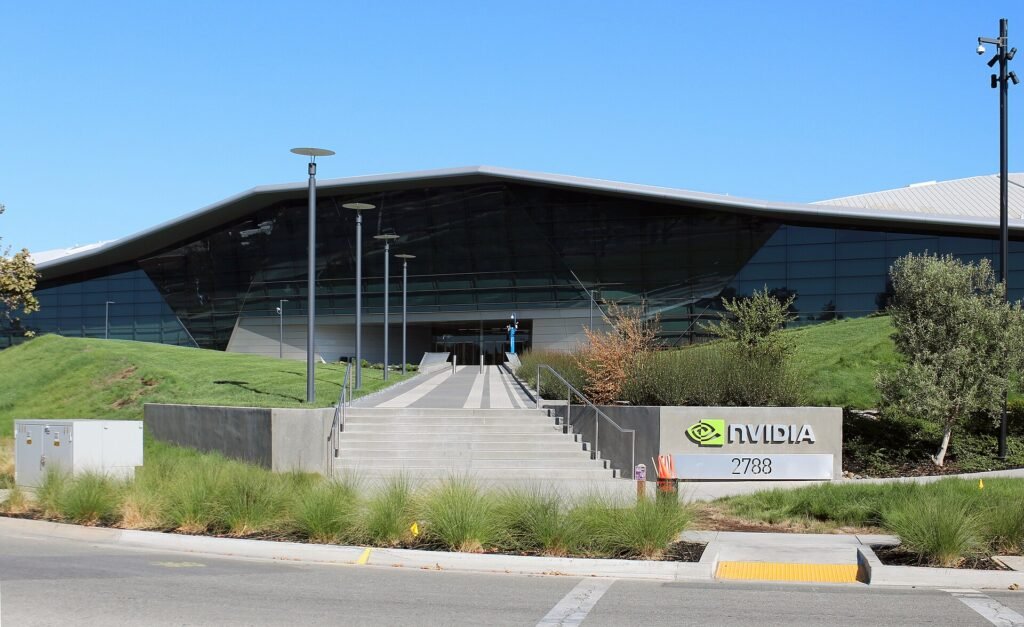
The Wachtell inquiry is therefore a test of the board as much as of Huang: whether directors who spent decades deferring to their founder can now judge him independently.
The Fallout So Far
The market’s verdict was swift. Nvidia shares fell about 4 percent on Monday, 9 November, and a further 5.47 percent on Tuesday, a two-day drop of roughly 9.5 percent. Reuters has reported that the revelations have knocked more than $700 billion off Nvidia’s market value.
Legal and official scrutiny has spread quickly beyond the boardroom:
- A shareholder lawsuit was filed on Monday, 9 November, by retail investor Mark Kistenmacher, on behalf of investors who bought Nvidia shares between 9 October 2025 and 8 November 2026, accusing the company of misleading investors over Huang’s alleged relationship with a suspected Chinese intelligence operative.
- The FBI is conducting a separate investigation, alongside the board’s inquiry.
- Three Republican chairmen of House committees summoned Huang for a closed-door congressional briefing on Wednesday, 18 November — the day after the company’s quarterly earnings report.
- The US Securities and Exchange Commission is probing Nvidia after Huang’s resignation, the Wall Street Journal reported on Tuesday, 17 November, citing people familiar with the matter.
On the same day, Nvidia reported third-quarter revenue of $116 billion, up 103 percent on a year earlier, and Kress told investors on the company’s first earnings call without Huang that the business, its leadership and its staff had the backing of suppliers and partners. Shares rose more than 4 percent in extended trading after the company forecast fourth-quarter revenue above Wall Street’s expectations.
A New Board, a Closed Door
The company has also moved to redraw its governance. On 17 November, the board announced the formation of a National Security and Export Control Oversight Committee, and Harvey Jones was named the board’s new chairman.
Huang said on Tuesday that he “would be honored” to return to the company if invited by the board. Jones rejected the idea on the post-earnings call, saying: “The Nvidia board unanimously accepted [Huang’s] resignation and does not intend to reinstate Jensen as CEO.”
The Justice and Commerce Departments are also investigating Megaspeed, according to Reuters, adding a further official track to a case that now spans the company’s board, the FBI, Congress and the markets regulator.
Whatever Wachtell finds, the company that emerges will be governed differently from the one Huang built — the question is whether the investigation can establish what, if anything, was actually put at risk.
What Happens Next
Nvidia has not publicly set a deadline for the Wachtell review, nor confirmed whether its findings will be released. The congressional briefing scheduled for 18 November is closed to the public, and the SEC inquiry is at an early stage, according to the Wall Street Journal’s reporting.
For now, the facts established are narrow: a relationship Huang has acknowledged, suspicions reported by US officials and denied by Beijing, and a board that says it has no reason to believe secrets were compromised — but has hired one of the toughest firms in America to make sure.
By The BNN Media
The Best News Network
News Beyond the Borders
Sources: New York Post; Reuters; Qazinform; American Bazaar Online.