By
Nearly half a century after leaving Earth, NASA’s Voyager 1 has crossed a distance no spacecraft has ever reached before — so far away that a radio signal travelling at the speed of light now takes a full day to reach it.
By The BNN Media
The Best News Network
News Beyond the Borders
Pasadena, California — NASA’s Voyager 1 spacecraft reached one light-day from Earth on Wednesday, 18 November 2026, at 5:16:07 a.m. EST, becoming the first human-made object in history to travel that far from home. The milestone puts the probe about 16 billion miles (about 26 billion kilometres) from Earth — a distance it took 49 years, two months and 11 days to cover since its launch in 1977.
What a Light-Day Means
A light-day is not a measure of time. It is the distance that light — the fastest thing in the universe, moving at about 186,000 miles every second — travels in 24 hours. NASA puts the exact figure at 16,094,799,096 miles (25,902,068,356 kilometres).
To grasp the scale, sunlight takes about eight minutes and 20 seconds to reach Earth from the Sun. Light crosses the distance to the Moon in just 1.3 seconds. Even Neptune, the most distant planet in our solar system, sits only about four light-hours and 10 light-minutes away. Voyager 1 is now a full day’s worth of light travel from home.
The takeaway: Voyager 1 has travelled so far that “far” itself needs a new unit of measurement — and it is still going.
A Signal That Takes a Day to Arrive
The most practical consequence of the milestone is the silence between messages. A radio command sent from Earth now takes a full 24 hours to reach Voyager 1, and any reply takes another 24 hours to come back. A single question and answer now spans two days.
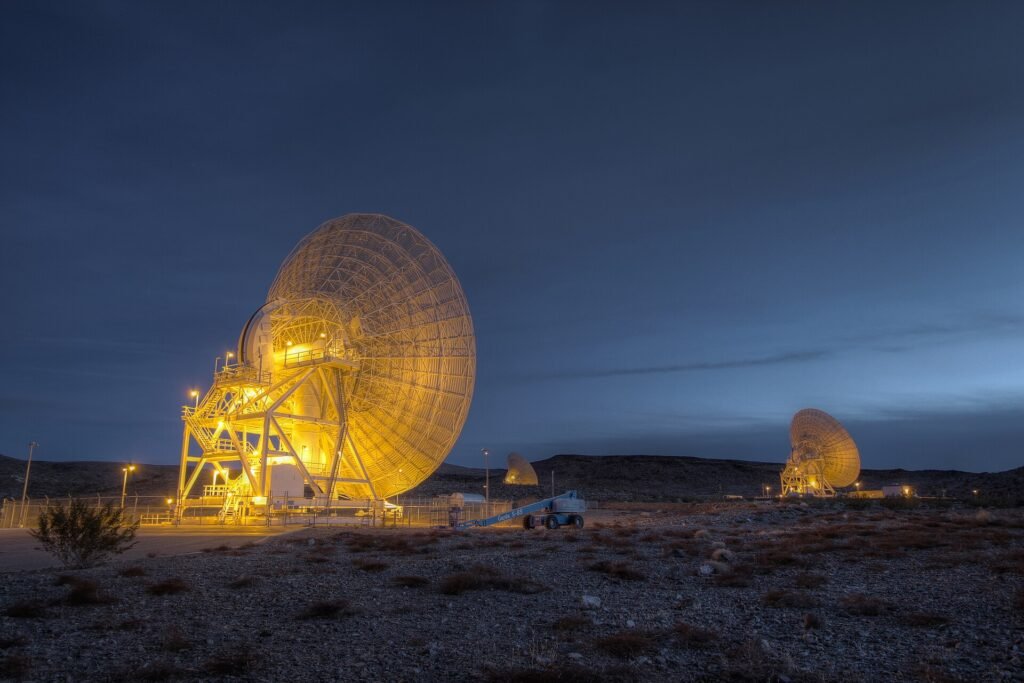
NASA’s Deep Space Network of giant antennas listens for the probe’s faint signal, which arrives weaker than the power of a modern digital watch. The spacecraft communicates through a 12-foot (3.7-metre) dish antenna, and its controllers must plan every instruction a day in advance.
The takeaway: Voyager 1 is now so distant that even light itself needs a day to catch up with it.
Nearly Fifty Years in Flight
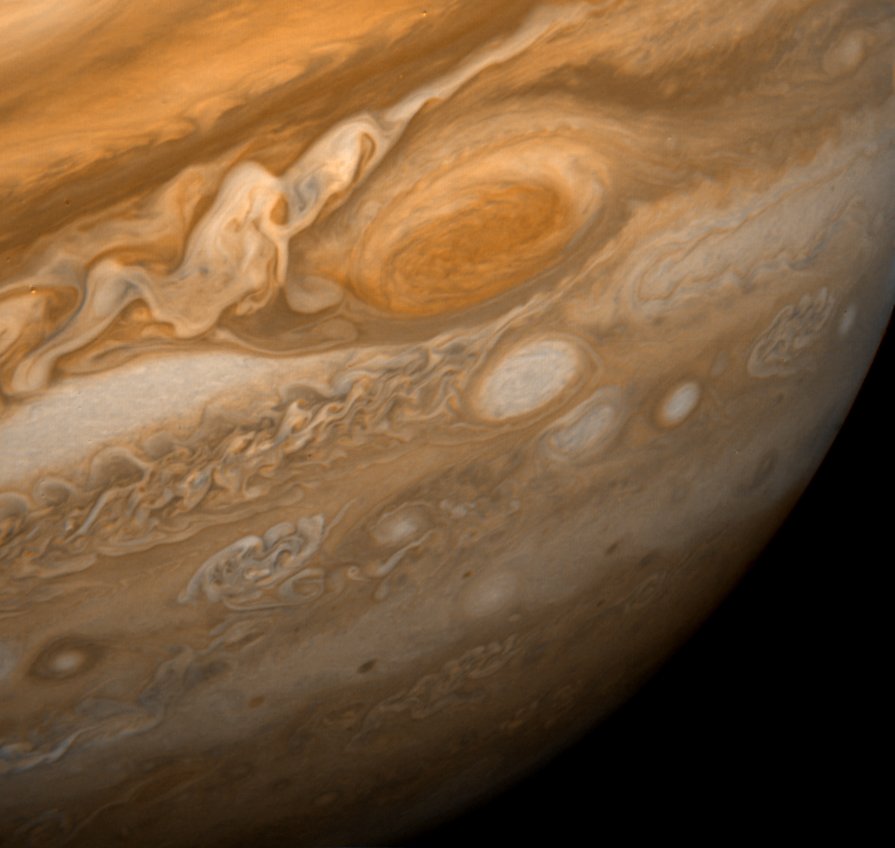
Voyager 1 launched from Cape Canaveral in Florida on 5 September 1977, sixteen days after its twin, Voyager 2. Both spacecraft were built to tour the outer planets, a mission expected to last only a few years. Instead, Voyager 1 flew past Jupiter in 1979 and Saturn in 1980, then used Saturn’s gravity to bend its path out of the plane of the planets and head for interstellar space.
Along the way it collected a string of firsts. On 17 February 1998, it passed Pioneer 10 to become the most distant human-made object from Earth, a record it has held ever since. On 25 August 2012, at about 11.3 billion miles from the Sun, it crossed the heliopause — the boundary where the Sun’s influence gives way to interstellar space — becoming the first human-made object to enter the space between the stars.
Still Working in the Dark
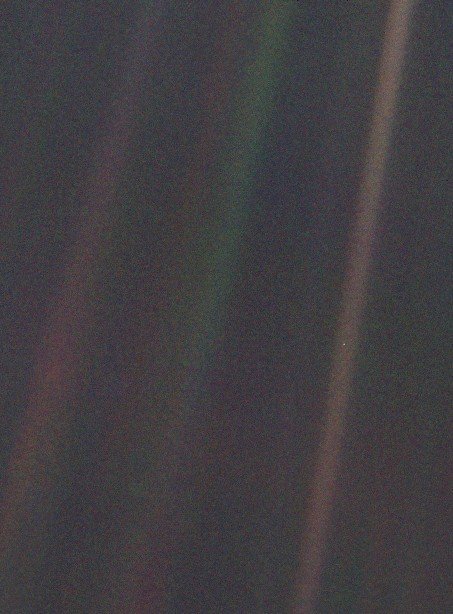
Remarkably, Voyager 1 is still sending back science data. As of NASA’s instrument status update in April 2026, two of its science instruments remained active: its magnetometer, which measures magnetic fields, and its plasma wave subsystem, which studies charged particles in interstellar space.
The spacecraft runs on a dwindling nuclear power supply, and NASA has been switching off heaters and instruments over the years to stretch the remaining energy. The space agency has said it hopes to keep at least one instrument operating into the 2030s.
Contact with the ageing probe has not been without alarms. In an update dated 29 October 2026, NASA reported that Voyager 1’s signal had gone missing during scheduled sessions on 18 and 19 October, before returning on 20 October, with contact maintained since. The episode was a reminder of how fragile the link has become after nearly five decades.
The takeaway: a machine built in the 1970s, running on fading power, is still doing science from beyond the edge of the solar system.
Where It Goes From Here
Voyager 1 is heading in the direction of a star more than 17 light-years away called AC +79 3888, also known as Gliese 445, in the constellation Ursa Minor. It is cruising at nearly 38,000 miles per hour (61,000 kilometres per hour), yet NASA calculates it will pass within about 1.7 light-years of that star only in 40,000 years.
Its twin, Voyager 2, took a different path through the solar system to visit Uranus and Neptune and is on pace to reach one light-day from Earth in November 2035, about nine years from now. Both spacecraft carry the Golden Record, a gold-plated copper disc engraved with sounds, music and images representing life and culture on Earth.
NASA marked the milestone with a worldwide invitation called “Shine Bright for Voyager’s Light-Day”, asking people to flash lights skyward after sunset on Tuesday, 17 November, as a symbolic wave of golden light circling the planet. The agency will also host a moderated discussion at its Jet Propulsion Laboratory in Southern California on Thursday, 19 November, about the status of both Voyager spacecraft.
A Milestone Nobody Planned For
When Voyager 1 launched, nobody on the team expected it to last this long. “When I was first working on Voyager back in 1977, I never expected Voyager 1 to reach one light-day,” planetary scientist Linda Spilker of NASA’s Jet Propulsion Laboratory told ScienceAlert.
The crossing is permanent. Because Earth orbits the Sun, its distance from Voyager 1 rises and falls through the year, but the spacecraft is travelling outward so relentlessly that even when Earth swings back towards it, Voyager 1 will remain more than a light-day away. The barrier, once crossed, stays crossed.
The takeaway: Voyager 1 was built for a five-year tour of the planets. Forty-nine years later, it has carried humanity’s farthest message a full day of light travel from home — and it is still going.
By The BNN Media
The Best News Network
News Beyond the Borders
Sources: NASA Science; USA Today; ScienceAlert.