By
China’s Xi Jinping and Russia’s Vladimir Putin held talks in Shenzhen on Wednesday, a day before a first-of-its-kind three-way meeting with US President Donald Trump that has Kyiv and European capitals watching anxiously.
By The BNN Media
The Best News Network
News Beyond the Borders
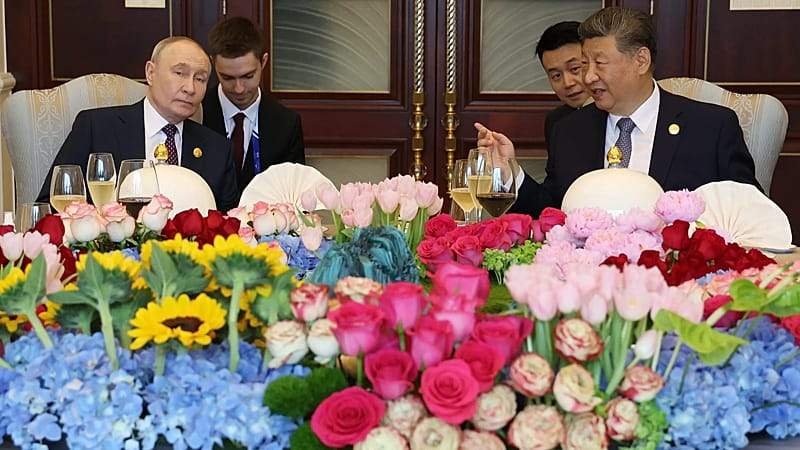
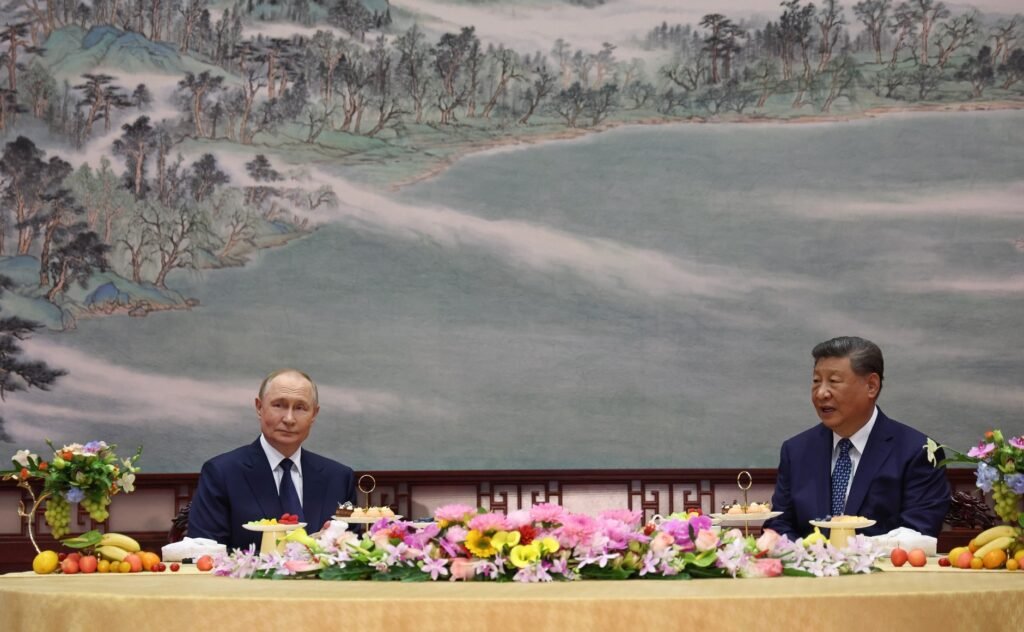
Shenzhen, China — Chinese President Xi Jinping and Russian President Vladimir Putin met in Shenzhen on Wednesday, 18 November 2026, on the sidelines of the Asia-Pacific Economic Cooperation (APEC) summit, a day before a planned trilateral summit with US President Donald Trump on Thursday. Chinese and Russian news agencies reported that the two leaders began talks around midday, in what was their fifth meeting this year, one of which took place by video link.
A Meeting a Day Before History
Thursday’s trilateral session is expected to be the first meeting of the leaders of the United States, China and Russia together — the world’s three largest nuclear powers sitting down as a trio. It will take place on the sidelines of the APEC leaders’ meeting in Shenzhen, which runs on 18 and 19 November.
Putin landed in Shenzhen just before 2 a.m. on Wednesday and received a ceremonial welcome on the tarmac, according to Russian media reports. Trump, meanwhile, was still in Manila on Wednesday, where he attended a summit of the Association of Southeast Asian Nations (ASEAN) and met fellow Quad leaders from Australia, Japan and India for the first time in his second term. He was due to arrive in Shenzhen later on Wednesday, according to Reuters.
The takeaway: three leaders who rarely share a room will do so on Thursday — and Wednesday’s Xi–Putin meeting was the preparation.
What Is on the Table
Beijing has said only that the leaders will hold “in-depth exchanges on safeguarding world peace and promoting strategic stability in major-power relations”. The White House has said the planned trilateral meeting is expected to focus on curbing the spread of nuclear weapons, against the backdrop of the wars in Iran and Ukraine.
According to Reuters, the three leaders could discuss:
- Russia’s war in Ukraine — now in its fourth year
- The war in Iran — and the wider Middle East conflict
- Nuclear weapons and arms control — after the last US–Russia bilateral nuclear treaty, New START, expired in February 2026
- Trade, artificial intelligence and technology
Washington initially said Ukraine was not expected to be on the agenda, but Trump later said it would be. Xi regards the war as not China’s concern, Euronews reported. American officials have characterised the encounter as an entry point for dialogue rather than a negotiating forum for formal agreements, and expectations of substantive outcomes remain deliberately modest.
The takeaway: the agenda is the world’s hardest list — Ukraine, Iran and nuclear weapons — but officials on all sides are warning against expecting a breakthrough.
Fears in Kyiv and Europe
Thursday’s meeting has raised concern in Kyiv and European capitals that the three leaders could settle Ukraine’s future without the Ukrainians or the Europeans in the room, and divide the world into modern spheres of influence.
Those fears have been sharpened by recent diplomacy. Ukraine, Russia and the United States reopened talks in Abu Dhabi on 10 and 11 November, and European leaders have pressed for a seat at the table in any settlement. According to the Kremlin’s announced programme, Putin was expected to brief Xi on his recent contacts with Washington, including those Abu Dhabi talks.
China’s Foreign Ministry has described the summit as having “groundbreaking significance”. For Putin, who has been shunned by the West since he invaded Ukraine in 2022, the trilateral is a chance to reclaim diplomatic relevance on the world stage.
The takeaway: the leaders not invited to Shenzhen — in Kyiv and across Europe — are watching this summit as closely as anyone.
What Xi and Putin Said in Public
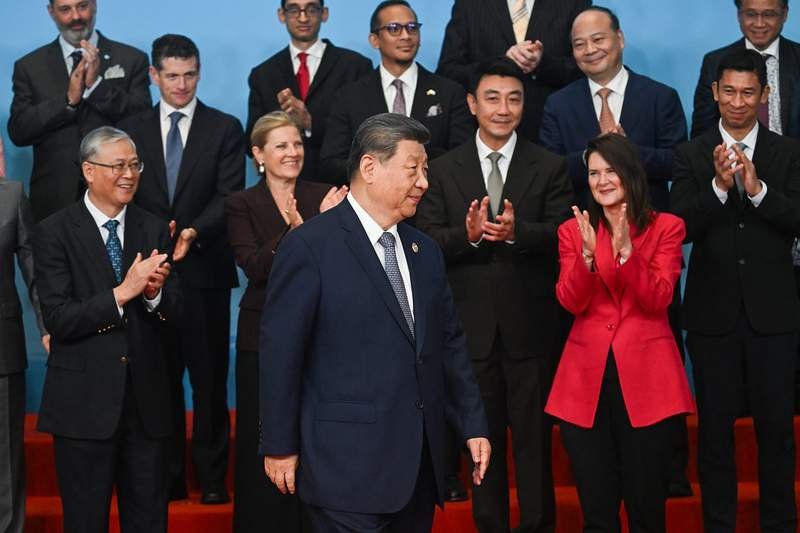
Both leaders also spoke at the opening of the APEC CEO summit on Wednesday. Opening the event, Xi called for stronger international cooperation on artificial intelligence and free trade, and said China would pursue “deep-seated reform”, starting with lower tariffs, wider market access and work on regulation and management standards.
Putin told the APEC gathering he expected the trilateral to be “highly useful”. “I therefore expect big potential benefit from the upcoming trilateral meeting between the leaders of Russia, China and the United States,” he said, according to Reuters. With military and political risks rising, he said “what is desperately needed is unity rather than division… and dialogue rather than ultimatums”, and argued that Western sanctions had failed, saying they could not fully halt growth or wreck the economies of rival states.
Xi and Putin also pledged to preserve stable bilateral ties and drive a multipolar global order amid mounting international uncertainties, ahead of the trilateral meeting with the United States.
The Nuclear Question
Nuclear arms control looms large over the summit. New START — the last strategic arms control agreement between the United States and Russia — expired in February 2026, leaving no formal limits on the two countries’ strategic nuclear arsenals for the first time in decades.
Trump has proposed that the trilateral could focus on nuclear weapons and denuclearisation. China, however, has long argued that the United States and Russia should cut their much larger arsenals before it will discuss limits on its own stockpile — a position that makes any three-way agreement difficult.
Analysts quoted by the Bulletin of the Atomic Scientists argue the summit should at minimum produce a joint declaration against using nuclear weapons, or nuclear threats, to facilitate conventional aggression or territorial acquisition.
The takeaway: with the last US–Russia nuclear treaty gone, this is the first time the three nuclear giants have met to talk about what replaces it.
Trump, Kim and the Wider Guest List
Trump has said he hoped to hold one-on-one talks with both Putin and North Korean leader Kim Jong Un in Shenzhen, adding that Kim “would like” to meet in China. Secretary of State Marco Rubio, speaking in Manila, stopped short of confirming a Kim meeting but said engagement was the only way to resolve problems with North Korea.
A separate bilateral meeting between Putin and Trump is also lined up, in addition to talks with the leaders of several other nations, according to Russian media reports. Putin is also scheduled to visit Shenzhen MSU-BIT University during his stay.
Around 2,000 people protested during Trump’s visit to Manila, carrying banners reading “Trump out now” and “Reject Pax Silica”, a reference to a US supply chain initiative.
What Happens Next
All eyes are now on Thursday. No agreements have been announced so far, and any statements on Ukraine, Iran or arms control remain open questions. The three leaders are also set to hold separate bilateral talks during the gathering, and Trump is expected to meet Xi one-on-one as well.
Whether the summit produces anything more than a photograph remains to be seen. But the image itself — the leaders of the United States, China and Russia in one room for the first time — is already the story.
The takeaway: Thursday’s meeting may settle nothing, but the fact that it is happening at all marks a return of great-power politics to centre stage.
By The BNN Media
The Best News Network
News Beyond the Borders
Sources: Euronews (AP); Reuters; Bulletin of the Atomic Scientists; Observer Research Foundation.