
 By
By The BNN Media
The Best News Network
News Beyond the Borders
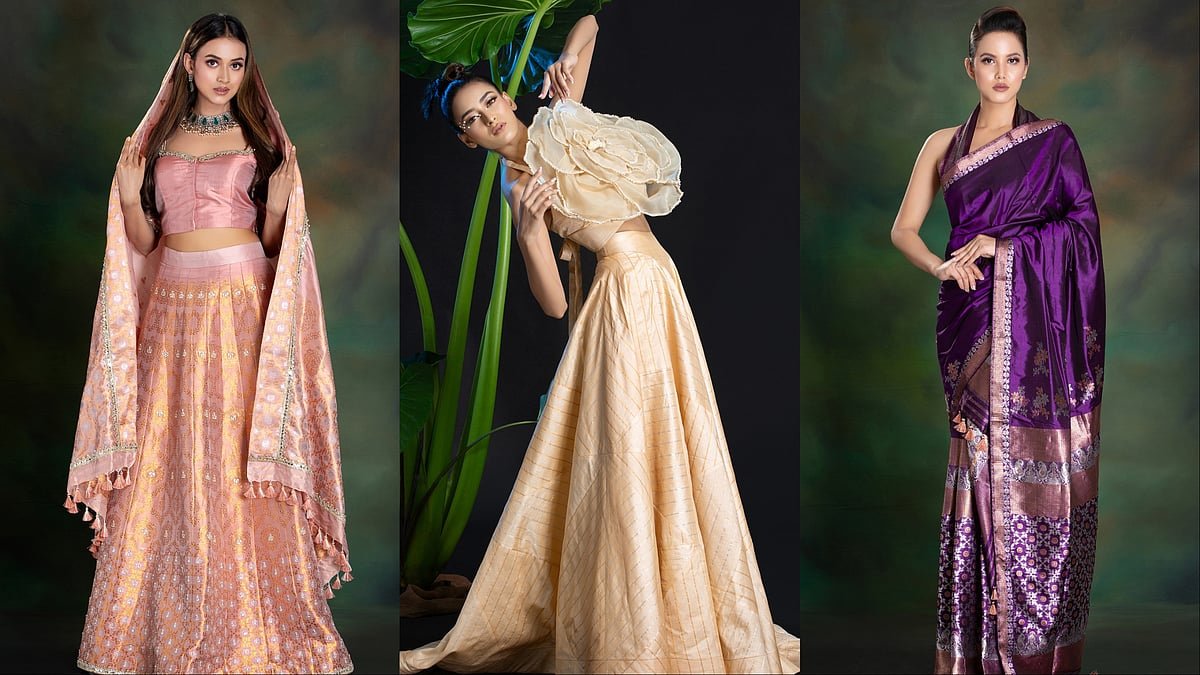
From a small weaving unit in Guwahati with just three handlooms, designer Sanjukta Dutta has carried Assam’s silk and the traditional Mekhela Sador to the runways of New York, Paris and Milan — and her latest collection, ‘Seneh — The Affection’, shown at Lakmé Fashion Week x FDCI, is her most personal tribute yet to the weavers behind the cloth.
New Delhi, India — Designer Sanjukta Dutta has put Assamese weaves in the global spotlight once again with her latest collection, ‘Seneh — The Affection’, showcased at the recent Lakmé Fashion Week x FDCI in New Delhi, where intricate Assamese handloom and traditional motifs appeared in modern silhouettes — the latest chapter in a journey that began with three handlooms in a small Guwahati weaving unit.
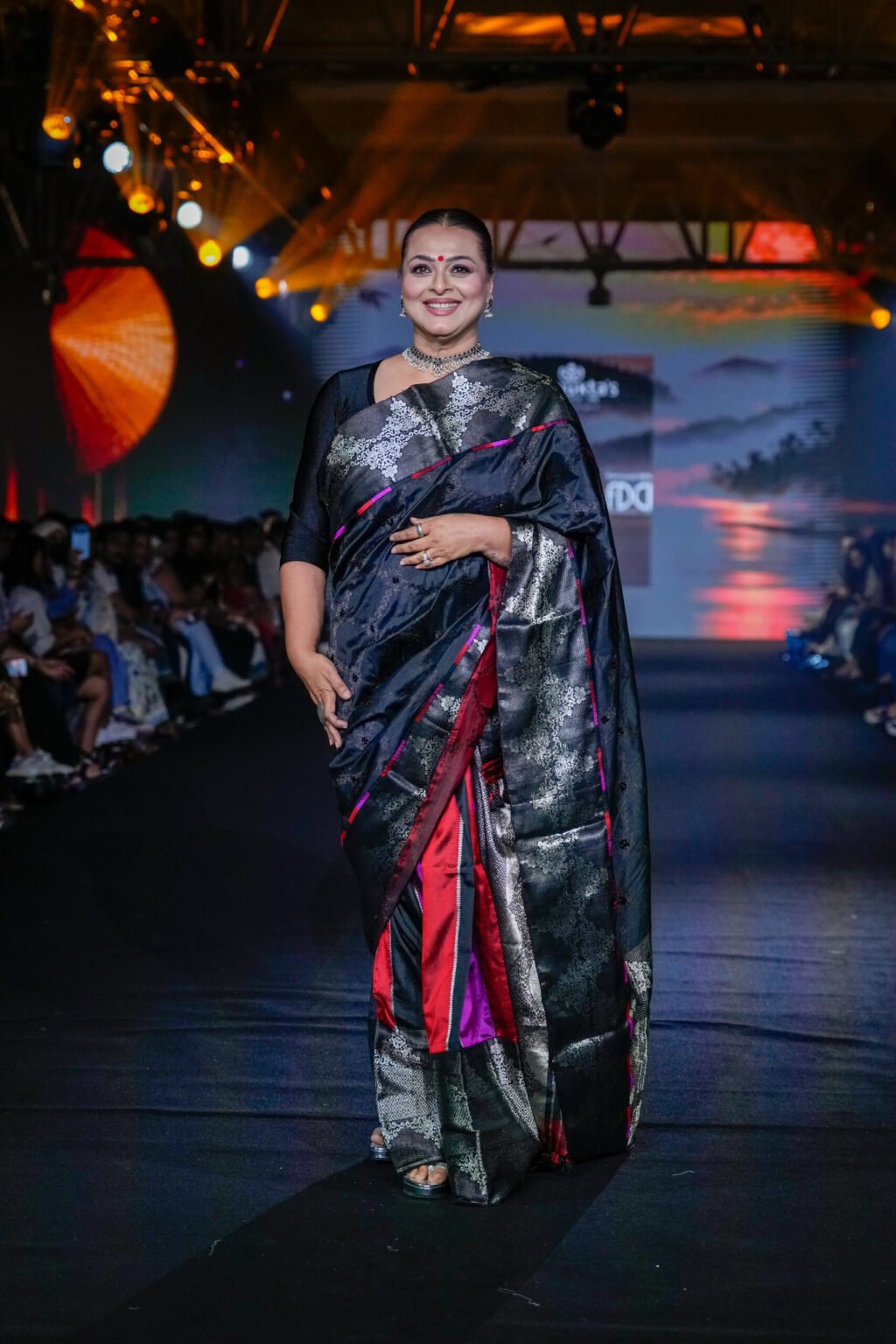
The collection, whose name means “affection”, celebrates the warmth of home, memories and belonging, and drew on the soft neutrals and natural tones of Assamese Muga silk. Bollywood actor Shilpa Shirodkar walked the ramp as the showstopper, closing a show built around traditional Mekhela Chadors, dresses and skirts reimagined through handwoven fabrics and age-old techniques.
‘Seneh’ on the Runway
The Lakmé Fashion Week x FDCI showcase presented Seneh as a collection about feeling as much as fashion. Dutta, known for authentic indigenous motifs and handweaving techniques, kept the traditional Mekhela Sador at the centre of the show while extending its language into contemporary dresses, skirts and structured drapes.
The show was, by the accounts of those who covered it, a display of the designer’s love for her heritage: every detail handwoven, the fabrics carrying the work of artisans whose techniques have been passed down through generations. Shirodkar’s appearance as showstopper — in a dark, silver-woven Mekhela Sador-style drape with red and magenta accents — brought the collection’s blend of tradition and modernity to the front of the runway.
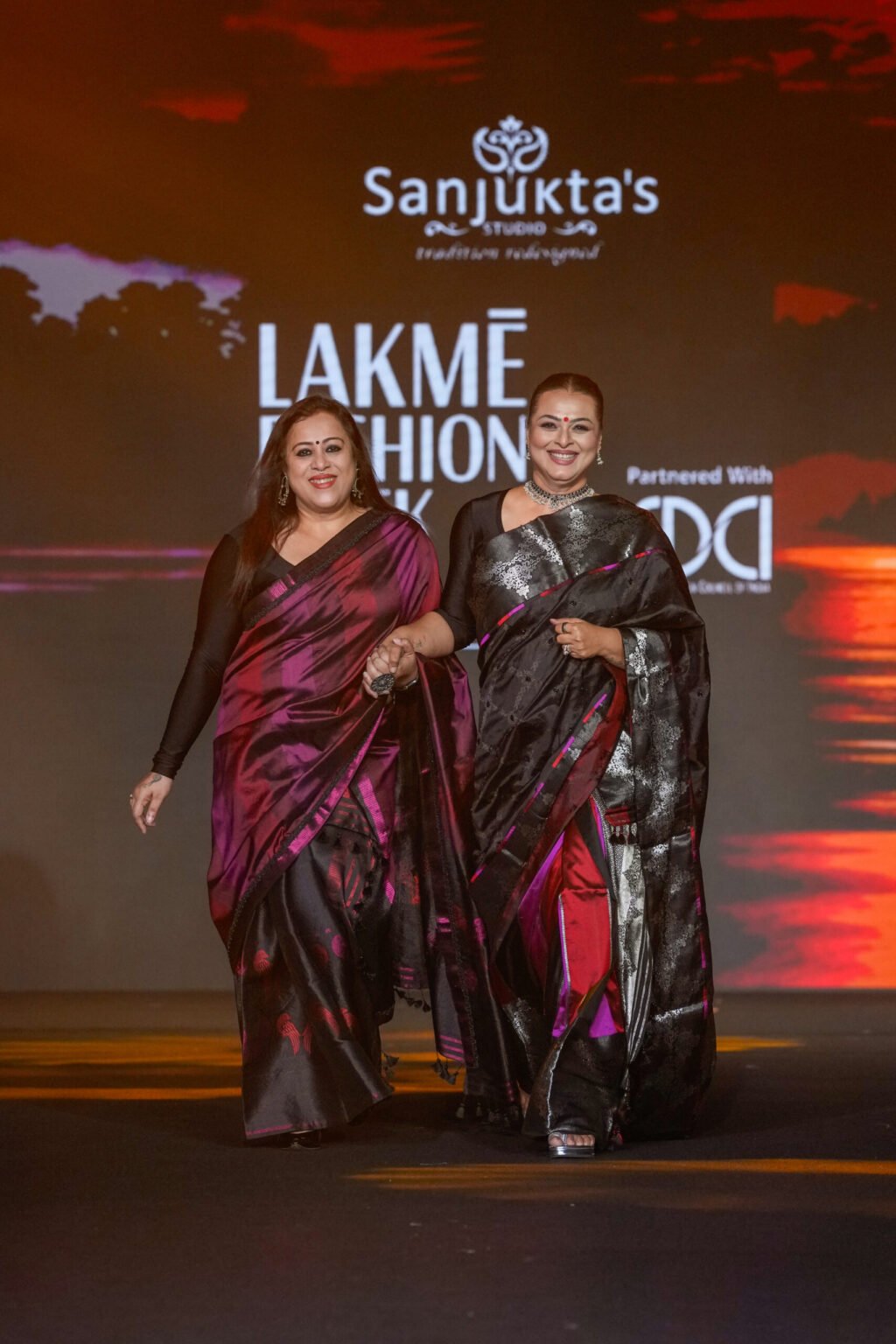
Dutta is the first Assamese woman designer to showcase a collection at Lakmé Fashion Week, a milestone that has made her a standard-bearer for the region’s textiles on India’s biggest fashion stage.
A collection named for affection, shown in the city where Indian fashion gathers — and closed by a star in Assamese silk.
What ‘Seneh’ Means
Seneh is a word that carries the warmth of home, and Dutta built the collection around exactly that. In an interview with Indulge Express, she described wanting to translate love and affection into a visual language — through the warmth of Muga-inspired beige, the richness of Assamese silk and the timeless elegance of traditional weaves.
“Love and affection are emotions that connect us to our roots, our families and our cultural identity,” Dutta said. “With Seneh – The Affection, I wanted to translate these emotions into a visual language through the warmth of Muga-inspired beige, the richness of Assamese silk and the timeless elegance of our traditional weaves.”
The palette is deliberately understated: soft neutrals and natural tones that echo the golden tone of Muga silk, rather than loud embellishment. The textures and drapes, she said, are meant to evoke the comfort of familiarity and the beauty of inherited traditions — garments that carry not just aesthetic value but a feeling of belonging, nostalgia and affection that transcends generations.
The Silks at the Heart of the Collection
The heartbeat of Seneh, Dutta said, lies in the craftsmanship of the weavers and the distinctive character of Assamese silk. Three silks do the work:
- Muga silk — with its natural golden-beige lustre, giving the collection its warm, understated colour story.
- Pat silk — a variety of mulberry silk, valued for its softness and sheen.
- Mulberry silk — fine in texture, lending delicacy to the garments.
Traditional weaving techniques, intricate borders and delicate motifs give Assamese textiles their unmistakable identity, and Dutta’s skill lies in translating those elements into contemporary designs without losing the integrity of the fabric. “For me, every handwoven piece represents generations of knowledge, patience and dedication,” she said. “The human hands behind the textile are as important to the collection as the final silhouette.”
Three silks, one palette of quiet gold — and the weaver’s hand visible in every piece.
From Three Handlooms to Six Factories
Dutta’s own story is as much a part of the collection as the cloth. Born in Nagaon, Assam, she holds a degree in engineering but chose to leave a secure job to pursue her childhood dream of dressmaking. She began her fashion journey in 2012, driven by a wish to help revive Assam’s handloom sector and create work for its skilled artisans.
From a small weaving unit in Guwahati with just three handlooms, she now has more than six factories supplying silk garments across India, and her studio works extensively with local weavers and artisans across Assam. That work, she says, has grown into something much deeper than a professional association: a community endeavour that supports more than 200 families through sustained work and livelihoods.
Her commitment to the craft has also been recognised at home. In October 2025, a new fashion and handloom studio of hers was inaugurated in Nagaon, an initiative aimed at empowering 126 artisan families and carrying Assam’s handloom traditions to a wider audience.
“My philosophy has always been to evolve with tradition, never away from it,” Dutta said. “The Mekhela Sador is not merely a garment; it is an expression of Assamese identity, craftsmanship and cultural continuity.”
Assam on the World’s Runways
Seneh is the latest stop on a journey that has already taken Assamese weave to the world’s fashion capitals. Dutta has showcased her collections at New York Fashion Week — first in 2022 with her collection ‘Alphool’, and again with ‘Kuwoli — The Mist’ — as well as at Paris Fashion Week, with ‘Chiki-Miki’ in 2023, and at Milan Fashion Week, and she has walked the red carpet at the Cannes Film Festival.
Her work has travelled beyond the runway as well. In 2019, an Assamese silk gown of hers was worn at Cannes by Ingrida Ilgine, winner of Top Model UK; in 2023, Ilgine and Marika Howard walked the Cannes red carpet in her couture creations. She has also designed for the Princess of Wales, Kate Middleton, for a visit to Kaziranga, and has styled Bollywood stars including Priyanka Chopra Jonas, Malaika Arora, Sonakshi Sinha, Raveena Tandon, Neena Gupta, Nora Fatehi, Bhumi Pednekar and Huma Qureshi.
The season has been a strong one for Indian fashion on home turf — from Dutta’s Assamese weaves to Siddartha Tytler’s 25 years in fashion, marked with an unapologetic show in New Delhi — but Dutta’s achievement is distinct: she has taken a regional drape, once rarely seen on a global platform, and made it a fixture of international fashion weeks.
Why It Matters
Dutta’s work is about more than clothes. Each collection creates demand for authentic Assamese textiles, preserves skills that might otherwise fade, and keeps the people behind the crafts inside the fashion economy. Sustainable livelihoods, she argues, are not created through occasional recognition alone; they need consistent demand, respect for artisans’ skills and the ability to make traditional crafts economically viable.
“I want women everywhere to embrace the Mekhela Sador, experiment with it and wear it with pride,” she said — and to make Assamese attire relevant to women across geographies and generations without diluting its authenticity.
Her larger vision, she says, is that the weaving traditions continue to thrive, that younger generations see value in inheriting these skills, and that the pride of Assam’s handloom heritage translates into lasting opportunities for its people. With Seneh, that vision is now walking runways far from the looms where it began.
From three handlooms in Guwahati to the runways of the world — Seneh is proof that a regional weave, worn with pride, needs no translation.
By The BNN Media
The Best News Network
News Beyond the Borders
Sources: Indulge Express, 20 November 2026; Fashion N Style Buzz, Lakmé Fashion Week report; Diversity Assam, designer profile; OB News, New York Fashion Week report.




One thought on “Sanjukta Dutta Puts Assamese Weaves in the Global Spotlight With ‘Seneh — The Affection’”