 By
By The BNN Media
The Best News Network
News Beyond the Borders
FIFA has confirmed three candidates for its presidential election on 18 March 2027 in Rabat, Morocco — incumbent Gianni Infantino, French football chief Philippe Diallo and Japanese football executive Kozo Tashima — setting up the first contested vote for the job since Infantino won it in 2016. Tashima, who says he is running to restore integrity and transparency to world football’s governing body, has ruled out stepping aside to clear the way for Diallo.
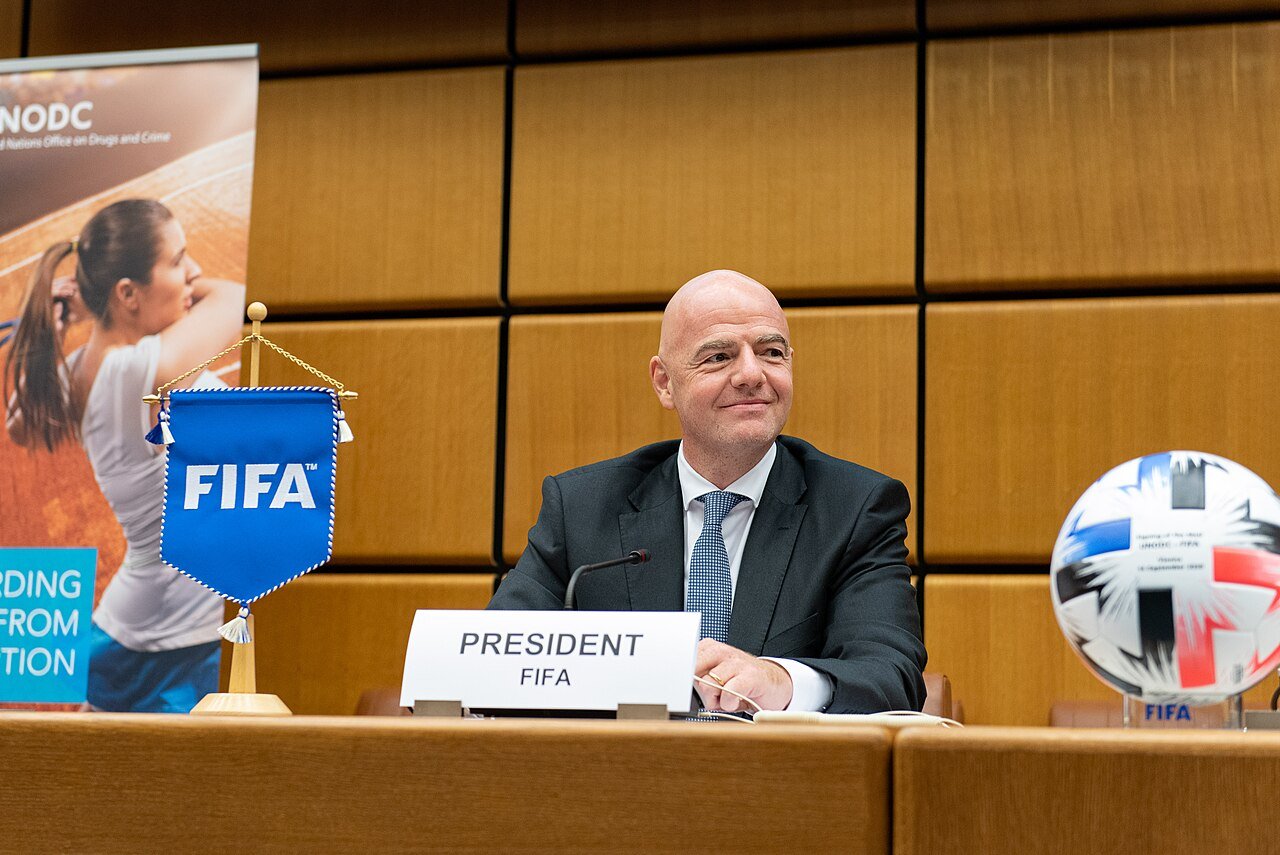
Zurich, Switzerland — FIFA confirmed on Thursday, 19 November 2026, that it has received three candidacies for the presidential election to be held at the 77th FIFA Congress in Rabat, Morocco, on 18 March 2027, with incumbent Gianni Infantino facing challenges from Philippe Diallo of France and Kozo Tashima of Japan. It will be the first time Infantino faces a challenger since he won the presidency in 2016, having been re-elected without opposition in 2023.
FIFA said the three candidacies had been forwarded to its electoral committee for examination and a decision on the admission of the candidates. Member associations will be told the names of the proposed and admitted candidates no later than 18 February 2027. Each candidate needed written support from at least five of FIFA’s 211 member associations to stand, and the nomination deadline passed at midnight in Zurich on Wednesday, 18 November.
The vote will decide who leads world football’s governing body for the next four years — and whether Infantino, 56, secures a fourth term, or whether one of his two challengers ends a presidency that has lasted a decade.
The Three Names on the Ballot
FIFA listed the candidates in alphabetical order by surname: Philippe Diallo, president of the French Football Federation; Gianni Infantino, the sitting president; and Kozo Tashima, honorary president of the Japan Football Association. All three are now subject to eligibility and integrity checks by a three-person electoral panel before they can appear on the ballot.
The field is smaller than it might have been. Former Switzerland and Tottenham Hotspur defender Ramon Vega, 55, declared his intention to run last month and said earlier this week that he had secured the five nominations he needed — but he was not among the candidates named by FIFA.
In a three-candidate election, two-thirds of the votes from eligible members are needed to win in the first round, according to the Associated Press. With 211 member associations each holding one vote, the arithmetic of the contest will be fought over the coming four months, in the open and behind closed doors.
For the first time in a decade, FIFA’s presidency will be decided by a vote rather than by acclamation.
Tashima: The Challenger from Japan
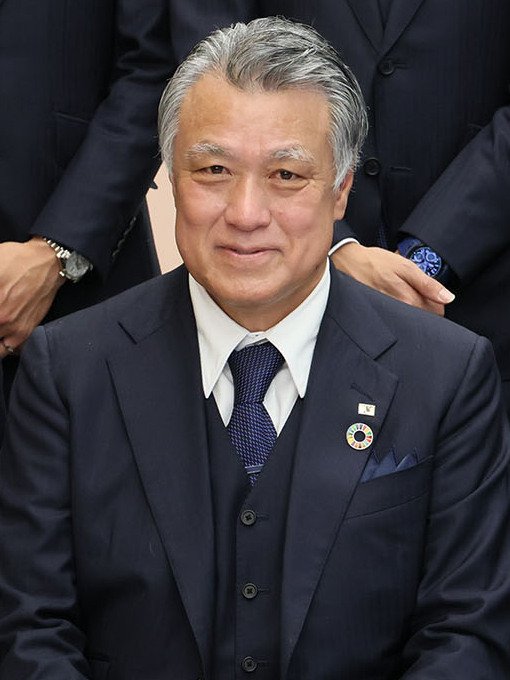
Tashima, 68, is the most striking of the two challengers. A former Japan international who later coached youth national teams, he was general secretary and then president of the Japan Football Association from 2016 to 2024, and has sat on the FIFA Council — the body’s highest decision-making forum — since 2015. He is the first Japanese candidate ever to seek the FIFA presidency.
He announced his bid on 5 November with the unanimous backing of the Japan Football Association’s board, and formally submitted his nomination on Wednesday, 18 November, with the support of Japan and at least four other member associations. He pressed ahead even though the Asian Football Confederation publicly backed Infantino for another term last month.
Speaking at a news conference near Tokyo on Friday, 20 November — his first public appearance since announcing his candidacy — Tashima confirmed he would continue his campaign and said he was not, “at this point”, thinking of dropping out to give Diallo a straight fight against Infantino. He turns 69 on Saturday.
“I just want to change FIFA,” he said. “I believe the worst outcome would be for him (Infantino) to remain in office without an election. I believe this is a test of whether FIFA truly has the capacity for self-reform.”
Tashima has framed his campaign around fairness, transparency and integrity. In a statement released by the Japan Football Association when his candidacy was submitted, he said he wanted to share with the world “the importance of fair play, respect and integrity — the core values at the very heart of football and of sport itself”, and to make FIFA “a healthier and more trusted organisation”. He has also pledged to “promote stronger governance and highly transparent organisational operations” within FIFA.
He has been blunt about what pushed him to run. He said he was particularly incensed by FIFA’s decision to lift a ban on United States forward Folarin Balogun following an intervention by US President Donald Trump, and has questioned FIFA’s handling of other decisions affecting players and national teams. “I didn’t enter the race just because I want to become FIFA president,” he said on Friday. “I decided to run on the basis that becoming president is the most effective way to improve FIFA.”
Diallo: Europe’s Candidate
Diallo, 63, is the president of the French Football Federation, a post he has held since 2023, and a member of European football body UEFA’s executive committee since April that year. He launched his bid in Paris on Monday, 16 November, after UEFA announced it had put him forward as its preferred candidate, with the unanimous backing of the national associations represented on UEFA’s executive committee and the FIFA Council.
That gives Diallo the organised support of UEFA’s 55 member associations, making him the candidate seen by many observers as the likelier of the two challengers to unseat Infantino. He emerged as Europe’s choice after former Arsenal manager Arsène Wenger, FIFA’s chief of global football development, declined to run.
Diallo played a leading role this year as France and other European associations withdrew their support from Infantino over the failed FIFA Forward Enterprise plan. Until that crisis, he had been seen as loyal to the incumbent. UEFA, announcing its backing, said that “against the backdrop of serious concerns over the direction of FIFA, the national associations called for renewed unity and trust within the global football community”.
Why Infantino Is Facing a Contest Now
Infantino, a 56-year-old Swiss-Italian lawyer, became FIFA president in 2016 after Sepp Blatter resigned in the wake of a corruption scandal. Under his leadership FIFA expanded the men’s World Cup from 32 to 48 teams, brought video assistant refereeing to the tournament and increased development funding for member federations. He was cruising towards re-election for a third straight time until this year.
The turning point was the FIFA Forward Enterprise proposal — a plan to sell stakes in the World Cup and other major competitions to private investors. The plan failed after a global backlash, with dozens of national federations, mostly in Europe, withdrawing their support, and Infantino has faced repeated calls for his resignation since. He maintains that he still has enough support from member associations around the world to be re-elected.
Tashima has also attacked the way money is handled at the top of the game, arguing that while generating revenue matters, the distribution of those funds should be discussed openly by all 211 member associations rather than decided by a small circle of executives. “We must restore FIFA to a state of fairness and impartiality,” he said when he announced his bid.
FIFA has stepped in to run member associations directly before — it recently named a five-member normalisation committee to run Nigerian football amid a crisis at the NFF — a reminder of how far the governing body’s authority reaches into national football.
The failed plan to sell stakes in the World Cup turned a coronation into a contest.
How the Vote Will Work
The process from here is fixed by FIFA’s statutes and electoral timetable:
- 18 November 2026: nomination deadline passed; three candidacies received.
- By 18 February 2027: member associations are told which candidates have been proposed and admitted, after the electoral committee’s eligibility and integrity checks.
- 18 March 2027: the election is held by secret ballot at the 77th FIFA Congress in Rabat, Morocco.
Tashima has signalled he is open to working with Diallo rather than treating him as a rival. “We do share some moral or ethical positions, so he’s a great person to team up with,” he said on Friday, adding: “I’m not looking at Diallo as opposition. I just want to change FIFA.” He also said he intended to work closely with the Frenchman, who he described as someone with considerable experience in governance and administration.
Whether that cooperation becomes a formal alliance — or whether one challenger eventually steps aside to unite the opposition vote — is the question that will shape the next four months. For now, both men insist they are staying in.
What Happens Next
The campaign now moves into its long middle phase: the eligibility checks, the lobbying of 211 member associations, and the public arguments about how football’s richest and most powerful body should be run. Infantino retains considerable support, particularly outside Europe, and has the advantages of incumbency. But for the first time since 2016, he will have to win votes rather than simply collect them.
Tashima, for his part, has said he is happy to fly under the radar. “I’m not sure it’s necessary for the FIFA president to be the one in the spotlight,” he said on Friday. “I believe the ones who should be most visible are the players, the referees, the teams. Those are the people who should stand out and I think we need to reshape the organisation so that they can.”
On 18 March 2027 in Rabat, world football will find out whether it wants more of the same — or a change of direction.
By The BNN Media
The Best News Network
News Beyond the Borders
Sources: Reuters, 19 November 2026; FIFA statement, 19 November 2026; Geo Super / AFP, 20 November 2026; theScore / AFP, 18 November 2026; Fox Sports / Associated Press, 19 November 2026; Flashscore, 19 November 2026; News Ei Samay, 20 November 2026.