By
Travis Head smashed 123 from just 83 balls as Australia chased down 205 in 28.2 overs to win the first Ashes Test by eight wickets — inside two days at a stunned Perth Stadium.
By The BNN Media
The Best News Network
News Beyond the Borders
Perth, Australia — Australia won the first Ashes Test by eight wickets on Sunday, 22 November, completing a staggering turnaround on the second day at Optus Stadium. Starc’s seven for 58 had bowled England out for 172 on a wild first day, before Ben Stokes took five for 23 to leave Australia 123 for nine at stumps — but within five madcap hours on day two, England had been bowled out for 164 and Head had blasted the hosts to victory.
Five Madcap Hours Turn the Test Around
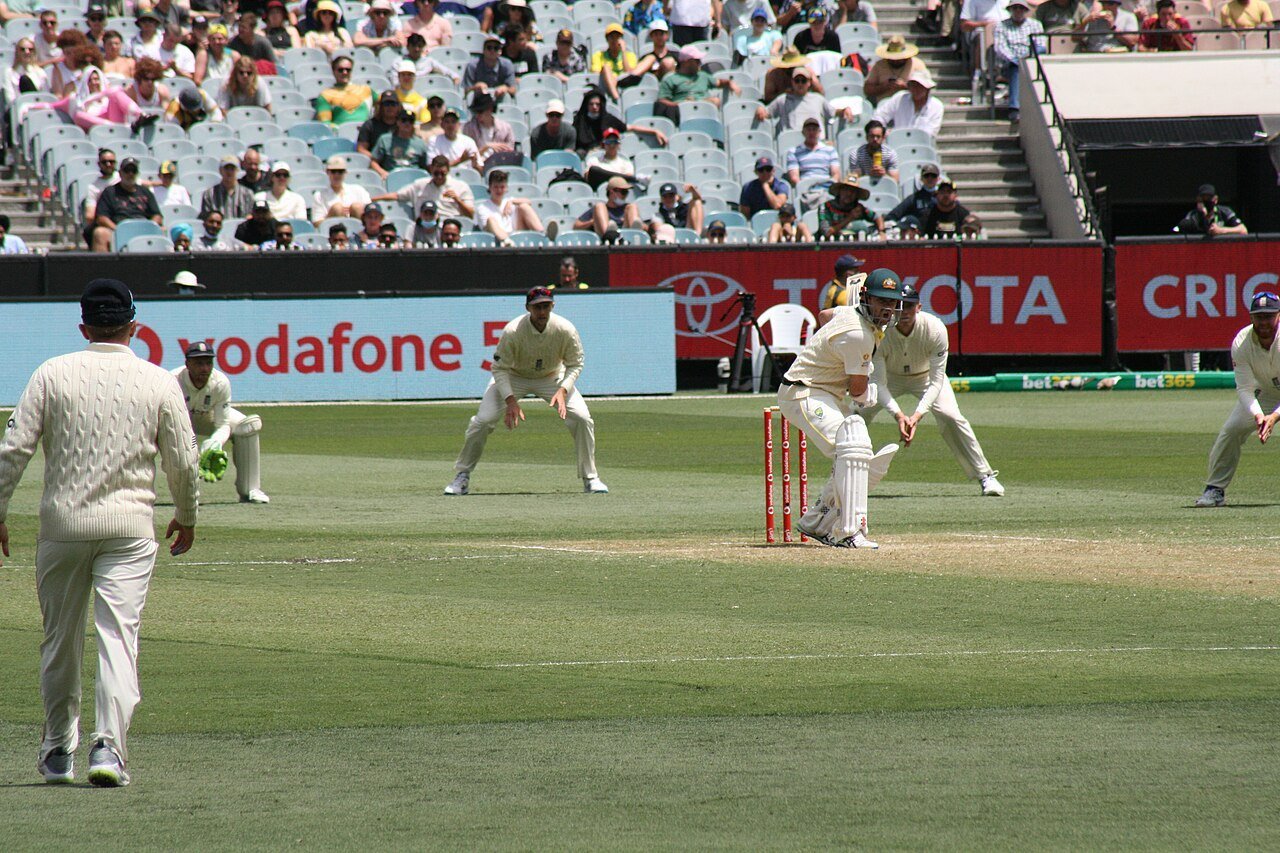
When play resumed on Sunday morning, Australia trailed by 49 runs with only one wicket in hand. Nathan Lyon added just one more run to his overnight score before Brydon Carse removed him for four, and Australia were all out for 132 — leaving England with a lead of 40.
It looked like a small advantage that could grow into something serious. England had the runs on the board, a fresh pitch still offering the bowlers plenty, and a chance to bat Australia out of the game. Instead, they lost their last nine wickets for 105 runs in the middle session, were bowled out for 164 at tea, and then watched Head tear their attack apart.
Australia went from 123 for nine and staring at defeat to winners by eight wickets — all in the space of a single day’s play.
England’s Collapse After Lunch
England’s second innings had started well enough. At 65 for one, with Zak Crawley and Ben Duckett settled, the tourists looked certain to build a lead of several hundred. Then Scott Boland and Mitchell Starc produced a spell of devastation.
Boland struck three times in the space of 11 balls, removing Duckett for 28, Ollie Pope for 33 and Harry Brook for a duck. Two balls later, Starc sent Joe Root back for eight. When Starc then removed captain Ben Stokes for two, England had slumped to 88 for six — six wickets for 39 runs in 11 overs.
Gus Atkinson, with 37, and Brydon Carse, with 20, put on 50 runs for the eighth wicket to drag England past 150, but there was no rescue. England were bowled out for 164 in 34.4 overs, losing nine wickets for 105 runs in the second session.
- England second innings: 164 all out in 34.4 overs (Atkinson 37, Pope 33, Duckett 28; Boland 4–33, Starc 3–55)
- The collapse: 65 for 1 to 88 for 6 — six wickets for 39 runs
- Session damage: nine wickets for 105 runs after lunch
Starc Completes a Ten-Wicket Match
If day one belonged to Starc, day two confirmed his dominance. His three second-innings wickets gave him match figures of 10 for 113 — only the third ten-wicket haul of his Test career — and he was named Player of the Match.
Starc’s day began in spectacular fashion. With the first ball of his second over of the innings — his 25th first-over Test wicket — he removed Crawley, diving to his left to take a stunning caught-and-bowled. Crawley, dismissed for a duck in both innings, had been beaten by the same bowler in the very first over of the series on day one.
Starc dismissed both the former and the current England captains in both innings of the match, accounting for Root and Stokes twice each. His first-innings figures of seven for 58 were a career best, and his ten wickets came while leading an attack missing captain Pat Cummins, out with a back injury, and Josh Hazlewood, out with a hamstring problem.
Head’s Assault: 123 Off 83 Balls
Chasing 205 — the biggest total of the match — Australia needed a fast start, and they got one from an unexpected source. Usman Khawaja, struggling with back stiffness, did not open, so Travis Head was promoted to the top of the order. It proved a masterstroke.
Head and debutant Jake Weatherald put on 75 for the first wicket, Weatherald making 23 from 34 balls, before Head took complete control. He reached his fifty from 36 balls, passing 4,000 Test runs along the way, and then raced to his hundred from just 69 balls — the fastest hundred in the fourth innings of a Test match, and the second-fastest in Ashes history, behind only Adam Gilchrist’s 57-ball effort.
Head smashed 16 fours and four sixes, including four boundaries in a single Ben Stokes over and a six back over the head of Jofra Archer. He brought up his tenth Test century with a twirl of the bat as the almost 50,000-strong crowd chanted “We love Head”. He was finally caught in the deep off Carse for 123 from 83 balls, with only 13 runs still needed.
Head scored at more than seven runs an over in a Test chase — giving England a taste of their own aggressive medicine, and then some.
Labuschagne Steadies the Finish
Head did not win the match alone. Recalled No. 3 Marnus Labuschagne finished unbeaten on 51 from 49 balls, sharing a 117-run stand with Head that broke England’s resistance completely.
When Head fell, Steve Smith — captaining the side in Cummins’ absence — walked out and hit the winning runs, finishing on two not out as Australia reached 205 for two in 28.2 overs. The run rate of 7.23 told the story of a chase that was never in doubt once Head found his rhythm.
For England, the numbers were grim. Their bowlers, who had ripped through Australia for 123 on day one, were hit to all parts of the ground by a batsman batting out of position — and their own batting had collapsed twice in two days.
A Test for the Record Books
The match lasted just 847 deliveries — the quickest completed Ashes Test in 137 years, according to the International Cricket Council. Nineteen wickets fell on day one and 13 more on day two, with 380 runs scored on the second day alone.
- England: 172 and 164 (Starc 7–58 and 3–55; Boland 4–33; Stokes 5–23)
- Australia: 132 and 205 for 2 (Head 123, Labuschagne 51 not out; Carse 2–44)
- Result: Australia won by eight wickets, inside two days
- Player of the Match: Mitchell Starc (10–113)
The Perth Stadium pitch, where 19 wickets fell on the opening day, was later rated “very good” by the ICC — a reminder that the chaos owed more to bold batting and outstanding fast bowling than to any demons in the surface.

What It Means for the Series
Australia lead the five-Test series 1–0, and history is on their side: it is the fifth consecutive Ashes series in which they have won the opening Test, and only once in the 21st century has a team won an Ashes series after losing the first Test — England, in 2005.
For England, the questions are familiar and uncomfortable. Their aggressive “Bazball” approach produced 172 and 164 on a fast, bouncy pitch, and their bowlers — so dominant on day one — had no answer to Head on day two. Captain Ben Stokes, who took five wickets in a brilliant six-over spell on the first day, could not repeat the trick when it mattered most.
The series now moves to Brisbane, where the second Test — a day-night match at the Gabba — begins on 4 December. England have little time to regroup, and Australia have all the momentum.
Two days, 32 wickets, and one unforgettable innings: the Ashes could not have asked for a louder start — and England could not have asked for a harsher lesson.
By The BNN Media
The Best News Network
News Beyond the Borders
Sources: ESPNcricinfo; Cricket Australia; AAP; SuperSport/AFP; BNN team article on Day 1.