By
A punishing sell-off on Friday capped the worst week for American shares in more than a year, leaving the Nasdaq down for 2026 and the S&P 500 and the Dow clinging to gains of barely 1 per cent and 0.2 per cent.
By The BNN Media
The Best News Network
News Beyond the Borders
New York, United States — A brutal week on Wall Street almost erased everything American stocks had gained in 2026, after a heavy sell-off on Friday sent the Nasdaq Composite into the red for the year and dragged the S&P 500 and the Dow Jones Industrial Average into correction territory.
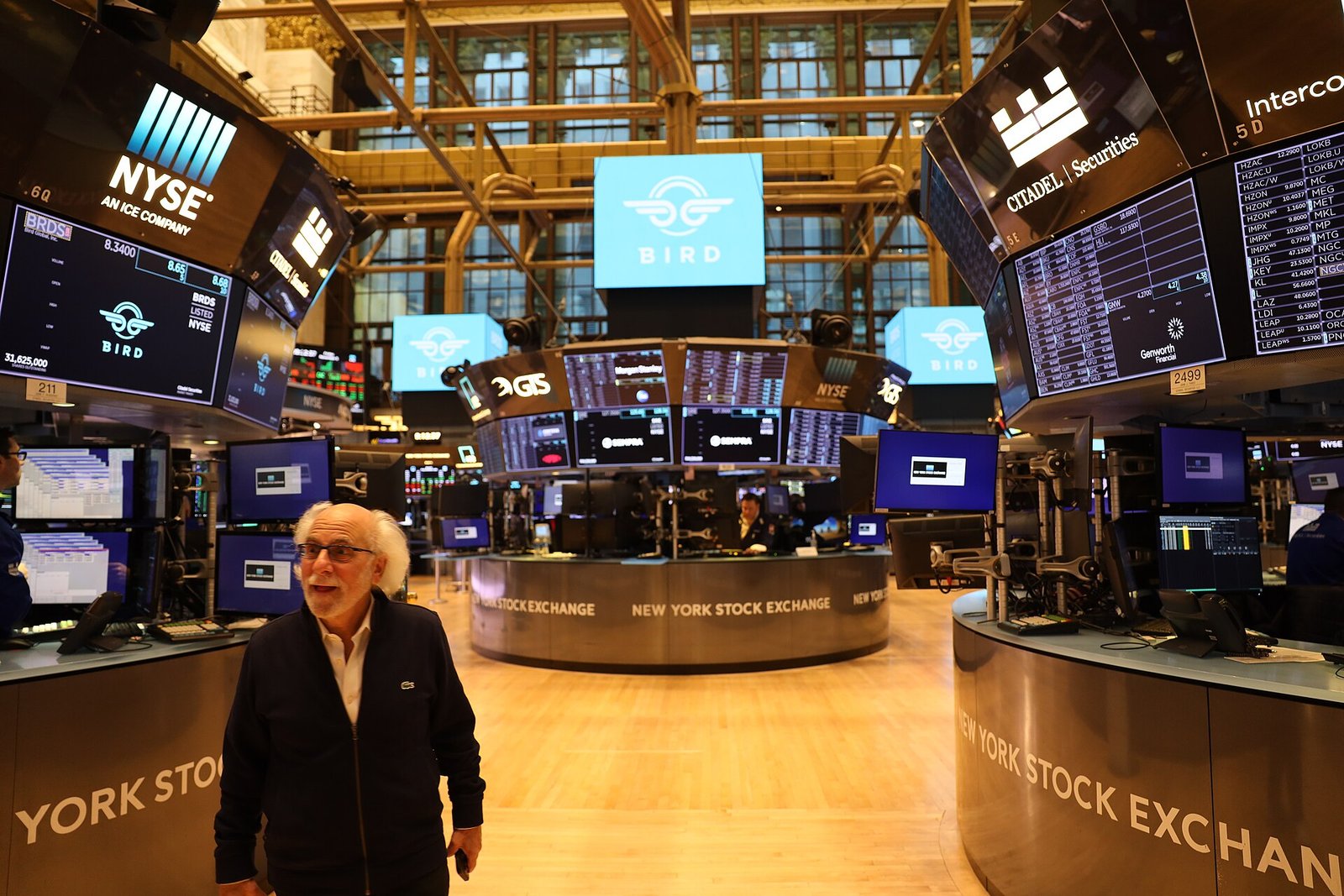
The Nasdaq Composite fell 5.28 per cent on Friday to close at 22,617.73, leaving it down 2.7 per cent for the year, according to FactSet data reported by Morningstar. The S&P 500 dropped 3.7 per cent to 6,910.39, its seventh consecutive daily loss, while the Dow Jones Industrial Average shed 949.73 points, or 1.93 per cent, to close at 48,147.33. For the week, the Dow lost 8 per cent, the S&P 500 fell 8.6 per cent and the Nasdaq tumbled about 10 per cent.
A week that undid a year
The scale of the damage is best measured against where the market stood only a few weeks ago. When the Nasdaq reached its most recent record closing high on 6 October, it had been up as much as 18.7 per cent for the year, according to CNN. By Friday’s close, every bit of that gain had been wiped out, and the index finished in the red for 2026 for the first time since April.
The S&P 500 and the Dow fared only slightly better. As of Friday’s close, the S&P 500 was up only 1 per cent for the year, while the Dow was 0.2 per cent higher, according to FactSet. The technology-heavy Nasdaq-100 was down 0.9 per cent for the year and more than 19 per cent below its record high, putting it on the cusp of a bear market, which is generally defined as a fall of 20 per cent or more.
It was the market’s worst week since the tariff turmoil of early April 2025 for the S&P 500, and the Nasdaq’s worst week since March 2020, in the early days of the Covid pandemic. The Dow recorded its worst week since March 2020 as well.
The week’s losses were not a single bad day but a steady grind lower, and by Friday there were few places left to hide.
A correction, by the numbers
The S&P 500 and the Dow slid into correction on Friday, joining the Nasdaq and the small-cap Russell 2000. A correction is generally defined as a fall of at least 10 per cent from a recent closing high, and all three major indexes now meet that test. It was the first time the S&P 500 had fallen that far from a high since the tariff sell-off of April 2025.
The damage beneath the surface was even broader. A tally on Friday showed that 64 per cent of the companies in the S&P 500 had closed at least 20 per cent below their record highs, according to Dow Jones Market Data. In the battered information-technology sector, that figure reached 87 per cent.
- S&P 500: down 3.7 per cent on Friday; down 8.6 per cent for the week; up only 1 per cent for 2026.
- Dow Jones Industrial Average: down 1.93 per cent on Friday; down 8 per cent for the week; up only 0.2 per cent for 2026.
- Nasdaq Composite: down 5.28 per cent on Friday; down about 10 per cent for the week; down 2.7 per cent for 2026.
- Nasdaq-100: down 0.9 per cent for 2026; more than 19 per cent below its record high.
- Volatility index (VIX): closed at 35.89 on Friday, its highest level in 19 months.
The Dow also closed below the 50,000 threshold for a second consecutive day, while the S&P 500 finished below the 7,000 level for the first time since April.
The AI trade comes apart
At the centre of the rout was the artificial-intelligence trade that had powered the market for much of the past two years. Investors dumped the shares that had benefited most from the AI boom, and on Friday the selling spread well beyond technology.
Nvidia, the chipmaker at the heart of the AI rally, fell 14 per cent on Friday, its worst day in almost two years, and ended the week down about 23 per cent. The shares have now fallen roughly 47 per cent from their 6 October peak, wiping out about $2.7 trillion in market value, according to CNN. Memory-chip makers suffered similar punishment: Sandisk dropped 16 per cent on Friday, while Micron and Western Digital each fell by double-digit percentages, and Advanced Micro Devices lost 13 per cent.
Even Anthropic, the artificial-intelligence company behind the largest initial public offering in American history, could not lift the mood. Its shares jumped on their debut on Thursday, but fell 8.5 per cent on Friday to close at $88.91, only just above the $83 offer price.
The selling was strikingly broad. All 11 sectors of the S&P 500 fell by more than 1 per cent over the week, something that had not happened since the week of the tariff announcement in April 2025.
What had been a debate about valuations has become a wholesale reassessment of the AI boom itself.
Fear takes hold
Wall Street’s fear gauge told the story as plainly as the indexes. The Cboe Volatility Index, known as the VIX, jumped above 30 on Friday and closed at 35.89, according to CNN, its highest level in 19 months after surging 86 per cent over the week.
Market watchers described the mood as a buyers’ strike. “It’s a buyers’ strike, even though we now have lower valuations,” Keith Lerner, chief investment officer at Truist Advisory Services, told MarketWatch. Investors, he said, had little clarity about what might turn sentiment back in a positive direction.
Valuations have fallen sharply. The S&P 500’s information-technology sector was trading at a forward price-to-earnings ratio of 16.3, based on Thursday’s close, according to John Butters, a senior earnings analyst at FactSet. That was the lowest since the March 2020 Covid crisis, and down from a ratio of 22 at the beginning of 2026.
Jim Caron, chief investment officer of portfolio solutions at Morgan Stanley Investment Management, put it more bluntly, telling MarketWatch: “We are in the midst of a re-evaluation and a correction.” As he added, with the year almost over, “what’s left over is the emotional aspect of preserving gains for the year.”
The Fed, rates and the midterms
Two worries hung over the market all week, and neither looks close to being resolved. The first is the Federal Reserve. Minutes of the central bank’s 27–28 October meeting, released on 18 November, showed that nearly all officials expected a quarter-point increase in interest rates in December, while two floated the possibility of a half-point move. The Fed’s next decision is due on 9 December, and market pricing now favours back-to-back rate rises running into January, according to the CME FedWatch Tool cited by MarketWatch.
Fed Governor Christopher Waller has warned that a “shock” may be needed to bring inflation back down to the central bank’s 2 per cent annual target, and investors fear the Fed could tighten financial conditions too much and damage the economy. Core inflation has recently run at about a 3.5 per cent annual pace over three months, far above target.
The second worry is political. The midterm elections delivered a strong result for the Democrats, who are set to take control of the House and the Senate, and the results exposed how unpopular the data-centre boom has become with voters. Investors have begun treating the midterms as the moment the support was pulled from under the AI trade, with fund managers warning that political pushback against data centres — and the pressure they put on local electricity bills — is now real.
With the Fed turning hawkish and Washington turning sceptical, the two props that held the rally up have weakened at the same time.
What comes next
The market now heads into a holiday-shortened Thanksgiving week, which may bring thinner trading and sharper moves. The hope among some investors had been that strong earnings from Nvidia and the excitement around Anthropic’s listing would steady the market. Instead, both were overwhelmed by selling.
There are some grounds for caution about reading too much into a single week. Earnings and the economy still look reasonably healthy for next year, and the S&P 500 is still expected to record earnings growth of 16 to 17 per cent next year, according to MarketWatch. As of Friday, however, the index was on track for its first fourth-quarter loss since 2018.
For now, the mood on Wall Street is defensive. Investors are more focused on protecting what is left of their 2026 gains than on hunting for bargains, and with the Nasdaq already in the red for the year, the question hanging over the market is whether the other two major indexes will follow it there before the year is out.
A year that once promised strong gains now hangs by a thread, and the market’s fate will be decided by the Fed’s December decision and by whether investors rediscover any faith in the AI story.
By The BNN Media
The Best News Network
News Beyond the Borders
Sources: Morningstar / MarketWatch (21 Nov 2026 and 20 Nov 2026); Investopedia (20 Nov 2026); CNN (20 Nov 2026); Associated Press reporting of the Federal Reserve minutes of 18 Nov 2026. Figures are as of the Friday 20 Nov 2026 close unless stated otherwise.