By
Wall Street’s week ended in a rout on Friday, with the S&P 500 and the Dow Jones Industrial Average both falling more than 10 per cent from their record highs as investors dumped the artificial intelligence stocks that had driven the market all year.
By Muhammad Noman
Journalist | The BNN Media – The Best News Network
News Beyond the Borders
New York, United States — The S&P 500 fell 3.7 per cent on Friday to 6,910.39, and the Dow Jones Industrial Average dropped 1.9 per cent to 48,147.33, taking both indexes into correction territory after a seventh straight day of losses. The Nasdaq Composite plunged 5.28 per cent to 22,617.73, wiping out its gains for the whole of 2026.
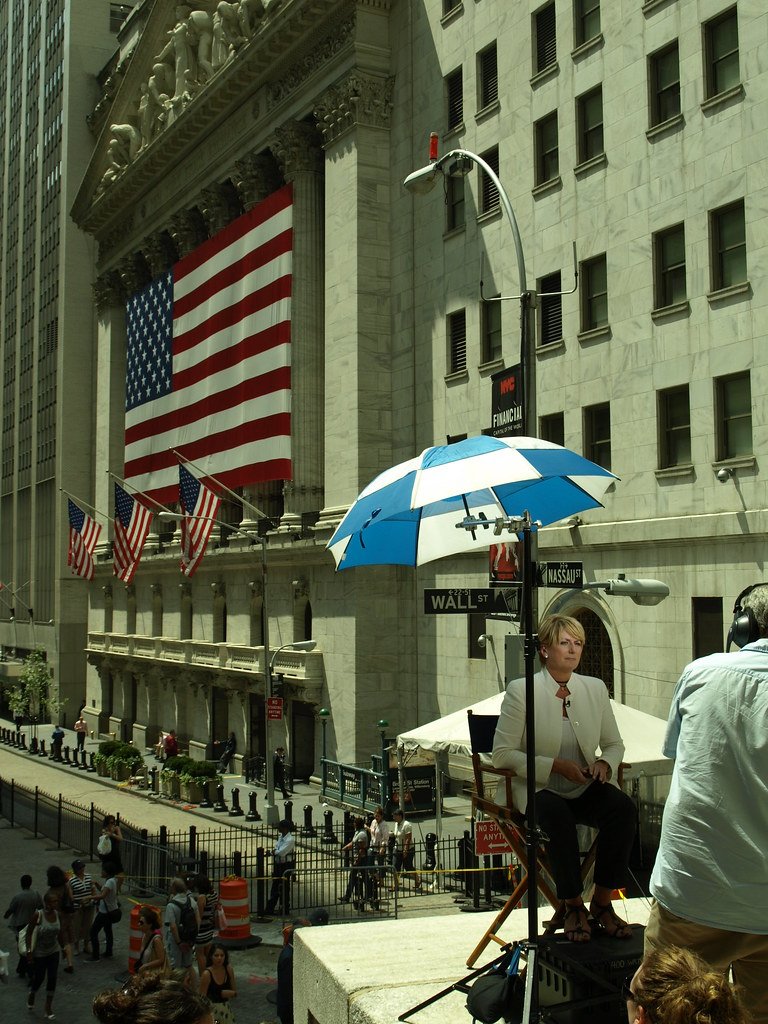
A week Wall Street will want to forget
Friday’s sell-off was the worst day of a week in which the market’s confidence in the artificial intelligence trade finally broke. The S&P 500 lost 8.6 per cent for the week, the Dow fell 8 per cent, and the Nasdaq tumbled 10 per cent — the worst week for all three indexes since April 2025, when President Donald Trump’s tariff announcement rattled markets, and the Nasdaq’s worst week since the early days of the Covid-19 pandemic in 2020.
It was the S&P 500’s seventh consecutive daily decline, its longest losing streak since February 2020. The index also closed below the 7,000 level for the first time since April. For the S&P 500, it was the first correction — defined as a fall of 10 per cent or more from a recent closing high — since the April 2025 tariff sell-off.
The week’s message was blunt: the AI trade that carried the market higher all year has turned into its biggest liability.
The chipmakers lead the fall
The damage was worst exactly where the boom had been biggest. Nvidia, the chipmaker whose processors power AI data centres, plunged 14 per cent to $125.53 on Friday, its worst one-day loss since the DeepSeek sell-off, and finished the week down 23 per cent — its worst week since the financial crisis. The shares have now fallen by nearly half from their record high on 6 October.
The rout spread across the whole semiconductor sector. Advanced Micro Devices dropped 13 per cent, Broadcom fell more than 12 per cent, and Micron, SanDisk, Seagate and Western Digital all posted double-digit declines. The Philadelphia semiconductor index fell 10.7 per cent on Friday alone and 17.1 per cent for the week.
- Nvidia: down 14% on Friday, down 23% for the week
- AMD: down 13% on Friday
- SanDisk: down 16%; Seagate and Western Digital: down 12% each
- CoreWeave: down 12.1% to $39.51, below its 2025 IPO price; Nebius: down 16.1%
- Amazon: down 3.9%; Meta: down 5.9%; Caterpillar: down 5%
Reports of a possible accounting investigation into Nvidia added to the pressure, while reports that Google may cut next year’s chip shipments weighed on Broadcom. Investors are also unsettled by the sudden departure of Nvidia chief executive Jensen Huang this month, which has raised questions about the financing behind the AI buildout.
When the market’s biggest winners fall this hard, this fast, it is no longer a rotation — it is a reckoning.
Anthropic’s debut fails to save the day
Not even the biggest stock market debut in American history could steady the market. Anthropic, the maker of the Claude chatbot, fell 9.1 per cent on Friday to $88.30, in its second day as a public company. At one point the shares traded as low as $83.05, within five cents of the $83 IPO price, and ended the day 28 per cent below their peak on Thursday.
On Thursday, Anthropic had closed at $97.17, up 17.1 per cent on its offer price, in a debut that briefly valued the company near $2 trillion. But the enthusiasm faded within hours, and Friday’s slide showed that even a record-breaking listing could not revive faith in the AI trade.
As BNN reported on Friday, Anthropic’s shares had soared on their Nasdaq debut before settling 17 per cent above the IPO price. Anthropic Shares Soar on Nasdaq Debut, Briefly Touch $2 Trillion, Then Settle 17% Above IPO Price
SpaceX, the other big AI-linked company to go public this year, fell 7.7 per cent to $127.79, slipping below its $135 IPO price.
A blockbuster IPO was supposed to prove the AI boom was alive. Instead, its second day proved how fast the mood has changed.
The sell-off goes global
The rout was not confined to New York. In Asia, Japan’s Nikkei fell 5.06 per cent on Friday, South Korea’s Kospi dropped 5.2 per cent, and Taiwan’s shares were down 17 per cent for the week — their biggest weekly decline since 1990. The MSCI index of Asia-Pacific shares outside Japan has sunk 8.5 per cent this week, its worst performance since March 2020.
In Europe, the pan-European STOXX 600 index fell 2 per cent on Friday and now sits 5 per cent below its record high of 12 November. MSCI’s gauge of stocks across the globe fell 3.30 per cent on Friday, and its weekly decline of 8.1 per cent was the largest since early 2020.
Even gold, the usual refuge in a storm, offered no shelter. Spot gold fell 2.81 per cent to $3,520.09 an ounce, its lowest in 14 months, after the largest weekly drop in eight months. Spot silver dropped 4.22 per cent to $40.95 an ounce.
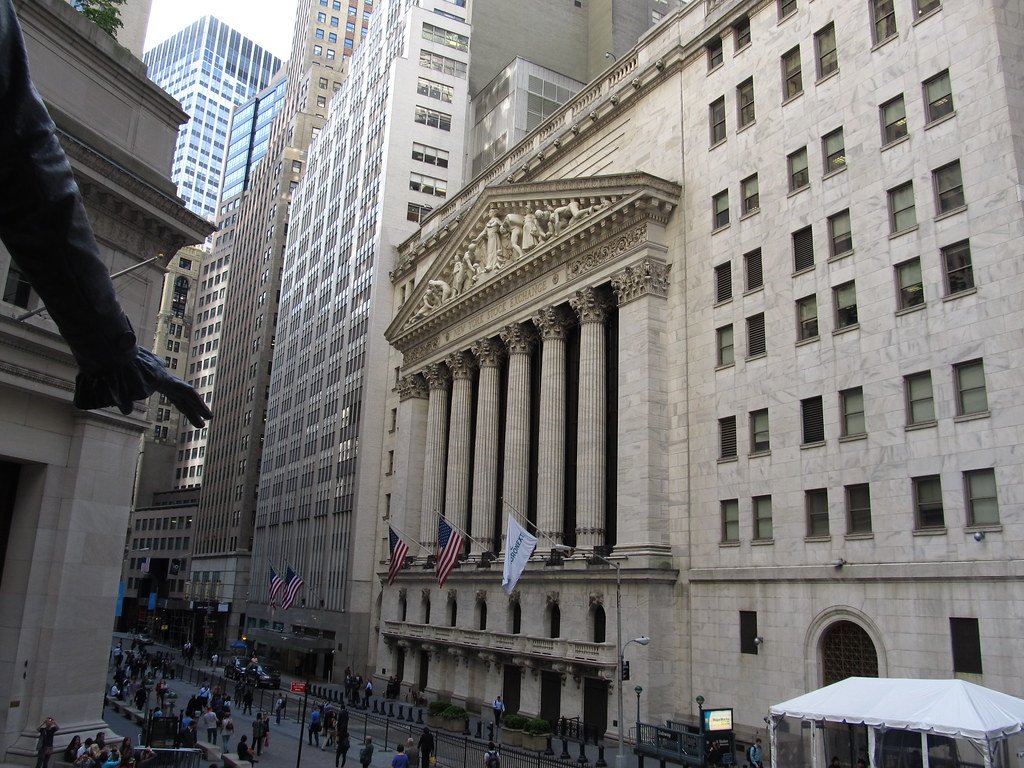
What spooked investors
Behind the selling is a growing fear that the AI boom was built on spending that may never pay for itself. The AI buildout still needs vast amounts of funding just as financing costs are rising and signs of credit stress are emerging, analysts said, and Anthropic’s huge debut itself siphoned money away from other AI-linked investments.
Investors sought safety instead. US Treasuries rallied, with the yield on the benchmark 10-year note falling by the most in a month to below 5 per cent. All 11 sectors of the S&P 500 finished more than 1 per cent lower for the week, the first time that has happened since April 2025.
There was one note of caution in the gloom: despite the sharp drop, equity markets remain up for the year after a strong rally in the first half, driven by AI optimism. But the Nasdaq has now erased its 2026 gains entirely and finished in the red for the year for the first time since April.
The question now is not whether the AI trade has cracked — it has. The question is whether this is a correction that ends, or the start of something bigger.
What happens next
Traders will be watching Monday’s open for any sign of stabilisation, and for fresh signals on interest rates and AI spending from the big technology companies. The Nasdaq 100, which tracks the largest technology companies, closed at 25,028.98, almost 20 per cent below its record high last month — close to bear-market territory.
For now, Wall Street has delivered its verdict on a week that began with a record IPO and ended with two of America’s three great indexes in correction. The AI boom is not over, but the market’s faith in it — the faith that carried stocks to record after record — is badly shaken.
Friday’s fall was not a blip. It was the market telling the AI industry that the bill for the buildout is coming due.
By Muhammad Noman
Journalist | The BNN Media – The Best News Network
News Beyond the Borders