By
President Donald Trump has threatened to stop American companies from building artificial intelligence data centres abroad, warning of a “tremendous tax” on any firm that does — a move that would upend the global plans of the biggest names in technology.
By Akhtar Saleem Khan
Head of IT | The BNN Media – The Best News Network
News Beyond the Borders
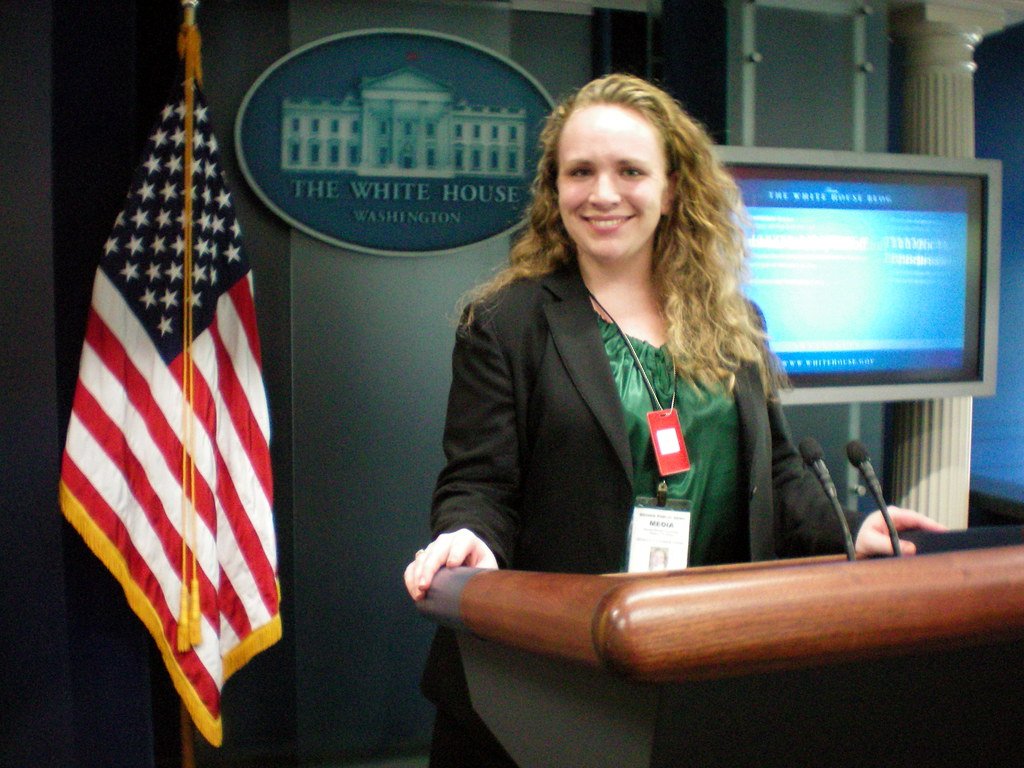
Washington, United States — President Donald Trump said on Friday that the United States would penalise American companies that build data centres overseas, telling reporters at a White House news conference that “we’re not going to allow our companies to build data centers outside of our country.” He said firms that went ahead anyway would face a “tremendous tax” — but gave no details of how a ban or a tax would work.
What Trump actually said
Speaking at the White House after returning from a trip to Asia, Trump put the data centre industry at the centre of his argument that America must win the race for artificial intelligence — which he calls “super intelligence” — against China.
“We’re going to fight very hard for the data centers,” he said. “We’re not going to allow our companies to build data centers outside of our country. We’re not going to allow that to happen.”
He added: “We’ll put a tremendous tax on them if they do it. If they won’t go in Texas or they won’t go in California, they’re going to go in West Virginia.”
Trump also said he was concerned the centres would be built in China or in European countries such as Finland, and warned: “We’re not allowing data centers to go into other countries, because China will take all of them.”
The threat was blunt, but the policy behind it is still a blank page — no law, no tax rate, no timetable.
Even his own officials were caught out
The most striking detail of Friday’s announcement was that it appears to have been made on the spot. Trump told reporters he had not even told his own officials about the plan before announcing it.
“I haven’t even said that to my people. But I’m telling them now — they’re here,” he said, with Vice President JD Vance and Secretary of State Marco Rubio standing nearby.
It was not immediately clear which lever Trump would try to pull to stop companies building abroad, and he suggested the penalty might come through some form of tax. No executive order was signed on Friday, and no legislation has been put before Congress.
A president announcing a major industrial policy live on television, before his own team has heard it, is a measure of how fast — and how personally — this debate is now moving.
Why companies are looking abroad
The threat lands just as America’s biggest technology companies are pushing hard overseas. The firms behind the AI buildout have been working to build their next frontier abroad, as politicians and local communities in the US grow more wary of data centres and their huge demands for power, water and land.
- Alphabet (Google) announced earlier this month that it plans to invest $15 billion in data-centre infrastructure in Malaysia in 2027 and 2028.
- Microsoft plans to invest more than $10 billion in Kuwait, Qatar, Saudi Arabia and the UAE through 2030 as it expands its cloud and AI infrastructure there.
- Oracle has spent the past year expanding abroad — four of the seven gigawatts of power it plans to bring online in the next two years are tied to US hyperscaler campuses, and the rest will be spread across smaller or international sites.
- Equinix and Digital Realty, two of the biggest American data-centre developers, already operate facilities overseas, according to Reuters.
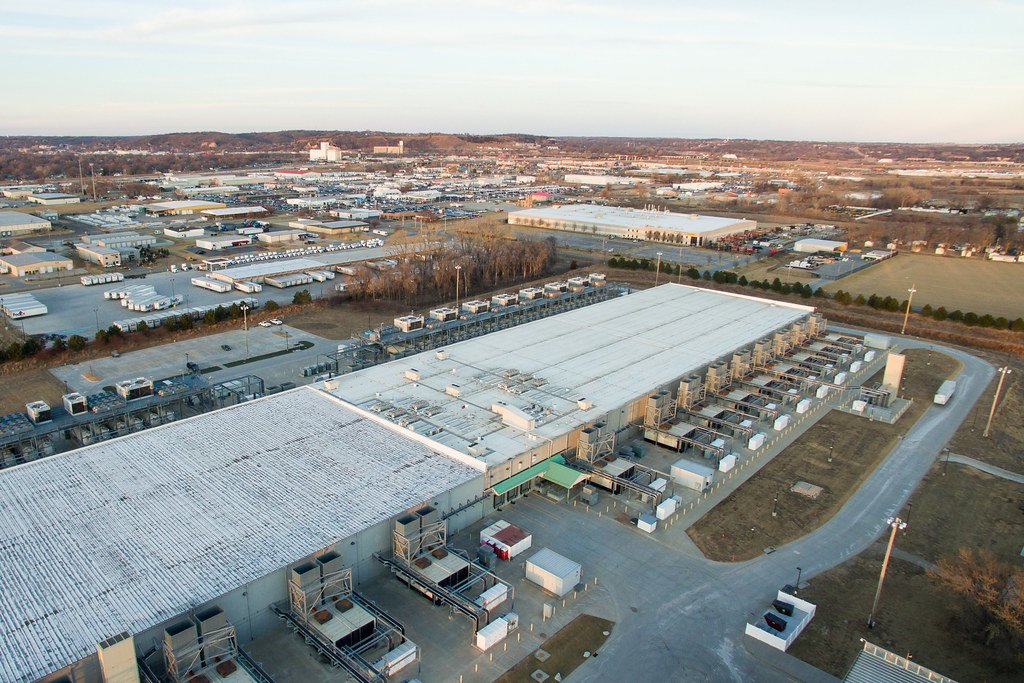
Data centres are critical to the AI boom because they provide the computing power needed to train and run increasingly complex AI systems. Developers often build them close to users to reduce delays for time-sensitive tasks such as payment processing, and moving large volumes of data over long distances adds cost.
If the penalty goes ahead, it would hit the very companies spending the most on the AI computing the US says it must lead.
The China argument
Trump framed the move as a contest with China. He said that if companies are allowed to build overseas, they will all build in China, and that whoever leads the development of artificial intelligence will lead the future.
The remarks follow a week of action on that front. On Monday, the Commerce Department moved to restrict exports of advanced AI chips to several Southeast Asian countries, part of a broader effort to stop China obtaining the technology through third countries. It also introduced a rule this week requiring a licence for data centres anywhere that rent large amounts of computing power on US chips to Chinese companies.
Trump spoke a day after a three-way summit with Chinese President Xi Jinping and Russian President Vladimir Putin in Shenzhen, China. He said the two leaders had agreed to joint guardrails on AI.
The warning also fits a wider pattern in US AI policy. Earlier this week, BNN reported that the US and eight allies signed the San Francisco Declaration to shield AI supply chains from China. US and Eight Allies Sign San Francisco Declaration to Shield AI Supply Chains From China
The through-line is clear: Washington is trying to keep the physical backbone of AI inside American borders — and inside allied hands.
The backlash at home
Trump’s announcement also comes amid a growing revolt against data centres inside the United States itself. In this month’s midterm elections, voters in at least 44 contests backed measures to rein in the industry, with moratoriums, new regulations or outright bans, according to Data Centers on the Ballot, a website tracking the legislation.
Technology companies have responded with promises of fewer taxpayer subsidies, greater disclosure and more spending in host communities. On Friday, Trump urged Americans to accept data centres in their towns — and to make the companies pay.
“You ought to take advantage of the data centers. Make them pay you, make them pay your community, but don’t shut them off,” he said.
The politics are unsettled on both sides. The Senate approved legislation on 19 November to ease the approval of data centres as part of a broader overhaul of permitting — a move that would make it easier, not harder, to build them at home.
Trump wants data centres built in America — but many Americans, it turns out, do not want them built next door.
What the industry says — and what happens next
Google, Oracle and CoreWeave did not immediately respond to requests for comment on Trump’s remarks, according to MarketWatch. No major technology company has yet said publicly whether it will change its overseas plans.
The remarks also came during a broad sell-off in AI stocks on Friday, with the S&P 500 down 2.3 per cent by early afternoon and the Nasdaq 100 down 4.0 per cent — a reminder that the same AI boom Trump wants to protect is under severe strain in the markets. BNN’s markets report today covers that rout in full.
For now, the threat is words, not law. A tax on overseas data-centre construction would need Congress, and a ban would face legal challenges from companies that already operate global networks serving customers outside the United States. But the signal to the industry is unmistakable: the White House now sees where data centres are built as a matter of national competition, not just business.
Trump has told Big Tech where it may build. Whether he can make it stick is the question that will decide the next phase of the AI race.
By Akhtar Saleem Khan
Head of IT | The BNN Media – The Best News Network
News Beyond the Borders