By
Singapore’s economy grew by 6.1 per cent in the third quarter of 2026, much faster than first estimated, as booming demand for artificial intelligence technology powered manufacturing and trade — prompting the government to raise its full-year growth forecast to around 6 per cent.
By The BNN Media
The Best News Network
News Beyond the Borders
Singapore — Singapore’s economy grew by 6.1 per cent year on year in the third quarter of 2026, the Ministry of Energy, Trade and Industry (METI) said on Tuesday, 24 November, in a sharp upward revision from the advance estimate of 5.4 per cent. The figure also beat the 5.6 per cent growth economists had expected in a Reuters poll, and it came with an upgraded forecast: the ministry now expects the economy to grow by around 6.0 per cent in 2026 as a whole, up from the 4.5 to 5.5 per cent range it set in August.
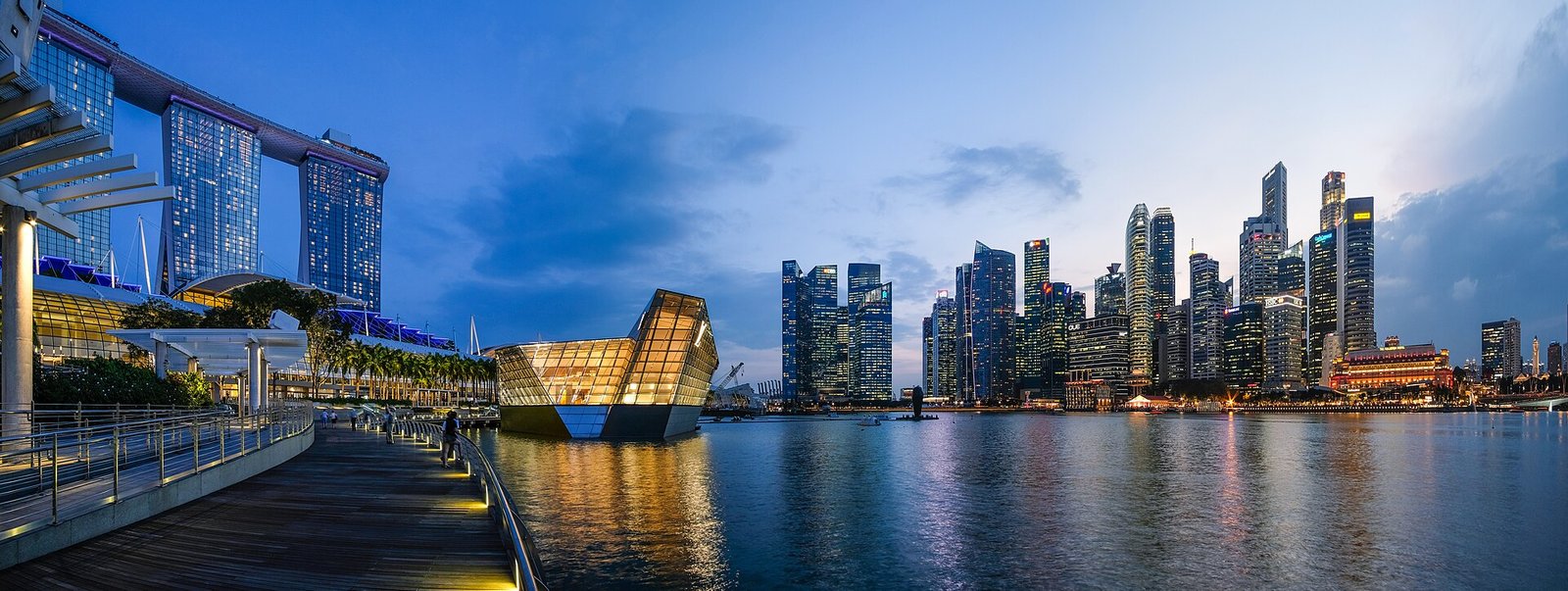
A Stronger Quarter Than First Thought
The revision is a large one, but it is not unusual for Singapore. The advance estimate, published in October, was largely based on data for July and August, while the latest figures draw on the full quarter. The same pattern played out a year earlier, when the third-quarter estimate was also revised up sharply.
Growth did ease slightly from the second quarter’s 6.4 per cent, and on a seasonally adjusted quarter-on-quarter basis the economy expanded by 1.5 per cent, moderating from 1.8 per cent in the April-to-June period. That quarterly figure was also revised up, from an advance reading of 1.1 per cent. For the first three quarters of 2026 taken together, the economy grew by 6.2 per cent year on year.
The ministry’s new forecast for 2026 — “around 6.0 per cent” — is the latest in a series of upgrades this year. The forecast has been raised at each review since January, when the ministry first pencilled in growth of 1 to 3 per cent, as global demand for AI-related goods has repeatedly come in stronger than expected.
The message from the numbers is clear: Singapore’s economy is running considerably hotter than anyone expected at the start of the year.
What Powered the Growth
The ministry said growth in the third quarter was driven mainly by three sectors: wholesale trade, manufacturing, and finance and insurance. The goods-producing industries expanded by 8.3 per cent year on year, slowing from 11.2 per cent in the second quarter, while the services-producing industries grew at a quicker pace of 6.1 per cent, up from 5.4 per cent.
Wholesale trade was the standout, expanding by 14.5 per cent year on year after growing 9.8 per cent in the second quarter. Manufacturing grew by 8.5 per cent, slower than the 13.2 per cent recorded in the previous quarter but still strong. Construction expanded by 9.5 per cent, up from 6.5 per cent, and the information and communications sector grew by 6.2 per cent, picking up from 4.7 per cent. Finance and insurance expanded by 3.8 per cent, moderating from 6.2 per cent in the second quarter.
Within manufacturing, the electronics cluster grew by 14.8 per cent and precision engineering by 26.5 per cent, according to the ministry’s figures — two clusters sitting squarely in the path of the global AI build-out.
- Wholesale trade: up 14.5 per cent year on year (from 9.8 per cent in Q2)
- Manufacturing: up 8.5 per cent (from 13.2 per cent in Q2)
- Construction: up 9.5 per cent (from 6.5 per cent in Q2)
- Information and communications: up 6.2 per cent (from 4.7 per cent in Q2)
- Finance and insurance: up 3.8 per cent (from 6.2 per cent in Q2)
The AI Engine: Chips, Trade and Data Centres
Behind almost every strong number in the release sits the same force: demand for artificial intelligence. The ministry said growth in the machinery, equipment and supplies segment of wholesale trade, and in the electronics and precision engineering clusters of manufacturing, was boosted by strong AI-related demand. Data centre operations and internet search engine activities drove the pick-up in information and communications.
AI-related production and exports, driven by a stronger-than-expected build-out of data centres around the world, have continued to accelerate since August, the ministry said. Singapore, as a maker of semiconductors and precision equipment and as one of the world’s busiest trading hubs, is positioned to benefit from both sides of that spending: the factories that build the hardware and the ports and warehouses that move it.
Growth in finance and insurance, meanwhile, was underpinned by credit growth and fee-generating activities, the ministry said — a sign that the boom is also flowing through the city-state’s financial sector, not only its factories and ports.
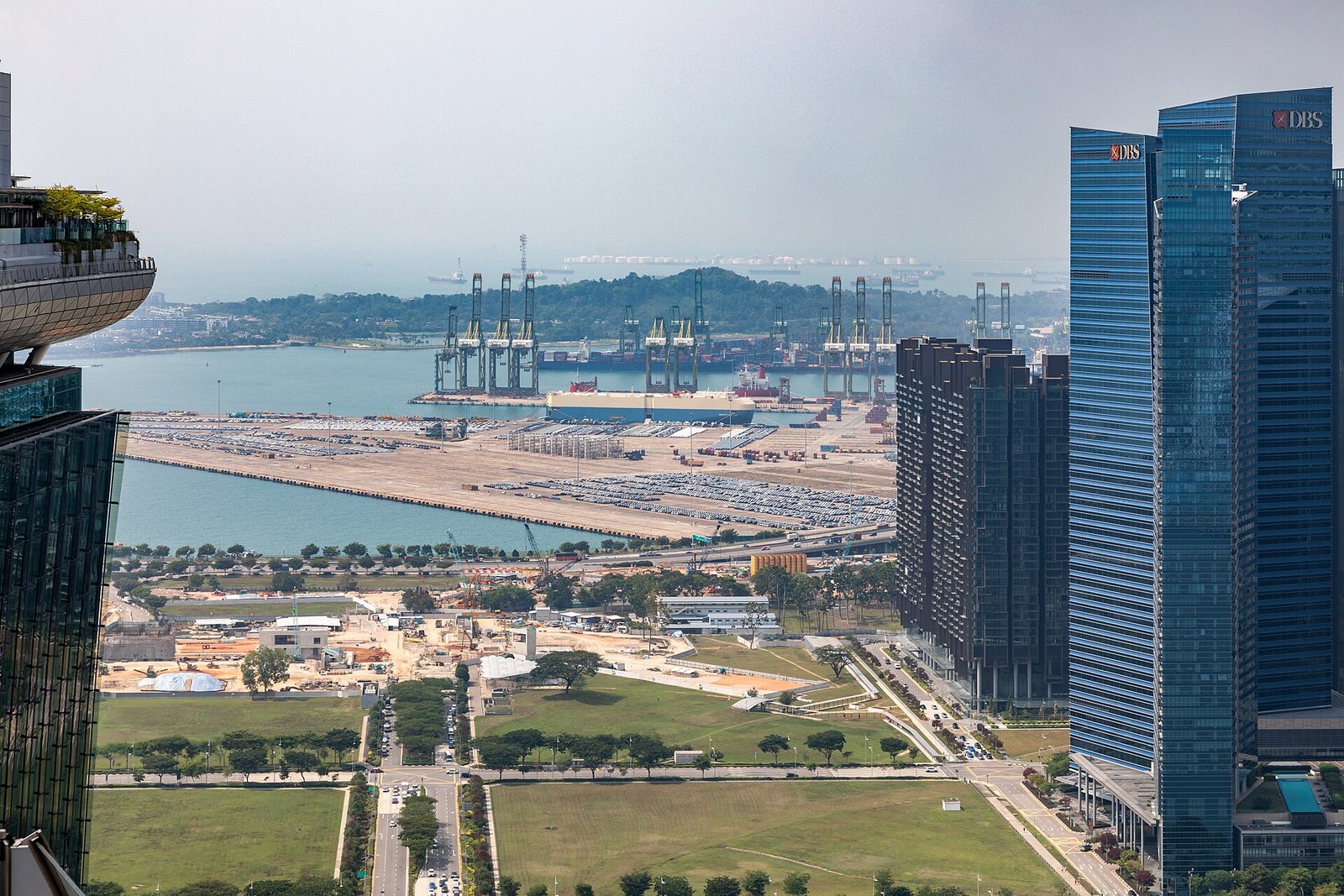
Exports Surge
The trade figures tell the same story. Enterprise Singapore, the government agency responsible for trade promotion, upgraded its forecast for non-oil domestic exports to growth of 30 to 32 per cent in 2026, up from 14 to 16 per cent previously. Non-oil domestic exports rose by almost 46 per cent in the third quarter, with electronics shipments more than doubling, according to Enterprise Singapore data reported alongside the release.
That export strength is the other side of the AI coin. As companies and governments around the world race to build data centres and buy the chips that power them, Singapore’s factories and its port — among the busiest in the world — are handling a surge of orders.
The ministry said it expects strong global AI-related demand to continue driving growth in the manufacturing and wholesale trade sectors for the rest of the year, while growth in outward-oriented services such as finance and insurance and information and communications should remain resilient.
Trade is doing the heavy lifting: exports are growing at a pace few forecasters thought possible a year ago.
Forecast Raised for 2026, Cooler Outlook for 2027
For 2027, the ministry struck a more cautious note. It forecast growth of 2.5 to 4.5 per cent, a clear step down from 2026’s pace. Growth in most of Singapore’s key trading partners — including major Southeast Asian economies, the United States and China — is projected to soften next year, and the pace of expansion in new AI investments is expected to moderate from its high level in 2026, the ministry said.
Beh Swan Gin, the ministry’s permanent secretary, said after the release that global economic conditions had turned out stronger than expected since August as AI-related production and exports continued to accelerate, but that the outlook for 2027 was softer. The upgrade to the 2026 forecast was described by one analyst quoted by Reuters as largely technical, given how strong growth has already been in the first three quarters of the year.
The advance estimates for the fourth quarter of 2026 are due no later than 14 January 2027, under the statistics department’s release calendar.
What It Means for Households and Policy
Strong growth brings its own questions for policymakers. Singapore’s key consumer price gauge rose by 1.5 per cent in October from a year earlier, according to Reuters, a relatively modest pace that suggests the boom has not yet fed through into sharp price rises for households.
The Monetary Authority of Singapore, the city-state’s central bank, will weigh the stronger growth against the softer outlook at its next policy review, due no later than 29 January. With growth running hot and inflation subdued, analysts quoted in coverage of the release suggested there was less pressure on the central bank to ease policy at that review.
For workers and businesses, the immediate picture is a strong one: an economy growing at more than 6 per cent, factories busy, trade flowing and the government confident enough to raise its forecast for the year. The open question is how much of that momentum carries into 2027, when the AI investment wave is expected to cool.

Risks on the Horizon
The ministry’s caution about 2027 is worth taking seriously. Singapore is one of the world’s most trade-dependent economies, and its fortunes rise and fall with demand in the United States, China and its Southeast Asian neighbours. If growth in those markets softens as projected, and if the pace of new AI investment slows, the city-state’s export engine will feel it.
There are also capacity constraints to watch. The Monetary Authority of Singapore has noted that any softness in electronics output is more likely to reflect limits in global supply chains than weaker orders — a reminder that factories can only produce as fast as their suppliers allow.
For now, though, the numbers speak for themselves. A 6.1 per cent third quarter, a forecast raised to around 6 per cent for the year, and exports growing at a pace few predicted — Singapore’s economy has had a remarkable 2026. Whether 2027 can match it is the question the ministry’s new forecast leaves open.
Singapore has ridden the AI wave further and faster than expected — the test now is what happens when the wave begins to ease.
By The BNN Media
The Best News Network
News Beyond the Borders