By
African heads of state and government opened the fifth International Conference on Public Health in Africa in Addis Ababa on Monday, urging the continent to fund its own health systems, make its own medicines and vaccines, and stop depending on outside aid.
By The BNN Media
The Best News Network
News Beyond the Borders
Addis Ababa, Ethiopia — African heads of state and government gathered in Addis Ababa on Monday to open the fifth International Conference on Public Health in Africa (CPHIA 2026), calling for greater domestic investment, national ownership and accountability to advance the continent’s health security and sovereignty.
A Conference Framed as a Movement
Co-hosted by the Africa Centres for Disease Control and Prevention (Africa CDC) and the Government of Ethiopia, the conference opened at the Addis International Convention Centre and runs from 23 to 27 November under the theme “Africa’s Health Security and Sovereignty: Transformation from Health Dependency and Vulnerability to Ownership and Resilience”.
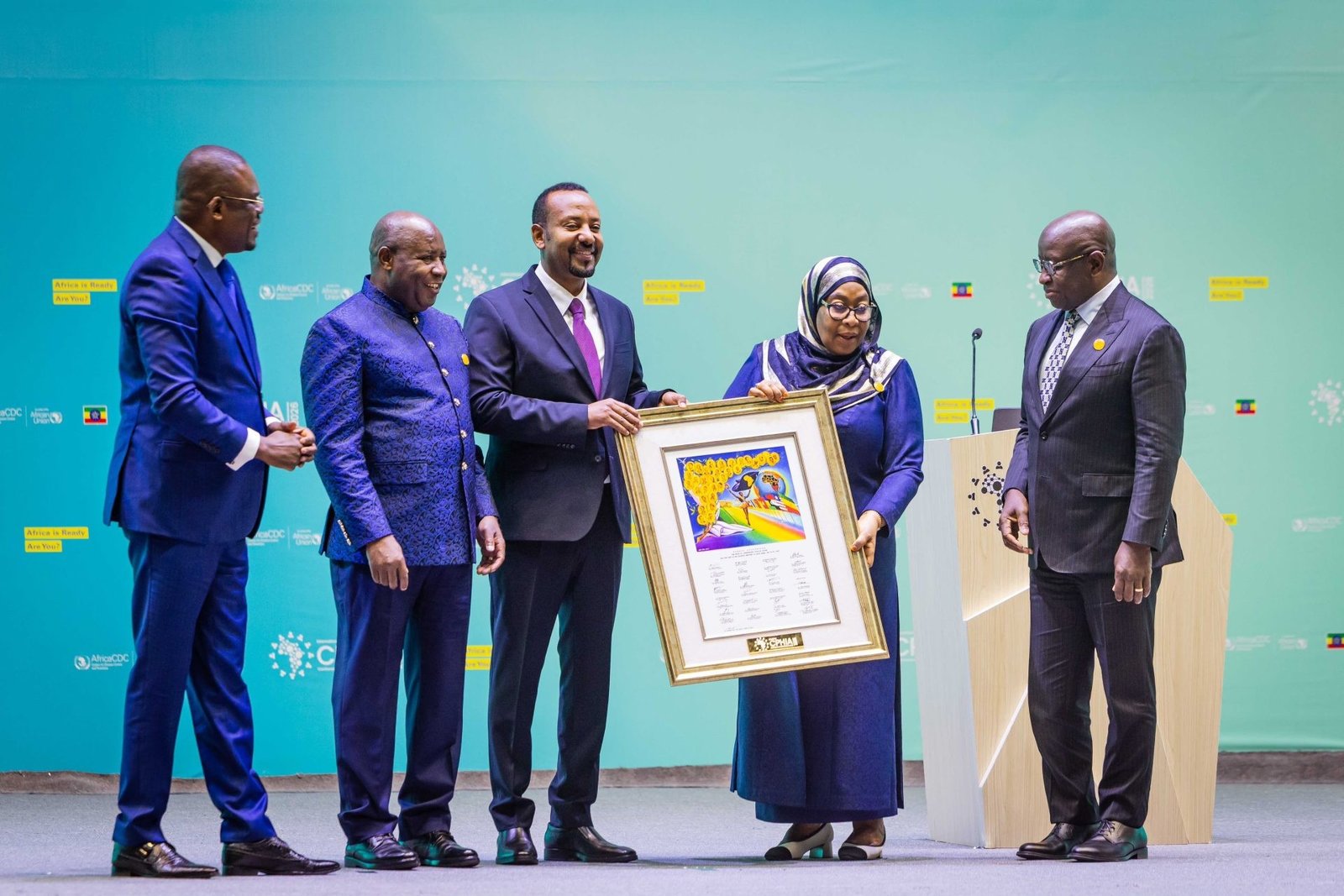
The opening brought together Ethiopian Prime Minister Abiy Ahmed Ali; Évariste Ndayishimiye, the President of Burundi and Chairperson of the African Union; Samia Suluhu Hassan, the President of Tanzania; Julius Maada Bio, the President of Sierra Leone; Mahmoud Ali Youssouf, the Chairperson of the African Union Commission; and Dr Jean Kaseya, the Africa CDC Director General, alongside ministers, senior government representatives, public health leaders and partners.
More than 30,000 participants are expected at the conference, according to Africa CDC, with organisers reporting registered delegates from more than 114 countries, 178 sessions across 19 halls, over 1,000 scientific research presentations and more than 70 industry exhibitions.
In his welcome address, Dr Kaseya described the gathering as more than a conference. “CPHIA is not a conference. CPHIA is a movement, a movement for Africa’s security and sovereignty. We in Africa understood that sovereignty is coming with responsibility. Responsibility is coming with good governance, trust and accountability,” he said.
The message from the opening ceremony was unmistakable: Africa’s health future, the leaders said, must be owned and paid for by Africa itself.
The Funding Squeeze Behind the Theme
The conference comes at a difficult moment for health financing in Africa. External health funding is declining, while public health threats — from outbreaks to maternal deaths — persist. Africa CDC said the theme reflected the need for stronger national institutions and sustainable health financing at a time when aid can no longer be taken for granted.
This year’s conference also coincides with a decade of Africa CDC’s work in advancing continental public health cooperation, supporting member states in disease surveillance, emergency preparedness and response, workforce development and regional coordination.
The African Union Commission Chairperson, Mahmoud Ali Youssouf, called for renewed efforts to meet the Abuja Declaration target of allocating at least 15 per cent of national budgets to health, alongside greater efficiency and accountability in public spending.
He also emphasised the need to accelerate local pharmaceutical and vaccine manufacturing, invest in African research and innovation, and strengthen the African Medicines Agency, while using the African Continental Free Trade Area and pooled procurement to develop continental health industries.
With donor funding falling, the conference’s central argument is that health sovereignty is no longer an aspiration — it is a necessity.
A Roadmap for Mothers and Children
One of the opening day’s main events was the launch of the African Union Champions’ Continental Roadmap on Reproductive, Maternal, Newborn, Child and Adolescent Health (RMNCAH) 2026–2030, championed by President Samia Suluhu Hassan of Tanzania.
The roadmap seeks to accelerate progress towards three objectives, known as the Three Zeros: zero home deliveries, zero preventable maternal and newborn deaths, and zero unvaccinated children.
“The success of this roadmap will depend on effective national implementation, and I therefore call upon all African Union Member States to designate empowered national focal points and integrate the Three Zeros into their existing national health strategies,” President Hassan said.
She called for expanded access to skilled, respectful maternity care and routine childhood vaccination, particularly in underserved communities. Drawing on Tanzania’s experience in strengthening health infrastructure and services, she announced an initial commitment of 60 scholarships for specialised training in midwifery, anaesthesia, obstetrics and gynaecology and neonatal care, alongside shorter competency-based training opportunities.
Sierra Leone Reports Falling Deaths
President Julius Maada Bio of Sierra Leone presented results from his country’s national campaign to reduce preventable maternal and child deaths and reach children who have missed routine vaccination.
Under the campaign, the Ministry of Health, hospitals and district teams conduct weekly reviews of maternal and child deaths to identify contributing factors, assign corrective actions and monitor progress. President Bio reported that maternal deaths had declined by about 34 per cent and child deaths by 12 per cent compared with the corresponding period of the previous year. The campaign had also reached 10,764 previously unvaccinated children, exceeding its target.
However, progress remains uneven, particularly in Freetown, where maternal deaths have increased and delays in referral and emergency care persist. The President stressed the need to strengthen emergency obstetric care, improve ambulance referrals and ensure that health facilities have trained personnel, blood supplies and essential medicines.
He reaffirmed Sierra Leone’s commitment to increasing domestic health financing through its national health compact and offered to share the country’s emergency response expertise, drawing on lessons from the 2014 Ebola outbreak. Dr Bio also invited African leaders and health teams to learn from Sierra Leone’s weekly accountability reviews.
Sierra Leone’s figures offered the opening day its clearest evidence that regular, local accountability can save lives — and its frankest admission that progress is still uneven.
Digital Health and Artificial Intelligence
Ethiopia, under Prime Minister Abiy Ahmed, presented its African Union Artificial Intelligence and Digital Health Championship, promoting African-led innovation, connected health systems and responsible health data use.
A documentary showcased Ethiopia’s investments in digital public infrastructure, electronic health records, community-level digital health systems and artificial intelligence capabilities. Dr Abiy highlighted how technology could improve access to specialist care and overcome geographical and workforce constraints.
“A midwife in a remote district should be able to consult a specialist when complications arise. A doctor in a regional hospital should be able to share an image for expert review. And a patient’s medical record should follow them securely from one facility to the next. Distance should no longer mean working alone,” he said.
Dr Abiy called for greater investment in African research institutions, laboratories, professional training and locally developed technologies. He also identified three priorities for continental cooperation: establishing centres of medical excellence, strengthening collective purchasing of African-produced medicines and health products, and improving accountability for implementation.
Technology, in the Ethiopian prime minister’s argument, is not a luxury for African health systems — it is the way to reach patients that distance and staff shortages have left behind.
Honouring the Continent’s Health Leaders
The opening ceremony also honoured African political leaders, scientists and global health partners for their contributions to public health. Presidential Awards for Health Transformation were presented to President Ndayishimiye, as well as Presidents João Lourenço of Angola, John Dramani Mahama of Ghana, Netumbo Nandi-Ndaitwah of Namibia and Dr Bio.
Cameroonian scientist Professor Rose Gana Fomban Leke of the University of Yaoundé received the Distinguished Scientist Award for her contributions to malaria research and immunisation.
Extraordinary Global Health Leadership Awards went to Dr Sania Nishtar of Gavi, Dr Richard Hatchett of the Coalition for Epidemic Preparedness Innovations (CEPI) and Dr Philippe Duneton of Unitaid, recognising their contributions to vaccine access, epidemic preparedness and equitable access to essential health technologies.
What Happens Next in Addis Ababa
The conference continues through Thursday, 27 November, with a programme that moves from discussion to detailed work. Tuesday’s agenda focuses on global health architecture, immunisation and health financing, including the launch of a Continental Immunization Forum and sessions on science communication, women’s health technologies and research preparedness for future outbreaks. A debate involving candidates for the position of WHO Director-General was also scheduled during the conference, according to coverage of the opening day.
Later days will cover domestic financing, local manufacturing and African cities, before the final day turns to research, innovation and the way forward, closing with the official closing ceremony.
The exhibition space at the Addis International Convention Centre is also open to delegates, bringing together African innovators, researchers, manufacturers, health organisations and development partners to showcase practical solutions to the continent’s health challenges. More than 300 journalists and media professionals from across Africa and beyond are covering the conference.
Five days of debate will not by themselves build the health systems Africa’s leaders described on Monday — but the opening ceremony set a clear test: whether the commitments made in Addis Ababa become budgets, factories, vaccines and trained health workers back home.
By The BNN Media
The Best News Network
News Beyond the Borders