By
Brent crude fell more than 3 per cent on Monday, settling at its lowest in almost three months, as recovering Gulf and Libyan supply and forecasts of a growing surplus outweighed fresh risks to shipping through the Strait of Hormuz.
By The BNN Media
The Best News Network
News Beyond the Borders
London, United Kingdom — Brent crude futures settled at $89.37 a barrel on Monday 23 November, down $3.20 or 3.46 per cent, while US West Texas Intermediate (WTI) settled at $80.17, down $3.24 or 3.88 per cent — both benchmarks closing at their lowest levels in about three months after a sharp sell-off through the London afternoon.

A sharp fall after a steady morning
January Brent began Monday near Friday’s settlement of $92.57 a barrel and touched a day high of $93.12 in the early hours. The contract then drifted lower through the London morning before selling accelerated sharply from around 13:50 UK time, taking it to $89.48.
A brief rebound faded, and selling resumed from 15:00 UK time. January Brent hit a session low of $89.07 — its lowest intraday level since 4 September — before closing the session down 3.63 per cent in intraday terms at $89.21, with the settlement at $89.37. January WTI fell as low as $80.36 during the day, its lowest since 1 September.
The fall extended into Tuesday. Brent was trading around $88.97 in early Asian hours and near $89.10 by 0700 GMT, while WTI slipped to about $79.94, after earlier touching its weakest level since 26 August.
The takeaway: Monday’s move was not a slow drift — it was a decisive break below $90 that gathered pace through the afternoon.
Supply is coming back
The main weight on prices was supply. The International Energy Agency said on 13 November that global supply would exceed demand by 1.7 million barrels a day in the fourth quarter of 2026, and it reported that Gulf oil exports had rebounded despite attacks on tankers.
Deutsche Bank, in a research note cited by Reuters, said global observed liquids inventories rose by 52 million barrels in October, implying an oversupply of 1.7 million barrels a day. The bank said evidence was accumulating that the global market was rebalancing and turning into surplus, although setbacks could still delay that process.
Libya added to the supply picture. The country’s Sharara oil pipeline has reopened, and oil has begun flowing into storage tanks at the Akakus facility in Zawiya, the chairperson of the National Oil Corporation told Reuters on Monday. The pipeline had been shut after an “outlaw group” closed a valve, threatening about 350,000 barrels a day of output, according to the corporation.
A preliminary Reuters poll also suggested US crude oil and product inventories likely rose last week, adding to the sense of comfortable supply.
The takeaway: with Gulf exports recovering, Libyan barrels returning and inventories building, traders see more oil coming than the market needs.
The war premium is fading
Just two weeks ago, Brent had traded near $97 on hopes — and fears — around talks involving Iran. That premium is now unwinding. President Donald Trump told Axios last week: “I am not rushing into any decision. We will see what happens after the beginning of the year.”
“With each passing day it seems less likely that Trump will attack again,” IG chief market analyst Chris Beauchamp said, according to Reuters. Vice President JD Vance was also reported to have met Qatar’s prime minister to discuss negotiations, in a further sign that diplomacy, rather than fresh military action, is the direction of travel.
JPMorgan expects oil futures to fall to the high $70s in the first half of 2027 on the back of the supply surplus, according to market reporting on Monday.
The takeaway: the fear that pushed Brent towards $97 earlier in November is draining out of the price as quickly as it arrived.
Shipping risks did not save the price
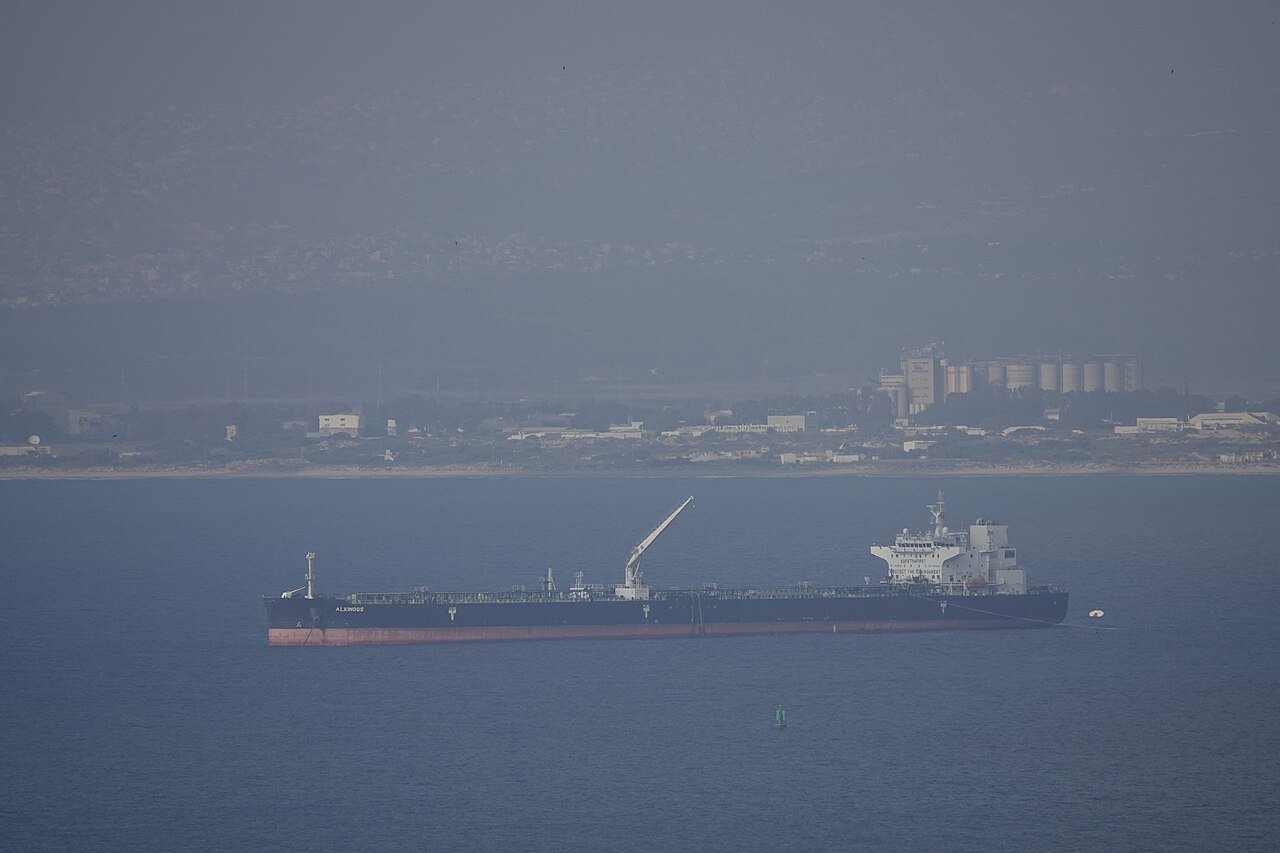
Monday brought no shortage of reasons for traders to worry about supply routes — yet prices fell anyway. Iran’s Revolutionary Guards navy said three “violating” oil tankers caught fire after hitting naval mines in the Strait of Hormuz on Monday, according to Iran’s Press TV, as reported by Reuters.
The United States is investigating whether Iran was involved in cyberattacks on as many as 50 energy tankers, the Wall Street Journal reported, citing US officials and others familiar with the matter. The Houthis said on Sunday they had attacked a Saudi refinery, and UK Maritime Trade Operations reported attacks on shipping near the Strait of Hormuz. Ukraine’s General Staff also confirmed an overnight strike on Russia’s Novoshakhtinsk refinery.
That none of this lifted prices underlines how firmly the market’s attention has shifted to the surplus. Oil prices, time spreads, refining margins and investor positioning increasingly suggest the market expects conditions to normalise, ANZ senior commodity strategist Daniel Hynes wrote in a client note — but he warned the market “remains under severe strain”.
“Despite some improvement in inventories and product availability, the oil market remains under severe strain,” Hynes said. “Oil prices, time spreads, refining margins and investor positioning increasingly suggest the market expects conditions to normalise. Yet logistics remain constrained and inventory buffers are thin. The oil system therefore appears to be moving from acute scarcity towards persistent vulnerability, rather than returning to normal.”
What it means for drivers and economies
Lower crude prices, if they hold, should feed through over time into cheaper petrol and diesel, easing pressure on households and on transport and manufacturing costs. For oil-exporting countries, however, the same move squeezes government revenues and budgets built on higher prices.
The Canadian dollar illustrated the knock-on effects: it touched 1.4385 against the US dollar on Monday, its weakest level in 19 months, heading for a tenth straight daily loss, with the oil slide among the pressures on the currency.
For consumers, the relief may be gradual. Refined product prices do not move in lockstep with crude, and inventories of fuel remain tight in some regions — a point analysts stressed even as crude fell.
- Brent: $89.37 a barrel, down 3.46% on Monday — lowest close since late August
- WTI: $80.17 a barrel, down 3.88% on Monday — lowest close since early August
- Next marker: OPEC+ ministers meet on 29 November to set 2027 output policy
What analysts say comes next
Not everyone expects a deeper slide. UBS strategist Giovanni Staunovo said in a research note that visible inventories “remain well below pre-war levels”, leaving prices sensitive to any supply surprise. Oil analyst Patrick De Haan said on X that oil and refined products looked oversold, while economist Steve Hanke cautioned that a respite would not come immediately, because it will take time to refill inventories drawn down during the war.
The near-term level to watch is Monday’s low of $89.07 on January Brent. A fresh confirmed attack on Gulf shipping could still trigger a quick bounce, while any signal from OPEC+ on 29 November about cutting supply in 2027 could change the tone into December.
For now, though, the market’s message is clear: after weeks in which war fears kept prices high, supply is back at the centre of the story — and supply is growing.
The takeaway: Brent below $90 marks a shift from a market priced on fear to one priced on surplus — but with shipping lanes still under threat, the calm may not last.
By The BNN Media
The Best News Network
News Beyond the Borders