By
By The BNN Media
The Best News Network
News Beyond the Borders
Moscow has accused Estonia of hostile actions “on the verge of triggering open war” after Tallinn decided to shut its land border with Russia — a sharp escalation in words over a frontier that will close in a week’s time.
Tallinn, Estonia — Russia’s Foreign Ministry said on Monday 23 November that Estonia’s decision to close its land border crossings with Russia from 1 December was among a series of hostile actions “on the verge of triggering open war”, after summoning Estonia’s chargé d’affaires in Moscow to deliver a formal protest.
The Warning From Moscow
The warning came in a statement from Russia’s Foreign Ministry on Monday, reported by Reuters, after Estonia’s envoy in Moscow was called in over Tallinn’s decision to close the border. The ministry’s words were pointed and deliberately public.
“The Estonian diplomat was once again told that such provocative and extremely dangerous actions are on the verge of triggering open war with Russia,” the ministry said, in the statement quoted by Reuters.
The phrasing matters. Moscow did not say it would declare war, and it did not announce any military step. It said Estonia’s actions were on the verge of triggering one — and added that “the Russian side reserves the right to take comprehensive political and diplomatic measures aimed at protecting Russia’s national interests and the legitimate rights of its citizens.”
It was, in other words, a threat framed as a warning: a claim that Estonia, a member of NATO and the European Union, was pushing a confrontation towards a point Moscow would treat as war, while keeping its own promised response in the political and diplomatic field — for now.
The sentence to remember is the one Moscow chose to publish: Estonia’s actions, it said, are “on the verge of triggering open war”.
What Estonia Decided — and Why
Estonia’s government decided on Friday 20 November to suspend its road border crossings with Russia from 1 December, for at least six months. The decision will be reviewed after six months, when the government says it will assess the security situation and the impact of the measure before deciding whether to extend it, amend it or lift it.
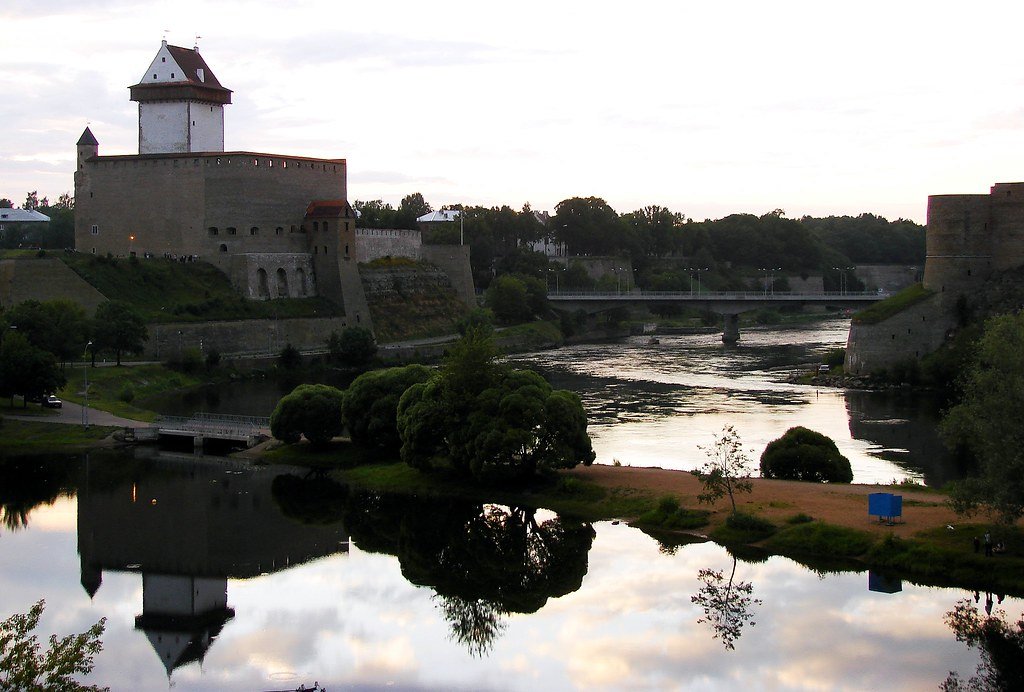
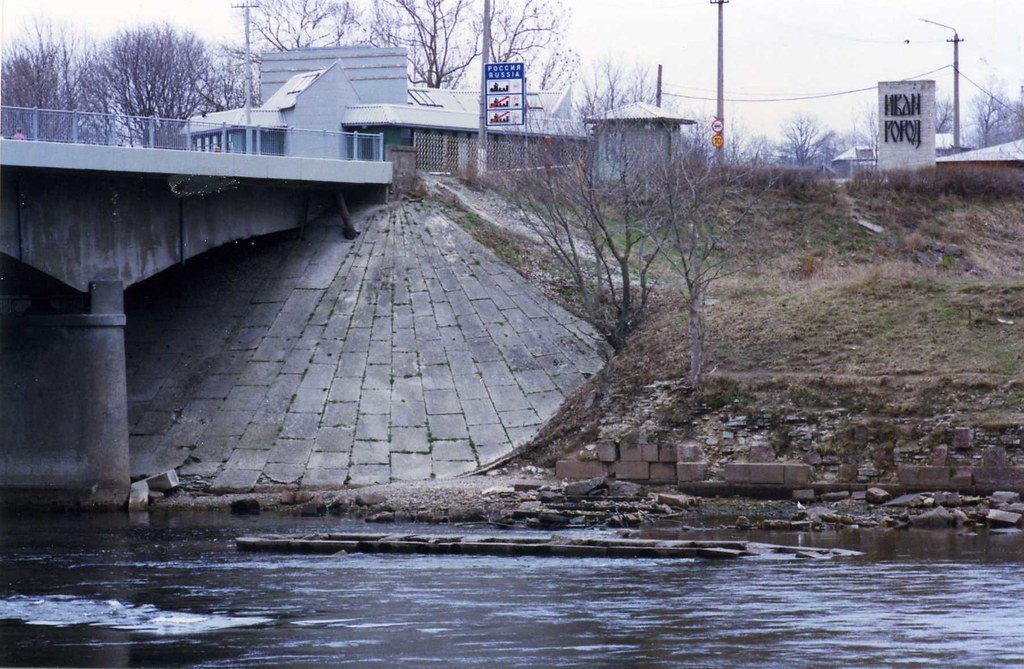
Five crossing points are affected: Narva-1, Narva-2, Koidula, Luhamaa and Saatse. Three of them handle travellers today — according to Estonia’s official crisis information service, the Narva crossing to Ivangorod is open to pedestrians only, while Koidula and Luhamaa in the south-east operate during daytime hours. From 1 December, direct pedestrian and vehicle crossings at all five points will stop, cutting the everyday overland route between the two countries and forcing anyone still needing to travel to reroute through a third country.
The plan had been signalled days earlier. On 15 November, Estonia’s Foreign Ministry said the government intended to close the crossings from 1 December, saying the move would curb Russia’s ability to act against Estonia and reduce the risk of sanctions being evaded through the border.
Foreign Minister Margus Tsahkna put the decision in the widest possible terms when it was announced: Russia’s hostile activities against Estonia and Europe have consequences. The closure, in Tallinn’s account, is not a punishment for a single incident but a response to a pattern of hostile activity that Estonia says has continued for months and shows no sign of stopping.
The Foiled Attack on Threod Systems
The immediate trigger was an attack that never succeeded. In the early hours of Saturday 14 November, at about 3:06 a.m., attackers tried to break into the premises of Threod Systems, a drone maker based in Viimsi, near Tallinn. According to Estonia’s Prosecutor General, Astrid Asi, the plan was to smash windows, pour flammable liquid inside and cause a fire and an explosion.
The company’s own security team stopped the attempt. Nobody was hurt, and the government said the company’s production and delivery capabilities were unaffected. Eight people, all residents of Latvia, were detained, and prosecutors applied to the courts to have five of them remanded in custody.
Estonia’s Internal Security Service, known as KAPO, said the attack was carried out on the orders of Russia’s military intelligence service, the GRU — an assessment its director general, Margo Palloson, said counterintelligence had established. Russia has denied involvement in the attack. The attribution is KAPO’s assessment, reported in an official Estonian government statement; it has not been tested in court.
Latvia’s State Security Service said it had passed risk information to KAPO on 13 and 14 November, and that on 14 November it carried out searches at nine sites in Latvia linked to the suspects, seizing explosive devices, pyrotechnic articles and ammunition, along with mobile phones and data storage devices.
Threod Systems, founded in 2012, builds long-range reconnaissance and attack drones, and its most consequential customer is Ukraine, where its drones are used for reconnaissance and guiding artillery fire. It was not the first such case: in September, KAPO said an arson attack in August against another Estonian defence company, Milrem Robotics, was an act of sabotage commissioned by Russian intelligence services.
One foiled attack, eight arrests and a border closure: Tallinn is treating the defence industry as a front line, not a bystander.
Moscow’s List of Accusations
The border closure was only one item in Moscow’s protest. In its statement on Monday, the Russian Foreign Ministry set out a list of accusations against Estonia that went well beyond the frontier.
It accused Estonia of allowing Ukraine to use its airspace “on the quiet” to attack targets in Russia. It accused Tallinn of trying to obstruct the movement of Russian cargo ships in the Baltic Sea, of banning the transit of Russian and Belarusian grain, of seeking a ban on the Russian language, and of threatening to close the Russian Orthodox Church.
After the closure was announced, Foreign Ministry spokeswoman Maria Zakharova had already described it as “openly confrontational”, saying it had been taken under the pretext of the alleged arson attempt and that the unilateral closure violated “the rights and interests of a significant number of Russian compatriots”. Reporting of her remarks also said she likened the move to a new Iron Curtain.
Russia has long accused Estonia and other Baltic NATO states of allowing Ukrainian drones to use their airspace. Ukrainian drones have frequently entered NATO airspace, which Kyiv says is a result of Russian signal jamming, and NATO countries have repeatedly denied intentionally allowing drones to use their airspace, blaming Russia for the incursions and for having launched the war with Ukraine in 2022.
Tallinn’s Answer
Estonia’s Foreign Ministry did not answer every accusation in Moscow’s statement. On the central charge, though, it was direct. “While we generally do not comment on or engage with Russian propaganda narratives, in this case we can reiterate that Estonia has never allowed, and will never allow, its territory to be used for military operations by another country,” it said, adding that other countries in the region had made the same position clear.
Foreign Minister Tsahkna went further on social media late on Monday. “Russia is flooding the airwaves with baseless accusations against Estonia to distract from its own actions undermining European security,” he wrote. In the same message he listed what he said were Russian actions in recent weeks alone: Russian missiles striking Polish territory, a Russian intelligence plot uncovered by Danish authorities, threats to commercial shipping in the Black Sea, and the thwarted GRU-ordered arson attack against an Estonian defence company.
The exchange captures the shape of the dispute. Moscow frames the closure as a hostile, escalatory act by a small neighbour. Tallinn frames it as a defensive measure against a campaign of sabotage and hybrid attacks that it says is aimed at Estonia, at its defence industry and at Europe more widely.
Neither side is backing down in words; the border, however, will close on a fixed date regardless.
A Wider Warning: Benghazi and the Baltic
Monday’s warning from Moscow did not come in isolation. On the same day, the Kremlin also warned Ukraine of painful consequences after Ukrainian naval drones struck Russian ships far from the Ukrainian front — in the port of Benghazi, in eastern Libya.
President Volodymyr Zelenskyy said on Sunday 22 November that Ukrainian forces had used seven naval drones to sink the Russian corvette Merkury, a warship commissioned in 2023 and attached to Russia’s Black Sea Fleet, and to strike the dry cargo vessel MV Angara, which Kyiv accuses of moving weapons and which has faced United States and international sanctions over arms shipments. Ukraine’s Security Service said a Ka-27 helicopter aboard the Merkury was also destroyed, and that the drone boats had been carried to the area and launched from a “mother ship”.
Russia’s Defence Ministry has not confirmed the loss of the Merkury, and Kremlin spokesman Dmitry Peskov declined to comment directly on Zelenskyy’s claim, saying the defence ministry was dealing with it. But Peskov’s warning was unambiguous in tone. “These actions have extremely painful consequences for the regime in Kyiv,” he said, according to reporting of his remarks, adding that Russian forces were carrying out large-scale strikes on military infrastructure in Ukraine every day.
A day earlier, on Saturday 21 November, two drones struck the Russian-flagged cargo vessel Sparta II in international waters in the eastern Gulf of Finland, setting it on fire as it sailed towards Kaliningrad. Finland’s military assessed that Ukraine likely carried out the attack. Peskov described what he called “a very dangerous trend of expanding terrorist activity” in the region.
The United Nations mission in Libya called for restraint after the Benghazi strikes, saying Libya “cannot afford, and must not become, a battleground for foreign conflicts”. In Tripoli, Musa al-Koni, deputy head of the Presidential Council, held Ukraine “fully responsible” for the strikes and said they were “tantamount to a declaration of war on the Libyan state”, according to Russia’s state news agency RIA Novosti.
Taken together, the weekend’s events show a war whose geography is widening — from the Black Sea to the Mediterranean and the Baltic — and a Kremlin that is answering setbacks at sea with warnings aimed at Kyiv, at its neighbours and at NATO’s eastern flank at the same time.
What Happens Next
The next fixed date is 1 December, when Estonia’s border suspension takes effect. Travellers have been urged to plan ahead and to complete any return journey through Estonia before the cut-off, or to reroute through another country. The eastern-based Libyan government that controls Benghazi has asked the United Nations secretary general and the Security Council for an international investigation into the ship attacks.
In Europe, the political response is still taking shape. The European Union is pressing ahead with the European Union’s proposed 22nd package of sanctions against Russia, targeting banks, crypto platforms and former combatants — a measure that, if adopted, would tighten the economic pressure Moscow already cites as a grievance.
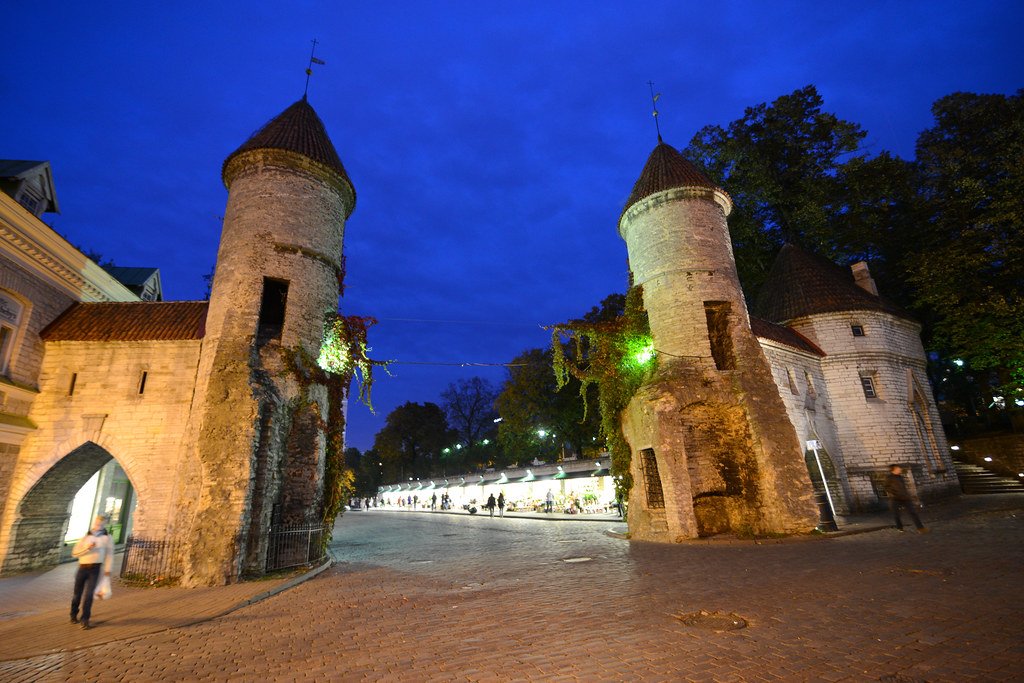
For Estonia, which sits on NATO’s north-eastern edge, the closure is the most concrete step it has taken against what it calls Russian hybrid warfare. For Moscow, it is another grievance to add to a long list — and the language it used on Monday, of actions “on the verge of triggering open war”, is the sharpest it has used against a NATO member in this dispute so far.
The border will close on 1 December. The words, for now, are the escalation — and both sides will be watching, over the next six months, whether the words stop there.
By The BNN Media
The Best News Network
News Beyond the Borders