 By
On Sunday 22 November, the planet ran 2.23°C hotter than the pre-industrial average — the highest daily figure ever recorded. The record fell the day after the COP31 climate talks collapsed without a deal.
By The BNN Media
The Best News Network
News Beyond the Borders
Paris, France — On Sunday 22 November 2026, the global average temperature stood 2.23°C (4.01°F) above pre-industrial levels — the highest daily figure ever recorded, according to preliminary data from the European Union’s Copernicus Climate Change Service (C3S). The reading, reported on Tuesday, beat the previous daily record of 2.05°C set on 17 and 18 November 2023, and it came at the end of a week in which the planet repeatedly pushed past a threshold it had never crossed before 2023.
A Record Set on a Sunday in November
The figure was reported by French public broadcaster Franceinfo, citing Copernicus data, and carried widely on Wednesday 25 November. It is a daily anomaly — the gap between the day’s global average temperature and the average for the same date in the pre-industrial period, the 1850–1900 reference used by climate scientists.
Before November 2023, the global temperature had never risen more than 2°C above pre-industrial levels on any single day. Since then, according to Copernicus data, that line has been crossed 11 times in three years. The 22 November reading is the highest of them all — and it was not even the week’s first record. On Friday 20 November, the anomaly reached 2.12°C, itself a record at the time, before being beaten two days later.
In the space of three days, the planet set and then broke its own record for the most abnormally hot day ever measured.
What the Number Actually Means
A single day’s anomaly is not the same as the planet’s long-term warming, and scientists are careful to say so. The Paris Agreement’s limits — holding warming well below 2°C and pursuing efforts to keep it to 1.5°C — are measured over decades, not days. By that long-term measure, the Earth has warmed by around 1.3°C since the 19th century, according to Copernicus figures cited in the reporting, and by nearly 1.4°C according to the United Nations.
But the daily figures matter because they show how far, and how fast, the system can now swing. The 2.23°C reading is preliminary data and may be revised slightly as Copernicus finalises its figures — one independent tracker, for example, puts the same day at 2.21°C. Whichever final figure is settled on, the day stands as the most abnormally hot ever measured.
- 22 November 2026: 2.23°C above pre-industrial levels — the highest daily figure on record (preliminary Copernicus data).
- 20 November 2026: 2.12°C — a record when it was set, beaten two days later.
- 17–18 November 2023: 2.05°C — the previous record.
- Before November 2023: the 2°C line had never been crossed on a single day.
The record is preliminary, but the direction is not in doubt: days this hot did not happen at all before 2023, and now they keep happening.
El Niño: The Amplifier on Top of Warming
The record does not come from long-term warming alone. An exceptionally strong El Niño — the natural climate pattern in which the tropical Pacific warms and releases heat into the atmosphere — is adding to the warming driven by greenhouse gas emissions from burning coal, oil and gas.
Samantha Burgess, deputy director of Copernicus, said earlier this month that the exceptionally strong El Niño was compounding human-driven warming. Scientific American, reporting the 20 November record, described it as a “blockbuster El Niño that is likely the strongest in the past 1,000 years”. El Niño is linked to above-average temperatures across large parts of the world and to shifts in rainfall that raise the risk of droughts in some regions and floods in others.
Because it takes time for the heat released by El Niño in the Pacific to affect global temperatures, scientists expect the pattern’s biggest effect on global temperatures to arrive in the months ahead rather than behind us.
Human-caused warming set the stage; El Niño is now pushing the planet further into uncharted territory.

A Week of Records, Not a Single Day
The 22 November figure was the peak of a run, not an isolated spike. The four days from 19 to 22 November were among the largest daily jumps above pre-industrial levels in the Copernicus record, which begins in 1940. US climatologist Zeke Hausfather, who runs the Climate Brink platform, said the Copernicus forecasting model pointed to a possible rise to 2.3°C in the coming days.
Zachary Labe, a scientist at the research organisation Climate Central, said more days at or above 2°C could occur in the coming months, potentially through March 2027, though he added that, viewed day by day, such episodes are still expected to remain exceptions rather than become the norm.
The run of hot days also feeds into the yearly picture. It is possible that 2026 will be the hottest year on record, besting 2024, though it will be close and could end in a tie. Both 2026 and 2027 are expected to average more than 1.5°C above pre-industrial temperatures — a level so far surpassed in a calendar year only in 2024. And 2027, when the El Niño heat has fully worked its way through the climate system, will almost certainly become the hottest year on record, according to the scientists cited in the reporting.
The record day may be beaten within days — and the record year may follow within months.
The Talks That Failed the Day Before
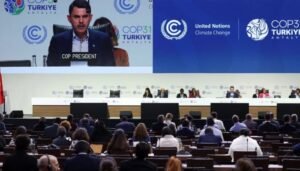
The timing added a bitter edge to the news. The record was set on Sunday 22 November — the day after the COP31 climate talks collapsed in Antalya without a deal. The European Union and other countries rejected a final deal put forward by the summit’s presidents, Turkey and Australia, saying it was too weak to advance the fight against global warming. The United States did not send an official delegation to the summit.
Outgoing United Nations Secretary-General António Guterres, a vocal supporter of phasing out fossil fuels, noted his “profound frustration” at the outcome. “Temperatures keep shattering records. Climate extremes keep intensifying. Emissions remain far too high. And every delay makes our task harder and more costly,” he said. “The world is now poised to exceed the globally-agreed limit of a 1.5 degree temperature rise. The window to keep that overshoot as short and shallow as possible is rapidly closing.”
On Wednesday, Pope Leo expressed disappointment at the failed talks and urged the international community to take firm measures to protect the Earth and prevent the consequences of climate change.
The hottest day ever measured arrived the morning after the world’s governments failed to agree on how to stop the next one.

What Comes Next
The United Nations Environment Programme has warned that the world will likely see a sustained rise above 1.5°C before 2030. That does not mean the Paris Agreement has already been breached — the agreement is judged over many years — but it means the margin for keeping the overshoot short and shallow, in Guterres’s words, is shrinking fast.
For now, scientists are watching the Copernicus data day by day. If Hausfather’s forecast is right, the 2.23°C figure may not stand for long. If Labe is right, more days above 2°C will follow through the northern winter and into early 2027, even if they remain the exception rather than the rule. And if the yearly forecasts hold, 2027 will take the title of hottest year on record — a title that has changed hands with grim regularity in recent years.
The record set on 22 November will be checked, revised and argued over, as all preliminary data is. But the pattern behind it — a warming planet, an exceptionally strong El Niño, and a failed summit — needs no revision.
The planet has now run more than 2°C above its pre-industrial average on 11 separate days. Before November 2023, it had never done so once.
By The BNN Media
The Best News Network
News Beyond the Borders