By
The revised cover text published in Antalya on Thursday drops every mention of coal, oil and gas, cuts the $120 billion adaptation finance target, and leaves nearly 200 nations with one day to save a summit campaigners are already calling a “ghost COP”.
By Faseeh Ur Rehman
Senior Journalist | The BNN Media – The Best News Network
News Beyond the Borders
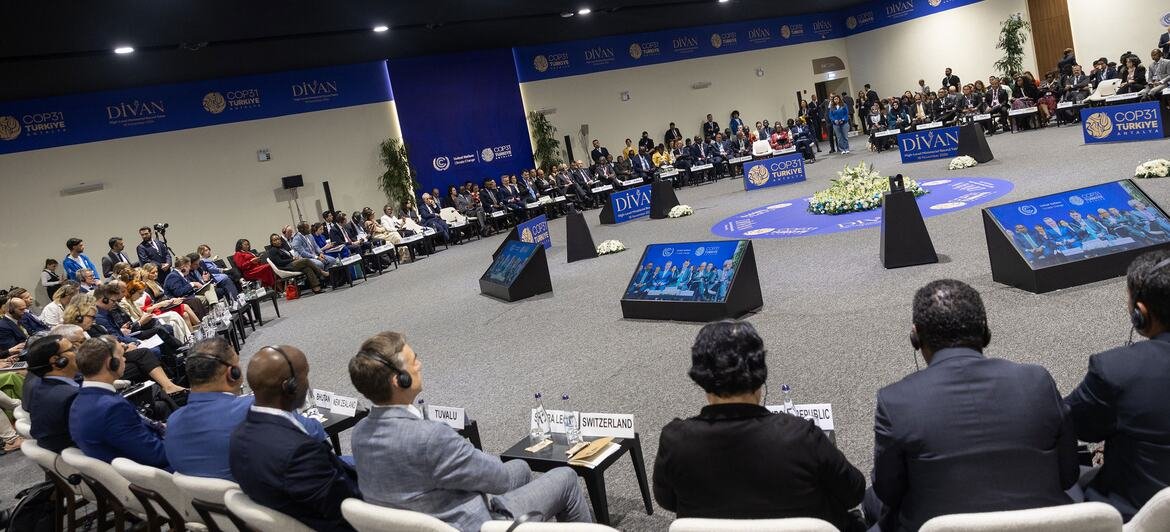
Antalya, Türkiye — Climate negotiators stripped out any reference to ending the use of fossil fuels in a slimmed-down draft deal text published on Thursday, as the COP31 meeting in Antalya approaches its Friday deadline. The revised text, cut from 144 paragraphs to 80, removes the pledge to phase out fossil fuels and drops the proposed $120 billion target for finance to help developing countries adapt to climate change — and it drew an immediate outcry from vulnerable nations and campaigners.
What was cut from the draft
The first draft, published on Monday, had contained two references to fossil fuels and limiting their use — a topic that deeply divides nations in the negotiations every year. It called for accelerated action to phase out fossil fuels and an immediate transition away from them in energy systems, and it proposed adaptation finance of at least $120 billion a year for developing countries by 2035.
The new text, an unedited version dated 19 November at 14:10 and prepared under COP31 Presidency consultations, removes all of that. The word “fossil” does not appear anywhere in it, according to the document published by the UN climate body and confirmed by Reuters, and it names neither coal, oil nor fossil gas. A proposal for accelerated action to phase out fossil fuels was nixed, and the draft also weakened language on electrification and adaptation finance compared with Monday’s version.
What survived: the draft acknowledges that global warming could exceed the 1.5 degrees Celsius threshold countries have sought to preserve and calls for “deep, rapid and sustained” cuts to greenhouse gas emissions. It encourages efforts to scale up technologies that can suck carbon out of the atmosphere, and it launches the Antalya Compact for Energy Efficient Buildings and the Antalya-to-Addis Ababa Roadmap for adaptation and resilience finance.
- Removed: Every reference to fossil fuels; the phase-out pledge; roadmaps for moving away from fossil fuels; the $120 billion adaptation finance figure
- Kept, but weakened: The 35-by-35 electrification goal; the tripling of adaptation finance by 2035, with the details left for further discussion
- Added: The Antalya Compact for Energy Efficient Buildings; new dialogues on oceans and mountains
- Still bracketed: Language supporting carbon capture, utilisation and storage (CCUS) and carbon dioxide removal
A text that cannot name the cause of the crisis is, for the countries living with that crisis, a text that has already failed.
“A ghost COP”
“This new text has gone backwards from the one released earlier in the week,” said Mohamed Adow, director of the climate and energy think tank Power Shift Africa. “If this version of the text remains, it will be a ghost COP. The summit will have nothing to show for what happened here.”
His verdict — that the talks had been “muzzled” by the refusal of some fossil fuel producing countries to allow a commitment to “transition away from fossil fuels” to stand — was echoed by campaigners around the world. Jasper Inventor, head of Greenpeace’s COP31 delegation, said the mention of carbon removal technologies opened the door for the fossil fuel industry to keep ramping up production. “Anything that provides a way for the fossil fuel industry to keep polluting the climate would be a profound backwards step at a time when climate impacts are rapidly worsening,” he said.
Andreas Sieber, head of political strategy at 350.org, strongly criticised the removal of fossil fuel language at a press conference after the draft was released. Teresa Anderson of ActionAid International told journalists that “adaptation finance is not nice to have. Adaptation is how we all survive this climate crisis together.” And Rachitaa Gupta, global coordinator of the Global Campaign to Demand Climate Justice, said: “The cause of the climate crisis is clear, as well as who should pay for it. What’s remaining is the global north’s political resolve to provide this finance.”
Panama threatens to block any deal
The anger was not confined to campaigners. Panama made the unusual move of writing to the Turkish and Australian presidents of the talks, announcing that unless all its demands were met — including a request to cap global oil production — it would block any outcome. “They are beautiful speeches. But while we listen to endless oratory, the planet is being destroyed … Outside this room and this conference, the world needs and expects radical change from us, and we are not delivering it,” read the letter signed by Panama’s environment minister, Juan Carlos Navarro.
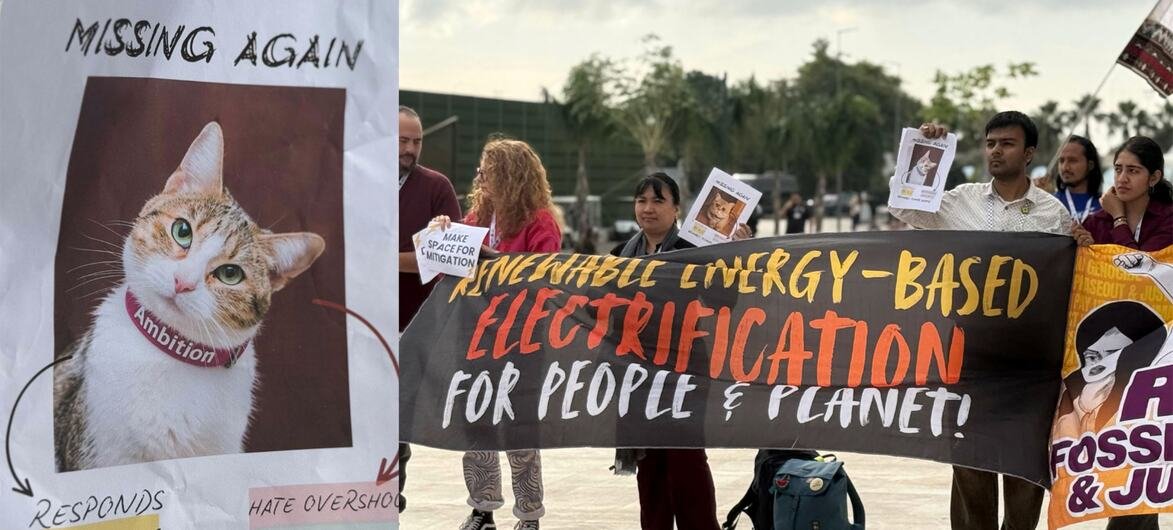
The protest outside the venue took a lighter form with a serious point. Under a grey Antalya sky on Thursday morning, climate activists held up crumpled missing-cat posters outside the COP31 venue. Both cats were called Ambition. “Right now, in this COP we are missing ambition,” Philippine Menager of the Ecología y Desarrollo Foundation told UN News, adding that the cats would only come home with a meaningful roadmap for moving away from fossil fuels. The campaign began at COP29, she said, and Ambition has apparently been disappearing ever since.
When a country has to threaten a veto to be heard, and activists have to report ambition as a missing pet, the negotiations are in trouble.
The presidency’s defence
Türkiye and Australia, which are sharing leadership of the conference, defended the decision and said this year’s meeting was more about delivering on past promises than reiterating them. “I do not think we are taking a step back. I think the determined steps we have taken need to be supported. It is clear we cannot get anywhere by repeating the same discussions,” said COP31 President Murat Kurum.
Australia, which is leading negotiations under the split presidency arrangement, had previously said Monday’s opening draft was always intended to be a broad document that would then be narrowed down. At a press conference presenting the text, Australia’s Chris Bowen, who is leading the negotiations, said COP31 would be the first climate summit to acknowledge that the world would fail to hold warming to the 1.5°C limit set out in the Paris Agreement. “But we are determined that COP31 is not remembered for that, but is remembered as a COP which decides clearly and strongly that that is not acceptable,” he said, referring to language calling for any 1.5°C overshoot to be kept as small and short as possible. He pledged to continue consultations through the night, adding: “We won’t be leaving the rooms of Antalya until we have that consensus.”
The money gap at the heart of the row
The fight over the text is, at its core, a fight over money. The UN Environment Programme’s 2026 Adaptation Gap Report, cited in the first draft, estimates developing countries’ adaptation needs at around $305 billion a year by 2035. A United Nations review published on Thursday found that adaptation finance for developing countries actually stood at $64.1 billion in 2024, down from $81.5 billion in 2022 — moving in the wrong direction while needs grow.
The revised draft reaffirms the goal of tripling adaptation finance by 2035 but leaves crucial details, including how to calculate that increase, for further discussion. Rich nations have resisted calls to increase support, citing budget constraints and insisting that big emerging economies also contribute. Developing countries, meanwhile, say they are still being asked to do more without adequate financial support.
There was some brighter news in the UN Climate Change Yearbook published this week: renewable energy capacity grew by 17 per cent between 2024 and 2025, and 44 of 96 global climate indicators were moving in the right direction — though 19 showed no progress and 33 lacked sufficient data. At a high-level event on Thursday, the COP31 Presidency presented an electrification package supporting Türkiye’s goal of increasing electricity’s share of global final energy consumption to 35 per cent by 2035, up from around 23 per cent now, bringing together more than 150 countries plus the European Union, 37 cities and over 260 businesses. The package cites more than 21,000 kilometres of electricity grids built in 2025 and annual investment plans of at least $156 billion for grids, renewable energy and storage — but only about 75 nations have so far backed the 35-by-35 goal itself.
What happens on the closing day
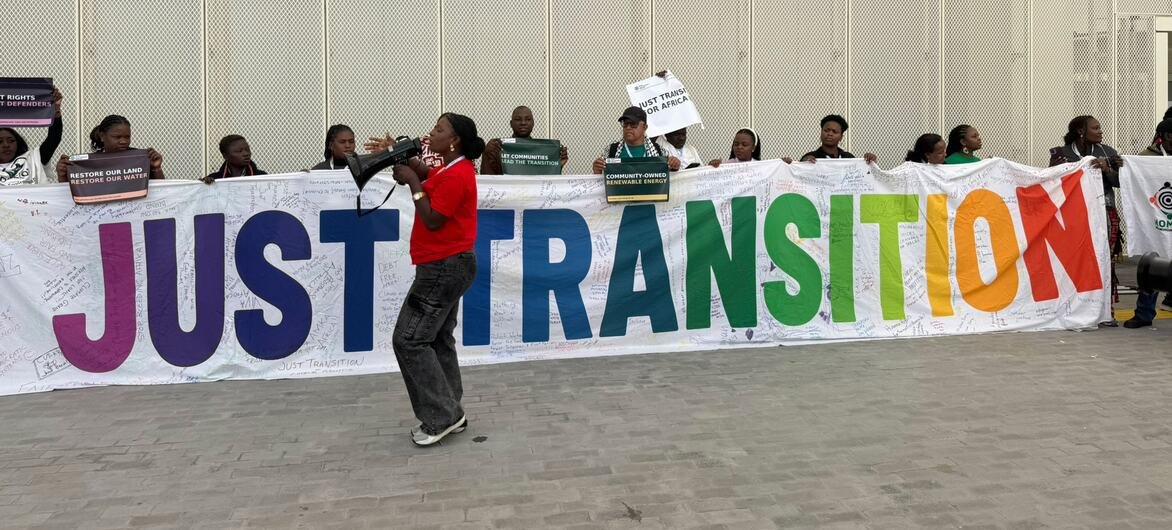
COP31 entered its final hours on Thursday with 21 issues still unresolved, and it enters its scheduled closing day on Friday with no final agreement reached. Closing plenary sessions began on Thursday even as the key tracks on finance, adaptation and a just transition remained unresolved, and ministers are trading last-minute offers through the night in search of consensus. The final text is due by midnight in Antalya on Friday — but in recent years efforts to secure consensus among the nearly 200 countries participating have regularly blown past the deadline by more than 24 hours, and observers in Antalya expect at least one more iteration of the text before anything can be agreed.
The backdrop makes the stakes plain. Nations agreed at COP28 in Dubai two years ago to transition away from fossil fuels, but language around energy sources is highly contested at the UN climate talks, where decisions are taken by consensus — and last year’s summit in Brazil ended with no mention of fossil fuels in the final deal. When the COP31 leaders’ summit opened in Antalya, nearly 200 nations faced the 1.5°C test; on the closing day, the question is whether the summit will answer it or leave Antalya with the fuel that causes the crisis still unnamed in its own deal.
UN climate chief Simon Stiell acknowledged that the benefits of the energy transition must reach further. “Vulnerable developing countries need affordable finance and technology. Workers and communities must help to shape and be supported through major change. Across the board, we need to move far faster to meet the demands of the science,” he said.
The draft can still change in the final hours — but as the summit closes, the world is watching whether COP31 will name the problem it was called to solve.
By Faseeh Ur Rehman
Senior Journalist | The BNN Media – The Best News Network
News Beyond the Borders
Sources: Reuters; UN News; The Guardian (via syndication); Inter Press Service/Global Issues; The Business Standard; Asia Today; 350.org. Reporting by Faseeh Ur Rehman for The BNN Media.