By
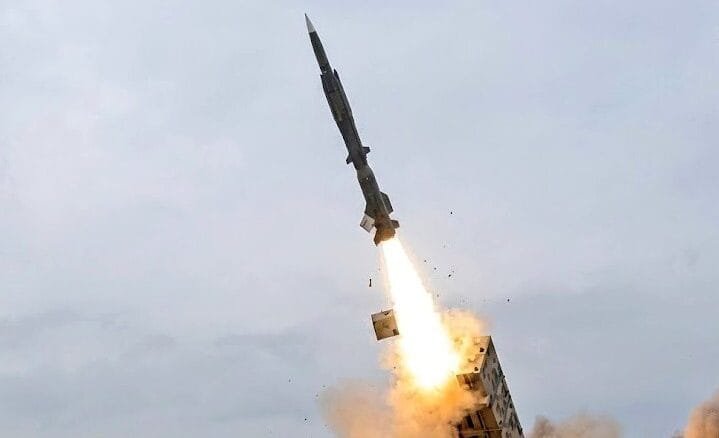
Pakistan Army has successfully test-fired the Fatah-3 supersonic cruise missile, the military says, in a launch watched by the commander of the Army Rocket Force Command. The army says the new weapon will extend the reach of the force created last year to operate its conventional missile arsenal.
By Salar Khan
Reporter | The BNN Media – The Best News Network
News Beyond the Borders
RAWALPINDI, Pakistan — The Pakistan Army has conducted a successful launch of the Fatah-3 supersonic cruise missile on Wednesday, 18 November 2026, marking another significant milestone in the advancement of national defence capabilities, the military’s media wing, the Inter-Services Public Relations (ISPR), said in a statement.

What the Army Announced
According to the ISPR, the weapon system is equipped with advanced navigation and propulsion systems and is capable of engaging targets at long range with high precision and lethality at supersonic speed. The statement described the test as another significant milestone in strengthening the country’s national defence capabilities.
The ISPR said the successful test “will significantly enhance the operational flexibility and strike reach of the Pakistan Army’s Rocket Force Command, further strengthening the country’s overall conventional deterrence and defence posture.”
A new supersonic weapon, tested in public, with the army saying it sharpens the reach of its youngest command.
Who Watched the Launch
The launch was witnessed by the Commander Army Rocket Force Command and senior officers of the Pakistan Armed Forces, along with scientists and engineers, the ISPR said.
President Asif Ali Zardari, Prime Minister Shehbaz Sharif, Chief of Army Staff and Chief of Defence Forces Field Marshal Asim Munir and the services chiefs commended the successful launch. They appreciated the dedication and commitment of all those who contributed to what the ISPR called another significant milestone in the development of the country’s national defence capabilities.
The Rocket Force Command
The Fatah-3 will be operated by the Army Rocket Force Command, the conventional missile force Pakistan created in August 2025. The command is the army’s dedicated formation for its conventional missile systems, and the ISPR has presented each new Fatah test as adding range and precision to that force.
The creation of the command last year, followed by a run of tests this autumn, shows how central conventional missiles have become to Pakistan’s defence planning. The Fatah-3 is the latest system to be publicly tied to the command’s growing arsenal.
A Missile First Seen in May
The Fatah-3 is not a new name. It was first revealed to the public in May 2026, when the ISPR released a video showing it as a ramjet-powered supersonic cruise missile leaving a road-mobile launcher. Wednesday’s test was the first publicly announced launch of the system since that reveal.
The test is also the latest in a rapid run of missile trials. In October, Pakistan tested the Fatah-2 extended-range hypersonic ballistic missile on 13 October and an extended version of the Fatah-IV ground-launched cruise missile on 6 October.

What Has Not Been Disclosed
The ISPR statement did not disclose the missile’s range, its exact speed, or the location of the test, and no date was given for when the Fatah-3 will formally enter service. Independent analysts have offered estimates of its range and speed, but Pakistan has confirmed none of those figures, and this report does not repeat them as fact.
What the army has said, in its own words, is that the system can strike at long range with high precision at supersonic speed — and that the successful test strengthens conventional deterrence.
No range, no speed, no test site — the army has confirmed the launch and its purpose, and nothing more.
Why the Test Matters
- New capability: The Fatah-3 adds a supersonic cruise missile to the Army Rocket Force Command’s arsenal.
- Third Fatah test in six weeks: It follows the Fatah-4 extended-range test on 6 October and the Fatah-2 extended-range test on 13 October.
- Deterrence message: The ISPR framed the test explicitly in terms of conventional deterrence and defence posture.
- Top-level endorsement: The president, prime minister and the chief of army staff all publicly commended the launch.
For Pakistan’s military, the message of the test is straightforward: the Rocket Force Command, barely a year old, is being equipped with longer-reaching, faster weapons — and the army wants that known.
What Happens Next
The ISPR has given no date for the Fatah-3 entering service, and no further test has been announced. What is clear is that the system has now moved from a video reveal in May to a confirmed test launch in November, and that the army expects it to extend the operational flexibility and strike reach of the Rocket Force Command.
Whether further tests follow, and when the missile is formally inducted, will be for the army to announce. For now, the Fatah-3 has flown — and the army says it flew well.
A supersonic missile, a successful test, and a clear message: Pakistan’s Rocket Force Command is gaining reach.
By Salar Khan
Reporter | The BNN Media – The Best News Network
News Beyond the Borders