By
S&P Global Ratings has kept France’s A+ credit rating but cut its outlook to negative, warning that weak growth and rising interest costs are making the deficit harder to cut — on the same day official figures confirmed the country is in recession and its deficit widened to 5.6 percent of GDP.
By The BNN Media
The Best News Network
News Beyond the Borders
Paris, France — S&P Global Ratings revised the outlook on France’s sovereign credit rating to “negative” from “stable” on Friday, 27 November, while affirming the rating itself at A+/A-1, citing growing budget pressures as weak economic growth and higher interest costs make it harder to reduce the deficit.

A Warning, Not Yet a Downgrade
The distinction matters. S&P did not lower France’s rating on Friday; it changed the outlook attached to it, signalling that a downgrade is more likely in the coming months if the country fails to make progress on its public finances. The agency said it expected larger fiscal deficits this year and next than it had previously forecast, according to Reuters.
The decision closed what Le Monde called a grim day for France — a day that brought recession, a soaring deficit and concerns over the country’s debt in quick succession. Instead of the recovery the government had been hoping for, the paper wrote, the country is plunging deeper into crisis.
France keeps its A+ rating for now. The negative outlook means S&P is watching for a reason to take it away.
The Deficit Keeps Missing Its Target
The numbers behind the decision tell the story. Under Prime Minister Sébastien Lecornu’s initial plan, the deficit was to fall from 5.1 percent to 4.7 percent of GDP in 2026, to honour commitments made to the European Union and ultimately to stabilise the debt. After parliamentary debate, the target was revised to 5 percent of GDP. Then, at the end of the summer, the government admitted the deficit would likely reach 5.4 percent of GDP, given the oil shock triggered by war in the Middle East and the impact of the drought.
On Friday, the National Institute of Statistics and Economic Studies (INSEE) reported that the deficit had climbed to 5.6 percent of GDP in the third quarter. Without further measures, S&P sees next year’s deficit at 5.3 percent of GDP, Agence France-Presse reported — short of the government’s 5 percent target for 2027.
Economy Minister Roland Lescure immediately acknowledged S&P’s move, saying it highlighted “the urgent need to give the country a responsible budget without delay”.
- Deficit target under Lecornu’s first plan: 4.7% of GDP in 2026
- Revised target after parliament: 5.0% of GDP
- Government’s own estimate by late summer: 5.4% of GDP
- Deficit reported by INSEE for Q3: 5.6% of GDP
- S&P’s forecast for 2027 without new measures: 5.3% of GDP
Every revision this year has gone the same way — up, not down.
Recession Confirmed on the Same Day
The fiscal news arrived alongside worse news on growth. INSEE confirmed on Friday that France entered recession in the second quarter of 2026. The drop in GDP remains small, but it has rendered the official target of 0.5 percent growth for the year, excluding inflation, unrealistic. “We’ll be lucky to reach just 0.2%,” predicted economist Stéphane Colliac of BNP Paribas, according to Le Monde. The promised rebound of 1 percent for 2027 looks equally out of reach, with some analysts forecasting growth of just 0.1, 0.2 or 0.3 percent.
Weak growth is not a side issue for the rating. When the economy barely grows, tax revenues stall while the cost of servicing a large debt keeps rising — and that is exactly the squeeze S&P described. Higher interest costs, the agency said, are making the deficit harder to reduce, even before any new spending is counted.
A country that cannot grow cannot shrink its deficit by growing out of it — and France’s growth has now evaporated.
Politics Is Part of the Problem
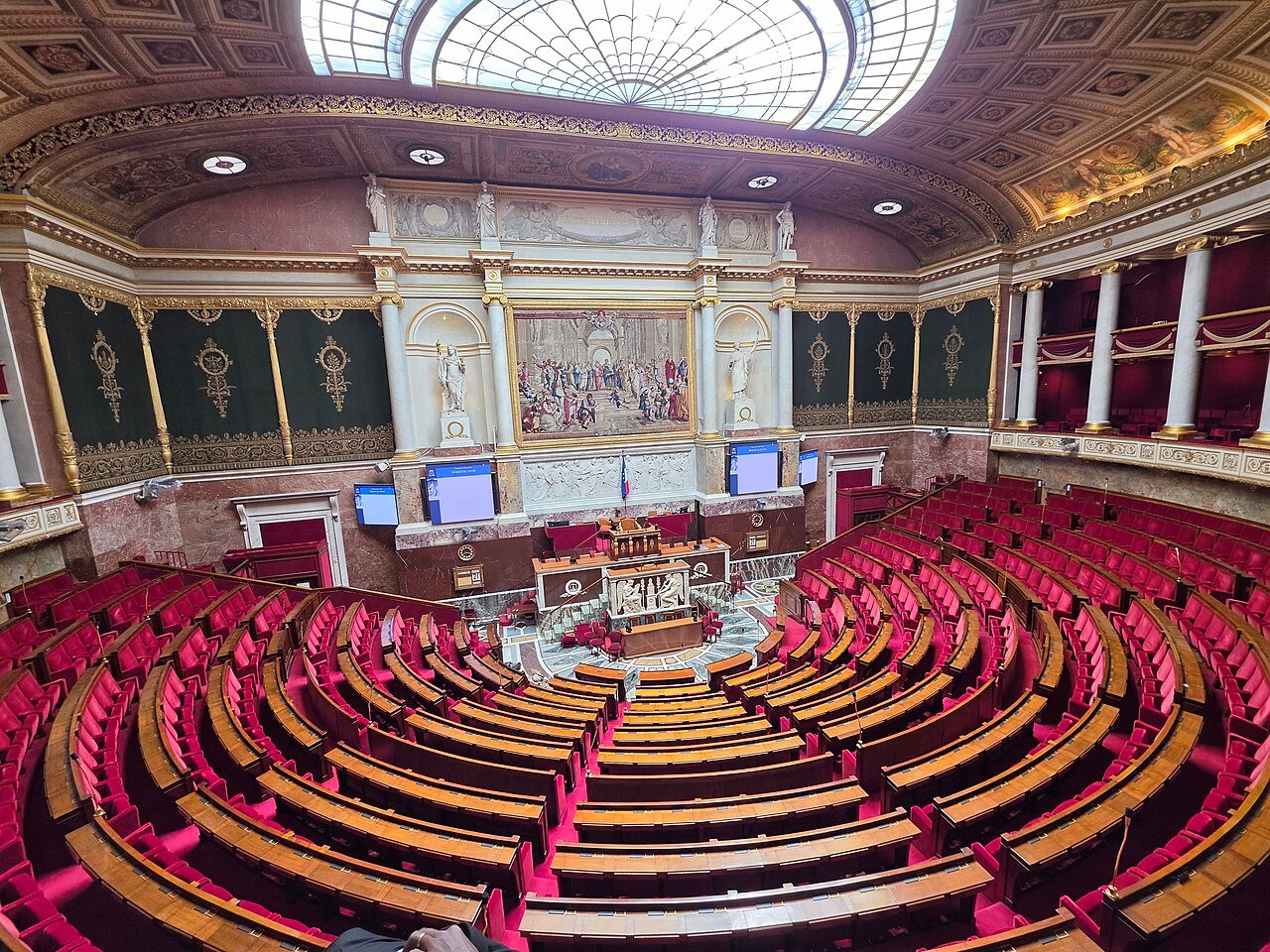
S&P’s worry is political as much as fiscal. “Continued political polarization, including beyond the 2027 presidential election, could continue constraining the implementation of deficit-reducing measures and growth-enhancing reforms,” the agency said in a statement quoted by Reuters.
The 2027 budget now under discussion in parliament is the immediate test. The government must show it can pass measures that actually narrow the deficit, in a parliament where it cannot take support for granted. S&P has spelled out what would cost the country another notch: failure to bring the deficit down meaningfully over the next two years, or growth staying below its forecasts for a long stretch. A narrower deficit and faster growth than it expects could return the outlook to stable.
The presidential election in 2027 hangs over the whole question. S&P’s warning extends beyond the vote, suggesting the agency doubts that the political system, whoever wins, will be able to agree on the spending cuts and reforms needed.
The rating agency is not just judging France’s accounts — it is judging whether its politics can fix them.
All Three Agencies Now Flashing the Same Warning
Friday’s decision completes a set. Moody’s reviewed France on 23 October and left its rating at Aa3, one notch above S&P’s grade, with a negative outlook already attached. A week later, Fitch held its A+ rating and turned negative too, in an unscheduled review. S&P’s move means all three of the world’s main rating agencies now carry a negative outlook on French sovereign debt.
The history adds weight. S&P cut France’s rating to A+ in 2025, one notch below its previous AA- grade, according to the Wall Street Journal. A further cut would take the rating to A — still five steps above junk, but another step away from the top tier France once held without question.
Moody’s has already set a nearer test, saying in October that its rating “assumes that a deficit-reducing budget for 2027 will be adopted, while financing costs and social tensions will abate somewhat in the next few months”. That assumption is now being tested in parliament.
When all three agencies point the same way, the warning is no longer one firm’s opinion — it is the market’s consensus view of the risk.
What Markets Face on Monday
Markets had shut by the time S&P published its decision on Friday, so Monday, 30 November, is the first full chance to trade the news. The bond market’s starting point is uneasy: the yield gap between French ten-year bonds and German Bunds, the eurozone benchmark, continues to hold below 150 basis points, and Germany’s ten-year yield ended Friday at 3.2629 percent after paring back an earlier rise, according to Reuters.
Friday’s trading was dominated by choppy, thin post-Thanksgiving liquidity, with the United States still on holiday. European bond yields had already moved higher during the day as a recovery in technology shares eased demand for safe-haven debt and hawkish accounts from the European Central Bank’s October meeting pushed investors to price in further interest rate rises. The ECB’s leadership is itself in transition, with eurozone leaders having backed Spain’s Pablo Hernández de Cos as the next president of the European Central Bank, with formal appointment due in December.
What happens on Monday will show whether investors treat the negative outlook as a warning already priced into French bonds, or as a fresh reason to demand higher yields for lending to Paris. A wider gap over German debt would raise France’s borrowing costs further — the very pressure S&P says is making the deficit harder to cut.
The rating was published after the close. Monday’s trading will be the verdict.

What Would Change the Outlook
S&P’s next scheduled review is a few months away, and the agency has left the path open in both directions. A downgrade would follow if France fails to bring its deficit down meaningfully over the next two years, or if growth stays below the agency’s forecasts for a long stretch. A return to a stable outlook would require the opposite: a narrower deficit and faster growth than S&P expects.
Neither outcome is in the government’s gift alone. It depends on a budget that parliament will pass, an economy that can grow again, and a political system that can agree on both. Until then, France borrows as an A+ country with a negative outlook — and with all three rating agencies warning that the direction of travel is down.
S&P spared France a downgrade on Friday. Whether it stays spared depends on the budget, the economy, and the politics — in that order.
By The BNN Media
The Best News Network
News Beyond the Borders