By
British retail sales volumes rose 0.7% in October, beating all economists’ forecasts, after the government’s “Be Ready” campaign sent shoppers stocking up on tinned food and UHT milk — yet analysts warn the rebound may hide a tougher Christmas ahead.
By The BNN Media
The Best News Network
News Beyond the Borders
London, United Kingdom — British retail sales volumes unexpectedly rose 0.7% in October compared with September, official figures showed on Friday, 20 November 2026, bolstered by a government call for households to stock up on long-life items and by stronger clothing sales as the weather turned colder.

The jump beat all economists’ forecasts in a Reuters poll, which had expected no growth at all, and lifted annual sales growth to a two-month high of 2.3%, up from just 0.4% in September. Sales excluding automotive fuel rose 0.9% on the month and 2.5% on the year.
The Numbers Behind the Rebound
The Office for National Statistics (ONS) said retail sales volumes rose 0.7% over the month, recovering from a revised fall of 0.6% in September. Over the three months to October, volumes were up 0.4% on the previous three months and 1.7% higher than the same period a year earlier.
Online sales continued to outperform the high street. The value of online sales rose 1.5% in October, after a fall of 0.3% in September, and was 9.7% higher than in October 2025. Online shopping accounted for 29.2% of total retail spending, up from 29.1% in September.
Separate figures on Friday showed October public sector net borrowing of £17.0 billion, about £1 billion better than expected, offering the government a small piece of good news on the same morning.
October’s rebound beat every forecast — but the detail of what drove it matters more than the headline.
The ‘Be Ready’ Effect
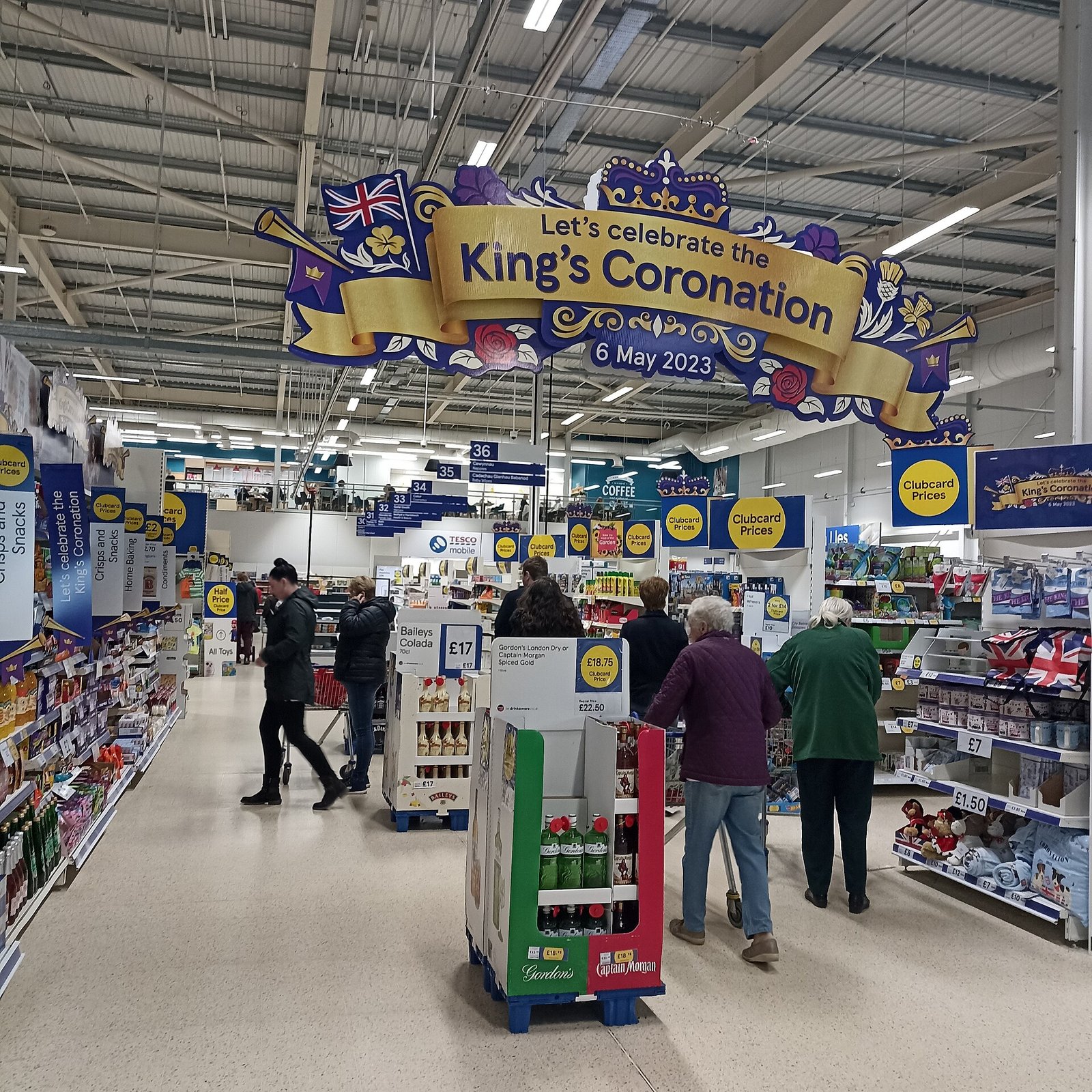
The most unusual driver of the October figures was not the weather or a sale, but a government emergency-preparedness campaign. Food stores reported a 0.8% rise in sales volumes in October, after a 0.3% drop the month before, and supermarkets told the ONS that demand for tinned goods, UHT milk and other long-life products had jumped after the government’s “Be Ready” campaign launched on 22 October, encouraging households to prepare for emergencies.
“Supermarkets have told us that sales of long-life food items such as tinned food and UHT milk were boosted by the government’s ‘Be Ready’ campaign,” said Grant Fitzner, the ONS chief economist.
Non-food stores also enjoyed a better month, with sales volumes rising 1.1% as cooler weather encouraged shoppers to update their autumn and winter wardrobes after a warmer than usual September.
Shoppers were not splashing out — they were stocking up. That distinction will shape how much of October’s gain survives into Christmas.
Confidence Edges Up — But From a Low Base
There was a small improvement in the mood of shoppers too. A monthly survey from the market research group GfK showed that British consumer confidence rose to -22 in November, up from -24 in October, as shoppers became more willing to make big-ticket purchases ahead of Christmas.
But the improvement came after sentiment had fallen sharply in October, when rising fuel bills and borrowing costs squeezed households. Separate BRC-KPMG data showed shoppers holding back on big-ticket purchases ahead of Black Friday, and analysts cautioned that the confidence reading remains deeply negative by historical standards.
“An unexpected recovery in retail sales in October underlines the current fickle nature of consumer confidence. The increase in sales … is probably a one-off which hides the challenge facing retailers as they head into the crucial festive trading period,” said Rajeev Shaunak, head of consumer at accountants MHA.
The Inflation Squeeze Behind the Headlines
The backdrop to the retail figures is a household budget under strain. Consumer price inflation rose to a one-year high of 3.6% in October, and the Bank of England forecast it would reach close to 5% in the middle of next year when it raised interest rates for the first time in three years this month.
Higher prices and higher borrowing costs have squeezed households through the autumn, and overall economic growth, while stronger than expected this year, has not translated into comfortable spending power. That is why analysts are cautious about reading too much into a single month’s figures: a rise driven by emergency stockpiling and a cold snap is not the same as a sustained recovery in consumer demand.
Inflation at a one-year high and interest rates rising for the first time in three years — October’s sales came despite the squeeze, not because it has eased.
Retailers Split on the Christmas Outlook
Updates from major British retailers ahead of the festive season have been mixed. Clothing and food retailer Marks & Spencer said recent trading had been “solid” and that it entered the Christmas period with momentum, while Primark and Next highlighted a pickup in sales in October when the weather turned colder.
Others were less upbeat. JD Sports said its UK sales trend had softened in its third quarter, compared with a second quarter boosted by the soccer World Cup, while discounter Poundland was reported to be considering administration — a reminder that the pressure on the high street has not gone away.
What Happens Next
Retailers now head into the most important weeks of their year, with Black Friday and Christmas trading set to decide whether October’s rebound was the start of a recovery or a one-off driven by stockpiling. The ONS figures give the high street a welcome boost, but the bigger question is what happens after Christmas, when higher energy bills and continued pressure on household finances could leave shoppers with less to spend.
For now, British shoppers have surprised the forecasters — by buying tins and UHT milk.
October’s surprise was real, but it was built on emergency supplies and cold weather. Whether shoppers keep spending when the festive season ends is the question that will decide the high street’s winter.
By The BNN Media
The Best News Network
News Beyond the Borders
Sources: Office for National Statistics, “Retail sales, Great Britain: October 2026”, 20 November 2026; Reuters, 20 November 2026; Retail Gazette, 20 November 2026; dpa-AFX via TradingView, 20 November 2026.