 By
[ad_1]
Last Updated:
Celebrate Tulsi Vivah 2026 with these five traditional bhog and prasad recipes, including panchamrit, gud wali kheer, atta churma, besan ladoo and aloo-puri.




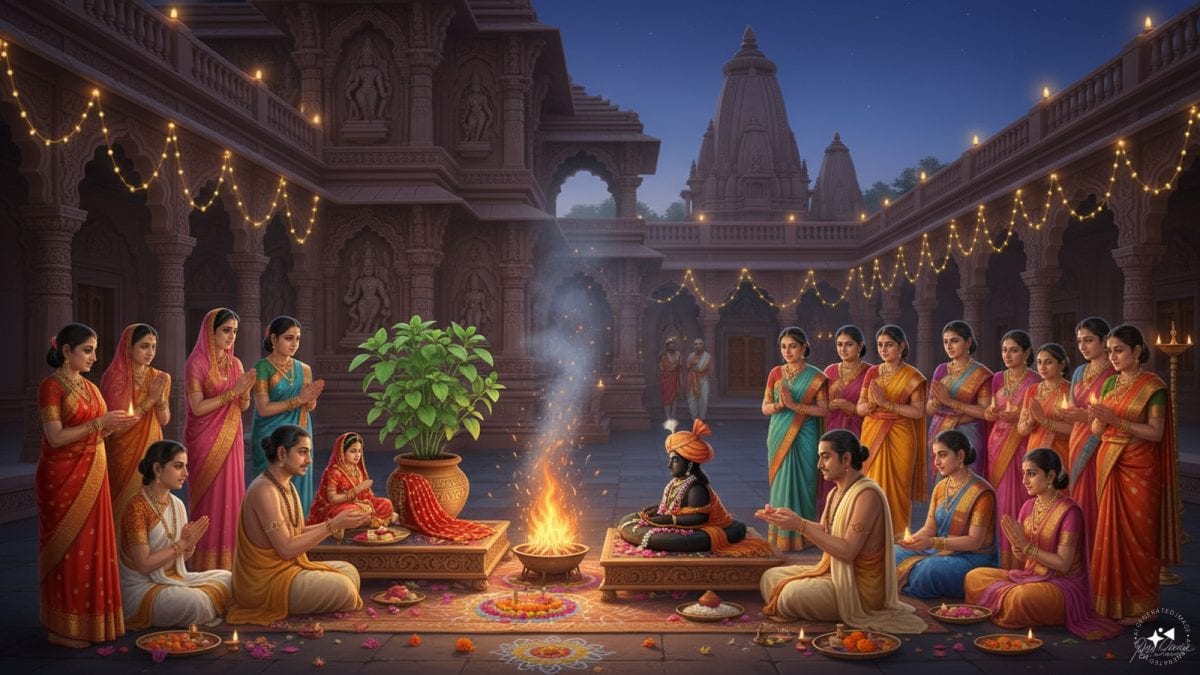
AI Representational Image
Tulsi Vivah is an important Hindu festival that celebrates the symbolic marriage of the sacred Tulsi plant, or holy basil, to Lord Vishnu, who is worshipped in the form of Shaligram. Observed on the Dwadashi tithi of Shukla Paksha in the Hindu month of Kartik, Tulsi Vivah marks the end of the Chaturmas period and traditionally signals the beginning of the Hindu wedding season.
In 2026, Tulsi Vivah will be observed on November 21.
On this auspicious day, devotees decorate the Tulsi plant with flowers, colourful fabrics, ornaments and rangoli, treating it as a bride and performing traditional wedding rituals with prayers and offerings. Preparing special Tulsi Vivah bhog and prasad is an important part of the celebration, with families making homemade sweets and festive dishes to offer during the puja.
Popular Tulsi Vivah prasad recipes include fruits, cow ghee, and many traditional vegetarian delicacies, depending on family and regional customs. If you are wondering what to make for Tulsi Vivah bhog this year, here are some easy and traditional prasad recipes you can prepare at home for the festival:
1. Panchamrit
Panchamrit is one of the most common offerings prepared during Hindu pujas, including Tulsi Vivah. The word literally means a mixture of five nectars, traditionally made using milk, curd, honey, ghee and sugar. To prepare it, take half a cup of chilled milk in a bowl and add two tablespoons of fresh curd, one tablespoon of honey, one teaspoon of ghee and one tablespoon of sugar. Stir until the ingredients are well combined. You can garnish it with a few tulsi leaves, chopped almonds or saffron strands, depending on your family’s tradition. Panchamrit is offered during the puja and distributed among devotees as prasad. Prepare it fresh and keep it refrigerated until it is time to serve.
2. Gud Wali Kheer
A bowl of warm gud wali kheer makes for a comforting festive sweet and is a traditional alternative to sugar-based rice pudding. To prepare it, wash and soak half a cup of rice for about 20 minutes. In a heavy-bottomed pan, bring one litre of milk to a gentle boil. Add the drained rice and cook on a low flame, stirring occasionally, until the grains become soft and the milk thickens. Meanwhile, dissolve three-quarters of a cup of grated jaggery in a little warm water and strain it to remove impurities. Allow the kheer to cool slightly before adding the jaggery syrup, as adding jaggery directly to boiling milk can sometimes cause it to curdle. Mix well and flavour with cardamom powder. Garnish with chopped almonds, cashews and raisins before offering it as bhog.
3. Atta Churma
Atta churma is a traditional Indian sweet made with whole-wheat flour, ghee and jaggery or sugar. It is particularly popular in Rajasthani and North Indian festive cooking. To make it, combine two cups of whole-wheat flour with two tablespoons of melted ghee and enough water to knead a firm dough. Divide it into small portions and shape them into thick discs. Cook these on a low flame in a heavy tawa until completely cooked through. Allow them to cool before breaking them into pieces and grinding them into a coarse powder. Heat half a cup of ghee in a pan, add the crushed wheat mixture and roast briefly. Turn off the heat and mix in three-quarters of a cup of powdered jaggery or sugar, along with cardamom powder. Garnish with chopped almonds and serve once cooled. The mixture can also be shaped into small portions for easier serving.
4. Ladoo
Homemade ladoos are a popular choice for festive bhog because they are easy to prepare, portion and distribute as prasad. Besan ladoos are one option that can be made with a handful of pantry ingredients. Heat half a cup of ghee in a heavy-bottomed pan and add two cups of besan. Roast on a low flame, stirring continuously, until the flour turns golden, releases a nutty aroma and loses its raw smell. This may take around 15–20 minutes. Allow the mixture to cool until warm, then add one cup of powdered sugar and half a teaspoon of cardamom powder. Mix well and fold in chopped almonds or cashews. Once the mixture is cool enough to handle, shape it into small round ladoos. Store in an airtight container after they have cooled completely.
5. Aloo-Puri
For households that prefer offering a savoury dish as part of their Tulsi Vivah bhog, aloo-puri makes a satisfying festive meal. To prepare the potato curry, heat two tablespoons of oil or ghee in a pan and add cumin seeds. Once they crackle, add grated ginger, chopped tomatoes, turmeric, red chilli powder, coriander powder and salt. Cook until the tomatoes soften, then add three boiled and roughly mashed potatoes. Pour in water to achieve the desired gravy consistency and simmer for five to seven minutes. Finish with fresh coriander. For the puris, knead two cups of whole-wheat flour with a little salt and water into a firm dough. Divide into small balls, roll into discs and deep-fry in hot oil until puffed and golden. Serve the puris hot with the potato curry. Follow your family’s puja traditions when deciding whether to include salt, spices or other ingredients in the offering.
Quick Answers
 Ask News18
In 2026, Tulsi Vivah will be observed on November 21. The festival marks the symbolic marriage of the sacred Tulsi plant to Lord Vishnu, commemorates the end of the Chaturmas period, and traditionally signals the beginning of the Hindu wedding season.
Ask News18About the Author

Abigail Banerji is a Senior Sub Editor with News18’s English desk. She brings 6 years of experience across both print and digital newsrooms, spanning editorial planning, reportage, copy editing, conte…Read More
November 17, 2026, 14:10 IST
[ad_2]
Source link