 By
Three days of summitry in Manila ended on Tuesday with the Indo-Pacific’s most important table full again: the leaders of the United States, India, Japan and Australia met as the Quad for the first time in two years, hours after the East Asia Summit adopted new pacts on online scams, supply chains and artificial intelligence.
By Umar Farooq
Journalist (UAE) | The BNN Media – The Best News Network
News Beyond the Borders
MANILA, Philippines — United States President Donald Trump arrived in the Philippine capital on Tuesday, 17 November, at the tail end of the 49th ASEAN Summit, and within hours was sitting down with the leaders of India, Japan and Australia for the first meeting of the Quad grouping in two years — the opening move of a three-day Asian trip that takes him next to China for a meeting with Xi Jinping and Vladimir Putin.
The Quad Returns
Trump landed in Manila at about 5:30 p.m. on Tuesday, minutes before the 49th ASEAN Summit formally closed, and went straight into an evening of meetings at the Solaire Resort. He greeted the Quad leaders and took part in a group photograph at 6:20 p.m., followed by a multilateral meeting at 6:30 p.m. — the first in-person meeting of the four leaders since September 2024, and the first of Trump’s second term in office.
The four leaders at the table were Trump, Indian Prime Minister Narendra Modi, Japanese Prime Minister Sanae Takaichi and Australian Prime Minister Anthony Albanese. “Our countries are the four corners of a free, open, stable, and prosperous Indo-Pacific,” Trump said as he opened the session. Modi, writing on X after the meeting, said: “Today’s meeting has given fresh momentum to our shared vision for a free, open, peaceful and prosperous Indo-Pacific, with concrete goals for the next phase of our cooperation.”
The Quad — formally the Quadrilateral Security Dialogue — is not a military alliance, but a grouping of four Indo-Pacific democracies built around maritime security, technology and supply chains. It was the first meeting of the grouping that Trump’s predecessor Joe Biden had regarded as a signature foreign policy initiative, and the first time Trump himself had convened it as president. Chinese President Xi Jinping, who will host Trump and others at this week’s Asia-Pacific Economic Cooperation meeting, has previously objected to the Quad as an effort to encircle Beijing.
For the first time in two years, the four corners of the Indo-Pacific were in the same room — and the photograph alone was the message.
What the Four Leaders Agreed
The Quad’s joint statement set out concrete plans rather than general promises. The leaders flagged joint military exercises next year featuring maritime patrol aircraft, and announced a new Indo-Pacific Maritime Surveillance Collaboration. They reaffirmed a commitment to an AI accelerator scheme, first announced by their foreign ministers in Atlanta, to coordinate and fund the development of trusted artificial intelligence across the region.
They also agreed to work together on critical minerals security — diversifying supplies of rare earths and other strategic minerals and reducing dependence on a single supplier, particularly China — and announced an inaugural Quad Business Leaders’ Forum in early 2027, which India is expected to host, to bring together business leaders, government officials and policy experts.
The leaders issued a joint statement describing the Quad as “a force for good and a partnership of action”, and reiterated their support for ASEAN centrality and unity, secure critical supply chains, freedom of navigation and overflight, and open, safe and resilient maritime transit corridors. Free and unimpeded commercial shipping lanes — including through the Strait of Hormuz, the Red Sea and Bab el-Mandeb — were part of the discussion, reflecting a region watching the war in the Gulf as closely as the contest in the Pacific.
The East Asia Summit’s Two Documents
Earlier on Tuesday, the 21st East Asia Summit had met at 2:30 p.m., with Modi in attendance alongside the ASEAN leaders and the summit’s other partners. The leaders adopted two landmark documents: the East Asia Summit Leaders’ Statement on Strengthening Cooperation Against Online Scams and Related Offences, and the East Asia Summit Declaration on Navigating our Future, Together: Stability and Renewal.
Modi unveiled four national initiatives during the summit, including an East Asia Summit Cyber Crime conference to be hosted at India’s National Forensic Sciences University, aimed at tackling online fraud and other cross-border cybercrimes. The East Asia Summit, which began in Kuala Lumpur in 2005, brings together the ASEAN members and eight partners — India, China, Japan, South Korea, Australia, New Zealand, the United States and Russia — and is the only leaders-led forum where India, the United States, China and Russia sit together on Indo-Pacific issues.
At the 23rd ASEAN–India Summit, held alongside it, leaders formally adopted the ASEAN–India Joint Statement on Cooperation in Disaster Management, agreeing to bolster early warning systems, share satellite data, conduct joint simulation drills and promote ethical artificial intelligence for disaster risk assessment under the 2026–2030 Plan of Action. Modi told the summit that ASEAN was central to MAHASAGAR — Mutual and Holistic Advancement for Security and Growth Across Regions — the framework he announced in Mauritius in March 2025 as an extension of India’s SAGAR vision of 2015. Trade between India and ASEAN stood at $128.37 billion in 2025–26.
AI for Small Business: ASEAN’s MSME Declaration
The summit’s most practical outcome for ordinary people in South-East Asia may prove to be one adopted on its first day. On Sunday, 15 November, ASEAN leaders adopted the ASEAN Leaders’ Declaration on AI-Powered MSME Growth, a coordinated regional plan to bring artificial intelligence to the micro, small and medium enterprises that form the backbone of ASEAN economies.
The declaration recognises that smaller businesses still struggle to adopt AI — limited awareness, poor data readiness, weak digital capabilities, the high cost of solutions and uneven digital infrastructure across member states — and commits the region to affordable tools, subsidised training, shared technical infrastructure, better digital infrastructure, AI literacy and responsible adoption. It is guided by the ASEAN Guide on AI Governance and Ethics, the expanded guide for generative AI from 2025, and the ASEAN Responsible AI Roadmap (2025–2030). The Philippines, as lead proponent, will coordinate with other members and the ASEAN Secretariat to report on progress under the AI-Powered MSME Growth Action Plan.
The declaration sat alongside other economic outcomes of the week: ASEAN economic ministers signed the Digital Economy Framework Agreement (DEFA) in Manila on 14 November, and leaders adopted a declaration establishing an ASEAN Center of Excellence for Creative Industries in the Philippines.
Three Days That Rewired the Region’s Calendar
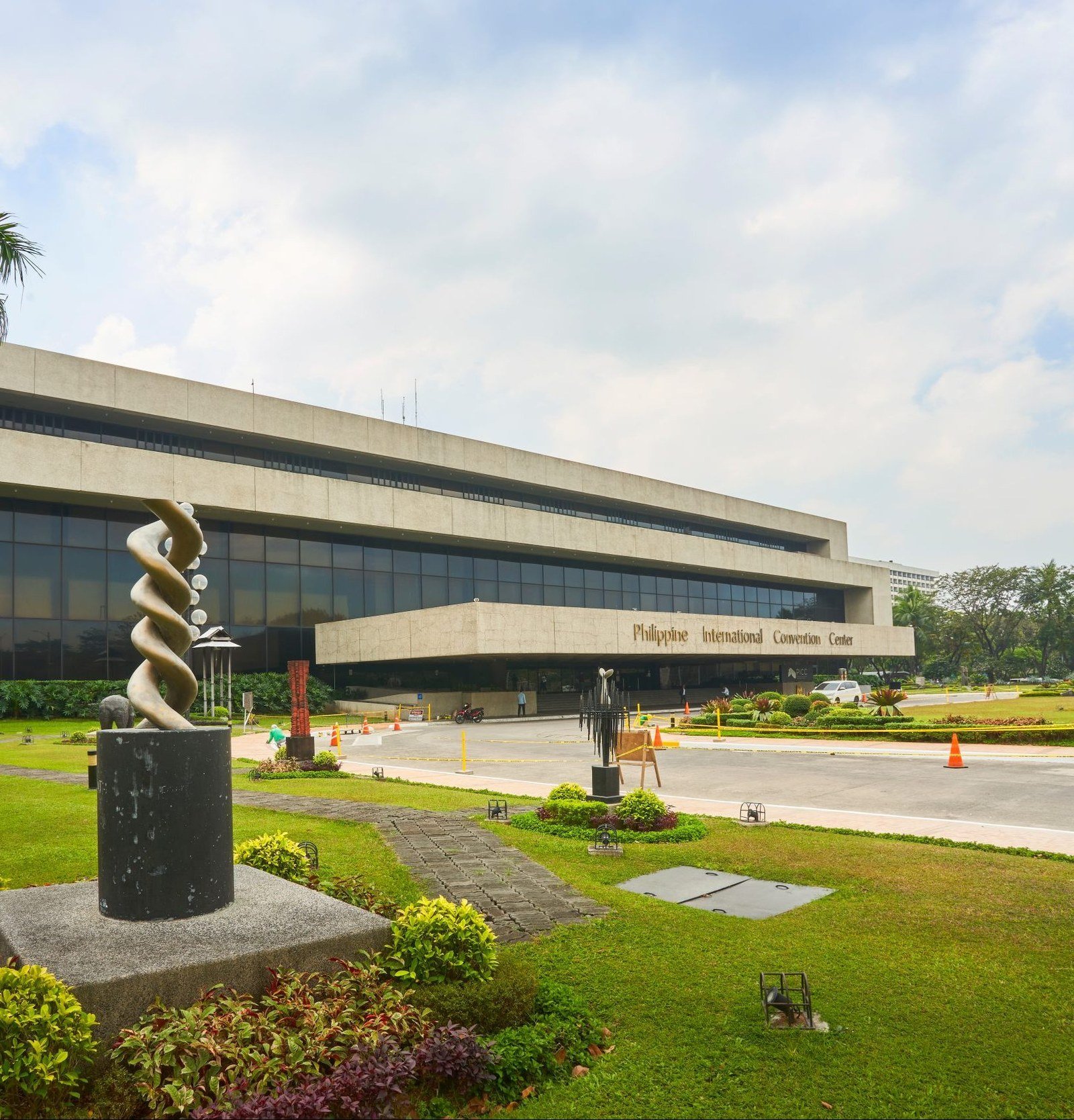
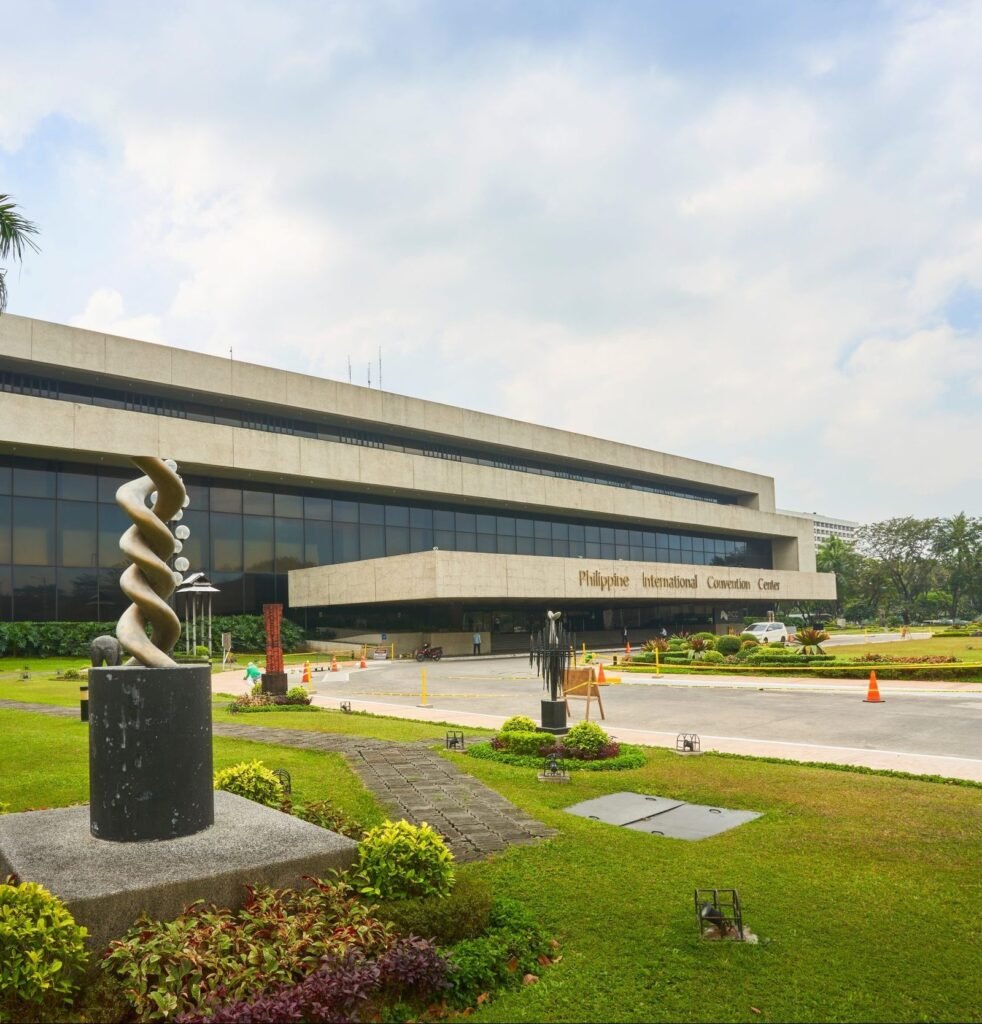
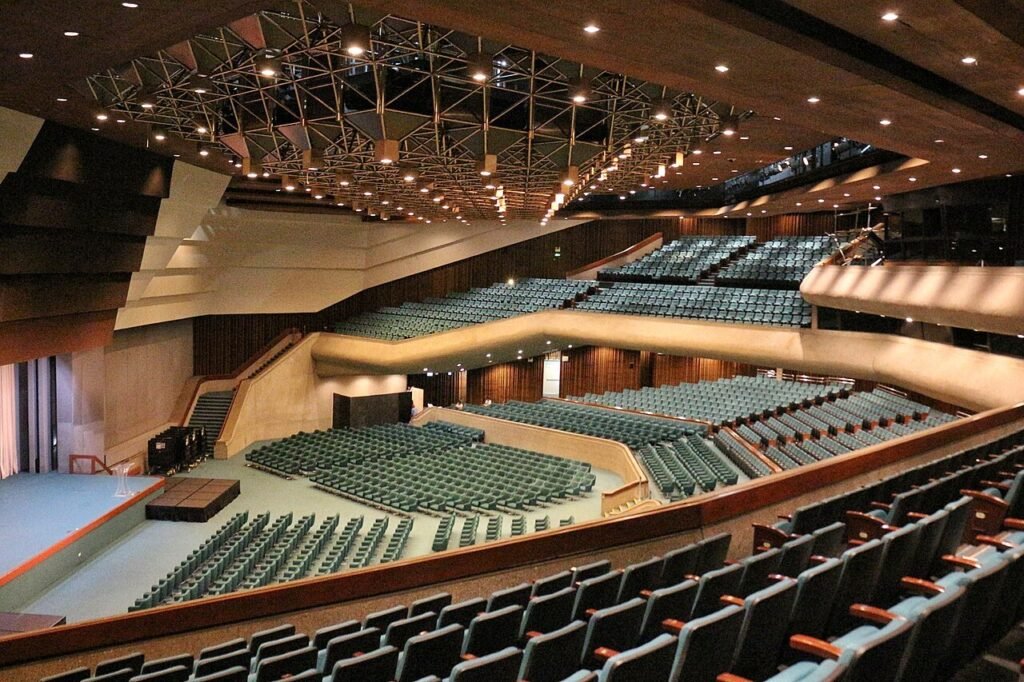
The 49th ASEAN Summit opened on Sunday, 15 November, at the Philippine International Convention Center in Pasay City, with the Philippines chairing under the theme “Navigating Our Future, Together”. Tuesday’s programme ran from the 29th ASEAN Plus Three Summit through the 21st East Asia Summit to a closing ceremony at 5:00–5:45 p.m., at which President Ferdinand Marcos Jr. formally handed the rotating chairmanship to Singapore as the Philippines ended its year as chair.
Modi departed for New Delhi on Tuesday evening after a visit that ran from 16 to 17 November, having also attended a ceremony marking the start of redevelopment works at the Gurudwara Khalsa Diwan in Manila, a Sikh place of worship established in 1929. “Tomorrow, 17th November, is a very special day,” he had said ahead of the ceremony.
Trump’s schedule was the tightest of all the leaders in Manila. After the Quad meeting he joined a US–ASEAN Special Summit, and on Wednesday, 18 November, he is due to attend a welcome ceremony with Marcos at Malacañang Palace at 11:05 a.m., followed by a bilateral meeting and lunch, before flying to Shenzhen for the Asia-Pacific Economic Cooperation leaders’ meeting on 18 and 19 November.
What Comes Next: Shenzhen and the Trilateral
The Shenzhen stop is the reason the Manila meetings matter beyond the region. On Thursday, 19 November, Trump is due to take part in the first-ever trilateral meeting with Xi Jinping and Vladimir Putin, on the sidelines of the APEC summit. The BusinessWorld report describes it as a much-anticipated trilateral meeting with his Chinese and Russian counterparts.
The trip comes at a delicate moment for Washington. It follows the Republican Party’s defeat in the midterm elections, alongside spy allegations and new US curbs on China’s access to AI chips through overseas data centres — a move to close a loophole in earlier export controls that could complicate a fragile trade-war truce. Trump has said he intends to raise Iran at the meeting, as the war in the Gulf grinds into its ninth month.
- Trump meets President Marcos at Malacañang on Wednesday, 18 November, then flies to Shenzhen for the APEC leaders’ meeting on 18–19 November.
- The first-ever Trump–Xi–Putin trilateral is due in Shenzhen on Thursday, 19 November.
- The Quad’s next steps — joint maritime patrol-aircraft exercises in 2027 and the first Quad Business Leaders’ Forum in early 2027 — will test whether Tuesday’s momentum survives the far harder conversations in China.
- ASEAN’s AI declaration for small businesses now moves to implementation, with the Philippines reporting on progress under the action plan.
A Summit Season That Ended With a Handshake and a Flight
Manila’s three days produced declarations, a disaster pact, a digital economy agreement and the return of the Quad. But the image that will define the week is simpler: four leaders around one table on Tuesday evening, and an American president boarding a plane on Wednesday morning for a meeting with the two men his administration most often calls its rivals.
The Quad is back at the leaders’ table. Whether it becomes a partnership of action, as its statement claims, will be decided in Shenzhen.
By Umar Farooq
Journalist (UAE) | The BNN Media – The Best News Network
News Beyond the Borders