By
Nvidia will no longer sell its H200 AI chips in China, interim chief executive Colette Kress told investors on Tuesday — ending the tariff arrangement brokered by Jensen Huang and President Trump, days after new US rules closed the last routes for advanced American chips to reach Chinese customers.
By Akhtar Saleem Khan
Head of IT | The BNN Media – The Best News Network
News Beyond the Borders
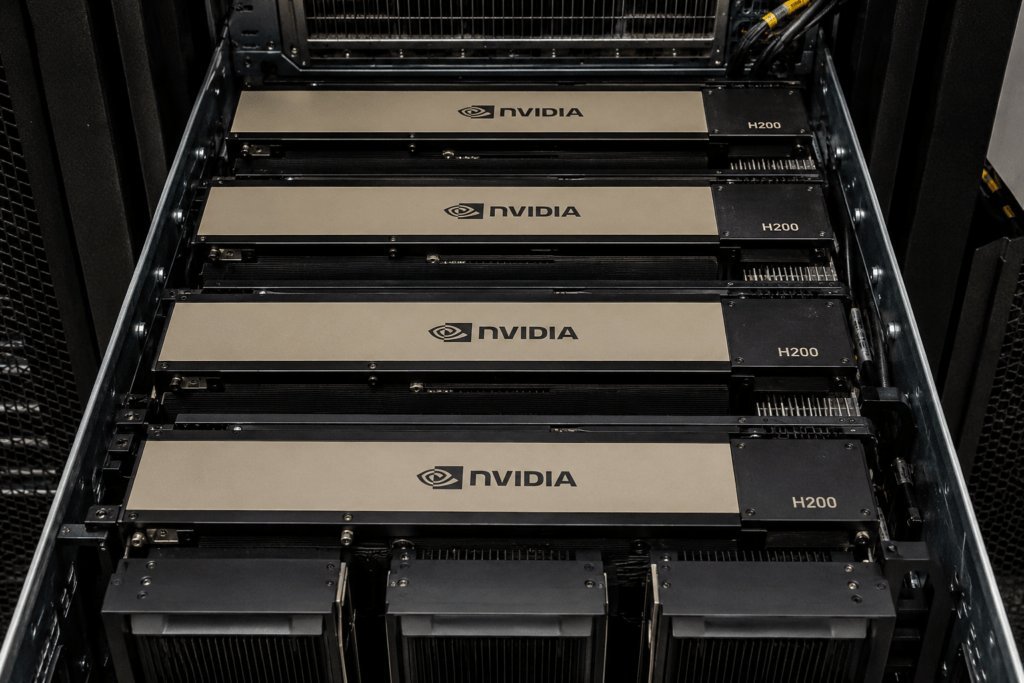
SANTA CLARA, United States — Nvidia will no longer sell its H200 chips in China, acting chief executive Colette Kress said on Tuesday, 17 November, during the company’s fiscal third-quarter earnings call — its first since co-founder Jensen Huang stepped down last week. The company has removed all licensed Hopper architecture revenue from its future sales outlook.
The End of the Tariff Arrangement
The decision ends a controversial arrangement brokered by Huang and President Donald Trump that allowed Chinese buyers to purchase the advanced H200 chips through US channels. Under that deal, the chips were routed through the United States, allowing the government to collect a 25 per cent tariff on them.
Kress’s announcement closes a channel created when the US Department of Commerce eased export restrictions in January. Nvidia has not said whether the halt is permanent, and regulatory filings have not disclosed whether the decision followed a formal licence revocation by the US government.
The loophole that let H200s reach China through America is now closed by Nvidia itself.
What the China Business Was Worth
Licensed Hopper data centre product sales to China reached $2.4 billion in the third quarter, for the period ended 25 October. For the fourth quarter of fiscal 2027, Nvidia expects revenue of $130.0 billion, plus or minus 3 per cent — and that guidance includes no licensed Hopper revenue from China.
China had largely refused delivery of the chips even before Nvidia stopped shipping them, according to reports, so the halt formalises a market that was already drying up from the Chinese side.
The New Rules That Changed Everything
The policy shift follows new restrictions issued on Monday, 16 November by the US Commerce Department’s Bureau of Industry and Security. The agency issued an interim final rule targeting remote computing arrangements in third countries: it mandates prior export licences for shipping advanced chips to data centres that provide remote computing capacity to Chinese customers, and imposed destination-based licence requirements for shipments to Singapore, Malaysia, Thailand, Indonesia and Brazil.
The rules close the workaround that had sustained the tariff arrangement. Chinese AI labs have continued accessing prohibited Nvidia Grace Blackwell chips through foreign data centres, and the new regulations will restrict sales to any facility serving Chinese customers remotely. Export control attorney Dan Fisher-Owens told TechCrunch that large data centres suited for training AI models will now have to certify they are not serving any Chinese customers.
How Much Will It Cost Nvidia?
The cost is where the reporting splits — and none of it attaches a dollar figure to the H200 decision itself. Investment bank Jefferies estimates the new export rules could trim between $44 billion and $62 billion from Nvidia’s data centre revenue next year. Kress, by contrast, said the backlog of demand for advanced chips such as Vera Rubin means the rules would have no impact on the company’s top-line revenue.
That disagreement is the heart of the story. If Kress is right, Nvidia can replace every lost Chinese sale with a sale elsewhere, because demand for its newest chips already exceeds supply. If Jefferies is right, the rules will cost Nvidia tens of billions in data centre revenue in the coming year, and the company will have to find new customers for chips it can no longer sell into its second-largest market.
A New Board Committee — and a New Posture
On the same day as the earnings call, Nvidia announced it was creating a board-level National Security and Export Control Oversight Committee, a standing committee covering national security policies, export control compliance and global trade risks.
The move, coupled with the H200 decision, signals how the leadership change is reshaping the company’s regulatory posture. Huang had consistently defended the China arrangement as vital to American competitiveness. Kress, who also serves as executive vice president and chief financial officer, has now abandoned it in her first earnings call as interim chief executive.
- Decision: Nvidia will no longer sell H200 chips in China, announced by interim CEO Colette Kress on 17 November
- Q3 licensed Hopper sales to China: $2.4 billion (quarter ended 25 October)
- Q4 guidance: $130.0 billion ±3%, with no licensed Hopper revenue from China
- Old arrangement: chips routed through the US, 25% tariff, brokered by Jensen Huang and President Trump
- New US rules: issued 16 November, barring advanced chips from foreign data centres serving Chinese customers remotely; licence requirements extended to Singapore, Malaysia, Thailand, Indonesia and Brazil
- Jefferies estimate: $44–$62 billion data centre revenue impact next year
- Kress’s position: backlog for chips such as Vera Rubin means no top-line impact
- Governance: board-level National Security and Export Control Oversight Committee created 17 November
What Happens Next
The Bureau of Industry and Security has said its remote computing rule takes effect upon formal publication in the Federal Register. Data centre operators in South-East Asia and elsewhere will have to certify they serve no Chinese customers if they want to keep buying Nvidia’s most advanced chips — and export control lawyers warn that, without such certification, many operators will be forced to buy competing hardware, potentially shrinking Nvidia’s share of the global AI market.
For China, the question is whether domestic chipmakers can fill the gap, and how far its AI labs can keep training on hardware obtained through other routes. For Nvidia, the question is whether Kress’s confidence in its order backlog survives contact with a $44–$62 billion hole in its data centre business.
Nvidia has chosen compliance over the China market. The market will now decide whether that choice cost it anything at all.
By Akhtar Saleem Khan
Head of IT | The BNN Media – The Best News Network
News Beyond the Borders