By
The leaders of the United States, China and Russia met for the first time as a trio on Thursday and signed a four-point declaration promising talks on nuclear risks — yet the document says nothing about the wars in Ukraine or the conflict with Iran, and sets no date for anything.
By Ihsan Ur Rehman
Editor-in-Chief | The BNN Media – The Best News Network
News Beyond the Borders
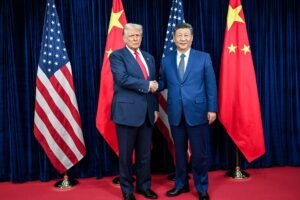
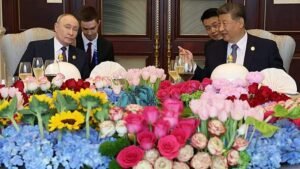
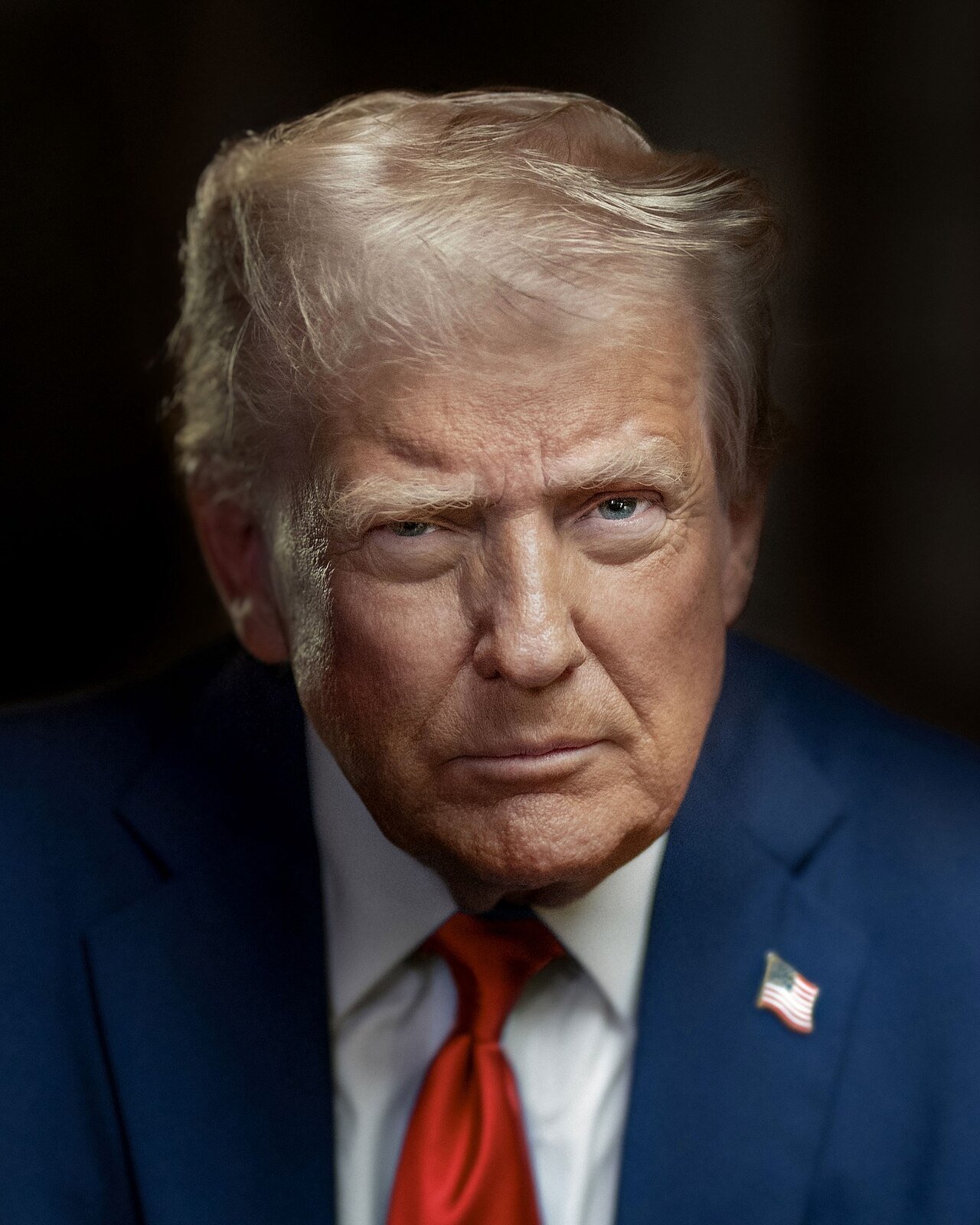
Shenzhen, China — Presidents Donald Trump of the United States, Xi Jinping of China and Vladimir Putin of Russia held the first-ever trilateral summit of the three leaders on Thursday, 19 November 2026, and issued a joint document they called a “peace declaration” after talks lasting about 90 minutes at the Kylin Villa, a lakeside retreat in the wooded hills outside Shenzhen.

The meeting, held on the sidelines of the Asia-Pacific Economic Cooperation (APEC) leaders’ gathering, brought together the leaders of the world’s three largest nuclear-armed powers for the first time in history. But the four-point declaration it produced was symbolic rather than substantive: it promised dialogue, not decisions, and it did not mention Russia’s war in Ukraine or the United States’ conflict with Iran at all.
A Declaration in Four Points
The joint statement, published by Russia and confirmed in near-identical versions by the White House and Beijing, contains just four commitments. First, the three countries, as permanent members of the United Nations Security Council, pledged to reform the UN so it can respond more effectively to global challenges. Second, they promised to increase the production and supply of refined petroleum products for the benefit of all nations, and reaffirmed the importance of stable energy flows.
The third point was the most pointed: the leaders agreed that the principle of state consent and respect for the immunities of state officials are of paramount importance, and that the International Criminal Court and similar bodies “must not abuse their jurisdiction”. The reference matters because the ICC issued an arrest warrant for Mr Putin in March 2023 over alleged war crimes in Ukraine, a warrant that remains in force and which Moscow rejects.
The fourth point, on nuclear weapons, was the one the world had watched most closely. The three leaders “reaffirmed that a nuclear war cannot be won and must never be fought” and said they would “conduct a dialogue on reducing nuclear risks and preventing the proliferation of nuclear weapons”. No date was given for that dialogue, and the declaration said nothing about negotiations on a trilateral nuclear arms reduction treaty — something Mr Trump has pushed since his first term and which China has consistently rejected, arguing that its arsenal is much smaller than those of the other two powers.
The declaration promises talk, not treaties — and on the two wars that dominate the world’s fears, it says nothing at all.
“We Are Really Making History”
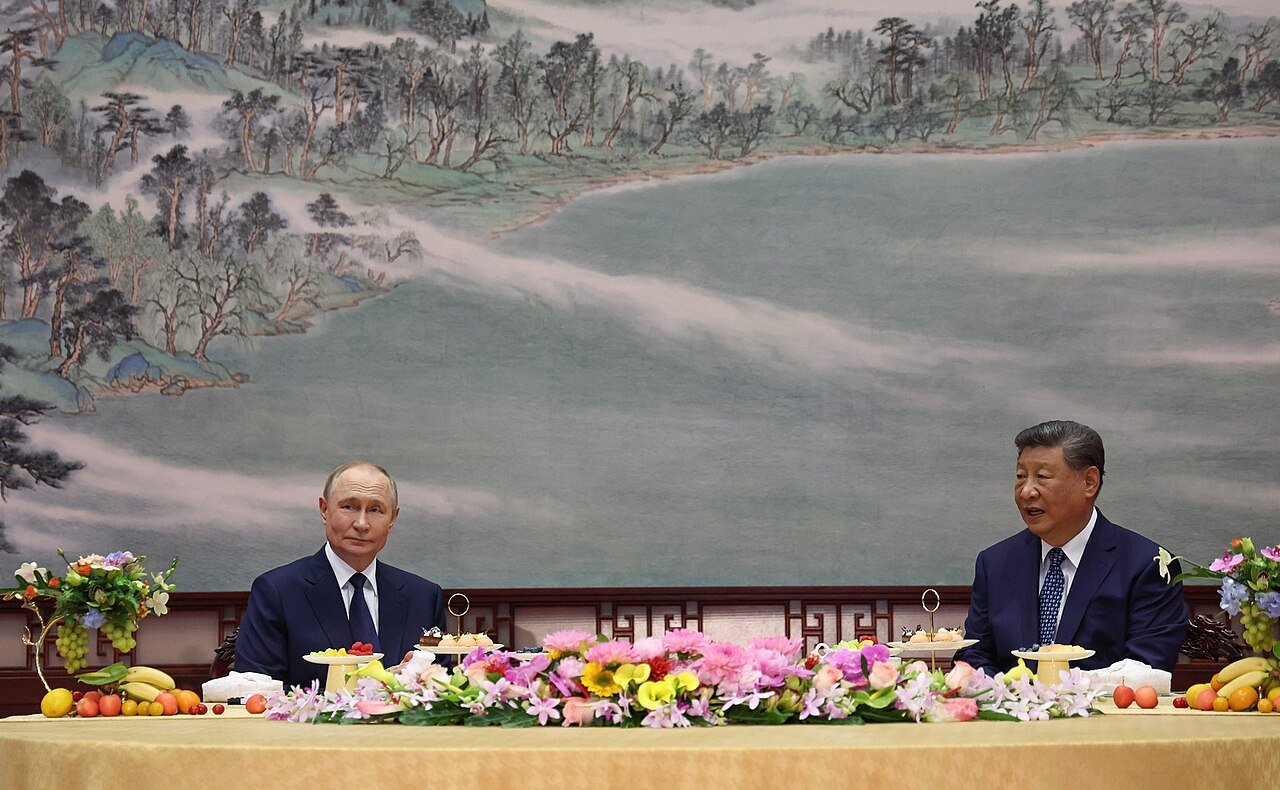
The day was heavy with ceremony and with the kind of personal theatre Mr Trump favours. Arriving for a bilateral meeting before the three-way talks, he pointed at Mr Putin and joked, “Who is he?” — before adding, “He’s my friend.” The two men embraced. Mr Xi, as host, sat between them at a large round table beneath the flags of the three nations.
“We are really making history,” Mr Trump told his counterparts at the start of the meeting. “No peace was ever forged by declining opportunities for engagement.” Mr Xi said history showed that “when major powers live in harmony, the world is at peace. When major powers clash, the world falls into turmoil.” Mr Putin said the three countries had “numerous shared interests in the settlement of regional conflicts, including obviously the conflict in Ukraine”.
Mr Trump left China plainly delighted with the day. He told NBC News afterwards that the meeting “went great” and rated it, on a scale of zero to ten, “a 12”. “Fantastic relationships built,” he said. He defended calling Mr Putin a friend, saying “it’s nice to have people that have 4,000 nuclear weapons as a friend as opposed to an enemy”, and called Mr Xi a friend and “an amazing leader”. He also acknowledged the difficulty of cutting nuclear arsenals, saying it was “psychologically very difficult” for leaders to give up such weapons. “It’s not an easy thing to do — give them up,” he said at the start of the meeting.
What the Declaration Left Out
For all the talk of history, the gaps in the declaration were as striking as its contents:
- Ukraine: The declaration does not mention Russia’s war in Ukraine. Mr Putin acknowledged afterwards that the document “did not set ambitious goals” and added that nobody would be forced to comply with its decisions. Mr Trump said he had discussed Ukraine with Mr Putin in their bilateral talks and that “things are happening”, again suggesting he believes a peace deal is possible — while hinting that he sees President Volodymyr Zelenskiy, rather than the nature of Mr Putin’s demands, as the obstacle.
- Iran: The declaration does not mention the US conflict with Iran either, even though the leaders had discussed it and the statement’s energy pledges were framed around supplies disrupted by the Iran war.
- Nuclear arms cuts: There is no timetable, no negotiation and no numbers — only a promise of dialogue.
- Trade and chips: No agreement was announced on superchip technology or the wider US-China trade tensions, although a separate APEC statement covered cooperation on trade, technology innovation and economic growth.
Mr Trump told Reuters the Shenzhen summit was “bigger than Yalta”, referring to the 1945 conference at which the US, Britain and the Soviet Union shaped the post-war order. Mr Putin rejected the comparison, saying Yalta had not divided the world into spheres of influence but had “codified the existing reality”.
Europe Pushes Back
While the three leaders were meeting in Shenzhen, the leaders of the “coalition of the willing” countries supporting Ukraine were gathering in Berlin — and their verdict was blunt. German Chancellor Friedrich Merz dismissed the Shenzhen gathering as “a photo opportunity” and said: “A ‘Yalta’ format will not bring peace.” President Emmanuel Macron of France said the peace declaration would not “lead to a reorganisation of the world”.
In Washington, Chuck Schumer, who leads the Democrats in the US Senate, called the summit “a historic embarrassment” and “a betrayal of the United States by a president who loves nothing more than to bow down to our adversaries for a photo op”. The Danish prime minister, Mette Frederiksen, called it “incomprehensible” that an American president would sit with Mr Putin while Moscow continues its war in Ukraine.
Others were more measured. Daryl Kimball, executive director of the US-based Arms Control Association, called the reaffirmation that a nuclear war should not be fought “positive”, but added: “We need much more than rhetoric. We need action on disarmament diplomacy.” Jonathan Eyal of the Royal United Services Institute in London said the pushback against international norms and courts was “the most interesting aspect” of the declaration, adding: “The big powers dictate, the small powers suffer.”
Europe’s message from Berlin was unmistakable: no peace in Ukraine will be decided over Kyiv’s head.
A Diplomatic Prize for Putin
Whatever the declaration lacked, the summit itself was a diplomatic coup for Mr Putin. His economy is barely a tenth the size of China’s and most of his country’s businesses are barred from trading with the West by sanctions — yet he was welcomed as an equal at the top table of world power, embraced by the American president and hosted by the Chinese leader.
Mr Eyal said Mr Putin had “gained credibility and escape from pariah status” from the summit, while Mr Trump had “gained a photo opportunity he didn’t need”. Russian media were enthusiastic, calling it the “summit of the century”. Mr Trump also told reporters he would meet the North Korean leader, Kim Jong-un, “at some point”, and the leaders discussed the Group of 20 summit Mr Trump will host at his golf resort in Florida in a few weeks’ time; Mr Putin said he would consider attending.
What Happens Next
China’s Foreign Minister Wang Yi said the three countries would maintain coordination at working level after what he called the “peace summit”. Mr Trump said on his Truth Social platform that he would hold a news conference in Washington at noon on Friday, where he will also discuss trade deals with Thailand, the Philippines and others.
Analysts noted that Mr Trump came to Shenzhen seeking to strengthen his standing after his Republican Party lost control of Congress in midterm elections earlier this month. Whether the declaration helps him at home remains to be seen. What is clear is that the world’s three great nuclear powers have now met as a trio for the first time — and that the wars they did not mention in Shenzhen will still be waiting for them when they meet again.
The first trilateral summit of the US, China and Russia is now history. Whether it becomes anything more than a photograph depends on the dialogue it promised — a dialogue with no date, no agenda and no deadline.
By Ihsan Ur Rehman
Editor-in-Chief | The BNN Media – The Best News Network
News Beyond the Borders
Sources: Reuters (via BusinessWorld, 20 November 2026); USA Today, 19 November 2026; The Times (London), live coverage and full text of the joint declaration, 19 November 2026; Fox News, 19 November 2026. This report follows on from BNN’s 19 November report on the Shenzhen meeting: https://thebestnewsnetwork.com/trump-xi-and-putin-meet-in-shenzhen-for-first-ever-trilateral-summit/