 By
By The BNN Media
The Best News Network
News Beyond the Borders
A new report from the US Centers for Disease Control and Prevention provisionally counts 65 children who died with RSV or COVID-19 during the 2025–2026 season — 34 linked to RSV and 31 to COVID-19 — and finds that most of them had not received the vaccines or antibody protection available to them. The same report tracks a fast-changing and highly divergent coronavirus variant, BA.3.2, which reached 8% of sequenced viruses by early June 2026.
Atlanta, United States — The US Centers for Disease Control and Prevention (CDC) has published its first full-season count of children who died with respiratory syncytial virus (RSV) or COVID-19, provisionally recording 65 paediatric deaths during the 2025–2026 season: 34 associated with RSV and 31 associated with COVID-19. The figures, published on Thursday, 19 November 2026, in the CDC’s Morbidity and Mortality Weekly Report (MMWR), also track the rise of BA.3.2, a highly divergent coronavirus variant that reached 8% prevalence in the four weeks ending 6 June 2026.
The death counts come from a newly established national surveillance system for RSV- and COVID-19-associated paediatric deaths, and the CDC stresses that they are provisional. Reporting only began in March 2026, and some deaths are likely to have been missed, so the true toll is probably higher. The report covers deaths that occurred between 28 September 2025 and 30 June 2026, using data reported as of 11 August 2026.
Most of the children who died were very young, many had underlying medical conditions — and most had not received the protection that was available to them. That is the report’s starkest finding.
The RSV Deaths: 34 Children, Most Without Antibody Protection
Of the 34 children who died with RSV, reported by 35 jurisdictions, 19 (55.9%) had at least one underlying medical condition and 16 (47.1%) had been hospitalised. The median age at death was 1 year, with ages ranging from 1 month to 17 years.
The protection gap is sharpest among the youngest. Of the 17 infants who had been age-eligible for RSV protection — aged under 8 months on or after 1 October 2025 — before they died, only three had received any recommended RSV monoclonal antibody (nirsevimab or clesrovimab), 11 had received none, and receipt was unknown for three.
The CDC recommends that infants in their first RSV season be protected either through maternal vaccination during September to January or through an infant monoclonal antibody during October to March, in most of the United States. The report notes that most US jurisdictions extended the use of RSV antibodies into April during the 2025–2026 season to protect eligible infants.
RSV activity itself came later than usual. The national season began in the week ending 29 November 2025, peaked in the week ending 28 February 2026 and ended in the week ending 25 April 2026 — later than in past seasons, nationally and by region. But severity was not higher than in recent years: the overall RSV-associated hospitalisation rate of 97.3 per 100,000 people was lower than in 2022–2025, and rates were highest among infants under 12 months (790.2 per 100,000), followed by children aged 12 to 23 months (611.9) and adults aged 75 and over (352.1).
A late season, but not a worse one — and the youngest children still bore the heaviest burden.
The COVID-19 Deaths: 31 Children, None Vaccinated
Of the 31 children who died with COVID-19, reported by 43 jurisdictions, 23 (74.2%) had at least one underlying medical condition and 12 (38.7%) had been hospitalised. The median age at death was 9 months, with ages ranging from 1 month to 16 years.
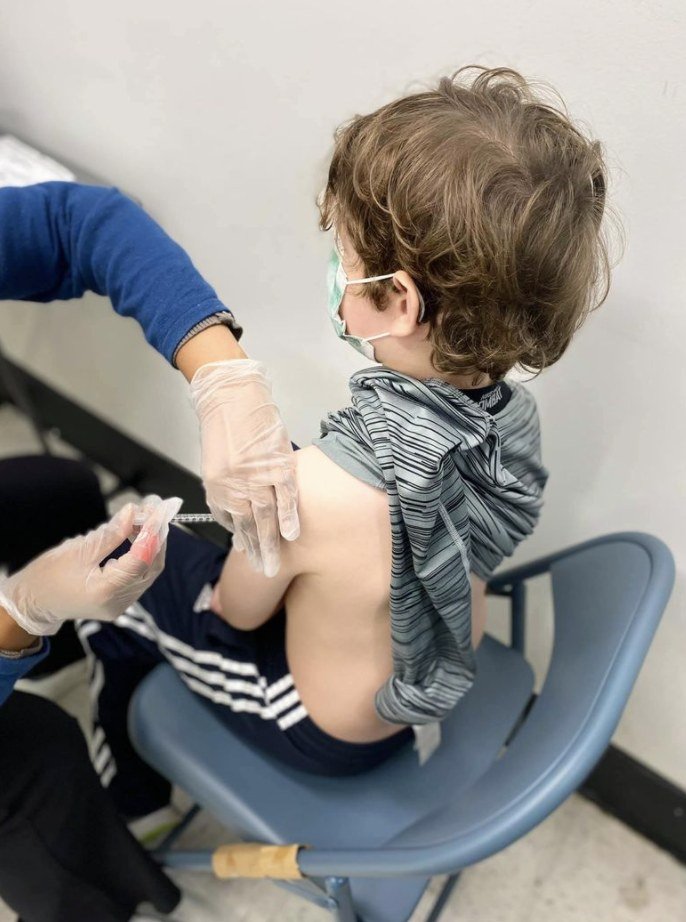
Here the protection gap is starker still. Of the 20 children who had been old enough to be vaccinated — aged 6 months or over — before they died, none of the 18 whose vaccination status was known had received a COVID-19 vaccine; status was unknown for the other two.
COVID-19 circulated nationally with two peaks, in the weeks ending 23 August 2025 and 24 January 2026. Hospitalisation rates were highest among adults aged 75 and over (361.2 per 100,000), infants under 6 months (173.3) and adults aged 65 to 74 (111.4). Across the whole population, the CDC estimates COVID-19 caused 4.1 million to 12.4 million illnesses, 830,000 to 2.3 million outpatient visits, 130,000 to 240,000 hospitalisations and 14,000 to 41,000 deaths nationally during the season. For RSV, the equivalent estimates are 2.8 million to 5.8 million outpatient visits, 170,000 to 340,000 hospitalisations and 9,900 to 25,000 deaths. The agency describes these as interim modelling estimates.
BA.3.2: The Divergent Variant Under Watch
The report’s other headline finding concerns the virus itself. Most SARS-CoV-2 viruses sequenced in the United States during the season were descendants of the JN.1 lineage, and this was the second consecutive year in which no major strain replacement occurred. One exception stood out: BA.3.2, a highly divergent variant.
During the four weeks ending 6 June 2026, BA.3.2 reached 8% prevalence (95% confidence interval: 4% to 17%). The variant carries 70 to 75 substitutions and deletions in the spike protein gene relative to JN.1 and LP.8.1, a JN.1 descendant — a large number of changes in the part of the virus that vaccines and the immune system target. As of 31 August 2026, the CDC was monitoring BA.3.2’s spread through genomic surveillance.
The dominant lineage of the season was XFG, the only lineage to pass 50% prevalence during the surveillance year, with a descendant, XFG.1.1, rising in 2026. The 2026–2027 COVID-19 vaccines are based on the JN.1-lineage XFG variant and are expected to provide protection against severe disease, according to the CDC.
On RSV, the genetic news was reassuring: sequencing found no substitutions linked to reduced susceptibility to the monoclonal antibodies available for infants, although some evolution continues in the virus’s binding sites.
BA.3.2 has not taken over — but its distance from the viruses now circulating is why scientists are watching it.
What the CDC Recommends Now
The CDC’s message from the report is direct: staying current with recommended vaccinations lowers the risk of severe illness from both viruses. Its recommendations include:
- Infants in their first RSV season should be protected through maternal vaccination (September–January) or an infant monoclonal antibody (October–March in most of the US).
- A single dose of RSV vaccine is recommended for all adults aged 75 and over, and for adults aged 50 to 74 who are at increased risk of severe RSV disease.
- Staying current with COVID-19 vaccination remains important, especially for adults aged 65 and over and people at increased risk of severe illness; the recommended number and timing of 2026–2027 doses vary by age, vaccination history and immune status.
- Core prevention steps for everyone: washing hands regularly, cleaning commonly touched surfaces, improving ventilation where people live and work, and staying home when ill with a respiratory illness.
- Antiviral treatments for COVID-19 are available and remain underused, the CDC says; early treatment for people at increased risk can moderate symptoms and prevent complications.
The CDC publishes its influenza findings separately from this report — and flu activity has also been running unusually high for November across several US states, making this a season in which more than one respiratory virus is demanding attention at once.
What Remains Uncertain
The report is careful about its own limits, and they matter. The paediatric death counts are provisional, drawn from a surveillance system that only began national reporting in March 2026; the CDC says cases are likely undercounted. Some of the underlying data come from voluntary laboratory reporting that may not represent every part of the country, and the genomic surveillance estimates are imprecise because of limited specimen availability.
What is not uncertain is the pattern: in a season when RSV arrived late and COVID-19 peaked twice, the children who died were mostly babies and toddlers, most had an underlying condition, and most had not received the vaccine or antibody doses that could have protected them. The CDC’s conclusion is that the tools exist — the gap is in reaching the children who need them.
Sixty-five deaths, counted for the first time in a single national system — and a warning that protection, not just surveillance, is what will keep the next count lower.
By The BNN Media
The Best News Network
News Beyond the Borders
Sources: CDC, Morbidity and Mortality Weekly Report, Vol. 75, No. 45, 19 November 2026 (“Respiratory Virus Activity — United States, July 2025–June 2026”, Winn et al.); Karmactive, 19 November 2026; United States Tribune, 19 November 2026. All counts are provisional, as reported by the CDC.