 By
The world’s two leading health and environment agencies have warned that chemicals capable of scrambling the body’s hormone system are reaching people before they are even born — and that the evidence of harm, from fertility to brain development, is now far stronger than it was a decade ago.
By The BNN Media
The Best News Network
News Beyond the Borders
GENEVA, Switzerland — The World Health Organization (WHO) and the United Nations Environment Programme (UNEP) have released a landmark global assessment warning that exposure to endocrine-disrupting chemicals (EDCs), including before birth, can affect human development, reproductive health and wildlife, the two agencies announced on Tuesday, 17 November 2026. The report, State of the Science of Endocrine-Disrupting Chemicals 2026, is the first major global update since the agencies’ joint assessment in 2012 — and it finds the evidence of harm has strengthened across almost every area studied.
What Are Endocrine-Disrupting Chemicals?
The body’s endocrine system is a network of glands that produce hormones — chemical messengers that travel through the bloodstream and regulate growth, metabolism, brain development, immunity and reproduction. Endocrine-disrupting chemicals interfere with that system. They can mimic natural hormones, block hormone receptors, or change how the body produces and breaks down its own hormones.
These substances are not confined to factories or farm fields. They are found in everyday items, including certain plastics, food packaging, cosmetics, textiles, toys and household cleaners. Well-known examples include bisphenol A (BPA), phthalates, polychlorinated biphenyls (PCBs) and persistent organochlorine pesticides. People encounter them by eating contaminated food, drinking polluted water, inhaling household dust or absorbing chemicals through the skin.
“What makes EDCs particularly concerning is that they can disrupt hormones that regulate many essential functions in both humans and wildlife, from development and reproduction to metabolism and behaviour. These effects can be long-lasting and, in some cases, irreversible,” said Sheila Aggarwal-Khan, Director of UNEP’s Industry and Economy Division.
The central warning of the new report is about timing: exposure can begin before birth, during the most sensitive windows of human development, and its effects can last a lifetime.
The Evidence Has Grown Stronger Since 2012
The 2026 assessment draws on more than a decade of additional research across human health, wildlife biology and chemical regulation. It finds that the evidence linking EDC exposure to adverse health effects has strengthened significantly since the 2012 report.
The assessment identifies stronger evidence of associations with impaired fertility and reproductive development, neurological disorders, thyroid dysfunction, metabolic conditions, immune system changes and cardiovascular health risks. In wildlife, exposure has been tied to disrupted reproduction, development and behaviour in fish, birds, amphibians and mammals.
Emerging research also points to possible links with metabolic liver disease and kidney complications, although the report says further investigation remains necessary in those areas.
Researchers have now detected these chemicals in human blood, breast milk and umbilical cord blood — confirmation that exposure can start before birth, during sensitive periods when hormones regulate the formation and functioning of organs and tissues.
The picture is no longer one of scattered suspicion. Across fertility, the brain, the thyroid, metabolism, immunity and the heart, the evidence has moved in the same direction — and it points to harm.
A Warning Written in Kerala
The report cites India’s decades-long endosulfan disaster in Kerala’s Kasaragod district as a case study of what prolonged chemical exposure can do to a community — and to the generations that follow.
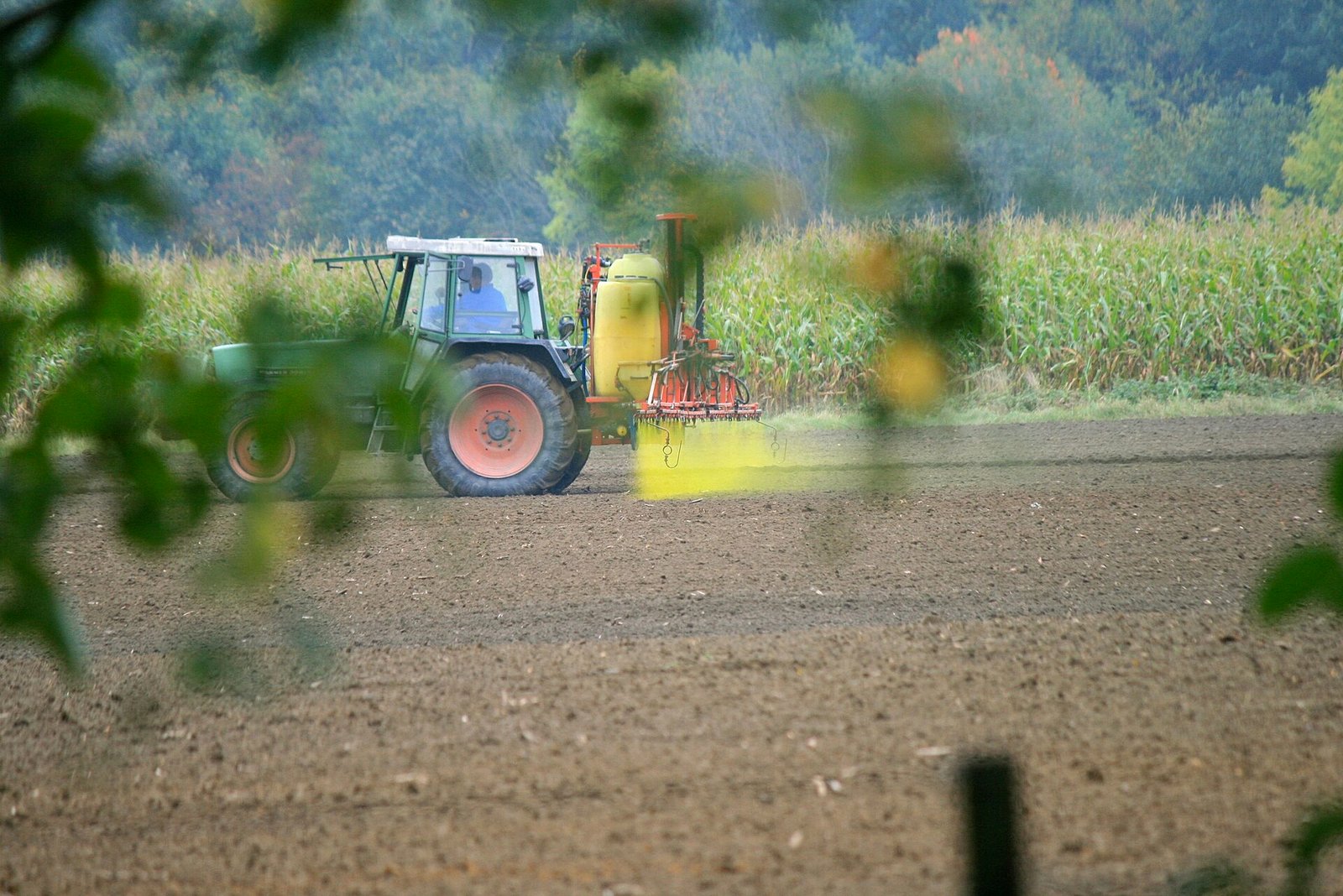
For over two decades, endosulfan, an organochlorine insecticide, was aerially sprayed over cashew plantations in Kasaragod to control agricultural pests. Communities living near the plantations subsequently reported unusually high rates of neurological conditions, congenital anomalies and reproductive disorders.
An epidemiological investigation by the National Institute of Occupational Health (NIOH), under the Indian Council of Medical Research (ICMR), documented a significantly higher prevalence of neurobehavioural disorders, congenital malformations in female participants and reproductive abnormalities in male participants, compared with a reference population. India’s National Human Rights Commission subsequently reviewed the evidence and recommended sustained medical monitoring and financial relief.
In 2011, the Supreme Court of India ordered a nationwide ban on the manufacture, sale and use of endosulfan. Yet the public health fallout persisted long after the spraying stopped. A June 2023 study published in the Egyptian Journal of Neurology, Psychiatry and Neurosurgery, which examined 400 family caregivers supporting people living with disabilities linked to the Kasaragod tragedy, found that 48.7 percent of caregivers experienced significant psychological distress, alongside higher disability burdens and reduced quality of life.
Kasaragod is cited in the report precisely because it shows the full arc of the problem: exposure that begins in the womb, harm that spans generations, and a community still living with the consequences decades after the chemical was banned.
A Regulatory System That Has Not Kept Up
The report highlights a significant gap in global chemical safety oversight. More than 350,000 chemicals and chemical mixtures are registered for production and use worldwide, but only a small proportion have undergone assessments for endocrine-disrupting properties.
It also warns that people and wildlife encounter mixtures of chemicals rather than individual substances — the so-called “cocktail effect” — while many regulatory frameworks continue to assess chemicals one at a time, potentially overlooking the combined effects of multiple exposures. The assessment also warns against “regrettable substitution”: replacing a restricted chemical with an under-tested alternative that later proves equally harmful.
In the European Union, 231 substances are officially recognised as endocrine disruptors and a further 121 are under evaluation, according to Euronews reporting on the assessment.
The economic stakes are large. The report estimates that diseases associated with EDC exposure could impose health-related costs equivalent to at least 1 percent of global gross domestic product — approximately US$1.1 trillion in 2025 under conservative assumptions — and warns the figure is likely an underestimate because it covers only a limited number of health conditions and chemicals with available data.
With hundreds of thousands of chemicals in use and only a fraction screened, the report’s message is blunt: regulation is running far behind the science.
From Evidence to Action
To support the transition from research to policy, UNEP is also releasing a companion report, From Evidence to Action: Addressing Endocrine-Disrupting Chemicals Across Sectors. It outlines practical measures for policymakers to reduce exposure across consumer goods, healthcare, agriculture, pharmaceuticals and waste management.
Both reports are being launched at the first International Conference of the Global Framework on Chemicals in Geneva, taking place from 16 to 20 November, where governments, industry representatives and civil society organisations are meeting to advance international action on chemical and waste management.
Bruce Gordon, Acting Director of WHO’s Department of Environment, Climate Change, One Health and Migration, called for stronger prevention and monitoring measures to reduce exposure, particularly among pregnant women and children. “Protecting public health means reducing exposure to hazardous chemicals throughout the life course — especially for pregnant women, children, and future generations,” he said.
The report identifies several priorities, including improved environmental monitoring, more rigorous product testing, harmonised criteria for identifying EDCs and more transparency about their use. It also notes that manufacturers have a significant role to play, because many EDCs enter the environment through everyday consumer products — and companies can limit the risks by selecting safer chemical alternatives, testing products early and improving transparency about their chemical composition.
What People Can Do — and What the Science Does Not Say
Experts cited in reporting on the assessment caution against alarmism. Detecting a chemical in a consumer product — or in the human body — does not automatically mean disease will follow. Health risk depends on the specific chemical’s potency, the dose, the duration of exposure and a person’s developmental stage. Chronic conditions such as diabetes, infertility or neurodevelopmental disorders stem from complex interactions involving genetics, nutrition, socioeconomic factors and multiple environmental exposures, making it difficult to attribute an individual diagnosis to a single chemical. Earlier government reviews in India also debated whether every reported illness in Kasaragod could be linked solely to endosulfan.
Even so, practical, low-cost habits can meaningfully lower everyday exposure:
- Handle food containers wisely: avoid heating food in plastic containers unless explicitly labelled microwave-safe; use glass, ceramic or stainless steel for hot foods and beverages.
- Wash produce thoroughly: rinse fruits and vegetables under running water to reduce surface pesticide residues.
- Follow label instructions: use household cleaners, pest-control sprays and personal care products strictly as directed, ensuring good ventilation.
- Prioritise workplace safety: agricultural workers should consistently wear recommended personal protective equipment when mixing or applying agrochemicals, and pregnant individuals should minimise unnecessary contact with solvents and pesticides.

What Happens Next
The Geneva conference runs until 20 November, and the two reports are intended to feed directly into its negotiations on the Global Framework on Chemicals. Whether governments agree on binding measures — harmonised identification criteria, stronger pre-market screening, or limits on the most hazardous substances — will determine whether the 2026 assessment becomes a turning point or another warning filed away.
For now, the facts established are stark: the chemicals are in blood, breast milk and umbilical cord blood; the evidence of harm has grown stronger on every front the scientists examined; and the regulatory system designed to protect people from them has assessed only a small fraction of the chemicals in use.
Sources: UNEP; HealthCare Middle East & Africa; Health and Family; BehindLines; UN News.
By The BNN Media
The Best News Network
News Beyond the Borders