By
Climate talks in Antalya moved close to a final deal early on Sunday after running well past their deadline, with the summit president putting a new package to nearly 200 nations that he says all of them can accept.
By Faseeh Ur Rehman
Senior Journalist | The BNN Media – The Best News Network
News Beyond the Borders
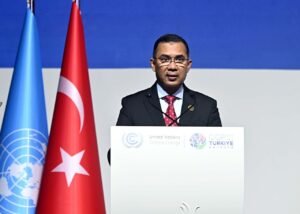
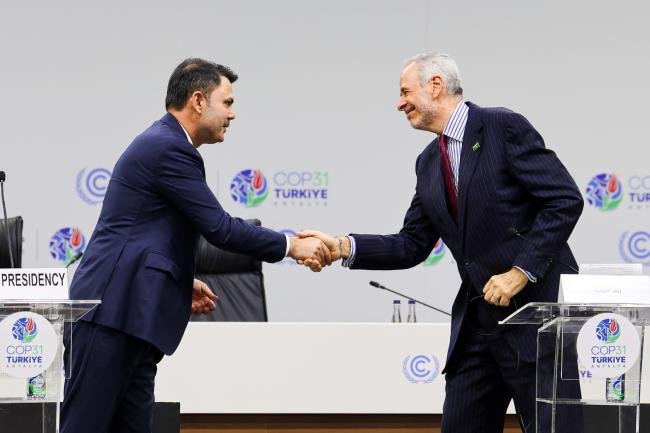
Antalya, Turkiye — The COP31 climate summit approached a final deal on Sunday, 22 November, after its president presented a new package to a late-night plenary session, saying: “We believe that we have put forward a text which all the parties can agree upon.”
COP31 President Murat Kurum told delegates the conference would reconvene on Sunday morning to approve the deal. Delegations have until 0300 GMT to raise objections, with an approval session scheduled for 0600 GMT (11:00 PKT). The talks had already run past their Friday deadline, straight through Saturday and into the early hours of Sunday.
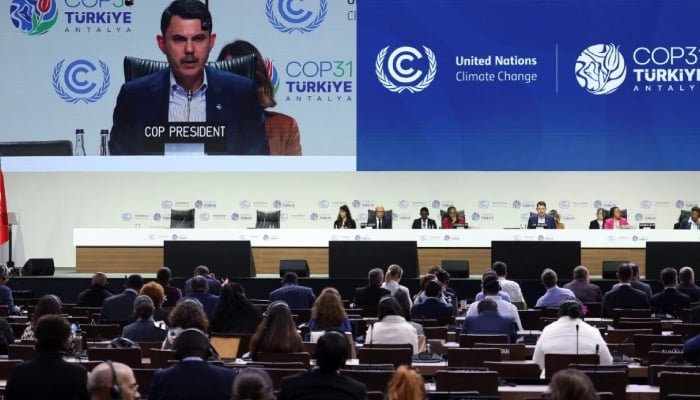
A Package for Nearly 200 Nations
The new text followed intensive consultations between Australia, which is leading the talks, Turkiye, which is hosting the meeting, and nearly 200 delegations from many of the world’s richest, poorest, largest and smallest nations. Kurum said he believed concerns around fossil fuels had been addressed, as had those around helping developing countries finance their adaptations to climate change.
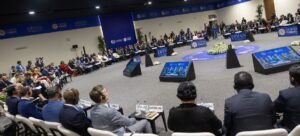
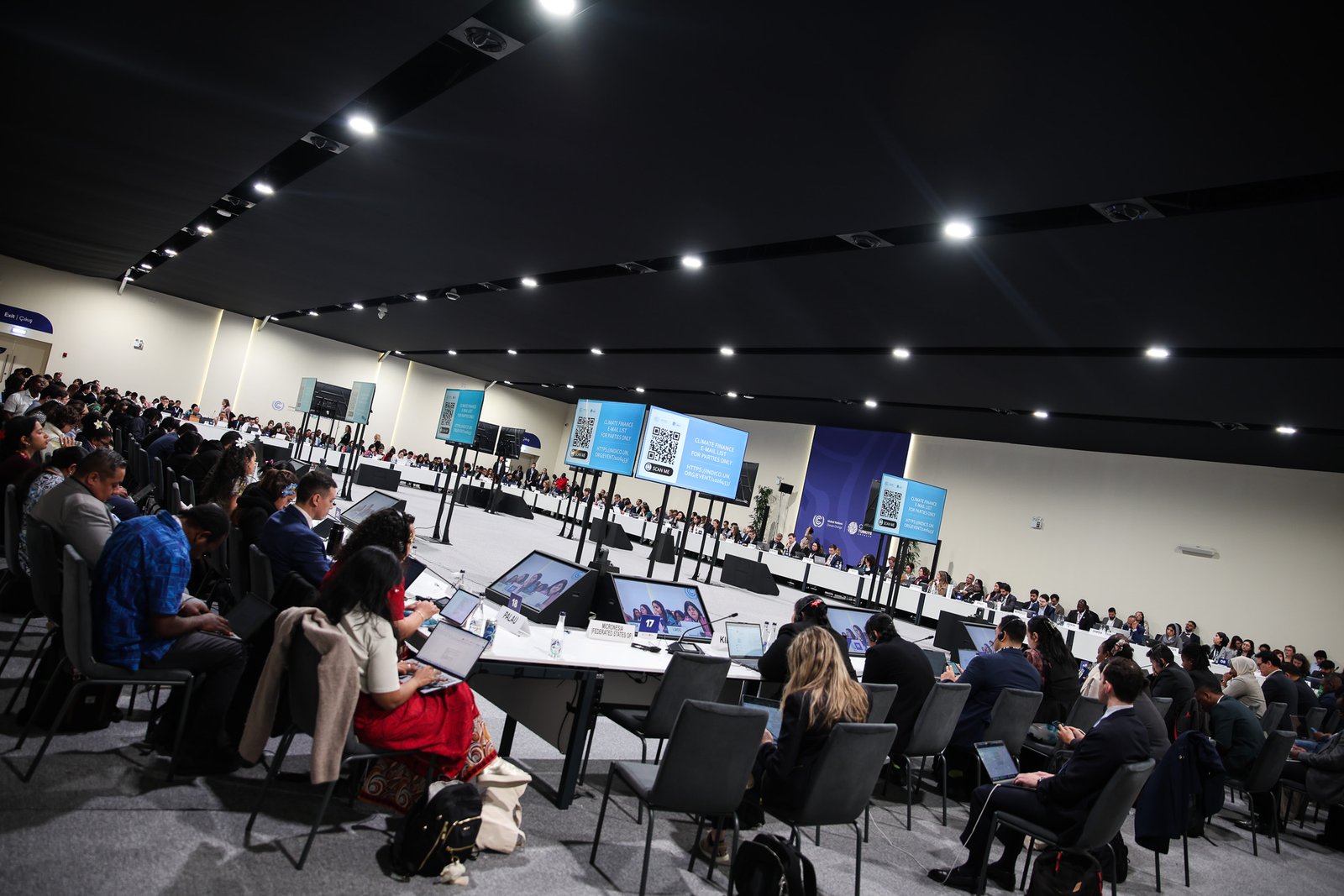
The deal is not done yet. Until the approval session meets and no delegation blocks the text, the package is a proposal, not an agreement. But after two days of overtime and a night in which the venue was being dismantled around the negotiators, the mood in the plenary hall had shifted from deadlock to something close to hope.
After a fortnight of argument, the summit finally has a text its president is willing to put to a vote.
The Two Sticking Points
The talks stalled on two questions: whether a final agreement should mention the fossil fuels driving global warming, and whether it should include support for poorer countries adapting to climate change.
A draft deal published on Thursday removed earlier references to ending fossil fuel use. Observers said Saudi Arabia and other major oil and gas producers had opposed the language. The same draft also dropped a proposed $120 billion target for finance to help developing countries adapt to climate change.
The new package replaces that finance target with an agreement to discuss a pathway towards tripling support for adaptation, and it keeps a goal of multiplying clean electricity capacity — the so-called 35-by-35 electrification goal. Whether the fossil-fuel language in the new text is enough for the countries that demanded it will only become clear when delegations respond before the 0300 GMT objection deadline.
“Good Deal or No Deal”
The European Union’s climate commissioner, Wopke Hoekstra, set out the stakes on Saturday, telling reporters: “It’s either going to be a good deal or it’s going to be no deal.” Asked about the chances of no deal emerging, he said: “We will find out.”
Hoekstra also said plainly that it was better to have no deal than a bad one, and that there was still no compromise on the key sticking points of fossil fuels and carbon capture technology when he spoke. His warning captured the mood of many delegations: after two weeks of talks, they would rather walk away empty-handed than sign a weak text.
Kurum, who is also Turkiye’s environment minister, urged countries to act responsibly. “I call on every country to act responsibly,” he told reporters. “There is no benefit for anyone to ruin this process by getting hung up on words, phrases.”
What the New Text Contains
The new package tries to balance the needs of nations most vulnerable to climate change with those whose economies depend on producing or consuming fossil fuels. That balance is the central task Australia and Turkiye were given, and it is why the text took so long to produce.
On adaptation finance, the shift from a hard $120 billion target to an agreement merely to discuss a pathway towards tripling support will disappoint developing countries that wanted a firm number. On fossil fuels, Kurum says the concerns have been addressed — but the text itself has not yet been tested against the objections of the countries that fought hardest over the wording.
The draft agreement also acknowledges that the world is on track to overshoot the 1.5°C warming limit agreed under the 2015 Paris Agreement, and calls for faster deployment of technologies that remove greenhouse gases from the atmosphere to help bring temperatures back down. Some delegations opposed including carbon-removal technologies, arguing that doing so could open the door to continued fossil fuel use.
The package is a compromise in the truest sense: nobody gets everything, and everybody is being asked to accept something.
A Summit Running on Empty
The summit was scheduled to end on Friday, 20 November. Instead, the closing plenary was suspended late that night with the biggest questions still unresolved, and talks resumed on Saturday with crews already boxing up the venue around the negotiators. As workers dismantled catering stands and exhibits, delegations shuttled between meeting rooms to discuss tactics, while others rested as they awaited a new version of the negotiating text.
This year’s COP is the first since the UN’s environmental body confirmed that the rise in global temperature was set to blow past 1.5 degrees Celsius, a threshold all countries agreed over a decade ago to try not to exceed, and beyond which extreme weather impacts intensify. A UN report last month found the world is on track to exceed that level.
The talks have been further complicated by war and rising living costs competing for policymakers’ attention — and by the absence of the United States, the world’s largest historical greenhouse gas emitter, for the second year in a row after President Donald Trump ended cooperation on climate policy.
The Voices From the Most Vulnerable
For the small island states and least developed countries, the fossil-fuel question is not a matter of wording. It is, as Tuvalu’s Climate Minister Maina Talia told reporters, a red line. “That is a red line for us. We’re talking about the root cause of all of this,” Talia said, adding that if the world cannot address fossil fuels “then we are wasting our time here”. His low-lying Pacific nation is threatened by rising sea levels.
Gambia’s finance negotiator, Isatou Camara, warned that some countries appeared to be using delay tactics to pressure others into accepting a weaker outcome — putting exhausted delegations in a position where they accept a text simply because they want to go home. Malawi’s loss and damage negotiator, Brenda Mwale, asked the question hanging over the whole summit: “The fact there is loads of unfinished business at this COP shows there’s a big problem here. The question is are we in a leadership crisis?”
What Happens at 0600 GMT
Everything now depends on the hours between the objection deadline and the approval session. Delegations have until 0300 GMT on Sunday to raise objections to the package. If none are raised — or if those raised can be settled — the conference will begin approving the deal at 0600 GMT, and COP31 will close with an agreement its presidents say every country can accept.
If objections pile up, the talks could stretch further into Sunday, or collapse into the first COP in a quarter-century to end with no agreement at all. The last major breakdown in UN climate talks came in Copenhagen in 2009, when countries failed to adopt the Copenhagen Accord by consensus.
- A new package was presented to a late-night plenary by COP31 President Murat Kurum.
- Delegations have until 0300 GMT to raise objections; the approval session begins at 0600 GMT (11:00 PKT).
- Fossil-fuel language was stripped from Thursday’s draft after objections from Saudi Arabia and other producers.
- The $120 billion adaptation finance target was dropped, replaced by an agreement to discuss a pathway towards tripling support for adaptation.
- The 35-by-35 electrification goal was kept in the text.
Two days past its deadline, COP31 finally has a deal on the table — and by Sunday morning the world will know whether nearly 200 nations can live with it.
Reporting based on Reuters, 21–22 November 2026, and The News, 22 November 2026. Earlier BNN coverage: COP31 Pushed Into Overtime as Fossil-Fuel Deadlock Defies a Third Draft
By Faseeh Ur Rehman
Senior Journalist | The BNN Media – The Best News Network
News Beyond the Borders