By
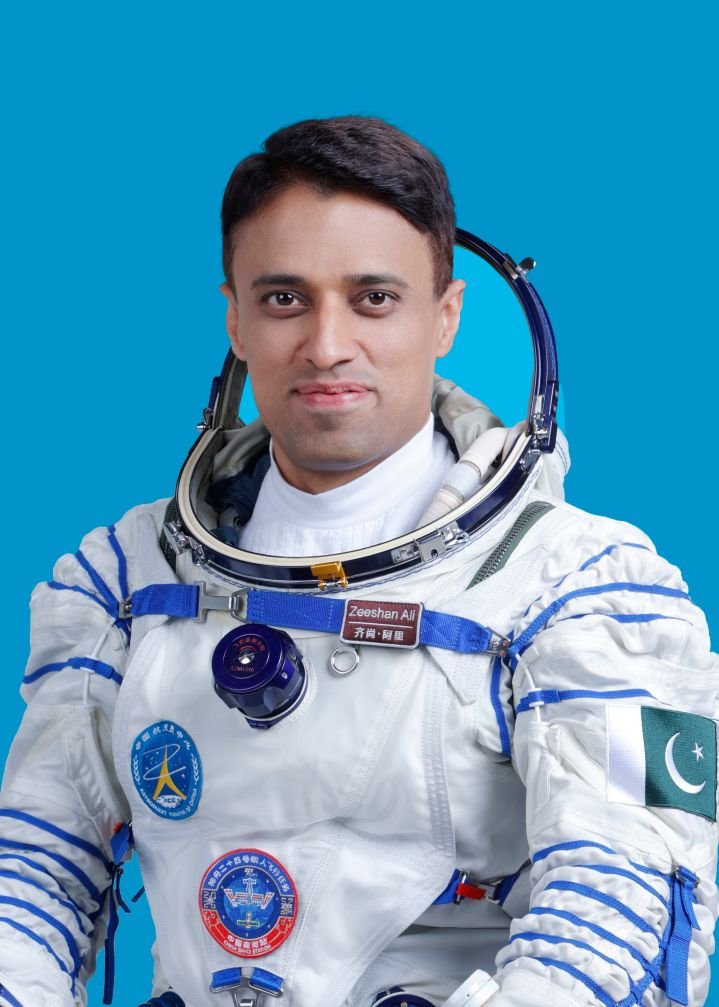
Wing Commander Muhammad Zeeshan Ali of the Pakistan Air Force will lift off aboard China’s Shenzhou-24 spacecraft on Wednesday morning, becoming the first Pakistani to travel into space and the first foreign astronaut ever to visit China’s Tiangong space station.
By Salar Khan
Reporter | The BNN Media – The Best News Network
News Beyond the Borders
Jiuquan, China — Pakistan is about to make its first journey into orbit. Wing Commander Muhammad Zeeshan Ali, a 40-year-old pilot in the Pakistan Air Force, will launch aboard the Shenzhou-24 spacecraft at 8:18 a.m. Beijing time on Wednesday, 25 November (5:18 a.m. in Pakistan), the China Manned Space Agency announced on Tuesday. He will spend about a week aboard China’s Tiangong space station as a payload specialist, carrying out scientific experiments for Pakistan, before returning to Earth aboard the Shenzhou-23 spacecraft.
The Crew and the Launch
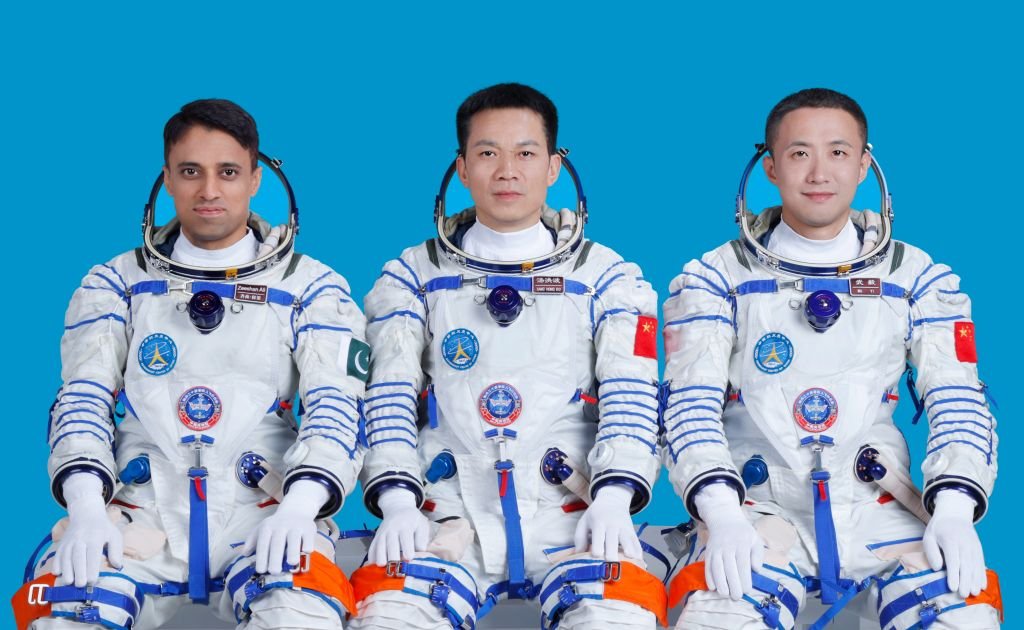
The three-person crew was unveiled by the China Manned Space Agency at a press conference at the Jiuquan Satellite Launch Center in north-western China on Tuesday, a day before the planned launch — the customary timing for Chinese crewed missions. The spacecraft will lift off aboard a Long March 2F rocket, and the agency said the crew was in good condition and launch preparations were complete.
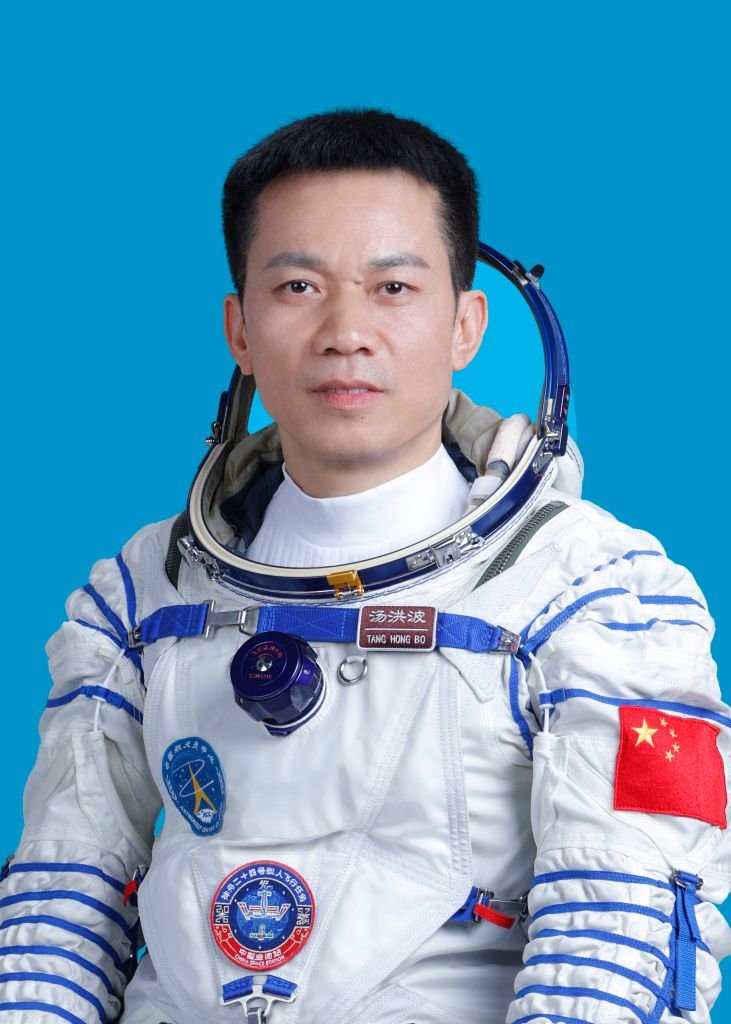
Commander Tang Hongbo, a major general, will lead the mission. He has flown to Tiangong twice before, on Shenzhou-12 and Shenzhou-17, and is about to become the first astronaut to visit the Chinese station three times. He will be joined by Wu Yi, a colonel and flight engineer on his first spaceflight, and by Ali as payload specialist.
After reaching its planned orbit, Shenzhou-24 will use a rapid autonomous rendezvous and docking mode, taking about three and a half hours to connect with the front port of the station’s Tianhe core module, according to the agency’s spokesman, Zhang Jingbo. The new crew will then take over the station from the Shenzhou-23 crew after several days of handover work.
Three astronauts, one rocket, and a seat that makes history for Pakistan.
One Week in Orbit: The Science
Ali will not be a passenger. As payload specialist, his main job in orbit will be the China–Pakistan joint space science experiments — installing experiment samples and units and running scheduled tests aboard the station, alongside the crew’s routine work.
His mission centres on four biotechnology experiments chosen from more than 300 proposals submitted by universities and research centres across Pakistan to the Space and Upper Atmosphere Research Commission (SUPARCO). The experiments focus on areas relevant to food security and climate change, according to details previously shared by SUPARCO officials. Chinese state television reported that the work includes an in-orbit experiment on photosynthetic microorganisms.
Unlike a standard station flight, the Pakistani visitor will travel up on one spacecraft and come home on another. After about a week aboard Tiangong, Ali will return to Earth aboard Shenzhou-23, taking the place of the outgoing crew. One member of the Shenzhou-23 crew, Colonel Zhu Yangzhu, will stay aboard the station to complete China’s first year-long spaceflight.
Ali’s week in orbit is a working week — four Pakistani experiments, chosen from more than 300 proposals, will be run aboard Tiangong.
How Ali Was Chosen
Ali was selected through a cooperation agreement signed in February 2025 between the China Manned Space Agency and SUPARCO to choose and train Pakistani astronauts for missions to the Chinese space station. Candidates went through a rigorous three-stage selection process — preliminary, secondary and final — with strict medical, psychological and technical evaluations in Pakistan and China.
Two military pilots emerged from a pool of 20 shortlisted pilots and scientists: Muhammad Zeeshan Ali and Khurram Daud. Both were named as Pakistan’s first two astronaut candidates in April 2026 and trained at the Astronaut Center of China in Beijing. Ali was chosen to fly; Daud will serve as his backup.
Pakistan’s Minister for Planning, Development and Special Initiatives, Ahsan Iqbal, travelled to Beijing to attend the departure ceremony and to meet the two finalists at the launch centre.
SUPARCO and the China–Pakistan Partnership
The flight is the most visible result so far of a space partnership that has been building for years. SUPARCO, Pakistan’s national space agency, has worked with China on satellites and space science, and the astronaut agreement signed in February 2025 took that cooperation into human spaceflight for the first time.
Reuters reported that Ali’s participation is part of bilateral cooperation under Beijing’s Belt and Road Initiative. The mission also carries wider significance for China: Shenzhou-24 is the 18th crewed Chinese spaceflight and the 24th flight of the Shenzhou programme, and the first time Tiangong has welcomed a visitor from another country.
The launch comes as China and the United States press ahead in a new race to the Moon. Washington has alleged that Beijing plans to colonise and mine lunar territory and resources — claims Beijing has strongly rejected. Against that backdrop, putting a Pakistani astronaut aboard Tiangong is also a statement: China’s space station, unlike the International Space Station, is now open to partners from the developing world.
For SUPARCO, the flight is the payoff of a partnership signed in February 2025 — and the start, not the end, of Pakistan’s human spaceflight story.
What It Means for Pakistan
Until now, the highest altitude ever reached by a Pakistani was about 87.4 kilometres, achieved by polar adventurer and artist Namira Salim during a 55-minute suborbital flight with the commercial company Virgin Galactic in the United States on 6 October 2023. Tiangong orbits roughly 400 kilometres above Earth — more than four times higher.
Ali’s flight puts Pakistan into a small club of nations whose citizens have lived and worked in orbit, and it gives Pakistani universities and researchers their first experiments run aboard a space station. For a country whose space programme has long worked in the shadow of its larger neighbours, a Pakistani flag patch aboard Tiangong — visible on Ali’s spacesuit in the official crew photographs — is a moment of national pride that will be hard to overstate.
The flight is scheduled, not yet flown. The launch is planned for Wednesday morning, and the docking, the handover and the week of experiments all lie ahead. But the crew has been named, the rocket is on the pad, and Pakistan’s first astronaut is ready to go.
Pakistan has waited decades for a citizen in orbit. On Wednesday morning, that wait ends.
The Key Facts
- Muhammad Zeeshan Ali, 40, a wing commander in the Pakistan Air Force, will become the first Pakistani in space and the first foreign astronaut to visit Tiangong.
- Shenzhou-24 launches at 8:18 a.m. Beijing time on Wednesday, 25 November 2026 (00:18 UTC; 5:18 a.m. PKT) aboard a Long March 2F rocket from the Jiuquan Satellite Launch Center.
- The crew is commander Tang Hongbo, flight engineer Wu Yi and payload specialist Muhammad Zeeshan Ali.
- Ali will spend about a week aboard Tiangong, running four Pakistani biotechnology experiments chosen from more than 300 proposals, then return aboard Shenzhou-23.
- The mission follows a February 2025 agreement between the China Manned Space Agency and SUPARCO; Ali and backup Khurram Daud were selected from 20 shortlisted candidates in April 2026.
- Tiangong orbits about 400 kilometres above Earth. The highest altitude previously reached by a Pakistani was 87.4 kilometres (Namira Salim, Virgin Galactic, October 2023).
- Shenzhou-24 is the 18th crewed Chinese spaceflight and the 24th flight of the Shenzhou programme.
A Pakistani astronaut, a Chinese space station, and a week of science chosen by Pakistan’s own universities — Wednesday’s launch is a first for Pakistan and a first for Tiangong.
Reporting based on Reuters, 24 November 2026; Xinhua via China Military, 24 November 2026; China Daily, 24 November 2026; Astronomy magazine, 24 November 2026; and AP via WSOC-TV, 24 November 2026.
By Salar Khan
Reporter | The BNN Media – The Best News Network
News Beyond the Borders