By
Panama’s government says Canadian miner First Quantum Minerals has accepted its conditions for negotiations on reopening the Cobre Panama copper mine, three years after the giant mine was shut down following mass protests and a Supreme Court ruling that its contract was unconstitutional.
By Muhammad Noman
Journalist | The BNN Media – The Best News Network
News Beyond the Borders
Panama City, Panama — First Quantum’s local unit, Minera Panama, has agreed to five conditions set by Panama’s government for talks on the future of the Cobre Panama copper mine, the government said on Monday, 23 November. A government commission led by Trade and Industry Minister Julio Moltó met company representatives in Panama City in the first formal sitting since President José Raúl Mulino announced this month that the two sides would decide the mine’s future together.
What First Quantum Agreed To
The five conditions, set out by the government, are that Panama owns the mineral resource beneath its soil, that the country must obtain the maximum economic benefit from any deal, that no company may decide over Panamanian territory, waters or airspace, that the highest environmental standards will apply under independent oversight, and that any agreement must fully comply with the constitution and the laws of Panama.
The government said the mine must also provide more jobs to Panamanians and respect the country’s sovereignty. First Quantum said it had reiterated its willingness to participate “constructively and transparently in the formal discussions led by the Government of Panama, with full respect for Panama’s sovereignty and the public participation process.”
Officials were careful to stress what Monday’s meeting was not. The government said it does not signal an imminent decision on the mine’s future, but marks the start of a “transparent and participatory” process in which public views will be considered before any final decision is made. President Mulino has said repeatedly that nothing has been approved and no reopening has been decided.
The talks are open — but a reopening is not. That distinction is the whole story.
A Mine Closed by Protests and a Court
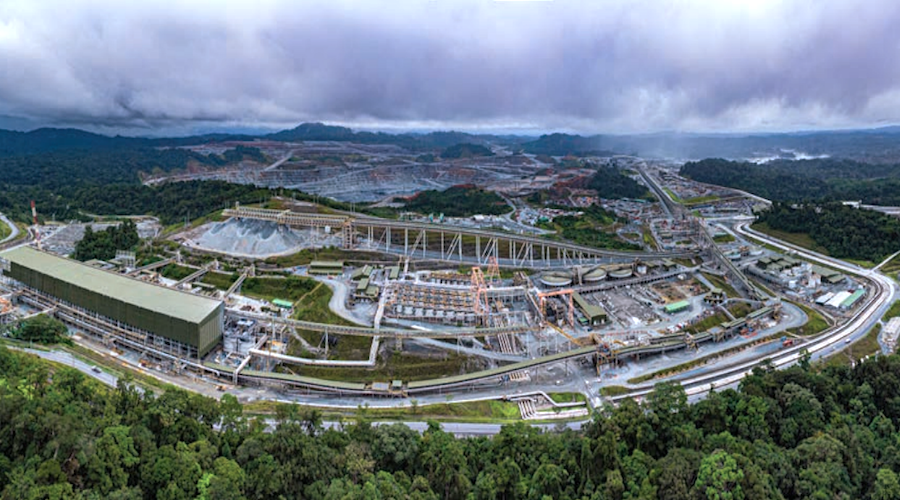
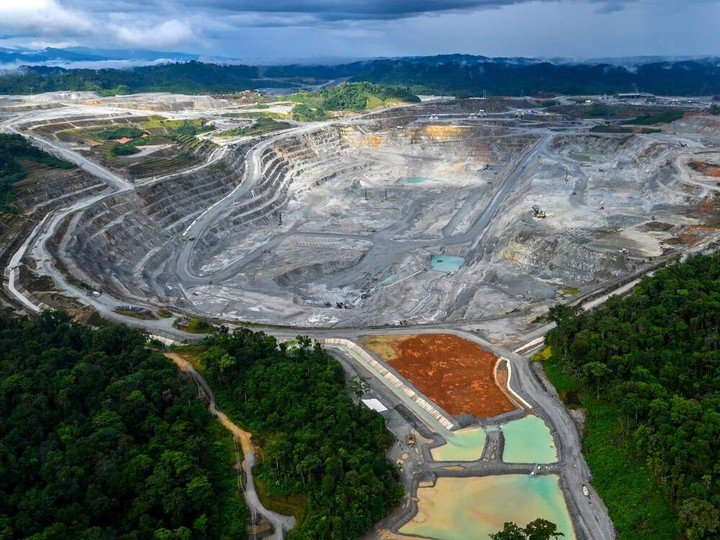
Cobre Panama, in Donoso district in Colón province, was one of the largest copper mines in the world when it was running. Built at a cost of about $10 billion — the largest private investment in Panama’s history — it began production in 2019 and quickly became an economic pillar, contributing close to 5 per cent of Panama’s GDP and employing thousands of people.
At full operation it produced around 350,000 tonnes of copper a year, roughly 1 to 1.5 per cent of world copper output. Its closure removed a significant slice of global copper supply overnight, at a time when demand for the metal — used in power grids, electric vehicles and data centres — keeps rising.
The mine’s troubles go back years. Panama’s Supreme Court questioned the constitutionality of the original 1997 concession as early as 2018. After more than four years of negotiations, a new contract was signed on 20 October 2023, giving First Quantum 20-year operating rights in exchange for payments of $375 million a year to the state. The deal set off immediate public backlash, with weeks of nationwide protests and road blockades over environmental concerns and the terms of the agreement.
On 28 November 2023, the Supreme Court declared the contract unconstitutional. First Quantum suspended 7,000 employee contracts, kept only a small team of essential staff, and began international arbitration proceedings against Panama. The mine has been under what the company calls “preservation and safe management” ever since.
Why the Door Has Opened Now
The shift began this year. First Quantum paused its arbitration proceedings in March 2025 after President Mulino signalled he was open to alternative solutions. A government interministerial commission then examined the mine, and its report of 30 September recommended that Panama restart it. A government-commissioned audit completed in June gave Cobre Panama an overall compliance score of 88 per cent on environmental, legal and operational requirements.
On 16 November, Mulino announced in a televised address that formal talks would begin, naming the interministerial team led by Minister Moltó. He set out the five principles as non-negotiable, and made clear that any agreement would not be a mining concession — instead, the government would set the legal framework for any future operations, with independent oversight and transparent reporting of what is extracted.
The government has also put a definitive end in the terms: any deal must include a company-funded closure plan that is orderly, verifiable and definitive, with no possibility of extension, including reforestation and the prevention of environmental damage. Minister Moltó has said one condition is the end of all arbitrations First Quantum has brought against Panama, which he has valued at more than $27 billion.
Investors welcomed the movement. First Quantum shares jumped 8.2 per cent to C$32.22 in early Toronto trading after Mulino’s announcement, and rose a further 6 per cent on Monday morning after news of the first meeting.
Three years of stalemate ended not with a deal, but with an agreement to talk — on Panama’s terms.
What Is at Stake for Panama and for Copper
For Panama, the mine is a test of whether the country can capture the value of its own resources without repeating the deal that brought tens of thousands of people onto the streets in 2023. The government wants the maximum economic benefit felt across the country, and thousands of jobs reserved for Panamanians. First Quantum estimates a restart could create 6,000 direct jobs and 30,000 indirect positions, with business for about 2,000 registered suppliers.
For the copper market, Cobre Panama is one of the few large mines to have entered production anywhere in the world in the past 15 years, and its return would restore a meaningful share of global supply at a moment of tightness. Even while closed, the site has not been entirely still: processing of stockpiled ore is approved and under way, and First Quantum’s guidance has Cobre Panama producing 30,000 to 40,000 tonnes of copper this year from stockpiles, out of 405,000 to 435,000 tonnes company-wide.
But the politics remain delicate. The 2023 protests were driven by environmental fears and by anger at a contract many Panamanians saw as unfair. Any new arrangement will be judged against those same concerns, and the government has promised that public participation will run alongside the negotiations and conclude before any agreement is reached.
What Happens Next
The Moltó commission and Minera Panama will now work through the substance: employment, the economic terms, environmental oversight, the closure plan and the ending of the arbitration cases. The government has said the negotiating team will set out the legal form of any agreement if one is reached — and that if the mine stays closed, the suspended arbitrations could resume, with an adverse ruling potentially costing the state billions of dollars.
There is no timetable for a decision, and no date for a possible restart. First Quantum has said it welcomes the chance to engage constructively and recognises that any new agreement must respect Panama’s sovereignty, democratic institutions, constitution and legal processes.
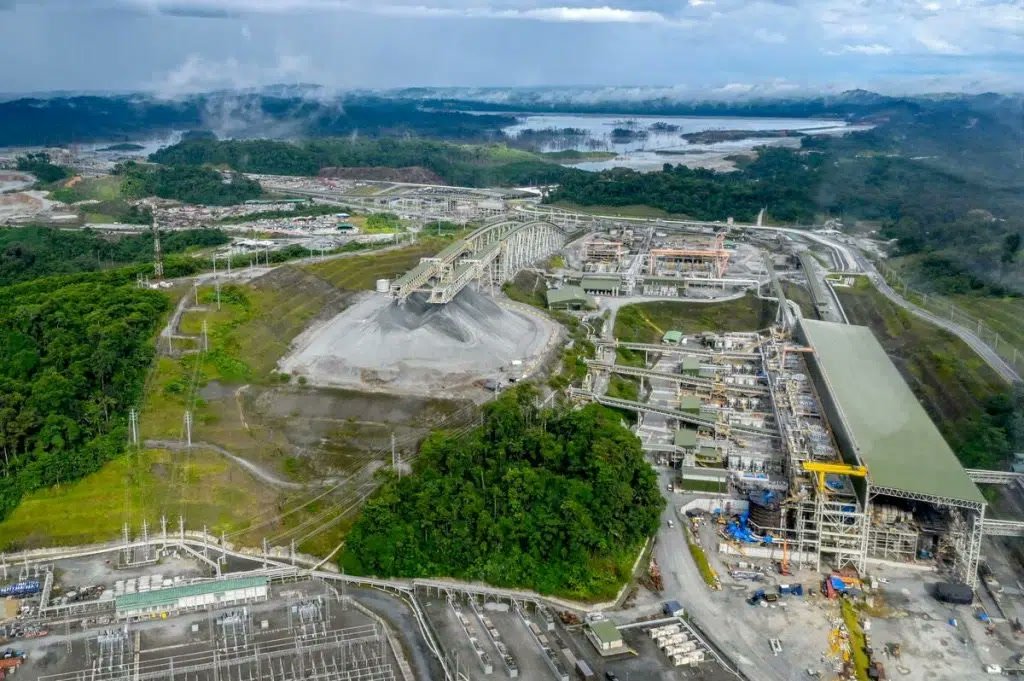
For now, the mine sits in care and maintenance in the Colón rainforest, its stockpiles being processed while its future is argued over in Panama City. The question that brought protesters into the streets in 2023 — who benefits from Panama’s copper? — is now, at last, being negotiated in the open.
The Key Facts
- First Quantum’s Minera Panama agreed to five government conditions for talks on Cobre Panama at a meeting in Panama City on Monday, 23 November 2026.
- The conditions: Panamanian ownership of the minerals, maximum economic benefit, sovereignty, the highest environmental standards with independent oversight, and full compliance with the constitution and laws.
- President José Raúl Mulino announced the formal talks on 16 November; the negotiating team is led by Trade and Industry Minister Julio Moltó.
- Any deal would not be a mining concession and must include a definitive, company-funded closure plan with no extension, plus the end of First Quantum’s arbitrations against Panama.
- The mine closed in November 2023 after the Supreme Court ruled its contract unconstitutional, following weeks of protests. It produced about 350,000 tonnes of copper a year, around 1–1.5 per cent of world output.
- First Quantum shares rose 6 per cent on Monday in Toronto, after jumping 8.2 per cent on the announcement of the talks.
- No reopening has been approved. A public participation process will run alongside the talks and conclude before any agreement is reached.
A mine that supplied the world with copper and Panama with a political crisis is back on the table — but only on Panama’s terms, and only if the public agrees.
Reporting based on Reuters, 23 November 2026; MINING.com, 17 November 2026; and the Center for Strategic and International Studies.
By Muhammad Noman
Journalist | The BNN Media – The Best News Network
News Beyond the Borders