By
COP31 ended in Antalya on Sunday with no overarching agreement — the first full collapse of the UN climate talks since Copenhagen in 2009 — after running more than 40 hours into overtime, the longest COP on record. The calendar, at least, is already set: the talks resume in Bonn in June, and COP32 meets in Addis Ababa next November under an African presidency.
By Faseeh Ur Rehman
Senior Journalist | The BNN Media – The Best News Network
News Beyond the Borders
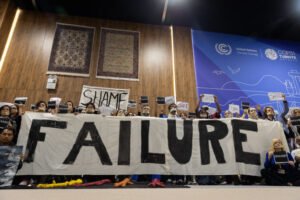
Antalya, Türkiye — The 31st UN climate conference ended on Sunday, 22 November, without an overarching agreement, after more than 190 countries failed to bridge their deepest divide: fossil fuels. The summit ran more than 40 hours past its scheduled close — the longest COP on record — before COP31 President Murat Kurum told the closing plenary there was no consensus and the proposed Antalya Pact would not be adopted. What was agreed, what was lost, and what happens next will decide whether the climate process can still deliver.

What Collapsed in Antalya
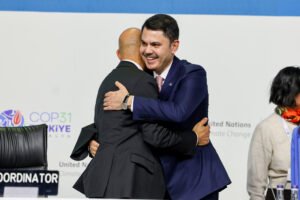
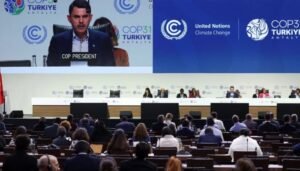
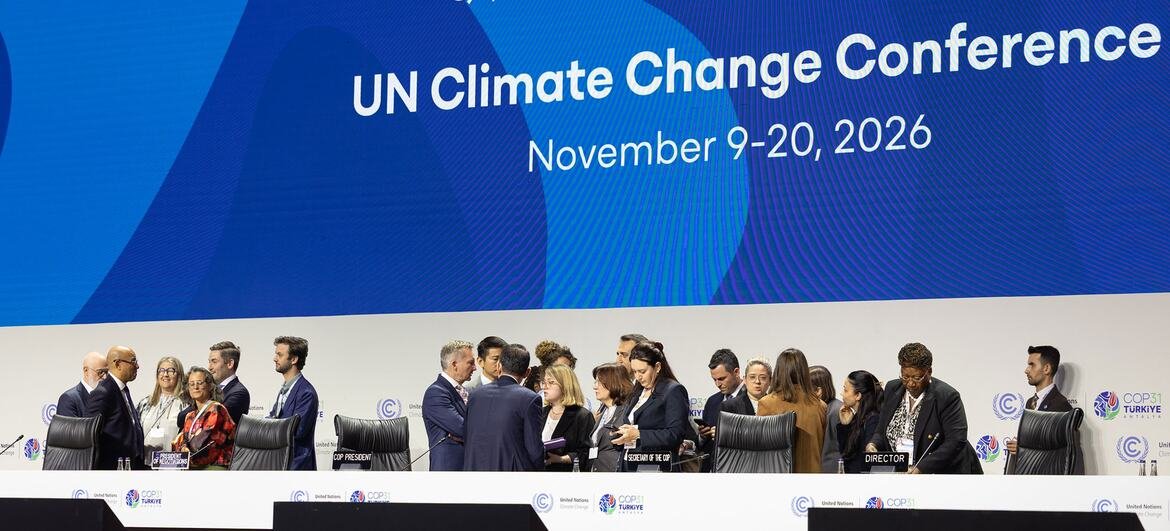
The summit was due to finish on Friday, 20 November. Instead, negotiators worked through the weekend, and on Sunday evening the talks finally ran out of road. At the closing plenary, Kurum, Türkiye’s environment minister, acknowledged the impasse: “I understand that there is no agreement on this text. For that reason, these decisions have not been adopted.”
BNN reported on Sunday that the talks had collapsed after record overtime, with the fossil fuel row ending the summit without a deal: COP31 Collapses in Antalya
The failure was total in one specific sense: the Antalya Pact, the draft cover decision meant to set the overarching political direction of the conference, has no formal standing because it was never adopted. Two major texts — one under the 1992 UN climate convention and a much longer one under the 2015 Paris Agreement — both went unadopted. The unresolved items are not dead, however. Under the UN climate body’s rules, they carry over automatically to COP32.
UN Secretary-General António Guterres said he was “deeply disappointed” by the outcome, but stressed that the failure did not change the realities of the crisis. “There may be no consensus in the negotiating room. There is no ambiguity in the science,” he said in a statement, warning that the world is now on course to exceed the internationally agreed 1.5°C warming limit.
No pact, no consensus, and the longest COP in history — but the agenda itself survives, carried forward to the next summit.
The Fossil Fuel Fault Line
The breaking point was the same one that has haunted the talks for years: whether the final text would say, plainly, that the world must move away from fossil fuels. The first draft of the cover decision called for “the immediate transition away from fossil fuels in energy systems”. By the fourth and final draft, every mention of fossil fuels had been stripped out, despite a push by more than 100 countries to keep the language in.
The European Union, backed by about 130 countries, refused to accept a text that named no fossil fuel, calling the omission “unconscionable” and warning it risked widening the gap between climate commitments and real-world action. Panama and the Marshall Islands also rejected the text, saying it weakened previous commitments and betrayed frontline countries. Russia, China and the Arab countries, by contrast, were prepared to accept it. Pakistan urged delegates to keep working toward consensus, warning that climate action requires “bridges, not barriers”.
The failed text also dropped a proposed $120 billion target for adaptation finance by 2035 and set no baseline for tripling adaptation finance, as agreed at COP30 in Belém. A draft goal of 35 per cent electrification by 2035 and a proposed two-year work programme on mountains and climate change went down with the text, along with a proposed Antalya–Addis Ababa road map on adaptation finance.
The United States was not in the room at all. Under President Donald Trump, Washington has pulled out of international climate action, leaving the talks to the remaining 190-plus countries — and leaving the old question sharper than ever: can a process that decides everything by consensus survive when a small group of countries can block the majority?
The text died on two words — fossil fuels — and on a missing number: $120 billion for adaptation.
What Did Survive the Wreckage
The collapse of the cover decision does not mean nothing was agreed in Antalya. Delegates did reach agreement on a just transition decision, covering how to make the shift to a low-carbon economy fair to affected workers and communities — though the mechanism’s governance, mandate and resources are still to be settled, with views due by 15 March 2027. Separate decisions were also adopted on adaptation measurement and on climate finance discussions continuing to 2028.
Outside the formal negotiations, the COP31 presidency pointed to voluntary agreements: more than 90 countries signed a pledge to speed up the electrification of their economies, according to COP31’s president of negotiations, Chris Bowen of Australia, along with pacts on geothermal energy and greener freight corridors.
And the Paris Agreement itself is untouched. Governments already agreed at COP28 in Dubai to transition away from fossil fuels, and that pledge remains in force — as does the Paris Agreement’s legal framework. As the World Resources Institute put it, the hollow outcome was “a failure of political leadership, not a failure of the Paris Agreement”.
Guterres was blunter about the forces at work, accusing powerful fossil fuel interests of obstructing climate action while continuing to profit. “We can’t put out the fire while pouring fuel on it,” he said.
Antalya produced a just transition decision and a stack of voluntary pledges — real, but a fraction of what the summit was meant to deliver.
The Road to Bonn
The next formal moment is the Bonn intersessional, 7–17 June 2027, where the technical work resumes: the just-transition mechanism’s governance, the technical assessment of the second Global Stocktake, and — if the presidencies choose — a fresh attempt at the cover-decision language that died in Antalya.
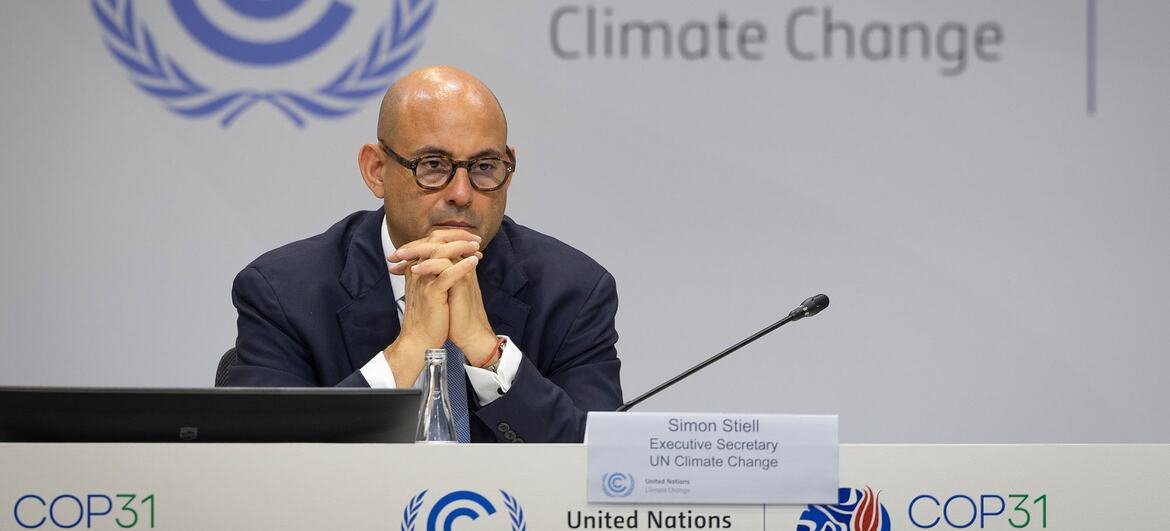
UN Climate Change Executive Secretary Simon Stiell, addressing the closing plenary, acknowledged the frustration of delegates and warned: “The world cannot afford a repeat of this moment.” He urged countries to learn the lessons of Antalya, and said COP32 must build on previous achievements rather than “step back”.
The months between now and Bonn will matter as much as the session itself. With the formal track stalled, coalitions outside the consensus process — bilateral clean-technology deals, domestic policy shifts, and the voluntary pledges struck in Antalya — are likely to move faster than the plenary hall. The question for Bonn is whether negotiators arrive with the fossil-fuel and finance fights already half-settled, or whether they simply re-stage Antalya in a smaller room.
Addis Ababa 2027: A Summit With Everything to Prove
Then comes COP32: Addis Ababa, Ethiopia, 8–19 November 2027, under an African presidency led by Ethiopia’s foreign minister Gedion Timothewos as president-designate. It will be the summit where the unresolved items from Antalya — the fossil-fuel transition, adaptation finance, loss and damage, equity and implementation — land back on the table, automatically carried over.
The second Global Stocktake, the periodic review of collective progress under the Paris Agreement, was launched at COP31 and will run its technical assessment through 2027, concluding at COP33 in 2028. No host has been chosen yet for COP33.
An African presidency changes the politics. Africa is the continent that has contributed least to global warming and suffers some of its worst impacts, and the Addis Ababa summit is already being framed, by its incoming presidency, as the one where delivery must finally replace deadlock. Whether it can succeed where Antalya failed will depend on whether the fossil-fuel question is settled before the summit opens, not during it.
For Pakistan, the stakes are direct. The country is among the most climate-vulnerable in the world, and its delegation in Antalya argued for consensus rather than collapse — “bridges, not barriers”. Adaptation finance, the $120 billion target that died with the Antalya Pact, is the money that pays for flood defences, resilient crops and early-warning systems in countries like Pakistan. A year of rebuilding that ends in another collapse in Addis Ababa would leave those countries waiting longer still.
Bonn in June, Addis Ababa in November — the climate talks have a year to rebuild, and no room left for another collapse.
The Key Facts
- COP31 ended on Sunday, 22 November 2026 in Antalya, Türkiye, with no overarching agreement — the first full collapse of the UN climate talks since Copenhagen 2009 — after running more than 40 hours into overtime, the longest COP on record.
- The final text, the Antalya Pact, named no fossil fuel and dropped a proposed $120 billion adaptation finance target by 2035; the EU, backed by about 130 countries, refused it.
- A just transition decision was agreed, and voluntary pledges were struck — including an electrification pledge backed by more than 90 countries. The Paris Agreement and the COP28 transition pledge remain in force.
- Unresolved items carry over automatically to the next summit.
- Next formal session: the Bonn intersessional, 7–17 June 2027.
- COP32: Addis Ababa, Ethiopia, 8–19 November 2027, president-designate Gedion Timothewos, Ethiopia’s foreign minister.
- The second Global Stocktake launched at COP31 and concludes at COP33 in 2028; no COP33 host has been chosen yet.
- UN Secretary-General António Guterres: “There may be no consensus in the negotiating room. There is no ambiguity in the science.“
Antalya failed. The science has not changed, the Paris Agreement still stands, and the calendar is already set — the rebuilding starts in Bonn.
Reporting based on UN News, 23 November 2026; Reuters via AP reporting, 22 November 2026; CNN, 22 November 2026; World Resources Institute, 22 November 2026; and Magna Bureau analysis, 22 November 2026.
By Faseeh Ur Rehman
Senior Journalist | The BNN Media – The Best News Network
News Beyond the Borders