 By
In a major shift for the South Pacific, the Solomon Islands has signed a sweeping treaty making Australia its primary security partner — and declared it will never allow a foreign military base on its territory, four years after a secretive security deal with China raised fears of a Chinese naval foothold in the region.
By The BNN Media
The Best News Network
News Beyond the Borders
Canberra, Australia — Australia and the Solomon Islands signed a security treaty on Wednesday that makes Canberra the Pacific nation’s defence partner of choice, in a deal that marks a sharp turn away from China. Under the treaty, Australia will support the expansion and development of the Solomon Islands’ police and border force, while Honiara has pledged that no foreign power will be allowed to establish a military or security base on its soil.
What Was Signed in Canberra
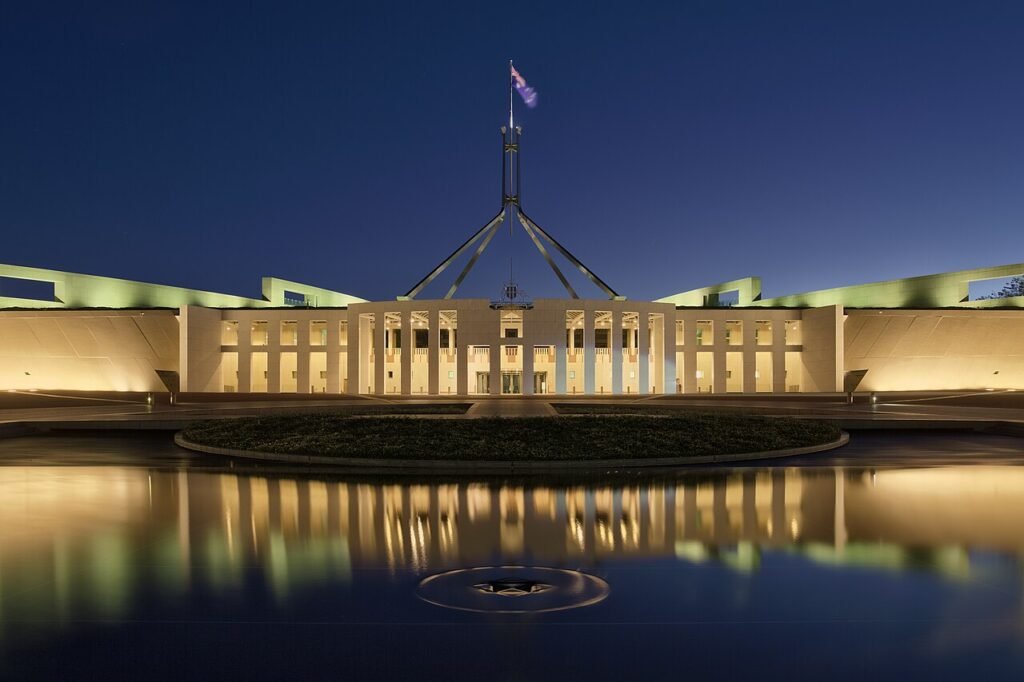
The treaty was signed in Canberra by Australian Prime Minister Anthony Albanese and Solomon Islands Prime Minister Matthew Wale, who arrived in the Australian capital with 15 of his ministers for talks spanning security, infrastructure, education and health.
“Australia is proud to be the Solomon Islands’ main security partner, and that’s a responsibility that we take seriously,” Albanese told a press conference in Canberra alongside Wale. He said the new bilateral treaty elevated relations to a “level which has never been seen before and has never been stronger.”
The deal confirms Australia’s place as the Solomon Islands’ “primary security partner” and states plainly that “there will be no foreign military or security base” on the smaller nation, which lies about 2,000 kilometres (1,200 miles) north-east of Australia, the two leaders said in a joint statement.
The treaty is broader than security alone. Australia has agreed to invest in the Solomon Islands’ infrastructure, education, renewable energy and sport, and to improve visa arrangements for Solomon Islanders. Reports put the package at 740 million Australian dollars (about US$490 million) over ten years, much of it to fund free education and other programmes. Honiara will also have to consult Australia on the development of critical infrastructure, and on security cooperation with countries outside the Pacific Islands Forum regional bloc.
The Solomon Islands’ sensitive infrastructure will “remain free from militarisation, foreign interference and unauthorised access”, the treaty says — a commitment aimed squarely at keeping outside powers out of the country’s ports, cables and communications networks.
The message from Canberra was unmistakable: after years of uncertainty, the Solomon Islands has chosen its security partner — and it is Australia.
The End of the China Deal — or Not Quite
The new treaty lands four years after the Solomon Islands signed a secretive security pact with China in 2022, a deal that raised fears among the United States and its allies that Beijing could begin docking warships there and eventually open a military base in the South Pacific.
Australian media reported on Wednesday that the Solomon Islands’ pact with China had been scrapped, though Wale declined to confirm or deny the reports, citing a non-disclosure agreement in the Chinese deal. The five-year pact with Beijing, which has provided Chinese police trainers to the capital, Honiara, is due to expire in early 2027, and reports say Honiara has told Beijing it will not be renewed.
“Unfortunately there is a non-disclosure clause in the treaty with China,” Wale told reporters at Australian Parliament House. “So I am unable to talk about that. We have ongoing discussions with China.”
The distinction matters. What is certain is that the Solomon Islands has now signed a public, wide-ranging treaty with Australia that commits it to no foreign bases and to consulting Canberra first. What remains unconfirmed is the formal fate of the 2022 deal with Beijing — and Wale, bound by its secrecy clause, would not say.

Why These Islands Matter So Much
The Solomon Islands is a nation of more than 800,000 people — fewer than 900,000, according to the Associated Press — spread across about 1,000 islands north-east of Australia. Its archipelago sprawls across the sea route between the United States and Australia, the same waters from which US General Douglas MacArthur commanded the Pacific campaign in the Second World War. American allies fought pivotal battles against Japanese forces on the islands during the war.
That geography is why the 2022 deal with China caused such alarm in Canberra and Washington. A Chinese naval foothold in the Solomons would sit astride the sea links between Australia and the United States — links that would matter enormously in any future conflict in the Pacific. China has denied that it is seeking to open a military base in the Solomon Islands.
Australia has spent the years since the China deal trying to edge Beijing’s influence out of the region through bilateral security agreements. Since Albanese’s government was first elected in late 2022, it has struck similar deals with Fiji, Tuvalu and Vanuatu, and reached a security-linked pact with Papua New Guinea in 2024 that promised Australia’s nearest neighbour 600 million Australian dollars (about $396 million) over a decade, including a rugby league team in the Australian national competition.
Analysts say the Solomon Islands treaty goes further than those earlier deals. “I think this deal, coupled with indications that Solomon Islands will let the China deal lapse, goes beyond the success of the previous deals,” said Connor Graham, a research fellow in the Pacific Islands programme at the Sydney-based think tank the Lowy Institute. “It is a blow to Chinese security ambitions in the Pacific certainly.”
Wale’s Journey: From China Critic to Treaty Partner
The signing also signals a significant shift by Wale himself. The Solomon Islands prime minister, who took office in May, was a long-time critic of China who had appeared to soften his stance in recent years.
Wale was highly critical of the 2022 security deal with China, echoing the United States and other Pacific nations by saying it would upset regional security and could jeopardise relationships with existing partners. But in 2025 he led a delegation to Beijing, where he praised China’s economic development and said his party supported the one-China principle.
On Wednesday in Canberra, the earlier critic was back. “Solomon Islands has been for a number of years a source of uncertainty and doubt in the region. Those days are done,” Wale said at the press conference. “Gone. We don’t want to be there again,” he added, according to the Associated Press account of his remarks.
Wale also said he would seek to introduce legislation to “bed down the treaty” — a move that should make it harder for any pro-China successor government to back out of the deal. Oliver Nobetau, the Lowy Institute’s Pacific Islands programme director, described the treaty as significant and fine-tuned to the Solomons’ priorities. “It demonstrates that Australia is listening to what the Pacific partners want,” he told the Australian Broadcasting Corporation.
What Australia Is Paying — and What It Gets
For Australia, the treaty is the biggest win yet in its contest with China for influence across the Pacific. It locks in Canberra as the Solomon Islands’ security partner of choice, gives Australia a formal say over the islands’ critical infrastructure decisions, and commits Honiara to keeping its sensitive infrastructure free of militarisation.
For the Solomon Islands, the payoff is practical: Australian support to expand and develop its police and border force, investment in infrastructure, education, renewable energy and sport, better visa access for its citizens to work and study in Australia, and a decade of funding for free education and other programmes.
The text of the treaty has been posted online by Australia’s foreign affairs department. It says the Solomon Islands is committed to keeping its sensitive infrastructure free of militarisation, and will ensure that its security cooperation comes from members of the Pacific Islands Forum — a regional group of which Australia is a member, but China is not.
The pattern is now familiar across the Pacific: Australia offers money, training, education and visas, and in return its partners agree to keep their security business inside the Pacific family. Similar pacts have already been signed with Papua New Guinea, Vanuatu and Fiji, and Denmark’s parliament ratified a US security pact on Greenland earlier this month — a reminder that security pacts are being rewritten well beyond the Pacific, too.
Beijing’s Response
China’s response on Wednesday was measured. Asked about the deal, foreign ministry spokesperson Guo Jiakun warned Australia and the Solomon Islands that their cooperation “should not target any third party”, according to The Times. In Beijing, Guo did not directly answer a journalist’s question about whether the Solomon Islands had said it would end the Chinese security pact.
“China always follows the principle of mutual respect and equality in developing relations with the Solomon Islands,” Guo said. “There is no element of geopolitical rivalry or bloc confrontation in cooperation between China and Pacific island countries, including the Solomon Islands.”
Beijing has consistently denied seeking a military base in the Solomon Islands, and the 2022 pact was presented at the time as a policing and security cooperation agreement. But its secrecy — the text was never published — fuelled the suspicion that it could open the door to a naval presence, and it was that suspicion, as much as the deal itself, that drove Australia’s response.
What Happens Next
The treaty now moves to the Solomon Islands parliament, where Wale plans legislation to entrench it. Ratification and implementation will take time, and the unanswered question — the formal status of the 2022 deal with China — will hang over the relationship with Beijing until Honiara is free, or chooses, to speak about it.
For now, though, the direction of travel is clear. A country that four years ago signed a secret security deal with China has now signed a public treaty with Australia, declared it will never host a foreign military base, and agreed to consult Canberra before making security or infrastructure deals with anyone outside the Pacific Islands Forum.
“Those days are done,” Wale said in Canberra. For Australia — and for the United States and its allies watching the Pacific — those three words were the whole point of the day.
By The BNN Media
The Best News Network
News Beyond the Borders